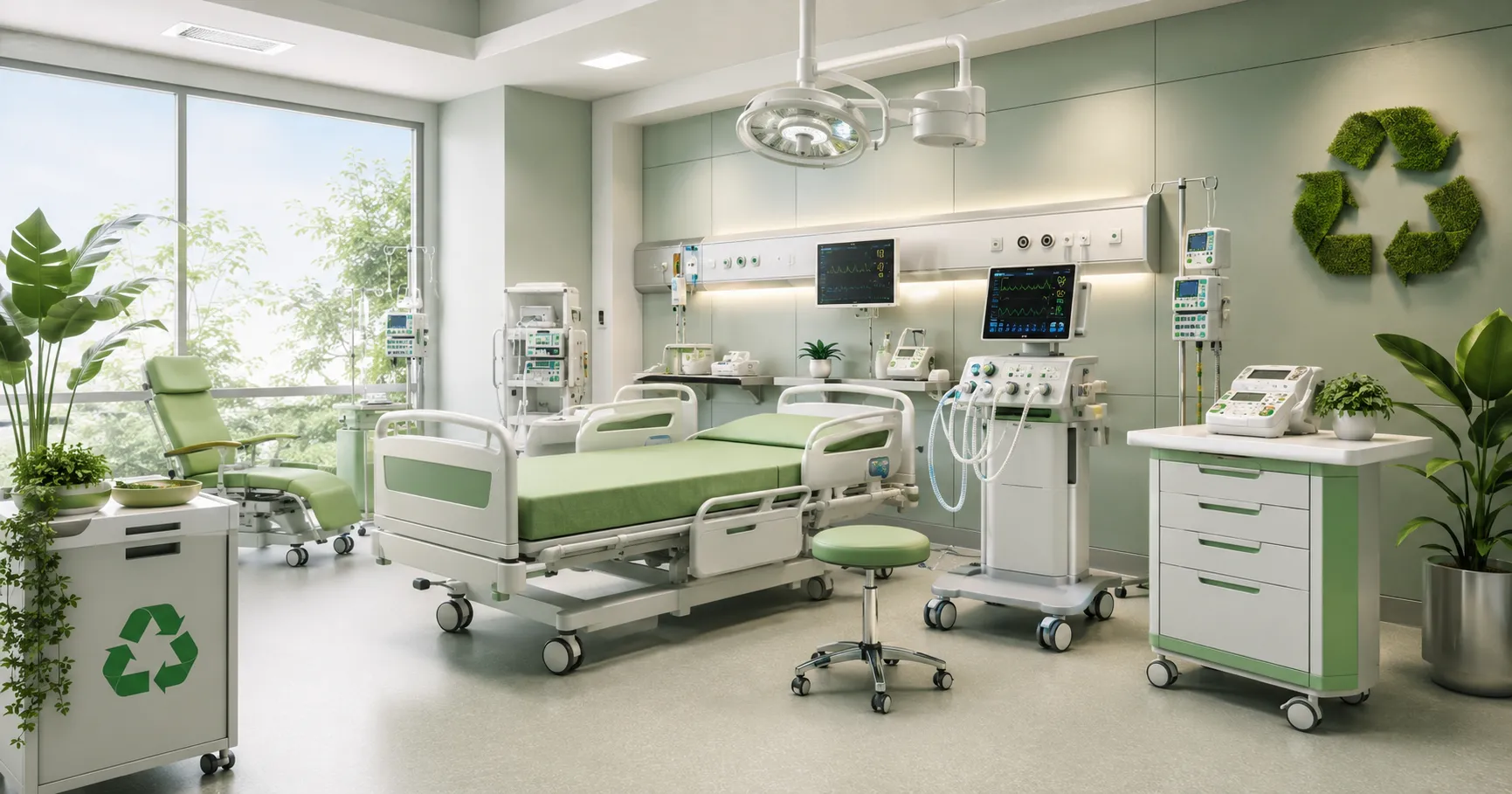
Eco-friendly medical devices help hospitals reduce waste, manage resources responsibly, improve equipment lifecycle planning, and support more sustainable healthcare procurement. These devices may include reusable instruments, repairable equipment, energy-efficient systems, durable hospital furniture, low-waste diagnostic tools, sterilisation-compatible devices, and equipment supported by robust maintenance and spare-parts availability.
For healthcare buyers, sustainability should not be viewed only as an environmental goal. It is also connected to procurement cost, equipment lifespan, waste management, staff workflow, maintenance planning, supplier reliability, and long-term hospital resilience.
WHO states that healthcare waste encompasses many material types and that poor waste management can pose health and environmental risks, making responsible device selection and waste planning important for hospitals.
What Eco-Friendly Medical Devices Mean
Eco-friendly medical devices are medical products selected, used, maintained, and replaced with sustainability in mind. They may reduce waste, support safe reuse where allowed, last longer, consume less energy, use fewer disposable accessories, simplify repair, or include recyclable packaging where appropriate.
Eco-friendly does not mean compromising clinical quality. In healthcare, sustainability must always be balanced with safety, infection control, regulatory requirements, device performance, and patient care needs.
A sustainable medical device strategy should consider the full lifecycle of equipment, including manufacturing, packaging, transport, installation, energy use, consumables, cleaning, sterilisation, maintenance, repair, spare parts, waste disposal, replacement, and decommissioning.
Why Sustainable Device Procurement Matters
Hospitals use large volumes of equipment, consumables, packaging, batteries, cables, instruments, and disposable items. Without structured procurement, this can increase waste, storage pressure, service cost, and replacement burden.
Sustainable device procurement helps hospitals reduce unnecessary waste, extend equipment service life, support repairs rather than early replacement, control consumable use, improve supplier accountability, reduce repeat purchasing, support waste segregation planning, improve lifecycle cost visibility, strengthen maintenance records, and make procurement more responsible.
NHS England’s greener procurement work includes supplier expectations around net zero and social value, showing that sustainability is becoming part of healthcare buying decisions.
Types of Eco-Friendly Medical Devices
Eco-friendly medical devices can be found in many hospital departments.
Reusable Surgical Instruments — Stainless steel instruments, trays, and procedure tools can be used repeatedly when properly reprocessed.
Energy-Efficient Equipment — Selected imaging systems, laboratory analysers, autoclaves, refrigerators, patient monitors, and hospital beds may offer lower energy use or power-saving features.
Repairable Medical Equipment — Devices with spare parts, service manuals, modular components, and supplier support can last longer.
Low-Waste Diagnostic Equipment — Systems that reduce unnecessary consumables, packaging, or repeat testing can support better resource control.
Reusable Patient Care Equipment — Approved reusable items such as selected cuffs, sensors, positioning aids, and accessories may reduce waste when compatible with cleaning policies.
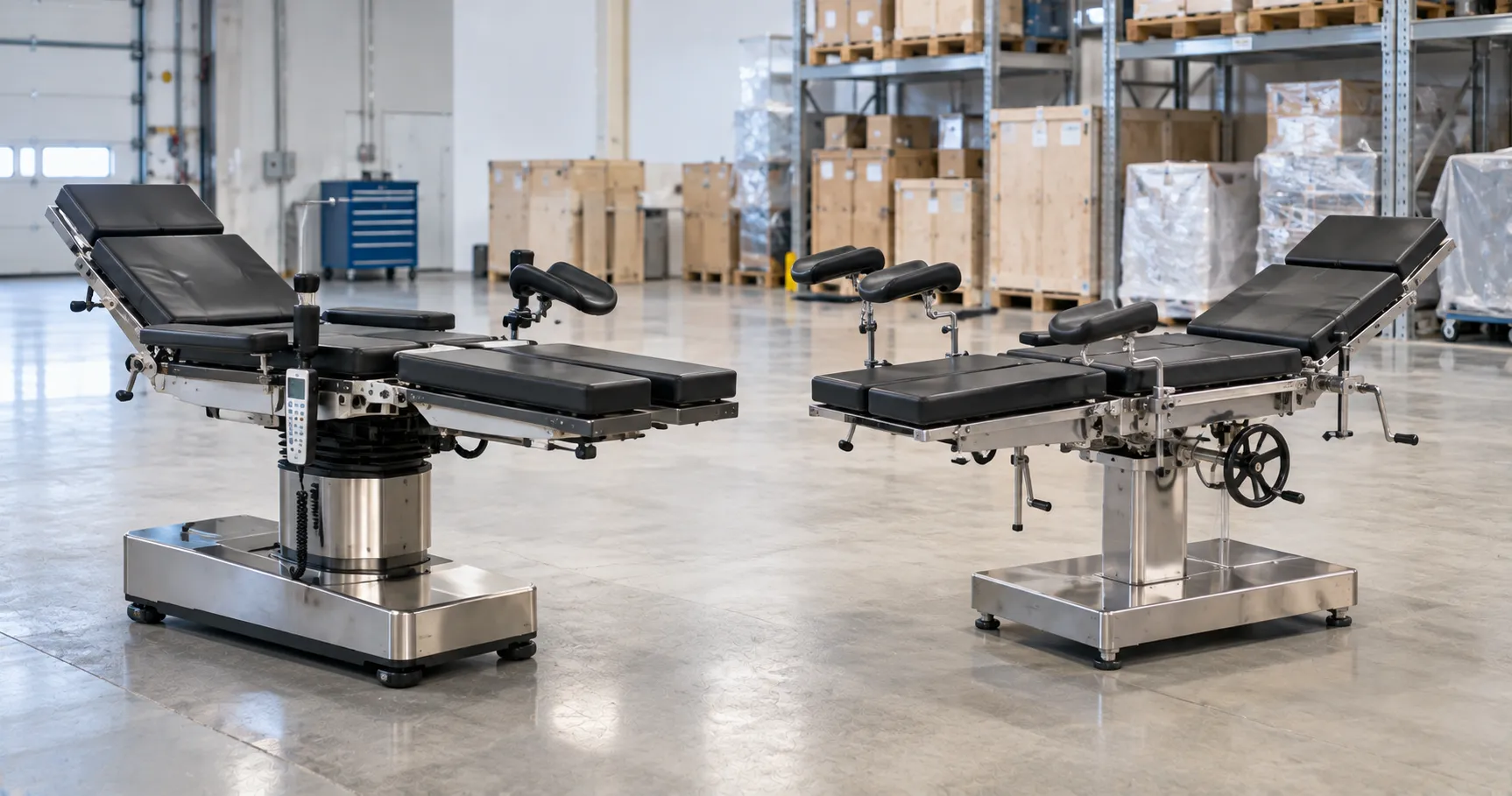
Sustainable Hospital Furniture — Durable beds, trolleys, carts, examination tables, and storage systems can reduce the frequency of replacements.
Facilities sourcing through regulated and certified equipment suppliers worldwide should request product specifications, cleaning instructions, service support, spare parts information, warranty terms, and compliance documents before procurement.
Reusable Devices and Reprocessing
Reusable devices can support sustainability when they are designed, used, cleaned, disinfected, sterilised, and maintained correctly. FDA explains that reusable medical devices undergo reprocessing, a detailed multistep process used to clean and then disinfect or sterilise devices after patient use.
Healthcare buyers should check whether the device is intended for reuse; the manufacturer's reprocessing instructions; cleaning methods; disinfection or sterilisation requirements; compatibility with hospital CSSD workflow; required accessories; training needs; inspection requirements; maximum reuse limits, where applicable; and documentation requirements.
Hospitals should never assume a device is reusable simply because it appears durable. Reuse must follow manufacturer instructions and local regulatory requirements.
Sterilisation and Sustainable Device Planning
Sterilisation is central to reusable device sustainability. For sustainable procurement, hospitals should assess whether devices align with their sterilisation workflow. A reusable device is not practical if the hospital cannot properly clean, inspect, pack, sterilise, store, and track it.
Procurement teams should review sterilisation method, material compatibility, cycle requirements, packaging needs, instrument tracking, CSSD capacity, drying time, inspection steps, storage conditions, staff training, and service records.
Sustainable device planning should include both the product and the workflow required to reuse it safely.
Waste Reduction in Hospitals
Healthcare waste reduction starts with buying decisions. Hospitals can reduce waste by selecting durable devices, standardising accessories, improving inventory control, avoiding unnecessary disposables, using reusable options where safe, and properly maintaining equipment.
WHO’s healthcare waste guidance highlights reducing unnecessary waste, separating general waste from hazardous waste, and treating waste to reduce risks to health workers and communities.
Waste reduction strategies may include choosing reusable instruments where appropriate, avoiding over-ordering consumables, reducing duplicate equipment models, standardising accessories, selecting repairable devices, improving stock rotation, reducing expired consumables, using correct waste segregation, training staff on disposal rules, and reviewing packaging waste.
Waste reduction should never reduce infection control or clinical safety.
Energy Efficiency and Equipment Selection
Energy-efficient medical equipment can support sustainable hospital operations, especially for devices used continuously. Examples include refrigerators, sterilisation units, imaging equipment, patient monitoring systems, laboratory analysers, beds, lighting systems, and HVAC-linked clinical equipment.
Buyers should ask suppliers about device power consumption, standby mode, continuous-operation requirements, cooling and ventilation requirements, expected runtime, service life, energy-monitoring options, and spare-part availability.
Energy use should be reviewed alongside clinical performance, service support, and lifecycle cost.
Maintenance and Sustainability
Maintenance is one of the most practical ways to improve equipment sustainability. A device that is maintained well can often remain useful for longer, reducing early replacement and waste.
Sustainable maintenance planning should include preventive maintenance schedules, calibration where required, inspection records, battery checks, cable reviews, software updates, spare parts planning, repair history, downtime tracking, and end-of-life reviews.
Biomedical engineers should work with procurement teams to identify devices that are reliable, repairable, and supported by suppliers.
Supplier Review for Eco-Friendly Devices
Supplier selection is important for sustainable procurement. A product may appear environmentally friendly, but weak documentation, limited spare-parts availability, or limited service support can make it unsustainable in practice.
Healthcare buyers should ask suppliers about product lifespan, warranty terms, spare part availability, repair options, maintenance requirements, packaging materials, consumable use, reprocessing instructions, energy use, compliance documents, and end-of-life handling.
Suppliers and manufacturers advertising to global healthcare buyers should provide clear product information, sustainability details, service support, and documentation for procurement teams.
Total Cost of Ownership
Eco-friendly procurement should compare the total cost of ownership, not only the purchase price. A device that costs slightly more at purchase may offer better value if it lasts longer, uses fewer consumables, consumes less energy, and is easier to repair.
Total cost should include device price, accessories, consumables, energy use, installation, training, cleaning materials, sterilisation requirements, maintenance, calibration, spare parts, downtime, repair cost, disposal cost, and replacement planning.
This helps hospitals avoid buying cheap equipment that becomes expensive to operate or replace.
Common Mistakes to Avoid
Hospitals should avoid these mistakes when planning the procurement of eco-friendly medical devices.
Choosing Green Claims Without Evidence — Buyers should request documentation, not only marketing language.
Ignoring Clinical Safety — Sustainability must not weaken patient safety or infection control.
Buying Reusable Devices Without Reprocessing Capacity — Reuse requires cleaning, disinfection, sterilisation, storage, and tracking.
Forgetting Spare Parts — A device becomes waste sooner if parts are unavailable.
Ignoring Energy Use — Continuous-use equipment should be reviewed for power consumption.
No Waste Segregation Plan — Proper disposal and segregation are essential.
Skipping Staff Training — Sustainable workflows depend on correct use, cleaning, and disposal behaviour.
International Sourcing Considerations
Eco-friendly medical devices can be sourced internationally when buyers clearly define device purpose, sustainability goals, regulatory needs, reprocessing requirements, energy expectations, warranty terms, spare parts, service support, packaging requirements, and compliance documentation.
Healthcare groups managing several facilities may benefit from structured distribution and reseller partnership arrangements. Standardising sustainable device categories, accessory lists, maintenance records, service contracts, and waste-control requirements can reduce variation across hospitals.
Buyers should confirm whether they need reusable surgical instruments, energy-efficient equipment, repairable devices, sustainable hospital furniture, sterilisation-compatible products, low-waste diagnostic systems, or full sustainable procurement packages. For project-based sourcing, buyers can contact the Medigear.uk team for supply support to discuss availability, documentation, export needs, and procurement requirements.
Future Role of Eco-Friendly Medical Devices
Eco-friendly medical devices will become more important as healthcare facilities focus on sustainability, waste reduction, lifecycle cost, energy control, supplier accountability, and responsible procurement.
The strongest sustainable hospital strategies will combine clinical safety, infection control, reusable device planning, maintenance readiness, repairability, supplier transparency, digital records, and total cost review.
Sustainability should not be treated as a separate project. It should be built into the everyday procurement of medical equipment.
Final Thoughts
Eco-friendly medical devices help sustainable hospitals reduce waste, improve equipment lifecycle planning, support reuse where appropriate, control energy use, and make procurement more responsible. The best approach balances sustainability with patient safety, infection control, regulatory requirements, maintenance readiness, and supplier reliability.
Healthcare buyers should review full lifecycle cost, reprocessing needs, repairability, spare parts, energy use, packaging, waste handling, documentation, and supplier support before ordering. Sustainable procurement works best when it is practical, evidence-based, and connected to daily hospital operations.
Disclaimer
Medigear.uk is a global medical equipment supplier, exporter, and distributor. The content published on this site is intended for educational and product awareness purposes only. Nothing on this page constitutes medical advice, clinical guidance, sustainability certification advice, infection control advice, legal advice, regulatory advice, or treatment recommendations. All healthcare procurement, sustainability, reprocessing, sterilisation, legal, regulatory, facility, and clinical decisions should be made by qualified professionals and compliant procurement teams operating within the regulatory frameworks of their respective countries.