Connected laboratory devices help hospitals improve sample processing, analyser data flow, result visibility, quality control, maintenance planning, and diagnostic workflow. Modern laboratories depend on reliable equipment that can capture data, reduce manual entry, support traceability, and connect with approved laboratory information systems.
For healthcare buyers, connected laboratory devices should be reviewed as both diagnostic equipment and digital workflow infrastructure. The FDA describes digital health technologies as systems that use platforms, connectivity, software, and sensors for healthcare and related uses, including connected analysers, middleware, laboratory dashboards, and data-enabled diagnostic equipment.
What Connected Laboratory Devices Mean
Connected laboratory devices are diagnostic or laboratory systems that can exchange selected data with other approved systems. This may include laboratory information systems, middleware, quality-control software, hospital information systems, maintenance platforms, barcode systems, cloud dashboards, or analyser networks.
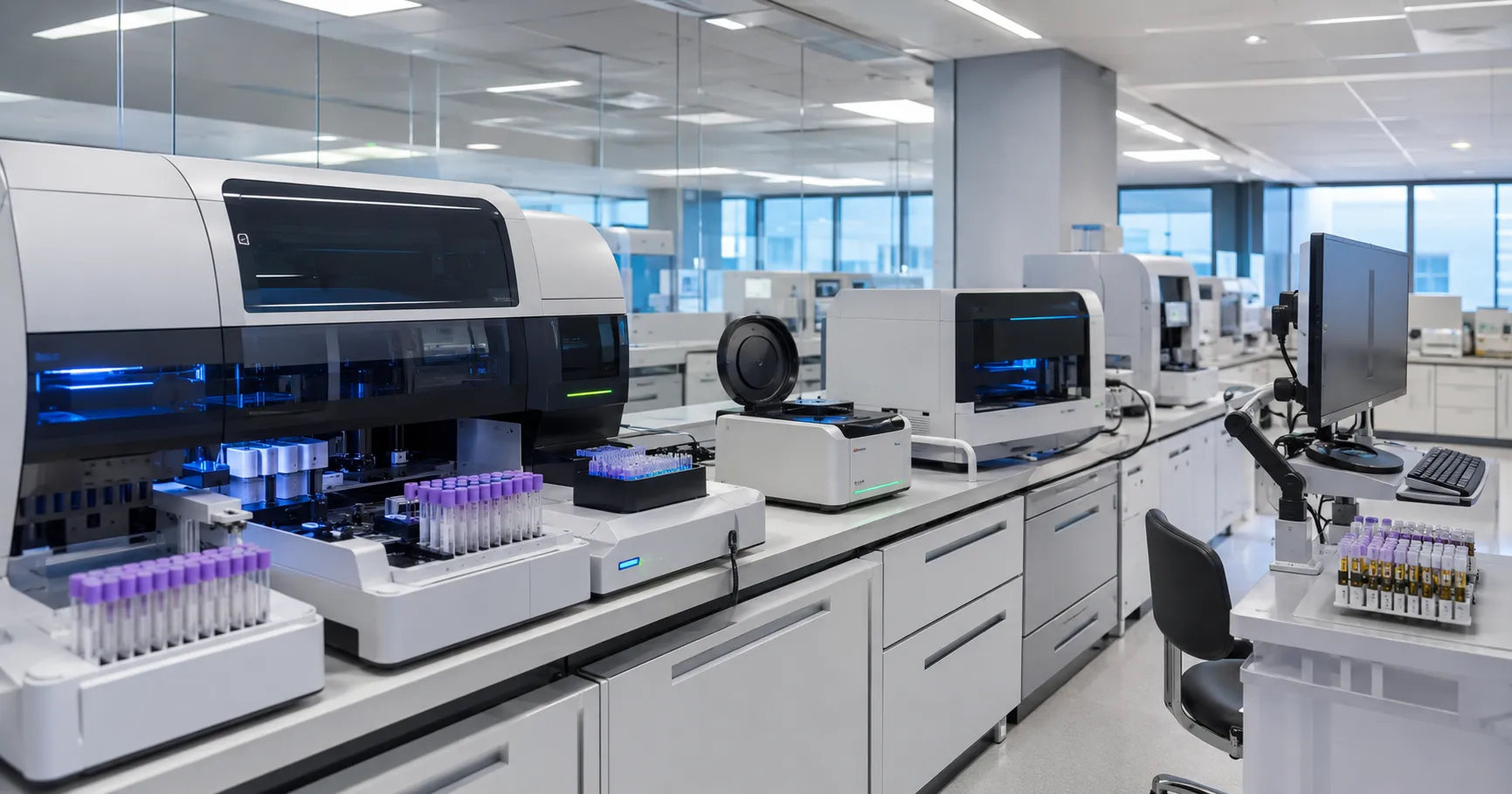
Examples include biochemistry analysers, haematology analysers, immunoassay systems, coagulation analysers, urinalysis devices, blood gas analysers, molecular diagnostic systems, pathology scanners, sample processors, barcode readers, and connected refrigerators.
A connected device should help laboratory teams reduce manual work, improve data accuracy, track samples, review results faster, and maintain stronger records.
Why Laboratory Connectivity Matters
Laboratory workflow can become slow when results are written manually, samples are not tracked properly, analyser data is disconnected, quality-control records are scattered, or maintenance logs are incomplete.
Connected laboratory devices can help hospitals:
-
Reduce repeated manual entry
-
Improve sample traceability
-
Support faster result transfer
-
Organise quality-control data
-
Track analyser performance
-
Improve maintenance records
-
Reduce reporting delays
-
Support audit readiness
-
Improve procurement decisions
WHO’s laboratory quality management system handbook covers essential topics for quality management in public health and clinical laboratories, showing why organised laboratory processes, records, and quality systems matter.
Key Connected Laboratory Equipment
Connected laboratory workflow may involve several equipment categories.
Biochemistry Analysers — These systems may support automated result transfer, reagent tracking, quality-control records, and LIS connection.
Haematology Analysers — Connected haematology devices can support sample identification, result review, flagging, and reporting workflows.
Immunoassay Systems — These may connect with laboratory software for test management, quality records, and result review.
Blood Gas Analysers — Point-of-care and laboratory blood gas systems may enable rapid data transfer and device-record visibility.
Molecular Diagnostic Devices — Connected molecular systems may support sample tracking, run records, and digital result management.
Digital Pathology Tools — Slide scanners and pathology workstations may support image storage, review, and reporting workflows.
Laboratory Refrigerators and Storage Systems — Connected cold storage may support temperature records, alarms, and inventory visibility.
Facilities sourcing through regulated and certified equipment suppliers worldwide should confirm device specifications, connectivity options, LIS compatibility, warranty, service support, spare parts, consumables, and documentation before procurement.
Sample Tracking and Barcode Workflow
Barcode systems and sample-tracking tools help laboratories reduce confusion among samples, test orders, analyser runs, and results. Connected devices can support a cleaner workflow when sample identity, test order, analyser status, and reporting data move through controlled systems.
Buyers should review:
-
Barcode compatibility
-
Sample ID workflow
-
Test order transfer
-
Result matching
-
Manual override rules
-
Audit logs
-
Error handling
-
Data correction process
-
Downtime workflow
-
Staff training needs
Sample tracking should be simple, reliable, and matched to the laboratory’s real workload.
LIS Integration and Data Flow
Laboratory information system integration is one of the main reasons hospitals choose connected laboratory devices. The FDA defines medical device interoperability as the ability to safely, securely, and effectively exchange and use information among devices, products, technologies, or systems.
Buyers should check whether connected laboratory devices can exchange data with:
-
Laboratory information systems
-
Hospital information systems
-
Middleware
-
Quality-control platforms
-
Reporting software
-
Asset management systems
-
Maintenance dashboards
-
Cloud review tools
-
Important questions include:
-
Can results transfer automatically?
-
Can the device receive test orders?
-
How is sample identity matched?
-
Can quality-control records be exported?
-
Can analyser flags be reviewed?
-
What happens during downtime?
-
Who controls software updates?
Interoperability should reduce manual work and improve accuracy, not create extra data gaps.
Quality Control and Calibration Records
Connected laboratory devices can support stronger quality-control and calibration records. Digital records help laboratory managers review analyser performance, reagent issues, repeated errors, test trends, and service needs.
Useful records may include:
-
Quality-control results
-
Calibration dates
-
Control lot numbers
-
Reagent lot details
-
Run history
-
Error logs
-
Maintenance notes
-
Engineer reports
-
Downtime records
-
Software version details
These records help laboratories prepare for internal review, external audit, supplier discussions, and equipment replacement planning.
Cybersecurity for Connected Laboratory Devices
Connected laboratory devices may use software, networks, user accounts, remote service, cloud dashboards, middleware, and patient or sample data. Cybersecurity should be reviewed before installation.
Procurement teams should ask suppliers about:
-
Access control
-
User permissions
-
Software update policy
-
Patch support
-
Remote service rules
-
Encryption
-
Audit logs
-
Data storage
-
Backup process
-
End-of-life data removal
Connected laboratory systems should be protected because diagnostic data, analyser access, and workflow continuity are important for hospital operations.
Maintenance and Biomedical Planning
Connected laboratory devices require preventive maintenance, calibration where required, software support, reagent system checks, temperature checks, sensor inspections, service logs, and spare parts planning. WHO medical equipment maintenance guidance explains that maintenance strategies include inspection, preventive maintenance, and corrective maintenance, and that preventive maintenance helps extend equipment life and reduce failure rates.
Maintenance planning should include:
-
Preventive maintenance schedules
-
Calibration requirements
-
Reagent system review
-
Sensor and probe checks
-
Error log review
-
Software updates
-
Barcode reader checks
-
LIS connection review
-
Service report storage
-
Spare part planning
Biomedical teams, laboratory managers, IT teams, and suppliers should work together because connected laboratory issues may involve hardware, software, network settings, consumables, or service support.
Procurement Guidance for Connected Laboratory Devices
Procurement should involve laboratory managers, pathologists, technicians, biomedical engineers, IT teams, cybersecurity staff, finance teams, compliance leaders, and procurement managers.
Define the Workflow Need — Buyers should know whether the goal is faster transfer of results, sample tracking, quality-control reporting, analyser automation, or multi-site laboratory visibility.
Review Total Cost of Ownership — Include equipment price, reagents, controls, calibrators, consumables, accessories, software, licences, service contracts, training, maintenance, and downtime.
Check Supplier Transparency — Suppliers and manufacturers advertising to global healthcare buyers should provide specifications, LIS interface details, cybersecurity documents, warranty terms, service support, consumable requirements, and compliance files.
Pilot Before Scaling — Hospitals should test connectivity, barcode workflow, result transfer, staff usability, downtime process, and service response before wider rollout.
Common Mistakes to Avoid
Hospitals should avoid these mistakes when buying connected laboratory devices.
Buying Without LIS Review — Connectivity should match the laboratory information system and reporting workflow.
Ignoring Consumable Costs — Reagents, controls, calibrators, cartridges, tips, and sample cups can affect long-term cost.
Skipping Cybersecurity Review — Connected analysers need access control, update planning, and remote service rules.
No Downtime Plan — Laboratories should know how testing continues if connectivity fails.
Weak Quality-Control Records — Digital workflow should support accurate QC and calibration documentation.
No Staff Training — Technicians should understand both device operation and digital workflow.
Ignoring Service Support — Connected devices require reliable technical support and spare parts.
International Sourcing Considerations
Connected laboratory devices can be sourced internationally when buyers clearly define the test menu, sample volume, analyser type, LIS requirements, data workflow, consumables, calibration needs, warranty, spare parts, service access, cybersecurity expectations, and compliance documentation.
Healthcare groups managing several laboratories may benefit from structured distribution and reseller partnership arrangements. Standardising analyser platforms, LIS interfaces, reagent systems, service records, quality-control workflows, and supplier requirements can reduce variation across facilities.
Buyers should confirm whether they need biochemistry analysers, haematology analysers, immunoassay systems, blood gas analysers, molecular diagnostic systems, pathology tools, laboratory refrigerators, barcode systems, or fully connected laboratory packages. For project-based sourcing, buyers can contact the Medigear.uk team for supply support to discuss availability, documentation, export needs, and procurement requirements.
Future Role of Connected Laboratory Devices
Connected laboratory devices will continue to support faster diagnostic workflows, better data visibility, automation, quality control, remote service, digital records, and multi-site laboratory management.
The strongest laboratory strategies will combine reliable analysers, clean sample tracking, LIS compatibility, cybersecurity planning, preventive maintenance, staff training, supplier transparency, and total cost review.
Connected laboratory equipment should make the diagnostic workflow more organised, not more complicated.
Final Thoughts
Connected laboratory devices help hospitals improve diagnostic workflow, sample tracking, analyser data visibility, quality-control records, maintenance planning, and reporting efficiency. They are useful for laboratories that need faster movement of results, stronger records, better traceability, and clearer equipment performance data.
Healthcare buyers should review the test menu, sample volume, LIS compatibility, consumables, service support, cybersecurity, calibration, maintenance, documentation, and total cost before ordering. The right connected laboratory strategy should support reliable diagnostics, not add unnecessary digital complexity.
Disclaimer
Medigear.uk is a global medical equipment supplier, exporter, and distributor. The content published on this site is intended for educational and product awareness purposes only. Nothing on this page constitutes medical advice, clinical guidance, diagnostic advice, laboratory practice advice, cybersecurity advice, procurement consulting, legal advice, regulatory advice, or treatment recommendations. All healthcare procurement, laboratory, diagnostic, technology, facility, legal, regulatory, and clinical decisions should be made by qualified professionals and compliant procurement teams operating within the regulatory frameworks of their respective countries.