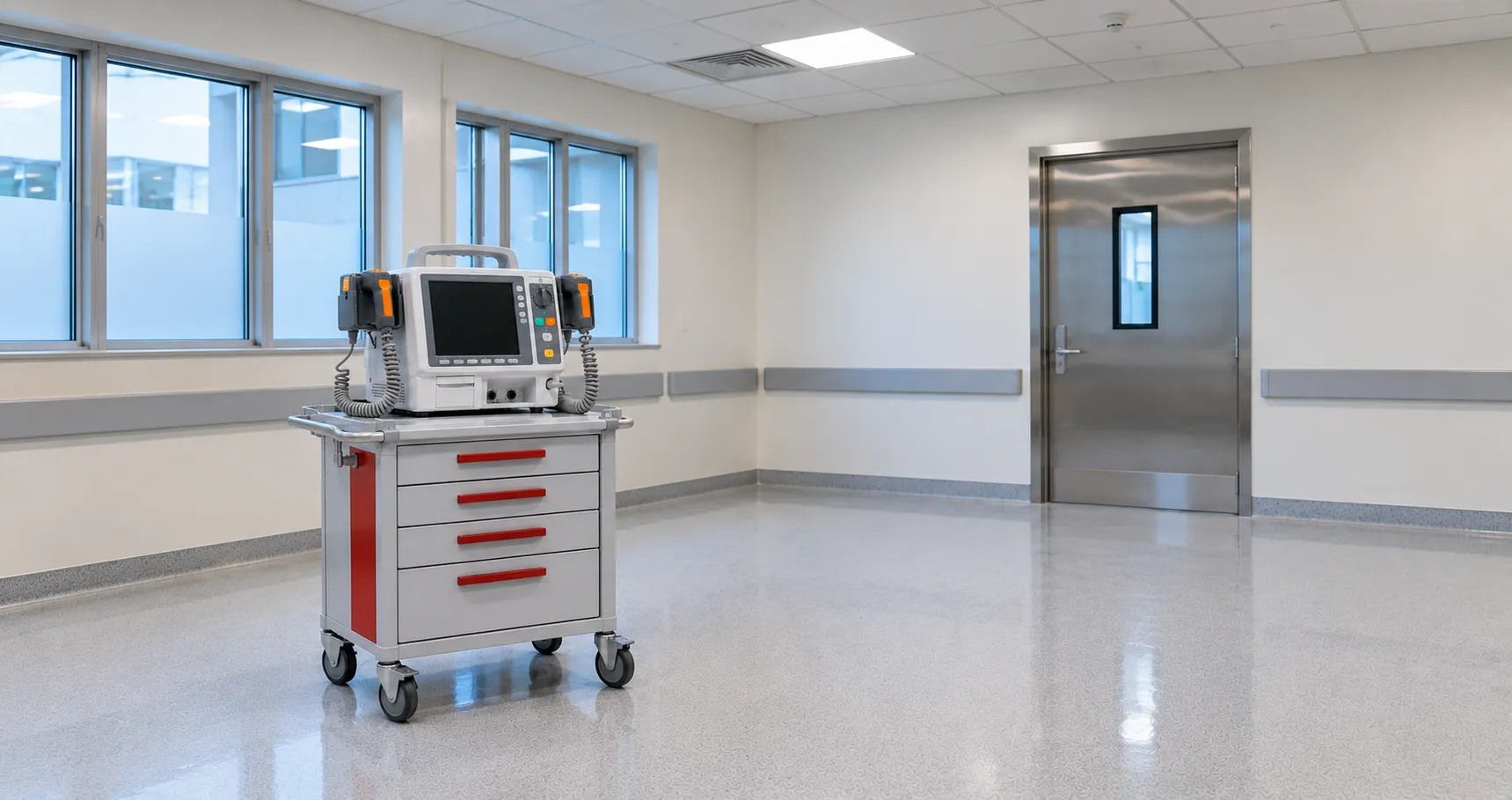
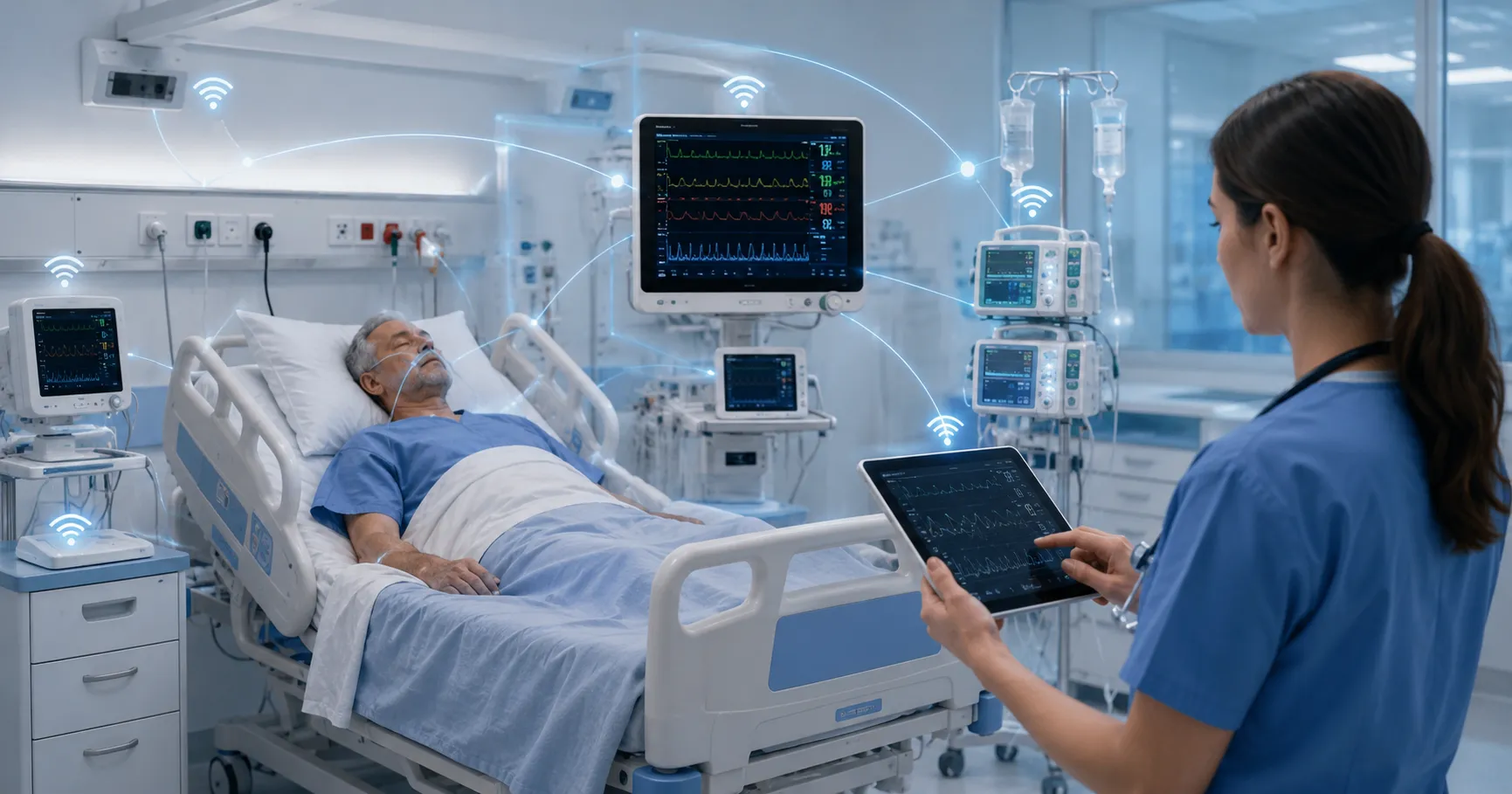
A connected patient monitoring system helps hospitals collect, display, share, and manage patient data from bedside monitors, wearable sensors, central monitoring stations, remote dashboards, and clinical systems. These systems are commonly used in ICUs, emergency departments, wards, recovery areas, operating rooms, step-down units, and specialist care areas where patient observation and timely response are important.
For healthcare buyers, connected patient monitoring systems should be evaluated as both medical equipment and digital infrastructure. The FDA describes digital health technologies as systems that use computing platforms, connectivity, software, and sensors for healthcare and related uses, which closely matches how connected monitoring systems operate in hospitals.
What a Connected Patient Monitoring System Means
A connected patient monitoring system links patient monitors, sensors, alarm tools, network infrastructure, central stations, and sometimes electronic medical record systems. Instead of readings remaining only at the bedside, selected data may be visible to authorised staff through nurse stations, central dashboards, remote review tools, or clinical documentation platforms.
The system may monitor heart rate, ECG, oxygen saturation, non-invasive blood pressure, invasive pressure, temperature, respiratory rate, end-tidal carbon dioxide, and other parameters depending on the device configuration. In critical care areas, connected monitoring can help teams review patient trends, detect changes, and coordinate care more efficiently.
A connected monitoring system is not only about collecting more data. Its value depends on how well the data supports clinical workflow, alarm response, documentation, patient safety processes, biomedical maintenance, and staff communication.
How Connected Monitoring Supports Hospitals
Connected patient monitoring systems support hospitals by improving visibility across clinical areas. They can help teams view patient status, device alerts, alarm conditions, and trends from a central location.
Continuous Patient Observation — Connected monitors allow healthcare teams to view selected patient parameters continuously or at defined intervals. This is especially useful in ICUs, emergency departments, recovery areas, and high-dependency units.
Central Station Visibility — A central monitoring station can display multiple patients simultaneously. This helps staff review trends and alarms across beds, but it should not replace direct bedside assessment.
Alarm Management — Connected systems may generate alarms for changes in patient parameters, lead disconnection, sensor failure, battery issues, or technical faults. Alarm policies should be carefully configured to reduce unnecessary noise.
Clinical Workflow Support — Connected monitoring can reduce repeated manual recording when data flows correctly into approved systems. This can support faster review and more organised documentation.
Biomedical Equipment Visibility — Some systems provide device status, service alerts, battery information, connection status, and fault logs. This supports equipment management and maintenance planning.
Where Connected Patient Monitoring Systems Are Used
Connected patient monitoring systems are used across different hospital departments depending on patient risk and workflow needs.
Intensive Care Units (ICUs) commonly require advanced bedside monitors, central monitoring stations, ventilator integration, infusion visibility, alarm review, and robust uptime planning.
Emergency Departments — Emergency areas use connected monitoring for triage, resuscitation, observation bays, and for unstable patients awaiting transfer.
Operating Rooms and Recovery Areas — Surgical and post-anaesthesia areas use monitoring systems to track patient status before, during, and after procedures.
High-Dependency and Step-Down Units — These units may use connected monitoring for patients who need closer observation than standard wards but may not require full ICU-level care.
General Wards — Some hospitals use wireless or connected vital-signs systems on wards to support early-warning workflows and improve trend review.
Specialist Departments — Cardiology, respiratory care, dialysis, neonatal units, paediatric departments, and procedure areas may use department-specific monitoring configurations.
Facilities sourcing through regulated and certified equipment suppliers worldwide should confirm intended use, supported parameters, accessory compatibility, documentation, service support, training, and compliance requirements before procurement.
Main Components of a Connected Patient Monitoring System
A connected monitoring system includes several parts. Buyers should review the complete system, not only the bedside monitor.
Bedside Patient Monitors — These display patient parameters and alarms near the patient. They may support ECG, SpO2, blood pressure, temperature, respiration, CO2, and other modules.
Central Monitoring Station — This allows staff to view multiple patient monitors from a central location. It may display waveforms, trends, alarms, and patient identification details.
Wireless or Wearable Sensors — Some systems include wireless sensors or wearable devices for selected monitoring needs. These may be useful in step-down units, wards, and remote observation programmes.
Network Infrastructure — Connected monitoring requires reliable network support. Buyers should check wired, wireless, server, gateway, and backup requirements.
Alarm Management Tools — These tools help route, prioritise, display, and manage alarms. Alarm fatigue can become a major issue if alerts are poorly configured.
Data Storage and Reporting — Some systems store trend data, alarm history, device logs, and reports. Buyers should understand storage limits, access rules, and export options.
Integration Interfaces — The system may need to connect with electronic records, nurse call platforms, hospital information systems, or biomedical equipment systems.
Common Patient Parameters Monitored
Connected monitoring systems may support different parameters depending on the device and clinical area.
ECG and Heart Rate — ECG monitoring supports rhythm observation and heart rate tracking in critical and high-risk patients.
Oxygen Saturation — SpO2 monitoring helps staff track oxygenation trends and respond to sensor-related alerts.
Blood Pressure — Systems may support non-invasive blood pressure and, in some cases, invasive pressure monitoring.
Respiratory Rate — Respiratory monitoring helps review breathing patterns and patient status.
Temperature — Temperature monitoring may be useful in critical care, surgical recovery, neonatal care, and infection monitoring workflows.
End-Tidal Carbon Dioxide (EtCO2) monitoring may be used in anaesthesia, emergency care, respiratory care, and selected critical care settings.
Advanced Parameters — Some systems may support cardiac output, gas analysis, depth of anaesthesia, neonatal parameters, or specialised modules depending on clinical need.
Benefits of Connected Patient Monitoring Systems
Connected monitoring systems can support better hospital workflow when selected and implemented properly.
Better Clinical Visibility — Centralised views help staff review multiple patients and recognise changes more efficiently.
Faster Alarm Awareness — Connected systems can route alarms to central stations or authorised devices, helping staff become aware of selected changes sooner.
Reduced Manual Documentation — When systems are properly integrated, selected readings may flow into approved documentation platforms, reducing the need for repeated manual entry.
Improved Trend Review — Trend data can help clinicians track patient changes over time rather than relying solely on isolated readings.
Better Equipment Utilisation — Device status and usage information can help hospitals manage, monitor availability, and service needs.
Support for Multi-Department Coordination — Connected monitoring can help ICUs, emergency departments, wards, and biomedical teams work with more consistent information.
Alarm Management in Connected Monitoring
Alarm management is one of the most important parts of connected patient monitoring. A system that creates too many unnecessary alarms can overwhelm staff and reduce response quality.
Alarm Threshold Planning — Alarm limits should match patient condition, department policy, and clinical workflow. Default alarm settings may not be suitable for every department.
False Alarm Reduction — Poor sensor contact, loose leads, movement, weak signal quality, or unsuitable settings can create false alarms.
Escalation Rules — Hospitals should define who receives alarms, how alarms are prioritised, and when alarms must be escalated.
Technical Alarm Review — Not all alarms are clinical. Some are caused by sensor failure, low battery, disconnection, network issues, or device faults.
Training for Alarm Response — Staff should know how to respond to alarms, silence alarms appropriately, check sensor placement, and report repeated technical issues.
Interoperability and Data Flow
Interoperability is essential because connected patient monitoring systems often need to exchange data with other devices and hospital systems FDA defines medical device interoperability as the ability to safely, securely, and effectively exchange and use information among devices, products, technologies, or systems.
Electronic Record Integration — Some hospitals may want monitoring data to flow into electronic medical records. Buyers should confirm integration options before purchase.
Nurse Call System Connectivity — Alarm routing may involve nurse call systems, mobile devices, or central dashboards.
Ventilator and Infusion Integration — ICU monitoring platforms may support selected data from ventilators, infusion pumps, or other bedside devices.
Correct Patient Matching — Data must be linked to the correct patient. Incorrect patient matching can create documentation and clinical risks.
Downtime Workflow — Hospitals should define how monitoring continues if connectivity, servers, wireless networks, or central stations fail.
Cybersecurity and Data Security
Connected patient monitoring systems may use hospital networks, wireless communication, servers, remote access, software updates, and patient data. This makes cybersecurity planning essential. FDA cybersecurity guidance provides recommendations on medical device cybersecurity considerations and what information to include in premarket submissions.
Access Control — Hospitals should define who can view patient data, change alarm settings, update software, export reports, and approve remote service access.
Secure Data Transmission — Buyers should ask whether patient data and device data are encrypted during transfer and storage.
Remote Service Management — Supplier remote access can support troubleshooting, but access should be approved, logged, time-limited, and controlled.
Software Update Control — Monitoring systems may need firmware, software, server, or cybersecurity updates. Updates should be carefully documented and planned.
Network Segmentation — IT teams should review connected patient monitors to reduce unnecessary exposure to broader hospital networks.
Audit Logs — A strong system should record user access, setting changes, alarm actions, and system updates where relevant.
Procurement Guidance for Connected Patient Monitoring Systems
Procurement of connected monitoring systems should include doctors, nurses, ICU leaders, biomedical engineers, IT teams, cybersecurity staff, finance teams, compliance teams, and procurement managers.
Clinical Requirement Review — The hospital should define patient groups, department needs, supported parameters, bed count, alarm model, central station needs, and integration expectations.
Total Cost of Ownership — Buyers should include the cost of monitors, modules, cables, sensors, cuffs, probes, central stations, software licences, servers, network upgrades, installation, training, maintenance, spare parts, and service contracts.
Supplier Transparency — Suppliers and manufacturers advertising to global healthcare buyers should provide specifications, supported parameters, accessory lists, software details, cybersecurity documentation, warranty terms, maintenance requirements, and training support.
Compliance Documentation — Buyers should request conformity documents, product registrations where relevant, user manuals, service information, cleaning instructions, calibration requirements, software version details, and warranty terms.
Demo and Pilot Testing — Hospitals should test and monitor usability, alarm behaviour, waveform quality, screen visibility, battery life, connectivity, integration, and staff feedback before bulk procurement.
Healthcare groups managing several hospitals may benefit from structured distribution and reseller partnership arrangements. Standardising monitoring systems, accessories, training, service contracts, and maintenance workflows can reduce variation across sites.
Key Questions Buyers Should Ask Suppliers
Connected monitoring systems require a detailed supplier review.
Which patient groups are supported? — Adult, paediatric, and neonatal monitoring may require different modules, sensors, cuffs, and alarm settings.
Which parameters are included? — Buyers should confirm standard and optional parameters before ordering.
How many beds can the central station support? — Capacity should match current and future hospital planning.
What accessories are required? — ECG cables, SpO2 probes, NIBP cuffs, temperature probes, pressure transducers, batteries, mounts, and modules should be reviewed.
What systems can it connect with? — Suppliers should confirm compatibility with EMR, HIS, nurse call, central monitoring, and biomedical systems.
What happens during downtime? — The hospital should understand how monitoring continues during network, power, or server failure.
How long are spare parts and software supported? — Long-term support is important for critical hospital equipment.
Maintenance and Biomedical Engineering Planning
Connected patient monitoring systems need regular maintenance to support reliability. WHO maintenance guidance explains that a maintenance strategy includes inspection, preventive maintenance, and corrective maintenance, with preventive maintenance aimed at extending equipment life and reducing failure rates.
Preventive Maintenance — Monitors, modules, central stations, batteries, mounts, cables, and accessories should follow manufacturer maintenance schedules.
Calibration and Verification — Some monitoring parameters may require accuracy checks or calibration in accordance with manufacturer guidance and facility policy.
Accessory Management — ECG leads, SpO2 probes, cuffs, cables, batteries, chargers, and modules should be stocked and inspected regularly.
Battery Checks — Mobile monitors and transport monitors depend on reliable batteries. Weak batteries can affect patient transfer and emergency workflows.
Software Version Control — Biomedical and IT teams should record software versions, updates, server changes, and configuration changes.
Service Records — Maintenance reports, downtime records, fault logs, calibration certificates, and warranty claims should be organised for audit readiness.
Staff Training and Workflow Adoption
Connected patient monitoring systems only work well when staff understand both the device and the workflow.
Clinical User Training — Nurses and doctors should understand parameter setup, alarm limits, sensor placement, trend review, transport use, and escalation steps.
Biomedical Training — Biomedical engineers should understand maintenance, troubleshooting, module replacement, calibration requirements, and service records.
IT Training — IT teams should understand network requirements, server support, access control, cybersecurity, and integration points.
Alarm Training — Staff should know which alarms require immediate action, which are technical alerts, and how to manage repeated false alarms.
Refresher Training — Training should continue after installation because staff changes, software updates, and workflow changes can affect safe use.
Common Planning Mistakes to Avoid
Hospitals should avoid these common mistakes when purchasing connected monitoring systems.
Buying Without Workflow Mapping — The system should align with departmental workflows, patient risk, staffing levels, and alarm response processes.
Ignoring Accessories — Missing cables, probes, cuffs, batteries, modules, or mounts can delay clinical use.
Skipping Cybersecurity Review — Connected systems must be reviewed before network deployment.
Poor Alarm Configuration — Too many alarms can overwhelm staff and reduce attention to important events.
No Downtime Plan — Hospitals must know how care continues when central stations, networks, or servers fail.
Weak Maintenance Planning — Monitoring systems need preventive maintenance, spare parts, and software support.
Not Checking Expansion Needs — Bed capacity, future departments, additional modules, and integration needs should be considered before purchase.
International Sourcing Considerations
Connected patient monitoring systems can be sourced internationally when buyers clearly define department type, bed count, patient group, required parameters, central station capacity, network needs, accessory requirements, power specifications, language requirements, warranty, service support, cybersecurity expectations, and compliance documentation.
Buyers should confirm whether they need ICU monitors, ward monitors, transport monitors, central stations, wearable monitoring devices, telemetry systems, alarm platforms, remote monitoring dashboards, or complete patient monitoring packages. For project-based sourcing, buyers can contact the Medigear.uk team for supply support to discuss availability, documentation, export needs, and procurement requirements.
Future Role of Connected Patient Monitoring in Hospitals
Connected patient monitoring systems will continue to support hospitals as healthcare becomes more digital, data-driven, and coordinated. Their future value will depend on interoperability, cybersecurity, alarm quality, usability, maintenance support, and clinical workflow design.
Hospitals should focus on systems that solve real problems: poor visibility, delayed response, manual documentation, disconnected devices, repeated equipment faults, and limited trend review. Connected monitoring should support clinical teams without overwhelming them with unnecessary alerts or difficult dashboards.
When selected carefully, connected patient monitoring systems can help hospitals improve patient visibility, staff coordination, alarm review, equipment management, and long-term care delivery planning.
Final Thoughts
Connected patient monitoring systems help hospitals improve patient visibility, alarm awareness, clinical coordination, trend review, and equipment management. They are especially important in ICUs, emergency departments, recovery areas, high-dependency units, and wards where timely information supports clinical workflow.
The right monitoring system should align with the patient group, departmental needs, supported parameters, alarm strategy, network infrastructure, cybersecurity policy, maintenance capacity, staff training, and local compliance standards. Buyers should review documentation, total cost of ownership, accessories, service support, software lifecycle, and supplier reliability before ordering.
Disclaimer
Medigear.uk is a global medical equipment supplier, exporter, and distributor. The content published on this site is intended for educational and product awareness purposes only. Nothing on this page constitutes medical advice, clinical guidance, cybersecurity advice, legal advice, data protection advice, or treatment recommendations. All healthcare procurement, technology, legal, data, and clinical decisions should be made by qualified professionals and compliant procurement teams operating within the regulatory frameworks of their respective countries.