If you are sourcing equipment for your clinic, managing recovery at home, or supporting patients with circulation issues, understanding compression therapy is essential. This widely used clinical approach helps millions of people across the UK manage conditions linked to poor blood flow, swelling, and venous disease. From compression stockings and pneumatic pumps to multi-layer wraps, each device plays a distinct role in keeping patients comfortable, mobile, and protected from serious complications like deep vein thrombosis and chronic venous insufficiency.
This complete guide walks you through how compression therapy works, the main types of devices available, their clinical uses, safety principles, and smart buying insights for clinics and home users alike. Medigear brings together years of experience supplying certified compression therapy equipment to help you make confident, well-informed choices.
What Is Compression Therapy
Compression therapy is a non-invasive treatment that applies controlled external pressure to the limbs to improve circulation, reduce swelling, and support healing. The pressure gently squeezes veins and lymphatic vessels, helping blood and fluid return toward the heart more efficiently. This simple yet powerful mechanism supports recovery, prevents complications, and improves quality of life for patients of every age.
Compression therapy has become one of the most trusted and cost-effective treatments in modern vascular medicine. It reduces hospital admissions, prevents recurrence of venous leg ulcers, lowers the risk of life-threatening clots, and keeps patients mobile and independent for longer. The global shift toward home-based care has only made compression therapy more relevant, with lightweight, easy-to-use devices now available for virtually every clinical indication and lifestyle.
How Compression Therapy Works
The therapy works on well-established medical principles. Graduated pressure — tightest at the ankle and lighter higher up — encourages upward blood flow and prevents pooling. Intermittent pneumatic pressure from compression pumps mimics muscle action, stimulating circulation in immobile patients. Multi-layer wraps deliver sustained therapeutic pressure for wound healing and long-term venous support. Together, these modalities form the backbone of modern vascular care across hospitals, clinics, and home settings.
The science behind compression therapy is well established and widely supported. When external pressure is applied to a limb, it reduces the diameter of surface and deep veins, increases blood flow velocity, and prevents valve reflux. This movement of blood reduces stagnation, prevents clot formation, and supports the return of fluid that causes visible swelling. In lymphoedema, compression aids the clearance of protein-rich fluid that the damaged lymphatic system cannot clear on its own, reducing limb volume and improving tissue health over time.
Clinical Uses and Applications
Compression therapy serves a remarkably wide clinical role across many healthcare environments. Common uses include preventing deep vein thrombosis in post-surgical and immobile patients, managing chronic venous insufficiency, treating varicose veins, reducing lymphoedema swelling, supporting healing of venous leg ulcers, easing post-thrombotic syndrome, improving circulation during long flights, and aiding recovery after orthopaedic procedures. Each application has specific pressure requirements and device recommendations.
Compression Stockings Explained
Compression stockings are the most widely used form of compression therapy. These specially engineered garments apply graduated pressure to the legs, supporting venous return and reducing swelling throughout the day. They come in several classes based on pressure levels, from mild Class 1 support for tired legs to Class 3 stockings for severe venous disease and lymphoedema management. Available in knee-high, thigh-high, and pantyhose styles, they fit into daily life easily once sized correctly.
Pneumatic Compression Pumps
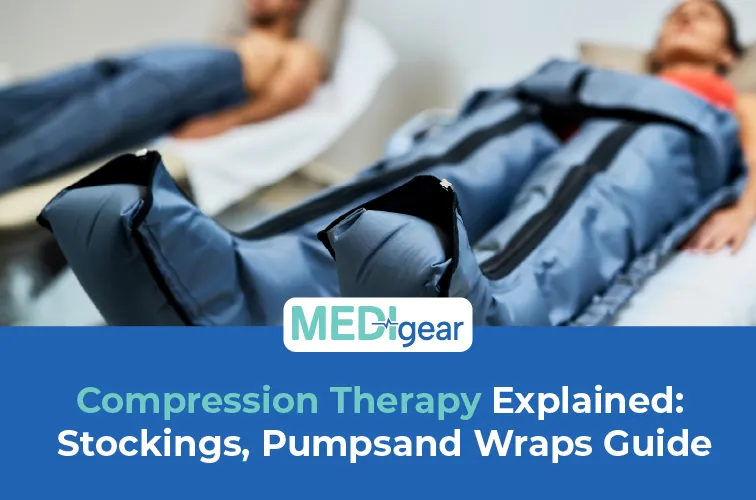
Pneumatic compression pumps deliver intermittent pressure through inflatable sleeves wrapped around the limbs. A small electric unit inflates and deflates the sleeves in programmed cycles, massaging the tissue and stimulating blood and lymphatic flow. These devices are highly effective for lymphoedema, chronic venous insufficiency, and post-surgical recovery. Home-use models are compact, quiet, and simple to operate, while clinical models offer advanced programming for specialist care.
Compression Wraps and Bandaging
Compression wraps provide adjustable, sustained pressure through overlapping elastic or inelastic layers. Multi-layer bandaging systems remain the gold standard for venous leg ulcer treatment, delivering therapeutic pressure that holds firm during activity and rest. Modern adjustable wraps with velcro closures offer similar benefits with far greater convenience — patients can tighten, loosen, or remove them easily without professional help, significantly improving compliance and outcomes.
Key Features to Look For
Before purchasing, it is important to consider features that genuinely affect comfort, effectiveness, and long-term use. Look for the correct pressure classification for the clinical indication, accurate sizing based on limb measurements, breathable, moisture-wicking fabrics, reinforced heel and toe areas on stockings, quiet motor operation on pumps, a clear pressure display on electronic devices, durable velcro or hook closures on wraps, and full CE marking with MHRA compliance.
Benefits of Compression Therapy
A well-chosen compression therapy device improves circulation, reduces swelling, prevents serious vascular complications, and helps patients stay active and comfortable. For clinics, offering compression therapy expands the range of in-house services, supports post-surgical protocols, and improves overall patient outcomes. If you are unsure which device suits your clinical environment or personal needs, you can contact our equipment specialists for tailored product guidance.
Clinics that invest in compression therapy often take the same principled approach across their wider equipment portfolio. Our complete buyer's guide to ECG machines for clinics applies similar certification and procurement principles to diagnostic equipment, while our guide to infusion pumps covering types, uses, and safety tips explains how accurate fluid and medication delivery complements every rehabilitation pathway.
Compression Therapy vs Alternative Treatments
Comparing compression therapy with alternative treatments helps clinicians and patients make informed choices. While surgical interventions address the underlying cause of venous disease, compression therapy remains the conservative first-line option for most patients — safe, affordable, and effective when properly prescribed. Pharmacological options such as diuretics reduce swelling but do not address the underlying circulatory issue. Elevation and exercise help, but cannot match the sustained therapeutic pressure that compression devices provide throughout daily activity.
Latest Innovations in Compression Therapy
Latest innovations in compression therapy include smart adjustable wraps with integrated pressure sensors, app-connected pneumatic pumps that track therapy compliance, breathable antimicrobial fabrics that improve skin health, and silicone-topped stockings that stay in place without constant adjustment. These advances make compression therapy easier to use, more comfortable to wear, and more effective across longer treatment durations — a welcome shift for both clinicians and patients managing long-term vascular care.
Complete Compression Therapy Buying Guide
One common mistake buyers make is choosing compression therapy products without professional measurement or pressure assessment. Always consult a clinician before starting therapy, especially for moderate or high-compression products. Accurate limb measurements, pressure class selection, and proper fit determine whether the therapy is effective or causes discomfort. Invest in certified brands with proven clinical track records and dependable after-sales support from your supplier.
Different conditions call for different devices. A post-surgical patient who is at risk of clots needs something very different from a lymphoedema patient managing chronic swelling, or a district nurse treating a venous leg ulcer at home. Choosing the right modality — stocking, pump, or wrap — depends on the clinical indication, the patient's mobility, dexterity, skin condition, and the duration of therapy required. A trusted supplier like Medigear helps match the right device to each scenario, avoiding wasted budget and poor outcomes.
Patients recovering after surgery often benefit from combined support — compression alongside other recovery tools. Our guide to essential medical equipment for post-surgery home recovery covers complementary devices that work well with compression therapy, creating a complete home recovery setup. For patients also managing pain, our complete guide to TENS units for safe pain relief at home explores drug-free pain management that pairs naturally with compression protocols.
Safety Tips for Compression Therapy
Compression therapy devices must be used safely to avoid skin damage, nerve compression, or circulation problems. Always measure limbs accurately before fitting stockings or sleeves, remove devices overnight unless clinically directed otherwise, check skin daily for redness or pressure marks, never use on severe arterial disease without specialist clearance, replace worn stockings every three to six months, and always follow the pressure class prescribed by the clinician. Proper usage makes the difference between therapeutic benefit and avoidable harm.
Training and correct application matter enormously in compression therapy. A perfectly engineered stocking applied incorrectly delivers the wrong pressure profile and fails to help. A pump used without proper skin inspection can damage fragile, older skin. A multi-layer wrap applied too tightly can harm tissue, and one applied too loosely does nothing at all. Every clinic using compression therapy should invest in thorough staff training and clear application protocols, and every home user should receive proper fitting and education before starting any treatment regimen.
Who Should Avoid Compression Therapy
Some conditions make compression therapy unsafe or require specialist supervision. Avoid compression in cases of severe peripheral arterial disease, acute deep vein thrombosis without anticoagulation, decompensated heart failure, severe infection or cellulitis in the treatment area, advanced diabetic neuropathy without assessment, and untreated skin conditions. Always consult a vascular specialist or GP before starting therapy if any of these conditions apply.
Compliance and Certifications
Always confirm CE marking, ISO 13485 manufacturing standards, and full MHRA compliance when purchasing compression therapy devices. These certifications protect patients, ensure consistent pressure accuracy, and guarantee the product meets UK safety and performance standards. Avoid uncertified imports and buy from trusted, established suppliers with clear product traceability and responsive support.
Why Choose Medigear for Compression Therapy
Medigear supplies certified, clinically trusted compression therapy devices backed by transparent pricing, dependable after-sales support, and genuine product expertise. Whether you are a clinic sourcing pumps for lymphoedema care, a GP surgery stocking compression stockings, or a patient managing recovery at home, our team helps you find the right device with complete confidence. Contact our team directly for a personalised recommendation and trusted guidance through every step of your purchase journey.
Conclusion
Compression therapy remains one of the most effective, accessible, and clinically proven treatments for circulation and swelling-related conditions. From graduated stockings and pneumatic pumps to multi-layer wraps, each device brings unique therapeutic benefits — but certification, proper fitting, and proper use must always guide every treatment decision. Medigear stands ready to support clinics, carers, and patients with trusted, certified compression therapy devices and the expert guidance needed for confident, safe, and effective care. Ready to upgrade your compression therapy toolkit? Speak to our specialists today and discover devices built for the future of vascular healthcare.