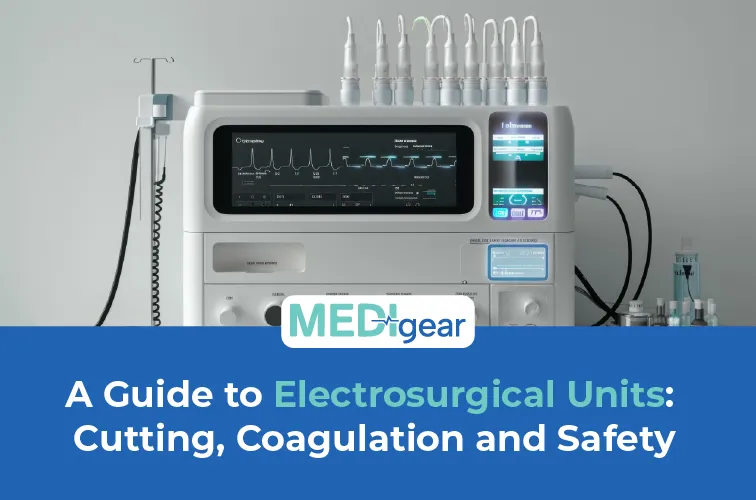
The first time a junior surgeon activates an electrosurgical unit in theatre, two things happen simultaneously — the tissue parts, and a healthy respect for electricity is born. There is something viscerally different about cutting with a current rather than steel. The blade does not move. The tissue responds. And somewhere between the hiss of vaporisation and the faint smell of coagulated protein, it becomes clear that this is a tool demanding respect long before it rewards proficiency.
Electrosurgical units sit in virtually every operating theatre, procedure room, and minor surgery clinic in the UK. They cut tissue, seal blood vessels, destroy lesions, and control bleeding with a precision that manual instruments struggle to match. Yet despite their ubiquity, electrosurgical units remain poorly understood by many clinicians who use them — and that knowledge gap leads to avoidable injuries, equipment damage, and procedural complications that better training and smarter equipment selection could prevent.
This guide explains electrosurgical units from the ground up — what they do, how they work, the difference between cutting and coagulation, the safety systems that protect patients and staff, and what clinics should look for before purchasing. Medigear supplies certified electrosurgical equipment to clinics and hospitals across the UK, and every recommendation here comes from real clinical experience rather than manufacturer brochures.
How Electrosurgery Works
Electrosurgery works by passing high-frequency alternating current through body tissue to produce thermal effects. Unlike household electricity — which stimulates nerves and muscles at low frequencies — electrosurgical current operates at frequencies above 200 kHz, generating heat within tissue without causing neuromuscular stimulation. The tissue itself becomes the resistor. Current flows from the active electrode through the tissue and returns to the generator via the return electrode, completing the circuit. The biological effect — cutting, coagulation, or desiccation — depends entirely on the waveform, power setting, electrode shape, and tissue contact.
Cutting Mode
Cutting mode uses a continuous sinusoidal waveform that rapidly heats cells at the electrode tip until they vaporise. The result is a clean incision with minimal lateral thermal damage — similar to a scalpel cut but with simultaneous haemostasis at the wound edges. Pure cut mode produces the least collateral tissue damage but also the least coagulation effect. For procedures requiring clean, precise tissue division, pure cut delivers the sharpest result.
Coagulation Mode
Coagulation mode uses an interrupted waveform that delivers current in bursts rather than continuously. This produces slower, more diffuse heating that denatures proteins and seals blood vessels without vaporising tissue. The effect is haemostasis — the control of bleeding from small and medium-sized vessels during surgery. Coagulation mode creates more lateral thermal spread than cutting mode, which is why precise electrode placement and appropriate power settings matter enormously. Excessive coagulation damages adjacent tissue unnecessarily and delays healing.
Blend Modes
Blend modes combine cutting and coagulation waveforms in variable ratios — giving surgeons the ability to cut tissue while simultaneously achieving haemostasis at the incision margins. Most modern electrosurgical units offer multiple blend settings, typically ranging from predominantly cutting with minimal coagulation through to predominantly coagulation with minimal cutting. Choosing the right blend depends on tissue vascularity, surgical site, and the balance between precision and haemostatic control that each specific procedure demands.
Monopolar Electrosurgery
Monopolar electrosurgery is the most commonly used configuration. Current passes from a small active electrode at the surgical site through the patient's body to a large dispersive return electrode pad — usually placed on the patient's thigh or back. The concentrated current density at the active electrode produces the intended surgical effect, while the large surface area of the return pad disperses the returning current safely without thermal injury. Monopolar electrosurgery offers versatility and power but requires careful patient pad placement and monitoring to prevent burns at the return electrode site.
Bipolar Electrosurgery
Bipolar electrosurgery confines the current path between two closely spaced electrodes — typically the tines of a pair of forceps. Current flows only through the tissue grasped between the electrodes, eliminating the need for a dispersive return pad and dramatically reducing the risk of unintended current pathways through the patient's body. Bipolar electrosurgery is essential for procedures near sensitive structures — nerves, bowel, reproductive organs — where stray current could cause catastrophic collateral damage.
Patient Safety
Patient safety in electrosurgery revolves around understanding where current flows and what happens when it flows elsewhere. Return electrode burns — caused by poor pad contact, dried gel, or insufficient adhesive — remain one of the most common electrosurgical injuries. Modern units address this with return electrode monitoring systems that continuously measure pad impedance and shut down the generator instantly if contact quality drops below safe thresholds. Any clinic purchasing a new electrosurgical unit today should consider return electrode monitoring as a non-negotiable safety feature rather than an optional upgrade.
Coupling Hazards
Capacitive coupling and direct coupling represent more subtle electrosurgical hazards. Capacitive coupling occurs when current transfers between insulated instruments through electromagnetic induction — particularly dangerous during laparoscopic surgery, where metal cannulae can become unintended conductors. Direct coupling occurs when an active electrode accidentally contacts another metal instrument within the surgical field, redirecting current to unintended tissue. Training, awareness, and proper instrument insulation inspection prevent both, but they require understanding of the physics involved, not just muscle memory with the foot pedal.
Surgical Smoke
Surgical smoke generated during electrosurgery is an occupational hazard that operating theatre teams are increasingly taking seriously. The thermal destruction of tissue produces a plume containing cellular debris, potentially viable cells, chemical irritants, and viral particles. Long-term exposure without adequate smoke evacuation carries respiratory risks that theatres can no longer justify ignoring. Integrated smoke evacuation systems — either built into the electrosurgical unit or deployed as standalone devices — protect everyone in the room.
Electrode Selection
Electrode selection affects procedural outcomes more than many clinicians appreciate. Needle electrodes suit fine cutting and precision work. Ball electrodes provide efficient coagulation across broader tissue surfaces. Loop electrodes excel at excision — particularly in LLETZ and skin lesion removal. Blade electrodes mimic scalpel-style cutting for longer incisions. Matching the electrode to the task sounds obvious, but clinics that stock a limited range often compromise technique to fit available instruments rather than selecting the right tool for each procedure. A well-stocked electrode set costs relatively little and improves every procedure it supports.
Choosing the Right Unit
Choosing the right electrosurgical unit for a small clinic or surgery requires honest assessment of clinical need. A GP surgery performing skin lesion removals needs a fundamentally different unit from a day-case theatre running laparoscopic procedures. Key considerations include power output range, available waveform modes, monopolar and bipolar capability, return electrode monitoring, smoke evacuation options, footswitch design, and ease of cleaning. Overspending on theatre-grade equipment for minor procedures wastes budget. Underspending on safety features for complex procedures risks patient harm.
Compliance and Certifications
Always confirm CE marking, ISO 13485 manufacturing standards, and full MHRA compliance before purchasing any electrosurgical unit. Verify that the device meets current IEC 60601 electrical safety standards. Ask about warranty terms, servicing schedules, electrode compatibility, and technical support response times. Electrosurgical equipment carries inherent risks that certification and quality control exist specifically to mitigate — this is not a product category where cutting corners on compliance is acceptable.
For clinics building broader procedural capability, our complete guide to PCOS symptoms, risks, and diagnosis explains how diagnostic equipment supports the hormonal and metabolic investigations that often precede gynaecological procedures involving electrosurgery. And for practices managing imaging alongside surgical devices, our guide to portable X-ray machines for small clinics covers procurement principles and compliance frameworks that apply across all equipment categories in a procedural clinic.
Maintenance and Safety Testing
Maintenance and safety testing keep electrosurgical units performing reliably throughout their working life. Annual electrical safety testing, regular calibration of power output, routine inspection of cables, electrodes, and footswitches, and prompt replacement of worn components maintain both performance and safety. Documenting every test and service event creates an audit trail that satisfies regulatory requirements and protects your clinic in the event of an adverse incident.
Staff Training
Staff training on electrosurgical principles is not a one-hour induction — it is an ongoing clinical responsibility. Every clinician using an electrosurgical unit must understand waveform selection, power settings, electrode handling, patient pad placement, smoke evacuation, and emergency shutdown procedures. Competency-based training programmes with documented sign-off protect patients, staff, and the clinic's professional standing.
Latest Innovations
Electrosurgical technology continues to advance. Vessel-sealing systems that permanently seal arteries and veins up to seven millimetres in diameter are reducing the need for sutures and clips. Advanced electrosurgical energy platforms combine ultrasonic and bipolar technology in a single instrument. Intelligent power delivery systems automatically adjust output based on tissue impedance feedback. And smaller, more affordable units bring electrosurgical capability within reach of clinics that previously considered it a hospital-only technology.
Why Choose Medigear for Electrosurgical Equipment
Medigear supplies certified electrosurgical units and accessories to clinics and hospitals across the UK — backed by transparent pricing, honest technical guidance, and after-sales support that understands the safety-critical nature of this equipment category. Whether you are adding electrosurgery for the first time or upgrading from legacy equipment, our team matches the right unit to your procedural reality. Reach out to our team directly for guidance built around the surgery you actually perform — not the surgery a brochure imagines.
Conclusion
Electrosurgery is one of the most powerful and widely used tools in modern surgery — and one of the most poorly understood. The difference between safe, effective electrosurgical practice and avoidable complications comes down to three things — understanding the physics, respecting the safety systems, and investing in properly certified equipment maintained by people who know what they are doing. Medigear stands alongside clinics and theatres with certified electrosurgical units and the honest, expert support that safety-critical equipment demands. Speak to our team today for guidance that puts patient safety and procedural precision at the centre of every recommendation.
DISCLAIMER
The information provided in this guide is for educational and informational purposes only and does not constitute medical advice, clinical recommendation, or professional consultation. Always consult qualified healthcare professionals for clinical decisions. Equipment procurement should follow institutional protocols, local regulatory requirements, and professional clinical guidance. Medigear.uk provides certified medical equipment but does not offer clinical, diagnostic, or treatment advice. Product specifications, availability, and certifications may change — always verify current details with the Medigear team before purchasing.