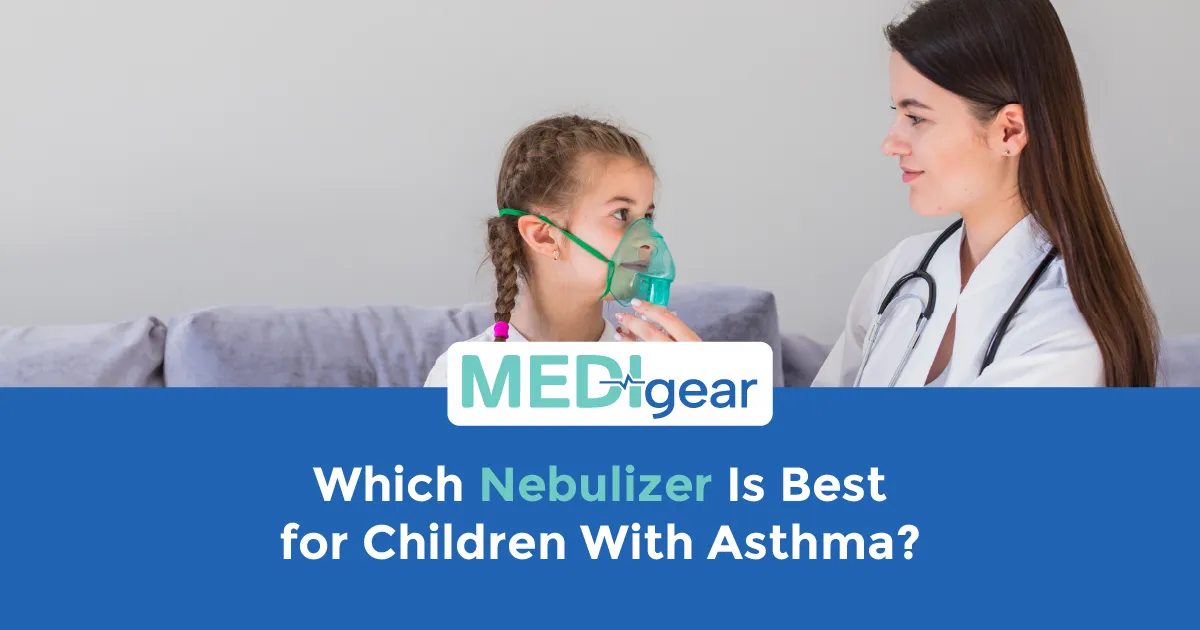
He is four years old. He wakes up at two in the morning coughing so hard his ribs hurt. His chest makes a sound like a squeezed toy. His mother sits him on her lap, holds the mask to his face, and turns on the machine that fills the room with a quiet hum and a thin white mist. Ten minutes later, his breathing eases. He falls back to sleep. She does not.
That scene plays out in thousands of homes across the UK every night. Asthma affects roughly one in eleven children in this country — and for the ones whose symptoms flare hard and fast, a nebulizer is not a nice-to-have. It is the device that stands between a scared child and a trip to A&E at three in the morning.
This guide helps parents and clinics choose the right nebulizer for children with asthma. What the main types are, how they differ, which features matter for small children, and what to look for before buying. Medigear supplies certified nebulizers to clinics and families across the UK — and every tip here comes from real clinical need, not product brochures.
How a Nebulizer Works
A nebulizer turns liquid medicine into a fine mist that a child breathes in through a mask. The mist carries the drug deep into the lungs where it opens tight airways, cuts swelling, and eases breathing. Unlike inhalers — which need timing between pressing and breathing — the device works with normal breaths. The child just sits, breathes, and lets the machine handle the rest. That makes it ideal for very young children, those too upset to use an inhaler well, and anyone mid-attack where calm technique is not going to happen.
Compressor Nebulizers
Compressor nebulizers are the most common type. A small pump pushes air through the liquid drug, breaking it into tiny drops that form a mist. They are steady, cheap, and work with most drugs. The trade-off is noise. Older models can be loud enough to scare a child already upset by a breathing attack. Newer ones run quieter, but check noise before buying any model for home use with children.
Ultrasonic Nebulizers
Ultrasonic models use sound waves to turn liquid into mist. They are quieter and faster at getting the dose out. But they warm the drug slightly — which means they do not suit all medicines. Some asthma drugs break down when heated. Always check with the doctor or chemist before using one for your child's asthma medicine.
Mesh Nebulizers
Mesh types push liquid through a plate with thousands of tiny holes, making a fine, steady mist with no noise and no heat. They are the quietest, the most portable, and the safest for drug stability. They cost more but give the best experience for children scared of noise, needing treatment on the go, or using drugs that cannot be warmed. For parents picking a device for a young child with frequent attacks, mesh is worth the extra cost.
Mask Fit
Mask fit matters more than most parents realise. A mask that sits loose on a child's face leaks mist around the edges. Less drug reaches the lungs. More drifts into the room or the child's eyes. Kids' masks come in different sizes. The right one covers nose and mouth snugly without pressing hard enough to cause pain or panic. A good seal is the gap between a treatment that works and one that wastes half the dose into the air.
Treatment Time
Treatment time affects how well a child handles the session. Compressor types take eight to twelve minutes per dose. Mesh types deliver in five to seven. For a four-year-old in a mask, every minute counts. Shorter times mean better cooperation, less stress, and a fuller dose reaching the lungs. If your child fights the mask after five minutes, a twelve-minute session is not doing its job.
Cleaning and Hygiene
Cleaning keeps the nebulizer safe and working well. Masks, chambers, and tubes should be washed after every use and dried fully. Germs and mould grow fast in damp parts — turning a breathing treatment into an infection risk. Replace masks, tubes, and mesh plates on the schedule the maker sets. A device that looks clean but holds hidden germs inside is not giving safe treatment.
Portability
Portability matters for families who travel or need treatment away from home. Compressor types need a plug and take up space. Mesh types run on battery or USB and fit in a bag. A portable device means treatment happens wherever the child is — not just at the kitchen table. For children with random triggers, having a device that travels with them removes the panic of being caught out when an attack hits away from home.
Noise
Noise deserves its own section because it is the top reason children reject treatment. A loud machine plus a tight mask plus a scary attack equals a child who fights the one thing that would help. Quiet models — mainly mesh types — turn treatment from a battle into a calm habit. Fun shapes and bright colours mean nothing if the sound makes the child cry before the mask reaches their face.
Nebulizer vs Inhaler With Spacer
A nebulizer does not replace an inhaler with spacer — they serve different roles in the asthma toolkit. Most children do fine with an inhaler and spacer for daily use and mild flares. The nebulizer fills the gap when attacks hit hard, when children are too young or too upset for inhaler skill, or when the drug must come in liquid form. Knowing when to use which — and teaching parents both — gives better results than leaning on one tool.
Linked Clinical Tools
For clinics managing respiratory care alongside other monitoring, our guide to pulse oximeters and heart problem detection explains how oxygen tracking supports breathing checks during nebulizer treatment — showing whether the drug is working and whether the child needs more help than a home device can give. Our guide to sleep apnoea equipment covers the breathing devices that sit alongside nebulizers in clinics managing a full range of airway conditions.
Certification
Always buy certified nebulizers that meet CE marking, ISO 13485 standards, and full MHRA compliance. Cheap devices sold without proper marks may give uneven mist sizes that change how much drug gets to the lungs. Home, clinic, or hospital — wherever a child uses a nebulizer for asthma, certified devices are the bare minimum. Cheap, unmarked units have no place near a child's lungs.
Medication Compatibility
Medication compatibility must be confirmed before choosing a nebulizer. Not all devices suit all drugs. Budesonide, salbutamol, and ipratropium each have rules about which types they work with. The wrong device with the wrong drug can cut how well it works or change the medicine in ways that affect safety. The doctor or chemist should confirm this match before the first use.
Spacer Training
Spacer technique training should come alongside any nebulizer purchase for a child with asthma. Many parents buy a nebulizer because the inhaler did not seem to work — when the real problem was technique, not the device. A spacer with a face mask allows even toddlers to use an inhaler well. The nebulizer then becomes the backup for bad nights and severe flares rather than the default for every wheeze. Getting this balance right keeps treatment practical and avoids over-reliance on one tool.
Night-Time Attacks
Night-time asthma attacks are the most common reason parents reach for the nebulizer at home. Cool night air, dust mites in bedding, lying flat, and airway muscles relaxing during sleep all combine to trigger attacks between midnight and dawn. A nebulizer set up in the child's room — cleaned, charged, and ready — turns a crisis into a routine. Preparation beats panic every time.
Asthma Action Plans
Asthma action plans written by the child's doctor or nurse should include clear guidance on when to use the nebulizer at home, when to repeat the dose, and when to stop home treatment and go to A&E. A laminated plan stuck to the fridge or beside the bed gives parents a calm, step-by-step path during a moment when clear thinking is hardest. No parent should be guessing at three in the morning whether their child needs another dose or an ambulance.
Sibling Awareness
Sibling awareness matters in homes with more than one child. Brothers and sisters often watch nebulizer sessions with curiosity or fear. Explaining what the machine does in simple terms — it helps their sibling breathe — removes the mystery and the worry. Some families let healthy siblings hold the mask or press the button to make treatment feel normal rather than scary. A calm household produces a calmer patient.
Why Choose Medigear
Medigear supplies certified nebulizers and respiratory accessories to clinics, hospitals, and families across the UK — with clear pricing, honest guidance, and after-sales support built for the demands of paediatric respiratory care. Whether you are equipping a children's ward, setting up a home treatment plan, or stocking a GP surgery for acute asthma management, our team matches the right nebulizer to your clinical need. Reach out to our team directly for guidance built around the child who needs to breathe and the parent who needs to sleep.
Conclusion
A nebulizer is a small machine that does a big job. It turns liquid medicine into a mist that reaches a child's lungs when nothing else can — at two in the morning, mid-attack, mid-panic, with a small body fighting to breathe and a parent fighting to stay calm. Choosing the right one means choosing quiet over loud, fast over slow, portable over stuck, and certified over cheap. Medigear stands alongside families and clinics with certified nebulizers and the honest guidance that paediatric respiratory care demands. Speak to our team today and find the device that helps your child breathe and lets you sleep.
⚠️ This post is for general information only. We do not sell medications or provide prescriptions — Medigear.uk is a medical equipment supplier only.