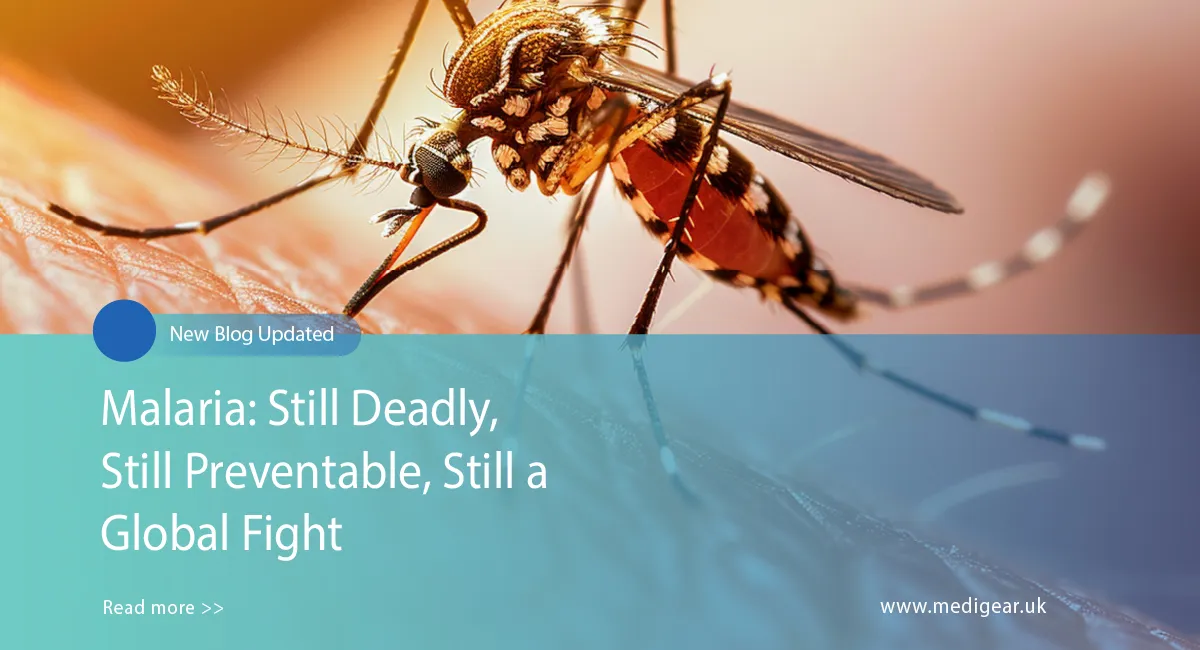
A mosquito bites a child at dusk. By morning, the parasite is inside her red blood cells. By the next evening, she has a fever her mother cannot explain. By the third day, she is shaking, vomiting, and too weak to stand. By the fourth, without treatment, she may not wake up. She is two years old. She lives in sub-Saharan Africa. And her story happens more than 600,000 times a year — most of them ending the same way.
Malaria is not a disease of the past. It is not a problem that vaccines and bed nets have solved. Malaria is an active, ongoing emergency that kills more children under five than any other infectious disease on earth. And the fact that it is almost entirely preventable makes every death not just tragic but avoidable — a failure of access, funding, and political will rather than medical knowledge.
This guide explains malaria with the honesty it demands. How the parasite works, how it spreads, why it kills, who carries the highest risk, what prevention looks like when it works, and how the right diagnostic tools give clinics the speed to catch it before it becomes fatal. Medigear supplies certified diagnostic equipment to hospitals and clinics — because in malaria, the gap between a rapid test and a missed diagnosis is measured in lives.
The Parasite
Malaria is caused by tiny parasites called Plasmodium, which are spread through the bite of infected female Anopheles mosquitoes. Five types infect humans. Falciparum causes most deaths — it grows faster in red blood cells, hits higher levels, and causes the severe forms that kill. Vivax is the most common type worldwide and can hide in the liver for months or years before coming back. The other three — ovale, malariae, and knowlesi — strike less often but still matter where they spread.
The Life Cycle
The parasite is built to survive. A mosquito pushes parasites into the skin during a bite. They travel to the liver, slip into liver cells, grow quietly for a week or two, then burst out as thousands of new forms that flood into the blood and attack red cells. Inside each red cell, they feed, grow, and pop the cell open — sending out more parasites that attack more cells. This cycle repeats every 2 to 3 days, causing the fever, chills, and sweating that mark the disease.
Symptoms
Symptoms start like those of any other tropical fever — headache, sore muscles, fatigue, and rising heat. In children, the first sign is often crankiness, poor feeding, or sleepiness that parents write off as a cold. Within hours, it can move from mild fever to severe illness — fits, deep coma, bad anaemia, breathing trouble, low sugar, organ failure, and death. The speed of that shift is what makes it so deadly in small children and so urgent to diagnose fast.
Severe Malaria
Severe cases — almost always falciparum — are a medical emergency. Brain involvement causes fits and coma as infected red cells block the tiny vessels in the brain. Bad anaemia strips the blood of its power to carry oxygen. Breathing trouble signals the body shutting down. Kidney failure, liver damage, and bleeding follow in the worst cases. Without treatment, it kills. With treatment, survival hinges on how quickly the test is done and how quickly the right drugs reach the patient.
Who Is Most at Risk
Children under five carry the heaviest burden. Their immune systems have not yet learned to fight it. Pregnant women face a higher risk of malaria during pregnancy, which causes anaemia, low birth weight, early delivery, and death at rates far above normal. Travellers from safe countries are fully open to it — they carry no built-up defence and can get severely ill from a single bite. Our guide to hepatitis B and C explains how blood-borne infections overlap with malaria in endemic regions where co-infection complicates diagnosis, treatment, and blood safety.
Prevention
Prevention works when it reaches the people who need it. Treated bed nets cut the spread by up to half in high-risk areas. Indoor wall spraying kills mosquitoes that rest on walls after biting. Giving children preventive drugs during peak months — seasonal prevention — slashes cases in parts of Africa. The first-ever licensed vaccine — RTS,S — provides partial protection for young children in the worst-hit areas. No single tool wipes it out. But nets, spraying, drugs, and vaccines together bend the curve.
Diagnosis
Testing must be fast. A child with a fever in a high-risk area needs a test within hours, not days. Microscopy — checking a stained blood slide under a lens — is still the gold standard. It names the parasite type, counts the load, and guides treatment choices. But it needs trained staff, working scopes, staining supplies, and power — things that many rural clinics in the hardest-hit countries lack.
Rapid diagnostic tests fill this gap. A finger-prick sample on a test strip gives a result in fifteen to twenty minutes — no scope, no power, no special training needed. Rapid tests have changed the game in community health, letting treatment start on the spot rather than after delays that cost lives. For any clinic serving at-risk populations, certified rapid malaria testing is not optional — it is the minimum standard for responsible care.
For clinics managing diagnostic services alongside malaria testing, our guide to haematology analysers covers the blood cell counting equipment that supports anaemia assessment, parasite detection, and treatment monitoring in malaria patients — where haemoglobin levels and platelet counts guide decisions as critically as the malaria test itself.
Treatment
Treatment depends on which type, how severe, and what local drug resistance looks like. Mild falciparum cases get artemisinin-based combo therapy — the current global standard. Vivax needs extra treatment to clear the sleeping forms hiding in the liver and stop relapse. Severe cases need artesunate by injection, followed by oral drugs once the patient can swallow. Drug resistance — mainly to older drugs — remains a constant threat that keeps pushing changes in treatment rules across affected regions.
Malaria in the UK
In the UK, malaria is an imported disease. Roughly 1,500 to 2,000 cases show up each year, almost all among travellers returning from affected areas. Late diagnosis is the main risk in UK settings, because doctors who rarely see it may not think of it quickly enough when a feverish traveller presents. Any patient with a fever and recent travel to an affected area should be tested straight away. Waiting to rule out everything else first is a mistake malaria does not forgive.
Climate Change
Climate change is making the problem worse in ways that catch health systems off guard. Warming temperatures push mosquitoes into highland areas and temperate zones where they could not survive before. Regions with no past cases are now seeing their first. Countries that had nearly wiped it out are watching malaria creep back. The map is shifting — and testing tools need to follow it.
Travel Clinics
Travel clinics in the UK play a bigger role in prevention than most travellers realise. Pre-trip advice, antimalarial tablets, net tips, and post-return tests all sit in the travel health path. A clinic that sends someone to West Africa without proper advice shares the blame if they come back with malaria that a simple tablet course would have stopped.
Community Health Workers
Community health workers in endemic countries are often the first and only point of contact for a sick child. Giving them rapid tests, clear steps, and trusted drugs puts care where it counts — in the village, not the hospital. Every test kit in a field worker's hands is a life saved without a referral that may never come.
Blood Donation Screening
Malaria testing during blood donation screening protects the transfusion chain in ways donors rarely consider. In endemic regions, every unit of donated blood carries a risk of parasite carriage. Checking donated blood for malaria before storage stops bad units from reaching patients who are already very ill. Our guide to blood bank refrigerator selection covers the cold chain equipment that stores these screened blood products safely — the two systems work side by side to keep the transfusion pathway clean.
Insecticide Resistance
Resistance to insecticides used in bed nets and wall sprays is growing across Africa and Southeast Asia. Mosquitoes that once died on contact with treated surfaces now survive and bite. New chemicals, better nets, and genetic methods are all in the works — but none is ready for full-scale use yet. The race between resistance and new tools will shape malaria outcomes over the next 10 years.
Poverty and Malaria
Malaria and poverty feed each other in a loop that public health alone cannot break. Sick children miss school. Sick adults miss work. Treatment costs drain savings. Repeated illness weakens bodies that are already underfed. Breaking this loop takes more than medicine. It takes jobs, schools, clean water, and food alongside nets, drugs, and test kits. Malaria is a health problem that only cross-sector action can solve.
The Global Fight
The global fight has made real gains — death rates have dropped by roughly a third since the start of this century. But progress has stalled. Funding gaps, insect resistance, drug resistance, climate change spreading mosquito zones, and pandemic hits to health services have all slowed the push. Wiping it out is still the goal. Getting there requires sustained funding, political will, and testing tools that work on the front lines — not just in big-city hospitals.
Why Choose Medigear
Medigear supplies certified diagnostic equipment, including rapid malaria tests, microscopy supplies, and haematology tools to hospitals, clinics, and global health programmes — with clear pricing, honest guidance, and supply chain reliability that front-line malaria services demand. Whether you are equipping a travel health clinic, supporting a tropical medicine unit, or supplying diagnostic tools to endemic settings, our team matches the right equipment to your clinical needs. Reach out to our team directly for guidance built around the malaria diagnostics your patients depend on.
Conclusion
A mosquito bite. A parasite. A child's life hangs in the balance, whether a test reaches her village before the fever reaches her brain. That is malaria in its simplest terms — a disease we know how to prevent, know how to diagnose, and know how to treat, yet still cannot stop from killing hundreds of thousands of the most vulnerable people on earth every year. The tools exist. The drugs work. The gap is access. Medigear stands alongside clinics, hospitals, and global health teams with certified diagnostic equipment and the supply-chain reliability that frontline malaria services demand. Speak to our team today and put the right test in the right hands at the right time.
⚠️ NOTE
This post is for general information only. We do not sell medications or provide prescriptions — Medigear.uk is a medical equipment supplier only.