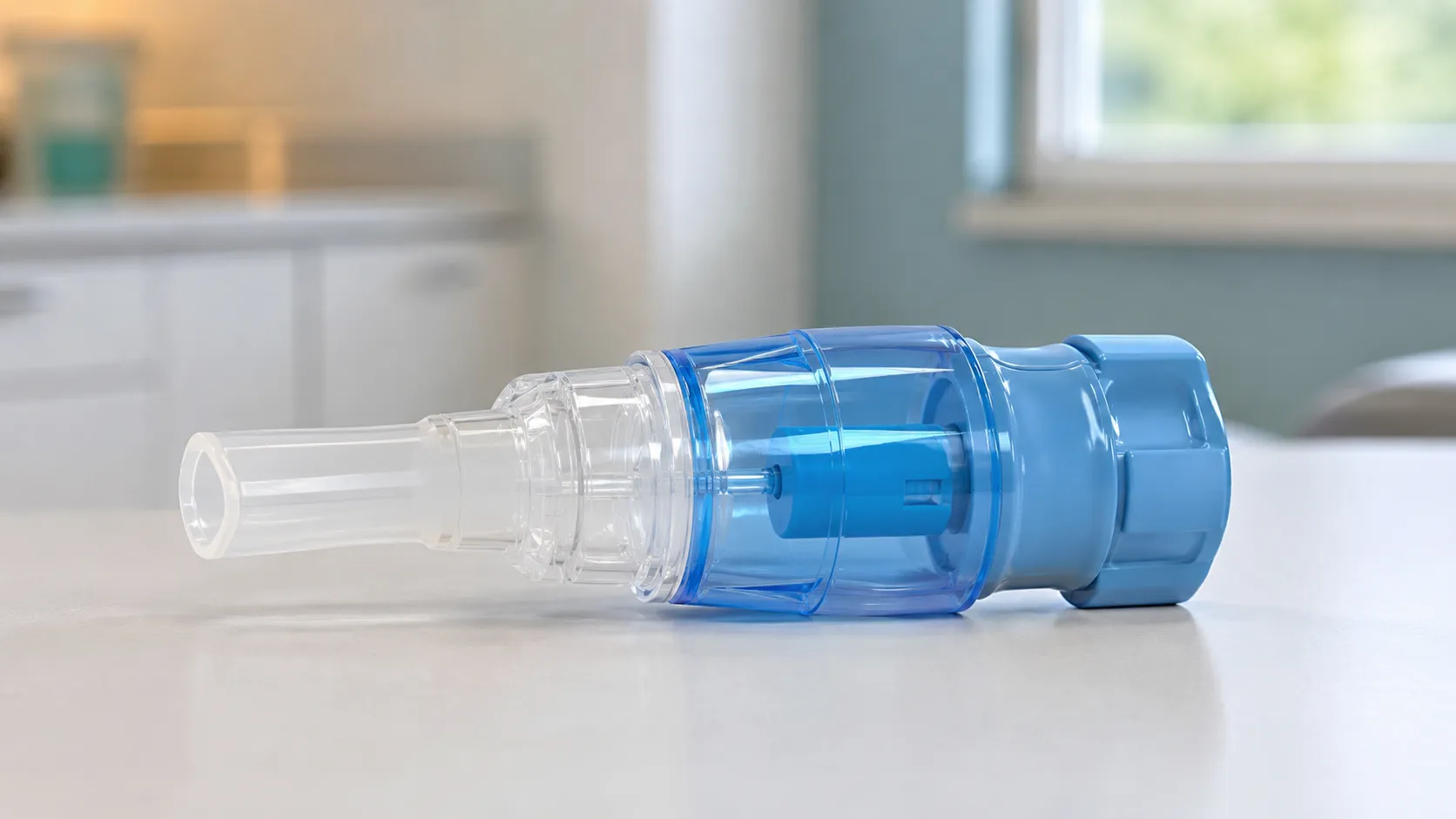
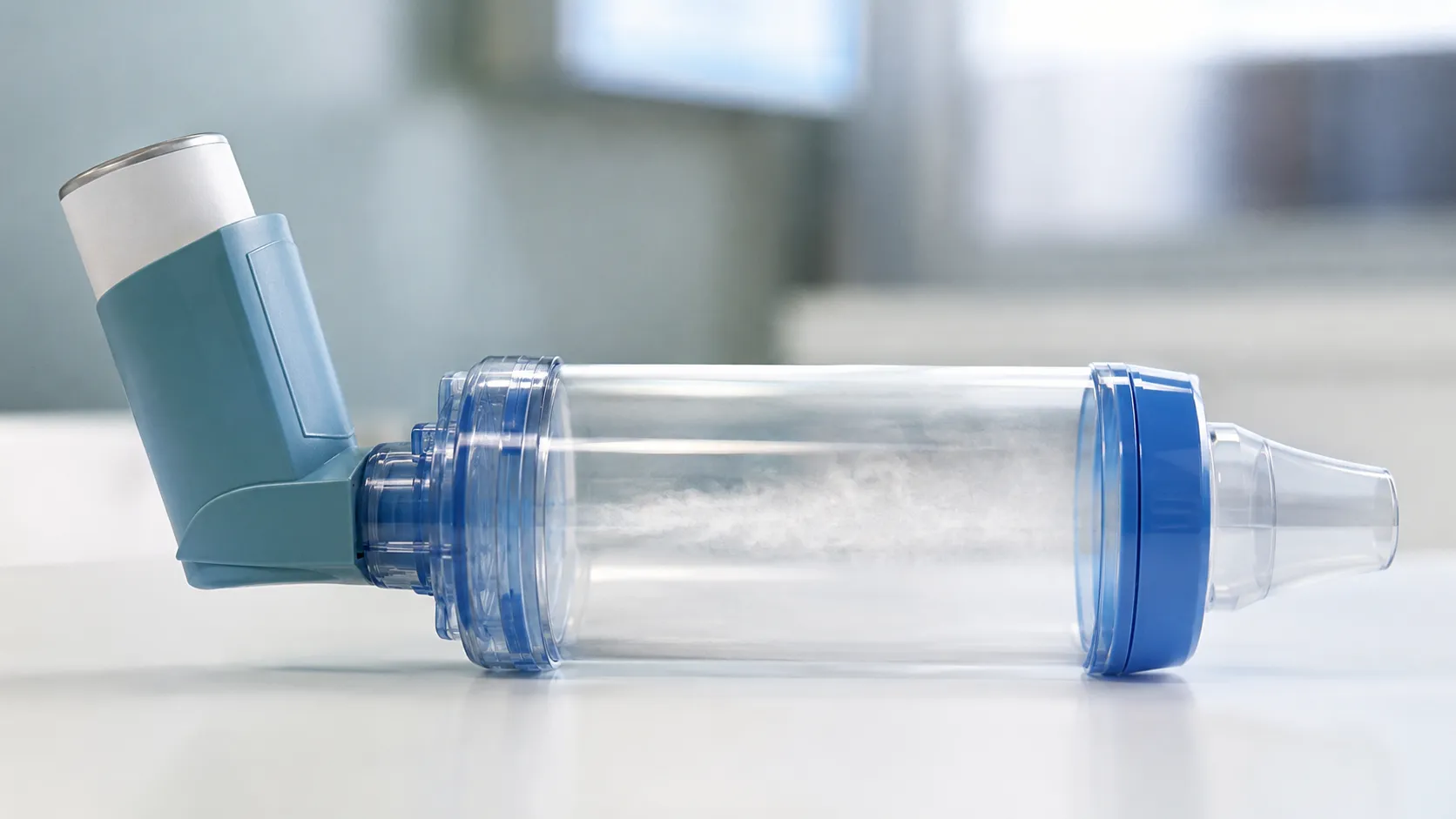
A spacer device is a hollow chamber that fits onto a metered-dose inhaler and captures the puff of medication so it can be breathed in over several slow breaths instead of a single, split-second effort. It holds the aerosol cloud momentarily after actuation, letting the fast-moving spray slow down and the propellant evaporate, so more of the fine drug reaches the lungs and less lands in the mouth and throat.
This guide is for procurement, respiratory-service and community-equipment teams specifying spacers and valved holding chambers alongside inhaler therapy. It explains how a spacer captures the dose, the difference between simple spacers and valved holding chambers, mask and mouthpiece options, cleaning and the specifications to check before buying.
How a Spacer Captures the Dose
Fired straight from a pressurised inhaler, the aerosol leaves at high speed and demands precise timing between actuation and inhalation; miss that window and much of the dose hits the back of the throat. A spacer removes the timing problem. When the inhaler is actuated into the chamber, the cloud is briefly held in suspension, the propellant evaporates, and the largest, fastest droplets fall out on the chamber wall rather than the throat. What remains is a slower cloud of fine particles the patient can draw in over a few relaxed breaths. The result is better lung deposition and less oropharyngeal deposition, which is particularly relevant for inhaled corticosteroids.
Spacers Versus Valved Holding Chambers
The terms are often used loosely, but there is a real distinction. A simple spacer is an open tube that adds distance between inhaler and mouth. A valved holding chamber adds a one-way inspiratory valve that keeps the dose in the chamber until the patient breathes in, then closes on exhalation so breath is not blown back into the cloud. The valve makes sensation-free, multiple-breath use reliable, which is why valved holding chambers are the usual choice for children, older patients, and anyone who struggles to synchronise a puff with a breath. When buyers say spacer, they most often need a valved holding chamber.
Mask and Mouthpiece Options
Chambers are supplied with either a mouthpiece or an integrated soft face mask. A mouthpiece suits cooperative adults and older children who can seal their lips and breathe through the device. A mask is used for infants, young children, and patients who cannot manage a mouthpiece, and mask sizes are matched to face size for a good seal, since leaks reduce the dose. Many ranges let the same chamber accept different mask sizes or a mouthpiece, which simplifies stock and lets a service step a patient up from mask to mouthpiece as they grow or improve.
Chamber Volume, Antistatic Materials and Dead Space
Two design details drive performance. Chamber volume must suit the patient: small-volume chambers for infants, larger volumes for adults, because a very large chamber can leave a small child unable to clear the dose. Material matters because plastic chambers can build a static charge that attracts drug particles to the wall and cuts the delivered dose. Antistatic chambers, made from conductive polymers or metal, or pre-conditioned per the instructions, hold more of the dose in suspension for the patient. Valve dead space and low resistance also help small children trigger the valve, so these figures are worth comparing on the datasheet.
Cleaning, Single-Patient Use and Durability
Most spacers are single-patient devices. In hospital, they are sent home with the patient or, where reused within a service, cleaned strictly per the manufacturer's instructions, which typically means periodic washing in warm soapy water and air drying rather than rubbing dry, to preserve the antistatic property—cross-infection control. Buyers should check the stated cleaning method, the replacement interval, and whether the chamber is dishwasher-tolerant.
Compatibility With Inhalers
A spacer is used with a pressurised metered dose inhaler, and the inhaler mouthpiece pushes into a universal or brand-specific back-piece on the chamber. Most valved holding chambers accept the common range of pMDI mouthpieces, but a snug, sealed fit matters, so confirm the chamber accepts the inhaler devices your service dispenses. Spacers are not used with dry powder inhalers, which are breath-actuated and need the patient's own inspiratory effort. Getting this boundary right at procurement avoids issuing a chamber that does not fit or is clinically inappropriate for the prescribed device.
Standards and Regulation
A spacer or valved holding chamber is a medical device in its own right, separate from the licensed medicine it is used with, and should carry valid UKCA or CE marking and be registered with the MHRA. Design verification: ISO 20072 describes design verification for inhaler drug delivery devices; contact materials should meet ISO 10993 biocompatibility requirements. Because the inhaler medicine itself is a pharmaceutical product regulated separately, a device distributor supplies the chamber and accessories rather than the drug, so confirm the instructions for use and marking with the supplier at the point of order.
Procurement Checklist
-
Confirm UKCA or CE marking and MHRA registration for the chamber as a device.
-
Choose a valved holding chamber where coordination-free multiple-breath use is needed.
-
Match chamber volume and mask size to your infant, child and adult populations.
-
Prefer antistatic or metal chambers to protect the delivered dose.
-
Check the stated cleaning method, replacement interval and single-patient labelling.
-
Verify the back-piece accepts the pMDI devices your service dispenses.
-
Compare valve resistance and dead space for reliable use by small children.
Technique Feedback and Dose Reliability
A spacer forgives poor timing, but it cannot fix breathing in too fast, which throws fine particles onto the throat rather than the lungs. Several valved holding chambers build in a flow indicator, often a whistle or reed that sounds when inhalation is too rapid, giving the patient and the person teaching them immediate feedback that the technique needs to slow down. For a respiratory service that spends real time on inhaler education, a chamber with this feedback feature is worth specifying, because it turns the device itself into a teaching aid and improves the odds that the prescribed dose actually reaches the airway. When comparing chambers, ask whether a flow indicator is fitted, whether it is audible enough for the setting, and whether it works with both the mask and mouthpiece configurations you intend to stock.
Use Across Care Settings
Spacers appear in paediatric clinics, respiratory and asthma services, emergency departments, GP practices and domiciliary care, and the right specification shifts with the setting. Community and paediatric services lean on mask chambers and small volumes; adult respiratory clinics favour mouthpiece chambers. Standardising on a small number of compatible chambers keeps training and stock manageable and makes it easy to step a patient between mask and mouthpiece. For total cost, remember the chamber is a consumable with a replacement cadence, so pack pricing and reliable supply matter alongside unit price.
Conclusion
A spacer, and more specifically a valved holding chamber, turns a hard-to-time inhaler puff into a forgiving, multiple-breath dose, so specify it on valve design, chamber volume, antistatic material, and a fit for your forces. Match mask and mouthpiece to your patient mix and confirm UKCA or CE marking and a clear cleaning protocol. To compare compliant spacers and valved holding chambers or arrange a facility quote, contact MediGear or set up a procurement