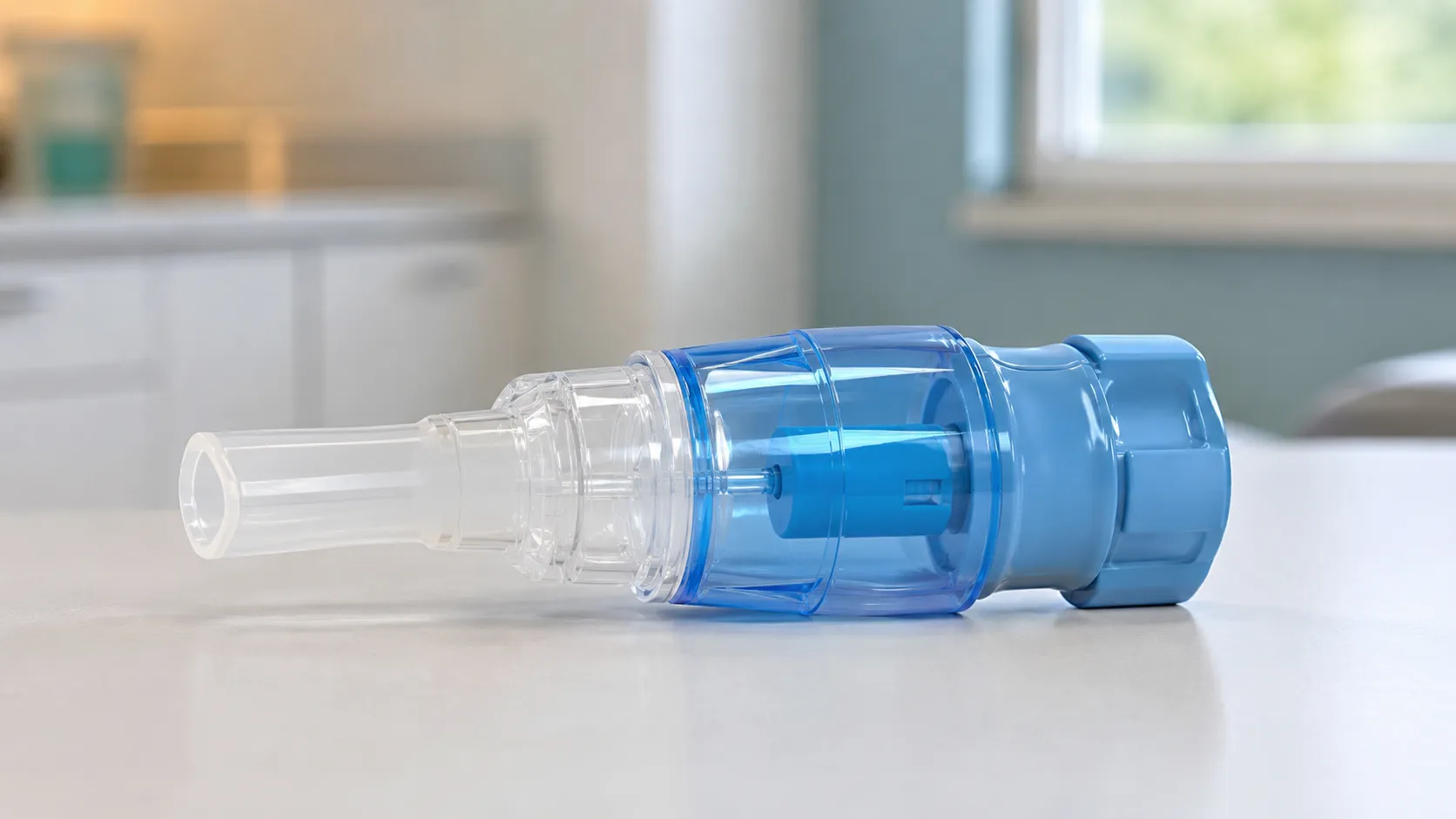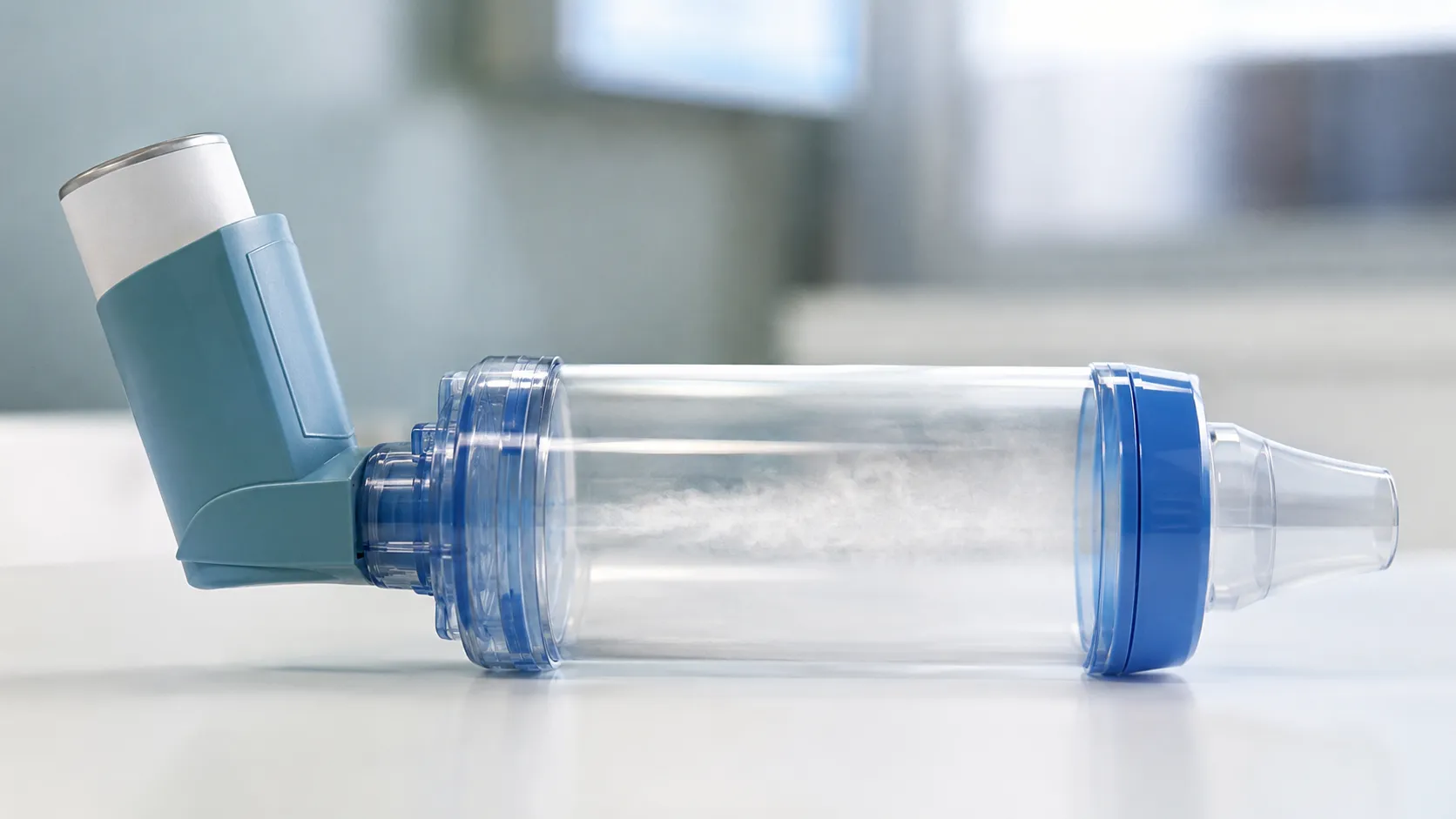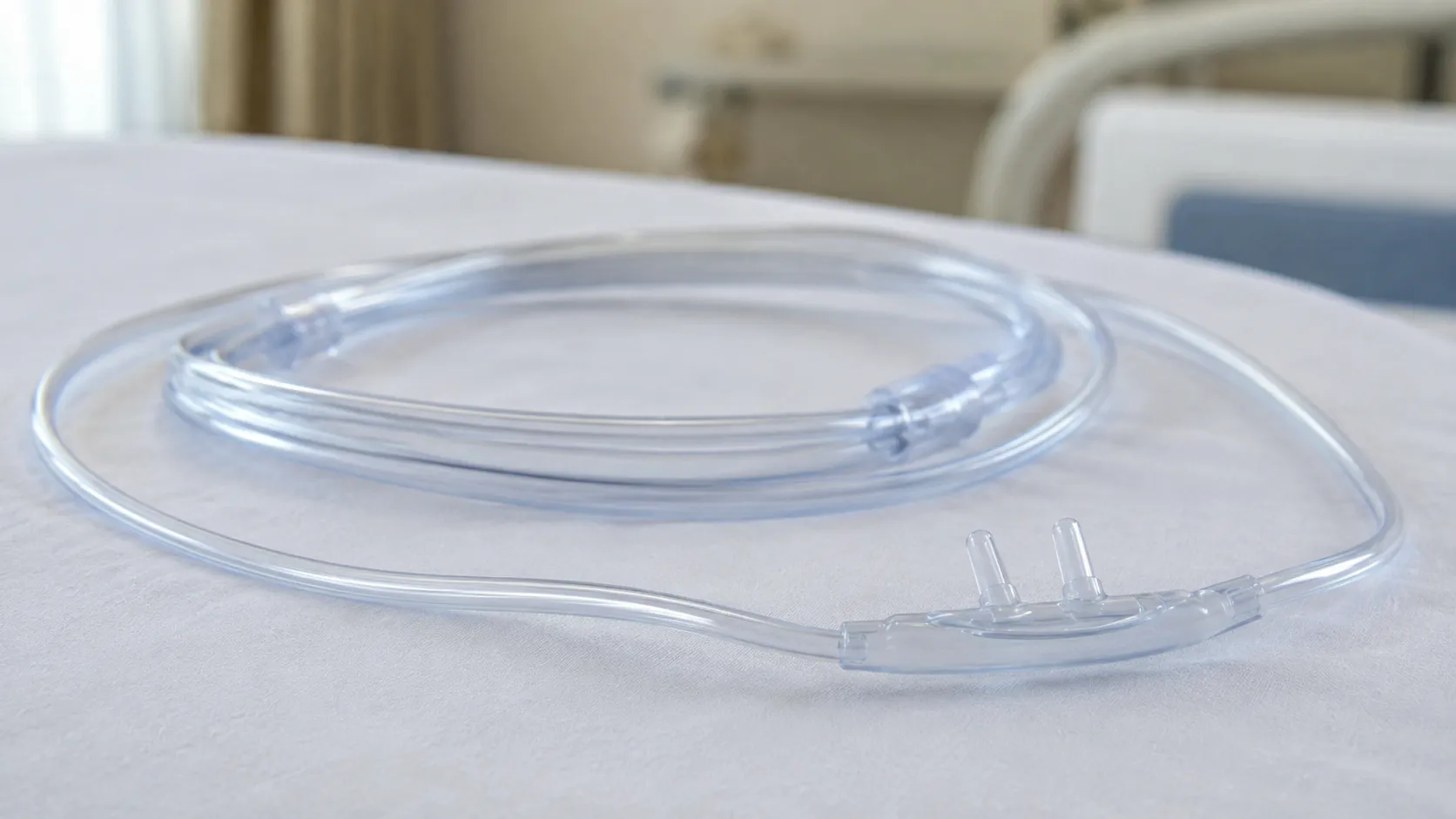
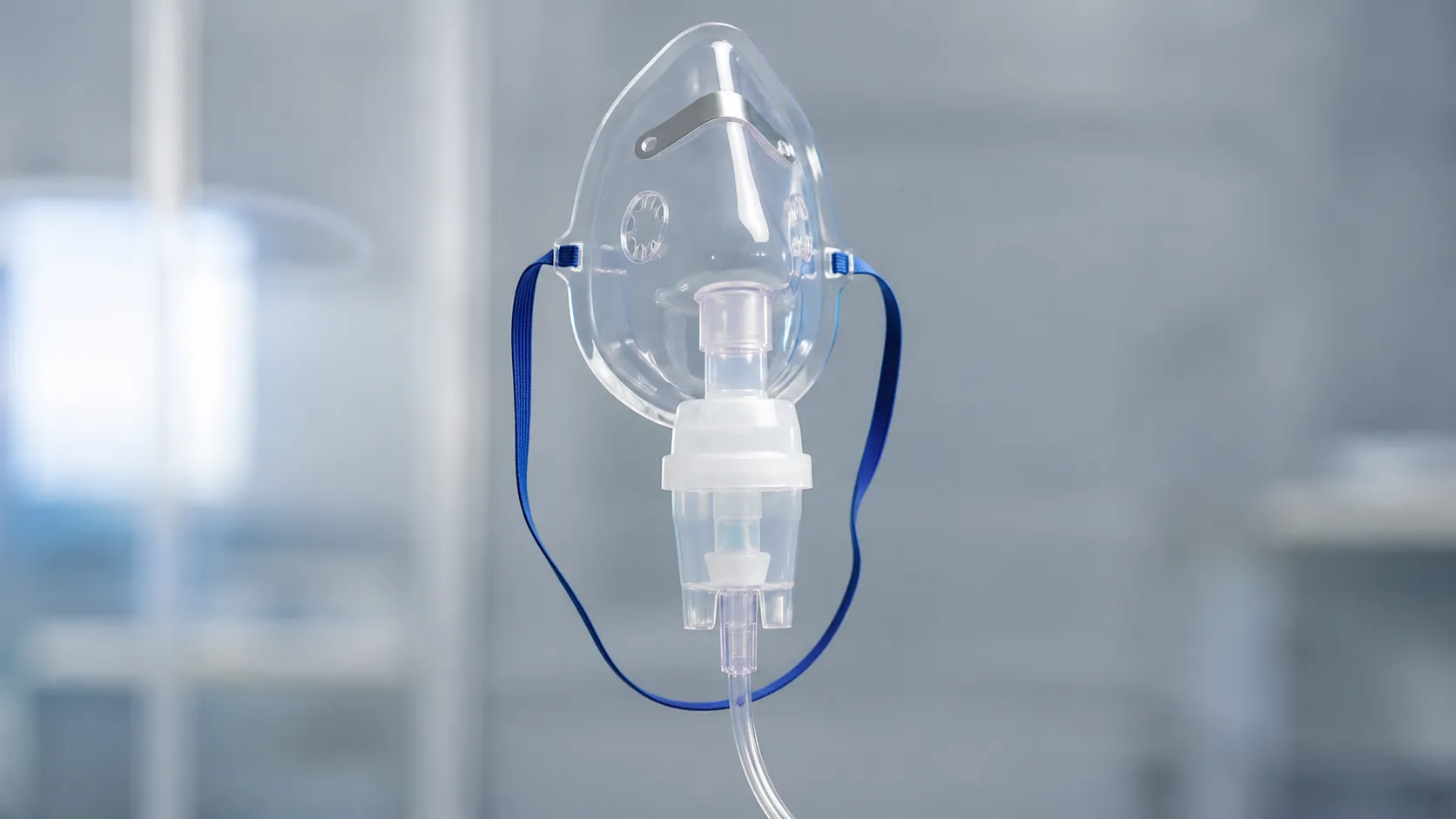
An aerosol mask is the patient interface that carries nebulised medication from a nebuliser chamber to the airway, covering the nose and mouth so a fine drug mist can be breathed in. It is the delivery end of a nebuliser set-up, not the machine that generates the mist, and its fit, venting and material decide how much of the prescribed dose reaches the patient rather than escaping to the room.
This guide is written for procurement, ward and biomedical teams choosing aerosol masks and nebuliser kits across acute, community and domiciliary care. It covers mask types, sizing, connectors, single- versus multi-patient use, and the specifications to confirm before standardising on a supplier.
What an Aerosol Mask Actually Does
The mask seats on the outlet of the nebuliser chamber, usually through a short elbow or T-piece. Unlike a sealed oxygen mask, it carries open side ports, sometimes called entrainment holes, that let room air enter on inspiration and exhaled gas leave on expiration. That venting is deliberate: the nebuliser produces a continuous aerosol, and the mask simply presents it to the face while allowing the patient to breathe normally around the mist. Because the interface is not sealed, a loose or oversized mask lets aerosol drift away, reducing the delivered dose and increasing fugitive aerosol in the treatment area.
Masks Versus Mouthpieces
Every nebuliser interface is either a mask or a mouthpiece, and the choice affects deposition. A mouthpiece routes the aerosol directly through the mouth, reduces drug landing on the face and eyes, and generally puts more of the dose into the lungs for a cooperative adult who can maintain a seal. A mask is the pragmatic choice for infants, young children, frail or breathless patients, and anyone who cannot hold a mouthpiece steadily. Some medicines are specifically discouraged from mask delivery where facial or ocular contact is a concern, so facilities often stock both interfaces and let the clinical team match the interface to the patient rather than force one option.
Mask Types and Sizing
Aerosol masks are supplied in adult, paediatric, and infant sizes, and the correct size follows the contour from the bridge of the nose to under the chin without gaping at the cheeks. Most are moulded from soft, latex-free PVC with an adjustable aluminium nose clip and an elastic head strap so the fit can be tuned. Paediatric versions are shaped and coloured for smaller faces, and some ranges add a soft cushioned rim to improve comfort during longer treatments. Sizing matters clinically because leak around a poorly matched mask is the single biggest avoidable loss of delivered dose.
Connectors, Tubing and Compatibility
The patient-side interface typically uses a 22 mm fitting to the nebuliser chamber, which is driven by tubing from an air or oxygen source. Jet nebulisers commonly run at a driving flow of roughly six to eight litres per minute, taken from a flowmeter on a wall outlet, a cylinder, or a dedicated compressor. Confirm that the mask, elbow, chamber, and tubing come as a matched kit, or that the parts you mix are dimensionally compatible, and check that the tubing length suits your trolley layout. Mixing an unmatched mask and chamber can introduce leaks or an insecure joint, so most buyers standardise on complete kits from one range.
Single-Patient and Infection-Control Considerations
Aerosol masks and nebuliser kits are treated as single-patient items. In hospital, they are usually disposed of between patients or sent home with the patient at discharge; in domiciliary care, a single patient reuses one kit with cleaning and periodic replacement per the manufacturer's instructions. Cross-patient reuse is avoided because the moist aerosol pathway is difficult to decontaminate reliably. Where fugitive aerosol is a concern, filtered or valved mask and circuit options can capture exhaled particles, a point that received far more attention after respiratory-virus outbreaks and is worth specifying for shared clinical spaces.
Particle Size and Delivered Dose
The therapeutic target for inhaled aerosol is the respirable range, roughly one to five microns mass median aerodynamic diameter, which is small enough to reach the lower airways. The nebuliser chamber and driving gas set that particle size, not the mask; the mask's role is to lose as little aerosol as possible. Deadspace inside the mask, the size of the vent ports and the quality of the facial seal therefore govern the delivered fraction. A well-fitted, low-deadspace mask on an appropriate chamber gives the patient the dose the prescription intended, which is why interface selection is a procurement decision and not an afterthought.
Standards and Regulation
Aerosol masks are medical devices and should carry valid UKCA or CE marking and be registered with the MHRA for the UK market. The relevant product standard is ISO 27427 for nebulising systems and components, which covers masks and interfaces as parts of the delivery system, while patient-contact materials should meet the ISO 10993 biocompatibility requirements. Ask the supplier for the instructions for use, the single-use or single-patient marking, and confirmation of the materials used, particularly latex-free status, which many facilities now require as standard.
Procurement Checklist
-
Confirm UKCA or CE marking, MHRA registration and single-patient or single-use labelling.
-
Stock adult, paediatric and infant sizes plus a mouthpiece option for cooperative adults.
-
Check that the mask, elbow, chamber, and tubing form a matched, dimensionally compatible kit.
-
Verify latex-free materials and ISO 10993 biocompatibility of face-contact parts.
-
Assess vent design and dead space to minimise aerosol loss and ensure a good facial fit.
-
Consider filtered or valved options where fugitive aerosol control is needed.
-
Confirm consumable pricing, pack sizes and reliable replacement supply.
Oxygen-Driven Versus Air-Driven Delivery
An aerosol mask does not care what drives the nebuliser, but the buyer should. A jet nebuliser can be powered by piped or cylinder oxygen or by medical air from a compressor, and the choice has clinical weight. Driving a nebuliser with high-flow oxygen delivers a significant oxygen load alongside the drug, which matters for patients whose oxygen must be titrated carefully, so many services deliberately drive nebulisers with air from a compressor for those patients. Because the mask is the same interface either way, a facility that supports both approaches simply needs masks and kits compatible with each drive source. Confirming that your mask and chamber run correctly at the driving flow of your chosen source, and stocking the tubing and connectors for both oxygen and compressor delivery, keeps the interface decoupled from the drive decision.
Total Cost and Use Across Settings
Because masks are consumables, the lifetime cost is driven by usage volume and pack pricing rather than a one-off purchase, so pack size, lead time and supply reliability matter as much as unit price. A complete kit usually bundles the mask, chamber, tubing and sometimes a mouthpiece, which simplifies stock control across wards, GP treatment rooms and community teams. Standardising on one compatible range keeps ordering simple and avoids the leaks and mismatches that come from mixing interfaces between brands. For domiciliary programmes, clear patient instructions on cleaning and replacement protect delivered-dose accuracy over the life of the kit.
Conclusion
An aerosol mask is a small consumable that has an outsized effect on how much nebulised medication reaches the patient, so specify it for fit, sizing, low deadspace, compatible connectors, and single-patient infection control. Match masks and mouthpieces to your patient mix, standardise on matched kits, and confirm UKCA or CE marking and ISO 27427 compliance. To compare compliant aerosol masks, nebuliser kits, and interfaces, or to arrange a facility quote, contact MediGear or open a buyer account.
Disclaimer
This article is for informational purposes only. MediGear (medigear.uk) publishes it for general information and procurement guidance; it is not clinical, diagnostic, treatment, technical, engineering, legal, or regulatory advice, nor a product endorsement, guarantee, or substitute for professional assessment. MediGear does not provide medical consultations. Buyers should consult their clinical, biomedical, estates, and regulatory contacts, and the manufacturer's documentation, and independently verify all specifications, certifications, compatibility,y and suitability before purchase. Specifications, certifications and availability are correct at the time of publication and may change without notice. MediGear is a medical-equipment distributor and does not sell medicines or pharmaceutical products.