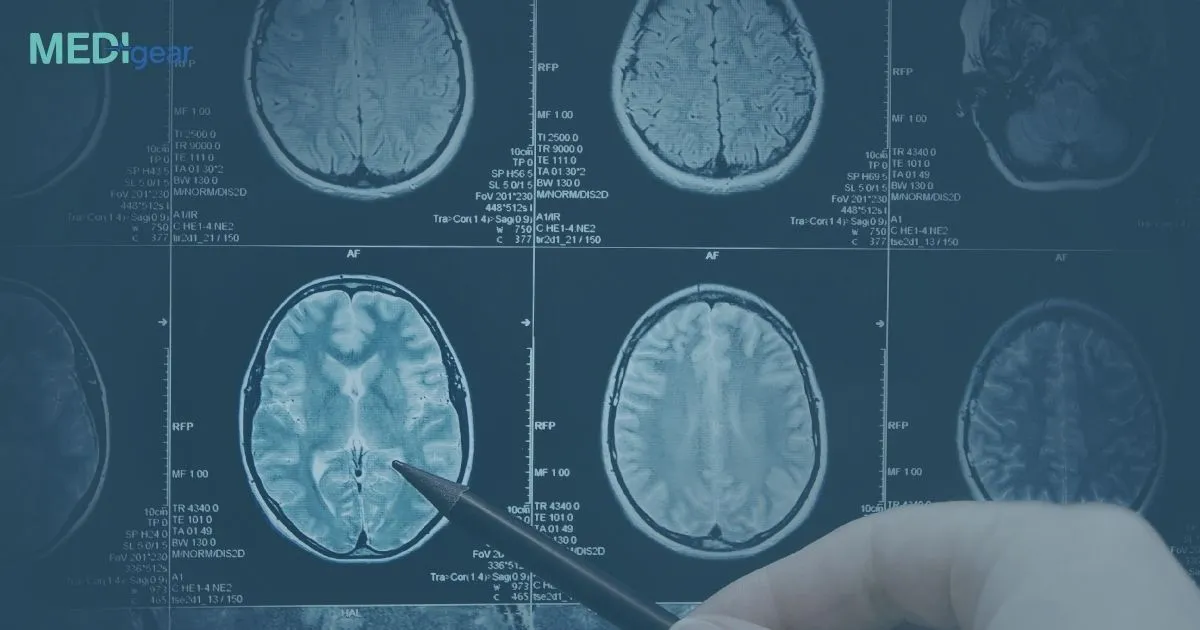
Magnetic Resonance Imaging, commonly called MRI, is a medical imaging technique used to create detailed pictures of organs and tissues inside the body. It helps doctors examine the brain, spine, joints, muscles, and many other parts of the body without surgery.
MRI is widely used because it produces highly detailed images and does not use harmful ionizing radiation. This makes it a valuable tool for diagnosing many medical conditions.
What Does MRI Stand For?
MRI stands for Magnetic Resonance Imaging.
It is a diagnostic imaging technique that uses:
-
Strong magnetic fields
-
Radio waves
-
Computer technology
These elements work together to produce detailed images of the body’s internal structures.
How MRI Works
The human body contains a large amount of water, and water molecules contain hydrogen atoms.
During an MRI scan:
-
A powerful magnet aligns hydrogen atoms in the body.
-
Radio waves are sent through the body to disturb this alignment.
-
When the radio waves stop, the atoms return to their original state.
-
As they return, they release signals.
-
A computer collects these signals and converts them into detailed images.
This process allows doctors to see soft tissues clearly.
Why MRI Is Used
MRI scans help detect and monitor many medical conditions.
Common uses include:
-
Examining the brain and spinal cord
-
Detecting tumors
-
Studying joint injuries
-
Evaluating muscles and ligaments
-
Assessing heart and blood vessels
-
Investigating abdominal organs
MRI is particularly useful for viewing soft tissues, which may not appear clearly in other imaging methods.
What Happens During an MRI Scan
A typical MRI procedure involves the following steps:
-
The patient lies on a movable examination table.
-
The table slides into a large cylindrical scanner.
-
The machine creates magnetic fields and radio signals.
-
The scanner captures images while the patient remains still.
-
The procedure usually lasts between 20 and 60 minutes.
The machine may produce loud tapping or knocking sounds during scanning, which is normal.
Is MRI Safe?
MRI is considered safe for most people because it does not use ionizing radiation. However, the strong magnetic field means that people with certain metal implants or devices must inform their healthcare provider before the scan.
Safety checks are always performed before the procedure.
Advantages of MRI
MRI offers several benefits in medical diagnosis.
-
Produces highly detailed images
-
Excellent for viewing soft tissues
-
Does not use radiation
-
Helps detect diseases early
-
Useful for monitoring treatment progress
These advantages make MRI an important diagnostic tool in modern medicine.
Limitations of MRI
Although MRI is very useful, it has some limitations.
-
The scan may take longer than other imaging tests
-
Patients must remain very still during the procedure
-
The machine can feel enclosed for some people
-
It may not be suitable for people with certain implanted devices
Doctors consider these factors before recommending an MRI scan.
Why MRI Is Important in Modern Medicine
MRI technology has greatly improved the ability to diagnose and understand many health conditions. Its detailed images help healthcare professionals detect problems early, plan treatments accurately, and monitor recovery.
Because of its accuracy and safety profile, MRI continues to play a major role in medical imaging.