Medical equipment is among the most valuable assets within modern healthcare facilities. Hospitals, clinics, diagnostic centres, laboratories, and specialised healthcare environments rely on equipment that must perform accurately, safely, and consistently throughout its operational life.
As healthcare organisations face increasing pressure to improve sustainability, control operational costs, and maximise technology investments, maintenance strategies are becoming more important than ever. Sustainable equipment maintenance practices help healthcare providers improve equipment reliability while reducing waste and supporting long-term environmental objectives.
For healthcare facility procurement decision-makers, maintenance is no longer viewed solely as a technical responsibility. It has become a strategic function that influences equipment performance, lifecycle costs, sustainability outcomes, and return on investment.
Healthcare organisations seeking guidance on equipment acquisition and lifecycle planning often include buyer services among the key stakeholders responsible for evaluating maintenance requirements before procurement decisions are finalised.
What Sustainable Equipment Maintenance Means in Modern Healthcare
Sustainable equipment maintenance focuses on extending equipment lifespan while minimising environmental impact and maximising operational efficiency.
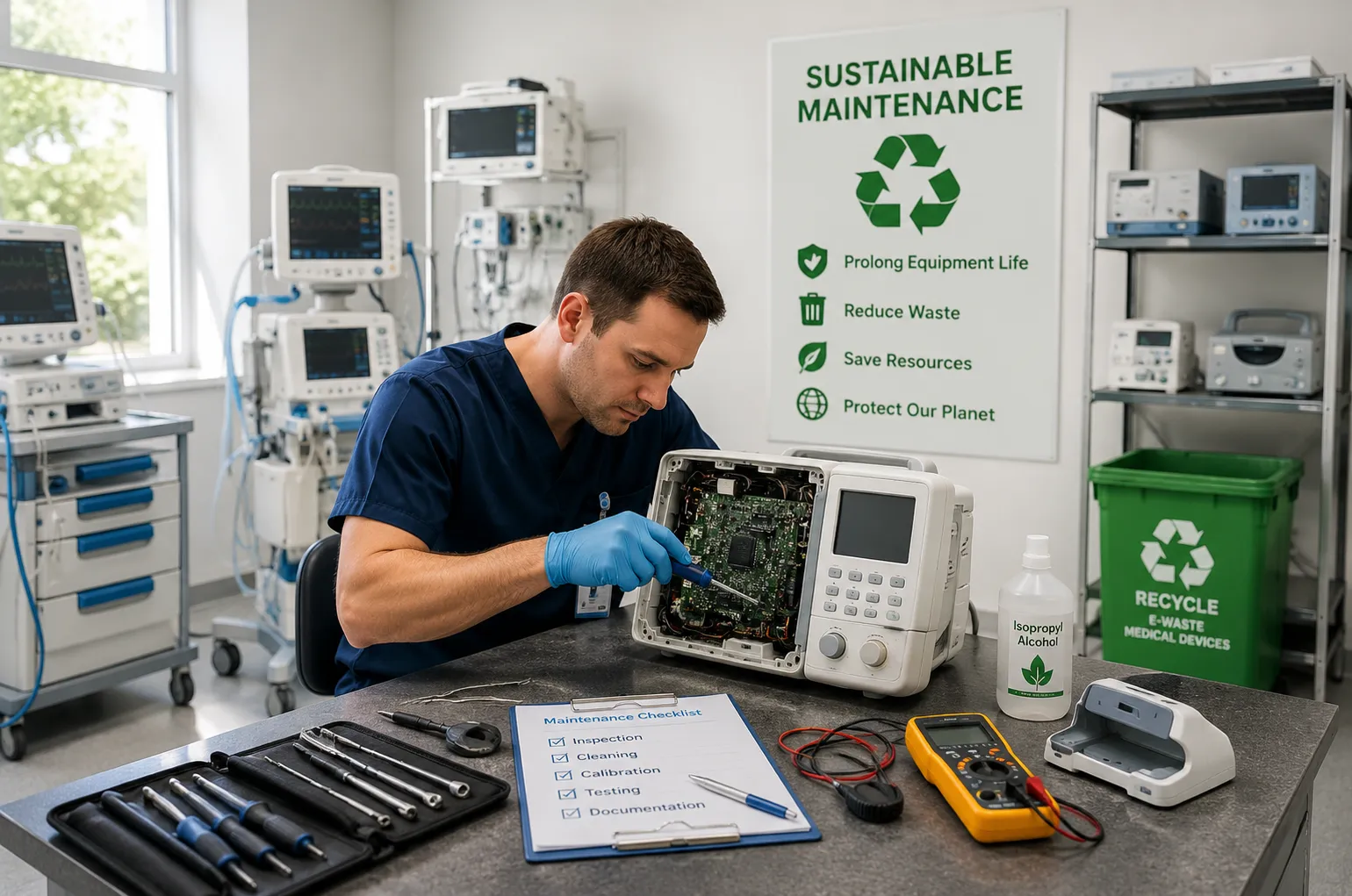
Preventive Maintenance Programmes- Preventive maintenance includes scheduled inspections, servicing, testing, calibration, cleaning, and component replacement designed to prevent failures before they occur. This remains one of the most widely adopted maintenance strategies across healthcare systems globally.
Predictive Maintenance Technologies: Predictive maintenance uses sensors, monitoring systems, and performance analytics to identify potential equipment issues before they cause operational disruptions. Facilities increasingly use predictive technologies to improve reliability and reduce unnecessary servicing activities.
Lifecycle Management Approaches- Sustainable maintenance considers equipment performance throughout the entire operational lifecycle, from installation and commissioning to refurbishment, upgrades, redeployment, and replacement planning.
Resource Optimisation Objectives- Maintenance programmes help healthcare facilities reduce waste, improve equipment utilisation, and maximise the value derived from technology investments.
Healthcare facilities that source equipment through regulated, certified equipment suppliers worldwide often receive maintenance guidance and lifecycle management support that contribute to long-term sustainability outcomes.
Why Maintenance Has a Direct Impact on Equipment Lifespan
Equipment lifespan is influenced not only by design and manufacturing quality but also by how effectively equipment is maintained throughout its service life.
Reducing Equipment Failures- Routine maintenance helps identify wear, deterioration, calibration issues, and performance problems before they become significant operational concerns.
Improving Equipment Reliability- Reliable equipment supports uninterrupted patient care, improved clinical workflows, and reduced operational disruption.
Protecting Capital Investments- Medical equipment often represents a substantial financial commitment. Effective maintenance helps healthcare organisations maximise return on investment by extending the useful life of assets.
Reducing Replacement Requirements- Longer equipment lifespans reduce procurement frequency and support more sustainable resource management practices.
One aspect that surprises first-time buyers is how significantly maintenance planning can influence total ownership costs over the lifetime of healthcare equipment.
Preventive Maintenance Remains the Foundation of Sustainable Equipment Management
Preventive maintenance continues to play a critical role in healthcare technology management.
Routine Inspections- Regular inspections help detect issues before they affect equipment performance or patient care activities.
Calibration and Verification- Calibration ensures that equipment continues to operate accurately according to manufacturer specifications and applicable standards.
Scheduled Servicing- Routine servicing supports equipment reliability, safety, and long-term operational performance.
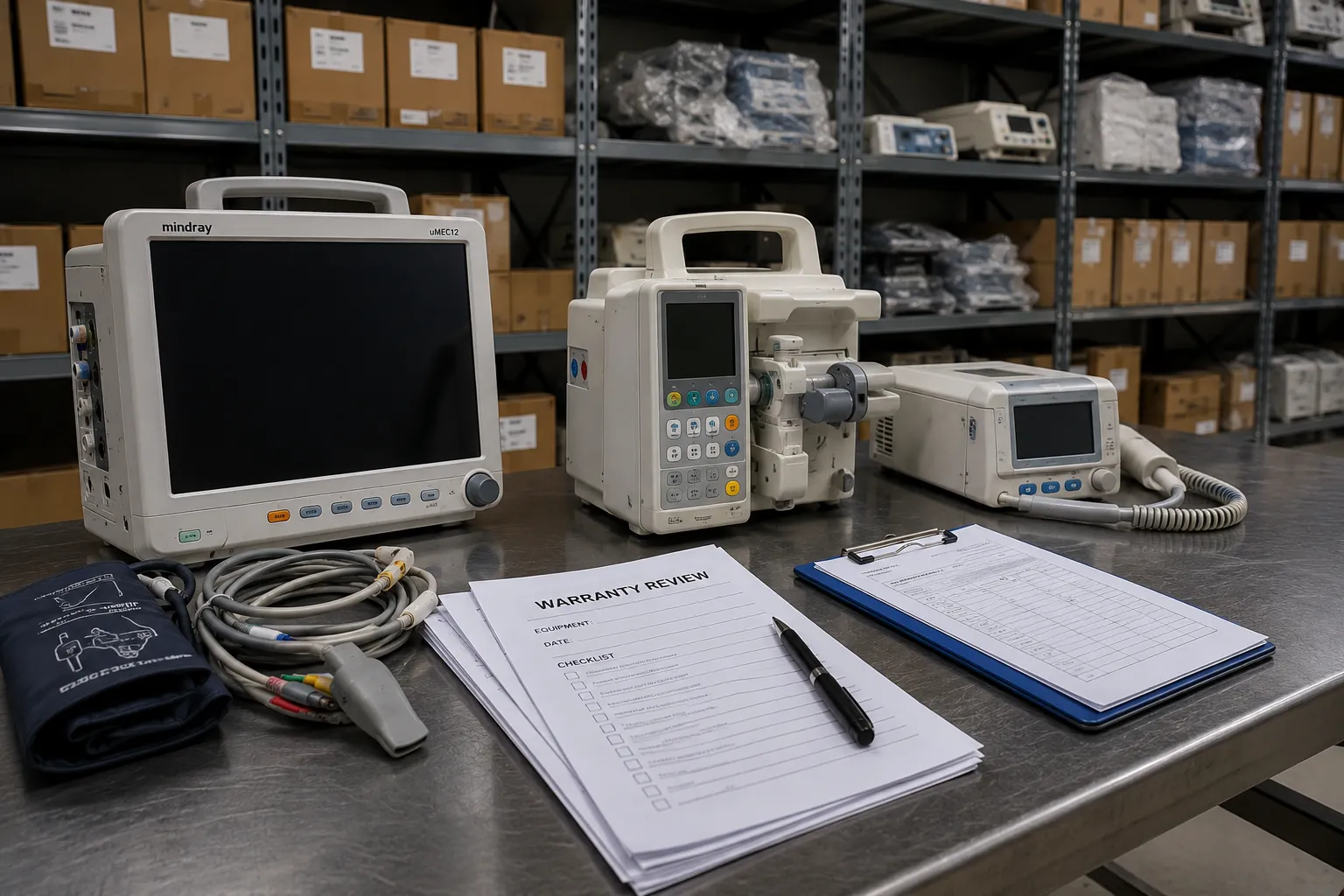
Regulatory Compliance Support- Preventive maintenance helps healthcare organisations meet manufacturer recommendations and applicable local regulatory requirements.
Experienced biomedical engineering teams often consider preventive maintenance one of the most cost-effective methods to improve sustainability and reduce equipment lifecycle costs.
Predictive Maintenance Is Transforming Healthcare Equipment Management
Healthcare technology is becoming increasingly connected, creating new opportunities for data-driven maintenance strategies.
Real-Time Equipment Monitoring- Modern medical devices can continuously assess performance, operating conditions, and equipment status.
Data-Driven Maintenance Scheduling: Maintenance activities can be scheduled based on actual equipment condition rather than fixed service intervals.
Reducing Operational Downtime- Predictive systems help identify potential failures before they disrupt healthcare operations.
Improving Resource Allocation- Maintenance teams can prioritise servicing activities based on utilisation patterns and equipment performance data.
Healthcare facilities increasingly compare maintenance support capabilities offered by business suppliers when evaluating long-term equipment management strategies.
Digital Asset Management Supports Sustainable Maintenance
Healthcare organisations are increasingly adopting digital asset management platforms to improve equipment oversight and lifecycle planning.
Equipment Visibility- Digital systems provide detailed information regarding equipment location, utilisation, condition, maintenance history, and service status. This visibility helps healthcare facilities make informed maintenance and replacement decisions.
Maintenance Documentation- Electronic maintenance records improve compliance, reporting accuracy, and audit readiness. Digital documentation also supports better communication between biomedical engineering teams, service providers, and healthcare administrators.
Performance Analytics- Data-driven insights help identify optimisation opportunities and support informed maintenance decisions. Facilities that have deployed asset management platforms at scale often report improved maintenance efficiency and equipment utilisation.
Lifecycle Forecasting- Healthcare providers can make more informed decisions regarding refurbishment, upgrades, redeployment, and replacement planning when supported by comprehensive equipment data.
Reducing Waste Through Effective Maintenance Practices
One of the most significant sustainability benefits of equipment maintenance is waste reduction. Healthcare facilities generate substantial amounts of equipment-related waste when devices are replaced prematurely or managed inefficiently.
Preventing Premature Equipment Disposal- Many medical devices can remain operational for years beyond their expected service life when supported by structured maintenance programmes. Healthcare organisations often discover that equipment replacement can be delayed without compromising safety or performance.
Supporting Refurbishment Opportunities- Well-maintained equipment is often more suitable for refurbishment, upgrades, and redeployment. Facilities managing large equipment inventories frequently use refurbishment strategies to maximise asset value.
Reducing Electronic Waste- Extending equipment lifespan helps reduce the volume of electronic waste entering disposal and recycling streams. This contributes to sustainability objectives while supporting responsible resource management.
Improving Resource Utilisation- Healthcare providers can achieve better utilisation of equipment assets when maintenance is integrated into long-term lifecycle planning. Effective resource management reduces unnecessary procurement activity and supports environmental responsibility.
Energy Efficiency and Equipment Performance
Equipment condition can directly influence energy consumption and operational efficiency.
Optimised Equipment Operation- Properly maintained systems generally operate more efficiently than equipment affected by wear, contamination, or component degradation. Small performance issues can gradually increase energy consumption if left unresolved.
Reducing Power Consumption- Faulty components may increase electrical demand while reducing equipment effectiveness. Experienced biomedical engineers frequently monitor energy performance alongside maintenance metrics to identify opportunities for improvement.
Cooling System Performance- Imaging systems, laboratory analysers, and critical care technologies often rely on cooling systems to maintain operational stability. Routine maintenance helps ensure these systems continue operating efficiently.
Supporting Sustainability Objectives- Many healthcare facilities incorporate maintenance activities into broader environmental and energy management programmes. Improved maintenance practices can contribute to both operational savings and sustainability goals.
The Role of Biomedical Engineering in Sustainable Maintenance
Biomedical engineering departments play a critical role in maintaining healthcare equipment safely, efficiently, and sustainably.
Equipment Performance Monitoring- Biomedical professionals continuously assess equipment condition, functionality, and reliability. Their observations often provide valuable insight into equipment lifecycle planning and replacement strategies.
Maintenance Programme Development- Structured maintenance schedules help ensure equipment remains safe, effective, and compliant with manufacturer recommendations.
Lifecycle Optimisation- Maintenance records support informed decisions regarding refurbishment, upgrades, redeployment, and replacement. Facilities that have deployed equipment at scale tend to report better lifecycle outcomes when biomedical engineering teams are actively involved.
Regulatory Compliance Support- Biomedical engineers assist healthcare organisations in maintaining compliance with applicable local regulatory standards and equipment performance requirements.
Healthcare facilities often review information from business advertise when comparing maintenance support programmes, technical service capabilities, and lifecycle management solutions.
Procurement Decisions That Influence Long-Term Sustainability
Maintenance considerations should form part of every healthcare equipment procurement decision.
Total Cost of Ownership Assessment- The purchase price is only one component of the overall equipment cost. Maintenance requirements, spare parts availability, service support, and expected lifespan all influence the total cost of ownership.
Service Support Availability- Healthcare organisations operating in regions with limited technical support often place greater emphasis on equipment reliability and service accessibility.
Training and User Competency- Proper operator training can significantly reduce equipment misuse, prevent avoidable failures, and improve maintenance outcomes.
Equipment Compatibility Considerations- Procurement teams increasingly evaluate how new equipment integrates with existing infrastructure, software platforms, and maintenance systems.
Healthcare networks managing procurement across multiple facilities frequently benefit from establishing business partners that provide technical support, access to spare parts, staff training, and lifecycle planning.
Future Trends Shaping Sustainable Maintenance Strategies
Healthcare maintenance practices continue evolving alongside advances in digital technologies, automation, and healthcare infrastructure development.
Artificial Intelligence for Predictive Maintenance- AI-powered systems can analyse equipment performance data and identify potential failures before they occur. This allows maintenance teams to intervene earlier, reduce downtime, and improve equipment reliability. Facilities that have implemented AI-assisted maintenance programmes often report more efficient resource allocation and improved equipment availability.
Internet of Medical Things (IoMT)- Connected medical devices provide real-time operational insights that support proactive maintenance strategies. Continuous monitoring helps organisations identify performance deviations and optimise servicing schedules.
Remote Diagnostics and Support- Manufacturers and service providers increasingly use remote monitoring technologies to identify and resolve technical issues efficiently. Remote diagnostics can reduce service response times and improve support availability, particularly in geographically dispersed healthcare networks.
Automated Maintenance Scheduling- Future maintenance platforms may automatically schedule service activities based on equipment condition, utilisation patterns, and performance trends. Automation can help reduce administrative burden while improving maintenance consistency.
Digital Twin Technology- Digital replicas of healthcare equipment may help organisations simulate performance, predict failures, and optimise maintenance planning. This technology is expected to support more accurate lifecycle forecasting and asset management.
Healthcare organisations adopting these innovations are often better positioned to improve reliability, reduce waste, and support sustainability objectives.
Why Sustainable Maintenance Will Continue Gaining Importance
Several industry trends are increasing the importance of sustainable maintenance across healthcare systems worldwide.
Growing Equipment Complexity- Modern healthcare technologies are becoming increasingly sophisticated, requiring more advanced maintenance approaches and technical expertise.
Rising Sustainability Expectations- Healthcare providers are facing greater pressure to reduce their environmental impact while maintaining operational excellence and the quality of patient care.
Increasing Focus on Lifecycle Value- Procurement teams are increasingly evaluating equipment based on total ownership costs and long-term value rather than purchase price alone.
Expanding Digital Healthcare Infrastructure- As healthcare facilities adopt connected technologies, maintenance strategies will become more data-driven and integrated with broader operational systems.
Experienced clinical supply managers typically evaluate maintenance capabilities alongside equipment performance when planning long-term technology investments.
Final Thoughts
Sustainable equipment maintenance practices are becoming an essential component of modern healthcare technology management. By focusing on preventive maintenance, predictive technologies, lifecycle optimisation, digital asset management, and resource efficiency, healthcare organisations can significantly extend equipment lifespan while reducing waste and environmental impact.
For healthcare facility procurement decision-makers, maintenance should be viewed as a strategic investment rather than simply a technical requirement. Effective maintenance programmes improve equipment reliability, reduce operating costs, support sustainability objectives, and maximise long-term value.
Healthcare facilities that integrate sustainability into maintenance planning often achieve stronger operational performance, improved equipment availability, and better resource utilisation. As healthcare technology continues advancing, sustainable maintenance practices will play an increasingly important role in helping organisations balance operational efficiency, financial performance, environmental responsibility, and patient care requirements.
Disclaimer
Medigear.uk is a global medical equipment supplier, exporter, and distributor. The content published on this site is intended for educational and product awareness purposes only. Nothing on this page constitutes medical advice, clinical guidance, or treatment recommendations. All healthcare procurement and clinical decisions should be made by qualified medical professionals and compliant procurement teams operating within the regulatory frameworks of their respective countries.