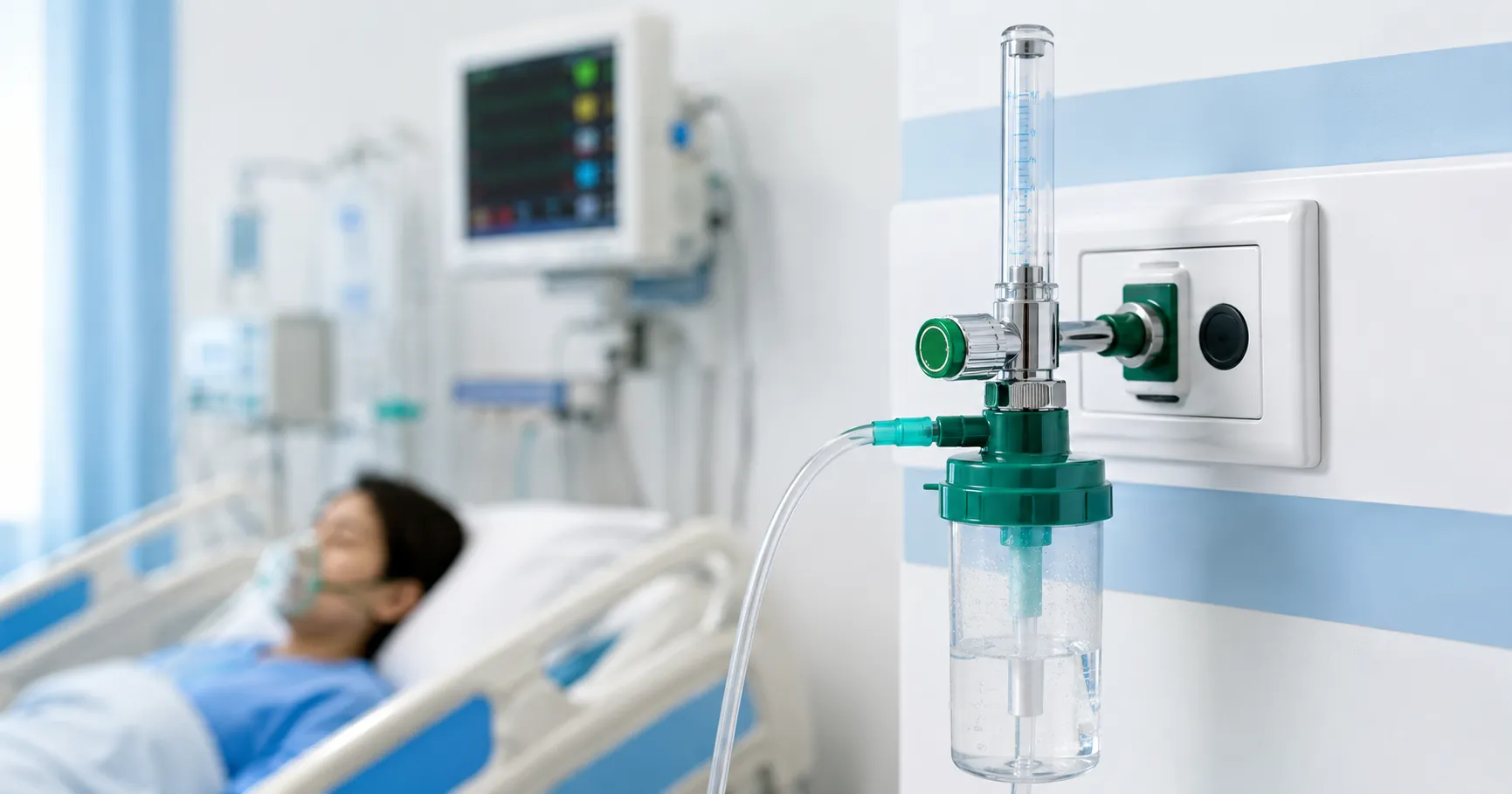
An oxygen flowmeter is a small but important part of oxygen therapy equipment. It helps control the oxygen flow delivered from a wall outlet, cylinder, concentrator, or medical gas system to a patient interface such as a nasal cannula or oxygen mask. In busy healthcare settings, accurate and easy-to-read flow control helps staff deliver oxygen more safely and consistently.
For healthcare buyers, choosing an oxygen flowmeter is not only about selecting a low-cost accessory. Buyers need to review flow range, connector compatibility, outlet type, durability, humidifier support, cleaning needs, maintenance access, and compliance with applicable local regulatory standards. WHO-UNICEF technical guidance for oxygen therapy devices is intended to support the selection, procurement, use, and maintenance of oxygen therapy equipment for health facility administrators, clinicians, biomedical engineers, and procurement officers.
How Oxygen Flowmeters Support Oxygen Therapy
Oxygen flowmeters help regulate the flow of oxygen before it reaches the patient. They are used by nurses, doctors, respiratory therapists, anaesthesia teams, emergency staff, and home care providers under appropriate clinical direction.
Controlled Oxygen Flow — The flowmeter allows staff to set a visible oxygen flow rate. Oxygen administration devices are commonly grouped by flow type, and the oxygen flow rate is typically adjusted using a flowmeter connected to the oxygen source.
Support for Different Delivery Interfaces — Flowmeters may be used with nasal cannulas, simple masks, non-rebreather masks, humidifier bottles, and selected oxygen accessories. The selected flow range must match the intended device and patient care area.
Clear Reading During Care — A good flowmeter should be easy to read at the bedside. In practice, unclear markings, poor lighting, or a sticky adjustment knob can slow staff during busy rounds or emergency response.
Safer Oxygen Management — Oxygen is a clinical therapy and should be administered by trained healthcare personnel in accordance with local policy and patient need. StatPearls notes that oxygen should be treated as a drug within its therapeutic window, with attention to risks from inappropriate administration.
Where Oxygen Flowmeters Are Used
Oxygen flowmeters are used across many healthcare settings. Their design and flow range should match the department, oxygen source, and patient group.
Hospital Wards — General wards commonly use wall-mounted oxygen flowmeters connected to medical gas outlets. They support routine oxygen therapy for patients who need controlled oxygen delivery.
Emergency and Critical Care Areas — Emergency rooms, intensive care units, and recovery areas may need strong, easy-to-adjust flowmeters. Facilities sourcing through regulated and certified equipment suppliers worldwide should confirm the connector type, flow range, outlet compatibility, and spare-part availability before procurement.
Operating and Recovery Rooms — Anaesthesia and post-operative areas may use oxygen flowmeters as part of broader oxygen delivery and monitoring systems. These settings need reliable performance because oxygen may be required during recovery, sedation support, or emergency care.
Clinics and Home Oxygen Support — Smaller clinics, mobile medical units, and home oxygen programmes may use cylinder or concentrator-compatible flowmeters. WHO oxygen concentrator guidance focuses on appropriate selection, procurement, utilisation, and maintenance to improve oxygen access and system quality.
Common Types of Oxygen Flowmeters
Oxygen flowmeters are available in different designs. The right type depends on the oxygen source, required flow range, and clinical setting.
Wall-Mounted Flowmeters — These connect to hospital medical gas pipeline outlets. They are common in wards, ICUs, operating areas, and emergency departments. Buyers should confirm the outlet standard used in the facility before ordering.
Cylinder Flowmeters — These are used with oxygen cylinders and usually work with a pressure regulator. They are useful for transport, emergency backup, smaller clinics, and areas without fixed oxygen pipelines.
Thorpe Tube Flowmeters — These use a transparent tapered tube and a floating ball or indicator. Staff read the flow level visually, so clear markings and vertical mounting are important for accurate use.
Dial Flowmeters — Dial models allow flow selection by turning a control to a marked setting. They can be compact and easier to read from certain angles, but buyers should confirm available flow steps and accuracy requirements.
Low-Flow and Paediatric Options — Some patients require lower flow rates than standard adult settings. Low-flow or paediatric flowmeters may support more controlled adjustment for selected care areas.
Selection Points for Healthcare Buyers
Oxygen flowmeters should be selected for clinical suitability, not appearance alone. A mismatch between flowmeter type and facility system can create avoidable procurement problems.
Flow Range — Buyers should check whether the unit supports the required oxygen flow range. Nasal cannulas and simple masks have different typical flow needs, and StatPearls describes nasal cannula flows commonly around 1–6 L/min and simple face mask flows around 5–10 L/min.
Connector Compatibility — Oxygen outlets and cylinder connections vary by region and system type. Procurement teams should confirm wall outlet standard, regulator connection, humidifier connection, and tubing compatibility before placing bulk orders.
Humidifier Bottle Support — Some flowmeters are used with humidifier bottles to add moisture to oxygen when clinically required. Humidifiers are commonly used because dry oxygen can irritate the respiratory mucosa, and they may improve patient comfort in suitable situations.
Material and Build Quality — The flowmeter body, control knob, tube, float, seals, and connectors should tolerate regular use. In practice, weak knobs, unclear scales, or poor seals often become visible only after daily ward handling.
Cleaning and Safety — The unit should be easy to wipe and should not have unnecessary dirt-trapping gaps. Buyers should request cleaning guidance and confirm compatibility with the facility’s approved cleaning products.
Procurement Guidance for Oxygen Flowmeters
Oxygen flowmeter procurement should include technical review, clinical input, and biomedical engineering checks. A small accessory can cause major workflow problems if it does not fit the oxygen source or delivery setup.
Total Cost of Ownership — Buyers should consider the flowmeter, connectors, regulators, humidifier bottles, tubing, spare seals, replacement parts, calibration checks, and maintenance time. A budget-tier product may become costly if it fails frequently or requires non-standard parts.
Compliance and Documentation — Procurement teams should request product specifications, connection standards, cleaning instructions, warranty terms, spare part information, and conformity documents. Compliance should be checked against applicable local regulatory standards, such as CE, FDA, ISO, or their regional equivalents, where relevant.
Supplier Transparency — Suppliers and manufacturers advertising to global healthcare buyers should provide clear details on flow range, gas type, connector style, pressure rating, humidifier compatibility, materials, and packaging. Healthcare buyers should avoid vague listings that do not confirm whether the unit is suitable for medical oxygen use.
Training and Use Checks — Staff should know how to read the flowmeter, adjust the flow, connect accessories, and report faults. Biomedical or engineering teams should inspect units before clinical use when local policy requires it.
Healthcare groups managing several hospitals, clinics, or home care programmes may benefit from structured distribution and reseller partnership arrangements. Standardising flowmeter models and connectors can reduce confusion, simplify spare parts, and support smoother staff training.
Maintenance and Service Life
Oxygen flowmeters need regular inspection because small faults can affect daily oxygen therapy workflows. A unit may look usable but still have a stiff control valve, a cracked tube, a damaged seal, or an inaccurate flow indication.
Routine Visual Checks — Staff should check for cracks, loose connectors, unreadable scales, sticky knobs, leaks, and missing humidifier attachments. Any damaged unit should be removed from clinical use in accordance with facility policy.
Cleaning and Infection Prevention — Flowmeters should be cleaned according to manufacturer guidance and local infection prevention policy. Shared oxygen equipment needs a clear cleaning responsibility between patients or use areas.
Accessory Replacement — Humidifier bottles, seals, tubing, adapters, and regulator parts may need replacement during the product’s life. Procurement teams should confirm spare part availability before buying large quantities.
Storage and Handling — Spare flowmeters should be stored clean, dry, and protected from impact. Dropping or rough handling can damage the tube, control valve, or connector.
International Sourcing Considerations
Oxygen flowmeters can be sourced internationally when buyers clearly define the oxygen source, connector standard, flow range, gas type, humidifier requirement, packaging, documentation, and spare part needs. This is especially important for hospitals using medical gas pipelines, cylinder networks, or mixed oxygen supply systems.
Buyers should confirm whether they need wall outlet flowmeters, cylinder flowmeters, paediatric flowmeters, low-flow options, humidifier-compatible models, or regulator sets. For project-based sourcing, buyers can contact the Medigear.uk team for supply support to discuss availability, documentation, export needs, and procurement requirements.
Final Thoughts
Oxygen flowmeters are essential accessories for controlled oxygen delivery in healthcare facilities. They support oxygen therapy by helping staff adjust and monitor flow from wall outlets, cylinders, concentrators, or medical gas systems.
The right flowmeter should match the oxygen source, clinical use, flow range, connector standard, humidifier requirement, cleaning policy, and maintenance capacity. Buyers should review product documentation, spare parts, compliance needs, and supplier support before ordering.
Disclaimer
Medigear.uk is a global medical equipment supplier, exporter, and distributor. The content published on this site is intended for educational and product awareness purposes only. Nothing on this page constitutes medical advice, clinical guidance, or treatment recommendations. All healthcare procurement and clinical decisions should be made by qualified medical professionals and compliant procurement teams operating within the regulatory frameworks of their respective countries.