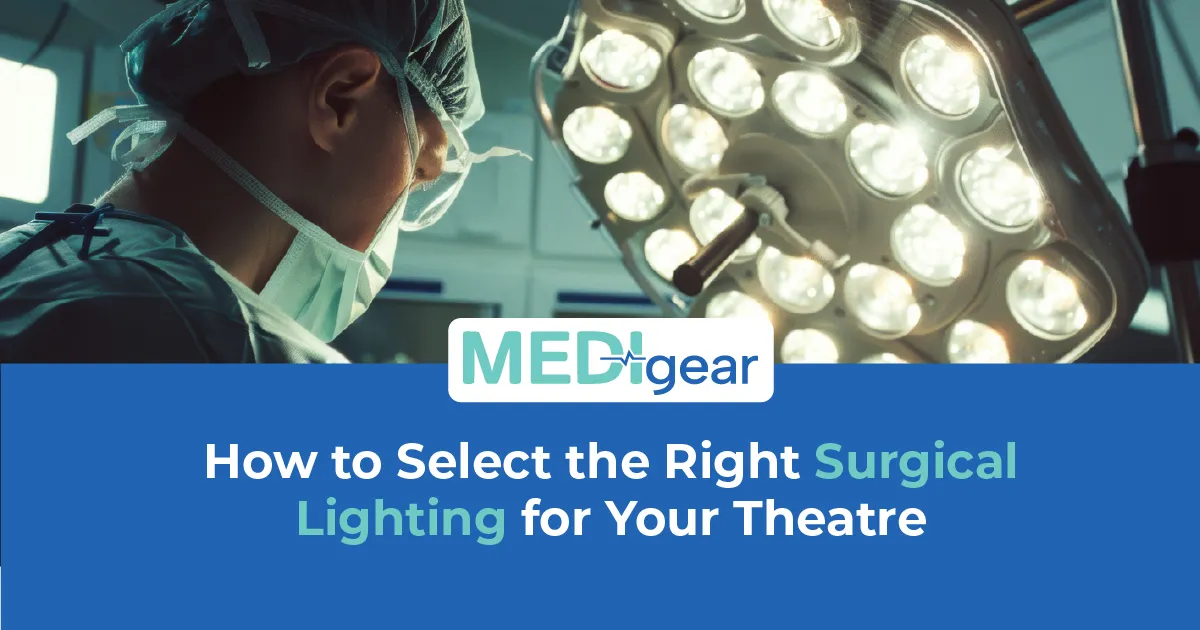
What if the surgeon could not see? What if the light cast a shadow every time a hand moved? Turned tissue the wrong colour? Heated the wound so much that the team paused between cuts? What if the one piece of equipment that makes every other tool visible was the one nobody upgraded? That is what bad surgical lighting does. Does not dim the field. Dims the surgery. And in theatre, what the surgeon cannot see is what the surgeon cannot fix.
She ran a day surgery unit with two theatres. The lights were fourteen years old. Halogen. Hot. Colour rendering drifted. Reds looked brown. Tissue planes blurred. The surgeon wore a headlamp to compensate. Six or seven repositions per case. Each one broke the flow and added minutes. She replaced both with LED surgical lights — cool-running, shadow-free, colour-accurate, ceiling-mounted, with multiple heads. Repositioning dropped once or twice. The headlamp went into a drawer. Same room. Same team. Different light. Different surgery.
This guide covers how to select the right surgical lighting for your theatre with the honest detail that theatre managers, surgeons, and procurement teams need. Medigear supplies certified surgical lighting to hospitals and clinics across the UK, and every point here comes from real theatre demand, not catalogue specs. Theatres sourcing certified surgical lighting can explore the Medigear buyers portal for pricing, availability, and procurement support built for surgical purchasing.
Illuminance
Illuminance is the amount of light delivered to the field — measured in lux. General surgery requires 100,000 lux or more at the wound site. Deep cavity work needs higher. Sixty thousand on the spec sheet? If it drops to forty at working distance, it does not meet the demand. Check the lux at the real working distance. Not the distance the manufacturer measured.
Colour Rendering
Colour rendering index — CRI — measures how accurately the light shows true tissue colour. A CRI of ninety or above is the standard for surgical lighting. Below ninety — reds shift, tissue planes lose contrast, and the surgeon's eye works harder than it should. Below ninety, the light lies about the colour of what it shows.
Colour Temperature
Colour temperature — measured in Kelvin — determines whether it is warm or cool. Surgical lighting typically ranges from 4,000 to 5,000 Kelvin. Adjustable lets the surgeon match the light to the tissue. Cool improves vascular contrast. Warm suits soft tissue. Fixed forces the surgeon to adapt. Adjustable lets the light adapt instead.
Shadow Control
Shadow control separates a good surgical light from a useless one. Heads move. Hands cross the beam. Instruments block. A single head creates shadows every time something crosses. Multi-head — two or three sources on separate arms — fills shadows from different angles. The shadow pattern under real conditions is the test that no spec sheet replicates. Surgical lighting manufacturers wanting to list products where theatres are searching can reach clinics through the Medigear advertising platform and connect with buyers sourcing exactly these systems.
Head Size
Light head size affects the field diameter and depth of focus. Larger head — wider, more even field. Smaller head — tighter beam for small deep cavities. Adjustable field — wide wash to focused spot — gives control. Cannot adjust? The surgeon chooses between seeing the whole wound and seeing the deepest part.
Heat
Heat output matters in a room where the patient is open, and the team is gowned. Halogen generates heat. Warms the wound. Dries tissue. Raises the temp under the drapes. LED runs cool. Light without the thermal load that halogen carries. Long procedures — joints, tumours, cardiac. The difference between hot and cool is whether the tissue stays moist or dries.
Depth
Depth of illumination — how far light penetrates a cavity without losing intensity — defines what the surgeon sees at the bottom. Poor depth means brightness drops as the cavity deepens. The surgeon at the bottom works dimmer than the one at the surface. Unless the light maintains intensity through depth. Check the depth of focus before buying. Reach out to our team for guidance on matching surgical lighting specifications to your theatre layout and procedure list.
Mounting
Mounting options shape where the light sits and how it moves. Ceiling-mounted gives the widest motion and a clear floor. Wall-mounted suits smaller rooms. Floor-standing serves as backup in minor procedure rooms. Mount must match ceiling height, load capacity, and workflow. A ceiling mounts that the room cannot support is a mount that moves at the wrong moment. Suppliers of surgical lights, mounting systems, and theatre accessories can register through the Medigear supplier portal to connect with hospitals building or upgrading operating theatres.
Sterilisable Handles
Sterilisable handles on the light head allow the surgeon to reposition without breaking sterile technique. A light that needs the circulator to adjust adds a step, a delay, and a break in focus to every repositioning. Autoclavable handles gripped in the sterile field keep control where it belongs. With the surgeon.
Camera Integration
Camera integration on modern surgical lighting allows recording, live streaming, and remote consultation. The camera in the light head captures the field from directly above. The surgeon's view. Recorded. Teaching. Audit. Medicolegal. The integrated camera turns surgical lighting into a recording platform without cluttering the field of view.
Linked Guides
For theatres managing surgical lighting alongside broader clinical equipment, our guide to the best nebulisers covers the respiratory devices used in recovery rooms beside theatres — because the patient leaving the lit table needs airway support in the room next door. Our guide to setting up patient monitoring on a budget covers the vital signs tools that run from induction through recovery — because the monitors beside the table work under the same light the surgeon uses.
Battery Backup
Battery backup keeps the surgical light on when the mains is not. A light failing mid-procedure plunges the field into darkness. Patient is still open. Thirty minutes of battery covers the gap between power loss and generator startup. No backup? One power cut from operating blind. Companies seeking long-term collaboration on surgical lighting supply, installation, and theatre fit-outs can explore the Medigear partnership programme for opportunities beyond a single purchase.
LED Lifespan
LED lasts forty to sixty thousand hours. Halogen lasts for hundreds. LED costs more upfront. Runs for years. Halogen costs less. Dies mid-list at the worst moment. Buy the one that lasts. Not the one that costs less on the invoice and more in every lost theatre minute.
Dimming
Dimming without colour shift is a feature only quality surgical lights deliver. Cheap LEDs change colour when dimmed. Beam yellows. Contrast drops. Tissue looks different at low versus high. Quality surgical lighting holds colour across the full dimming range. The surgeon dimming for a delicate dissection needs the same colour fidelity as at full brightness.
Real-World Testing
Does your theatre test the surgical lighting under real operating conditions before buying? A demo with an empty table in a bright room tells nothing about how the light performs with three pairs of hands in a deep abdominal cavity at 4 pm. Shadow patterns change under real use. Colour shifts under real tissue. Test with a surgeon, a scrub team, and a retractor in place. The light that wins in the theatre is the one the surgeon trusts.
Module Swap
Can your maintenance team replace a failed LED module without taking the entire light out of service? Modular designs let single segments be swapped in minutes. Non-modular units go dark until the engineer arrives. A surgical light designed for fast module swap keeps the theatre running when a segment fails. One that requires full replacement closes the room.
Backup Plan
What does your backup plan look like when the main surgical light fails mid-case? A mobile floor light. A headlamp. A second ceiling arm. Something must fill the field in the seconds between failure and fix. The patient is open. The surgeon cannot pause. The backup must be in the room — not in a cupboard down the corridor.
Infection Control
Does your surgical lighting meet current infection control standards for theatre? Smooth sealed surfaces with no crevices. Handles that autoclave. Heads that wipe clean between cases. A light with exposed joints, unsealed seams, or textured surfaces harbours bacteria that no wipe removes. Infection control in theatre covers every surface above the patient — including the one that lights them.
Cost Per Theatre Hour
How do you compare surgical lighting costs across suppliers? Not by sticker price. By cost per theatre hour over the expected lifespan. Add the purchase, installation, bulbs, modules, maintenance, power, and expected hours. LEDs run for 60,000 hours without a change. Halogen dies in hundreds. The maths is not close. The light that costs more on day one costs less on every day after.
Why Choose Medigear
Medigear supplies certified surgical lighting, mounting systems, and theatre accessories to hospitals, day surgery units, and clinics across the UK. Whether you are equipping a new theatre, replacing ageing halogen, or adding a second light for shadow control, our team matches the right system to your procedures and your surgeons. Reach out to our team for guidance built around the field the surgeon needs to see — and the light that must show it without shadow, without heat, and without compromise.
Conclusion
What if the surgeon could not see? Fourteen-year-old halogen lights. Reds that looked brown. Six repositions per case. A headlamp to compensate. She replaced them. LED. Cool. Shadow-free. Colour-accurate. Repositioning dropped to once or twice. Headlamp went in a drawer. Same room. Same team. Different light. Different surgery. The surgical light is the one piece of equipment that makes every other instrument visible. Shadow control, colour truth, depth, heat, and lifespan — these are not features. They are the conditions the surgeon's eyes depend on for every cut. Medigear stands alongside surgical teams with certified theatre lighting and the honest support that operating visibility demands. Speak to our team today — because what the surgeon cannot see is what the surgeon cannot fix.
⚠️ This post is for general information only. We do not sell medications or provide prescriptions — Medigear.uk is a medical equipment supplier only.