How to Safely Use a Home Oxygen Concentrator at Home
If you or a loved one relies on supplemental oxygen, knowing how to safely use a home oxygen concentrator is essential for both comfort and clinical well-being. These compact devices give patients with COPD, pulmonary fibrosis, and other respiratory conditions the freedom to breathe more easily at home. Yet safety missteps remain common — from poor placement to skipped filter cleaning — and they can quietly affect oxygen purity and patient health. As a trusted UK supplier of certified medical equipment, Medigear helps families and clinicians make home oxygen therapy safe and effective.
What Is a Home Oxygen Concentrator
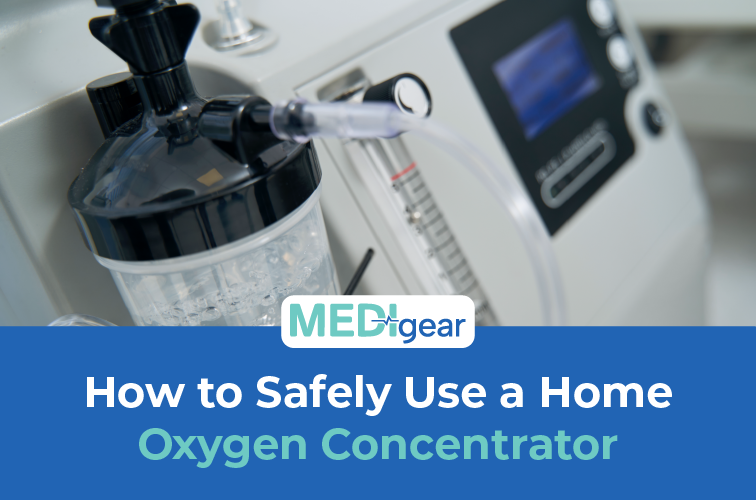
A home oxygen concentrator is a medical device that draws in room air, removes nitrogen, and delivers concentrated oxygen through a nasal cannula or mask. Unlike oxygen cylinders, it never needs refilling — it produces oxygen on demand from the surrounding air. Most units deliver between 1 and 10 litres per minute at oxygen purity levels of 90–96%. They are designed for long-term respiratory support at home, prescribed for conditions such as COPD and post-COVID recovery.
Clinical Purpose & Applications
Home oxygen concentrators are prescribed when blood oxygen saturation falls below safe levels. Common clinical uses include long-term oxygen therapy, nocturnal support and palliative care. They are also widely used in post-surgical recovery and chronic respiratory care. Each scenario calls for a specific flow rate, which should always be set by a qualified clinician. Self-adjustment can lead to oxygen toxicity or undertreatment — both carry serious risks.
Key Features & Built-in Safety Technology
Modern concentrators come packed with features that protect both the user and the device. Key features to look for include:
- Adjustable flow rate dial with clear LCD display
- Audible and visual alarms for power loss and low purity
- HEPA-grade intake filtration
- Quiet operation suited to bedrooms
- Oxygen purity indicator for live monitoring
- Hour meter to track service intervals
These features are not luxuries — they are clinical safeguards for safe oxygen delivery.
How a Home Oxygen Concentrator Works
The device pulls in ambient air through an intake filter and passes it through two zeolite-filled sieve beds. These beds trap nitrogen molecules under pressure, allowing pure oxygen to flow forward to the patient. The beds alternate continuously, releasing trapped nitrogen back into the room. This pressure swing adsorption process delivers a steady stream of medical-grade oxygen without tanks or refills. Knowing this cycle helps users recognise normal sounds and spot when something is wrong.
Safe Setup & Placement at Home
The correct setup is the single most important safety step. Place the concentrator in a well-ventilated room, at least 30 cm away from walls, curtains and furniture. Avoid carpeted corners that trap dust. Keep the device at least 2 metres from heat sources, open flames, and aerosol sprays — oxygen accelerates combustion. Plug it directly into a wall socket, never an extension lead. Run the unit for 15–20 minutes before connecting the cannula to allow purity to stabilise.
Daily Safe-Use Routine for Patients
Daily safe use comes down to a simple routine. Check the flow rate matches your prescription before each session. Inspect the cannula and tubing for kinks, cracks or moisture. Clean the nasal prongs gently with mild soap and warm water. Wipe the exterior of the unit with a dry cloth only — never use alcohol or petroleum-based cleaners near the air intake. Always switch off the device using the proper power button rather than unplugging it mid-session.
Maintenance, Filters & Service Schedule
Regular maintenance protects both the patient and the equipment. The gross particle filter should be rinsed weekly and replaced every 6–12 months, depending on the environment. Internal filters and sieve beds are serviced by qualified technicians only — never attempt to open the unit yourself. Keep a service log noting hours of use, alarm events and filter changes. A well-maintained concentrator can deliver reliable therapy for many years, while neglected ones lose purity output within months.
Understanding Alarms & Warning Signals
Every concentrator has alarms that signal a problem. A low-purity alarm means the sieve beds need servicing. A power-loss alarm indicates the unit has lost mains supply — switch to backup oxygen immediately. A high-temperature alarm usually means blocked airflow or a clogged filter. Never ignore an alarm or silence it without identifying the cause. Keep the user manual within reach and have your supplier's contact number on hand for quick support.
Common Mistakes Buyers & Users Make
One common mistake buyers make is placing the device in a cupboard or behind furniture to hide it — this restricts airflow and overheats the unit. Others skip filter cleaning, use the wrong flow rate, or smoke nearby. Never apply oil-based lotions, lip balms or hair products near the cannula. Avoid running the device on extension leads, as voltage drops can damage the compressor. Each of these small errors compounds over time, reducing both safety and equipment life.
Certifications, Compliance & Quality Marks
Always choose a concentrator that meets recognised medical standards. Look for CE marking, ISO 13485 certification and UKCA approval where applicable. These marks confirm the device has been independently tested for safety, accuracy and durability. Reputable suppliers will provide documentation, calibration certificates and user training. Medigear supplies only certified, traceable units that meet UK clinical standards, giving healthcare professionals and families full confidence.
Buying Guide — What to Look For
Before purchasing, it is important to consider flow rate range, noise level, weight and warranty terms. Match the flow capacity to the prescription — a 5 LPM patient should not buy a 3 LPM unit. Check decibel ratings if the device will run overnight. Ask about service availability, replacement parts and warranty length. Also, confirm whether training and after-sales support are included. A slightly higher upfront cost often means lower lifetime cost when reliability and service are factored in.
Why Choose Medigear for Home Oxygen
Medigear is a trusted UK supplier of certified medical equipment, partnering with hospitals, clinics and home-care providers nationwide. Every home oxygen concentrator we offer is sourced from approved manufacturers, fully compliant with UK clinical standards, and backed by expert guidance from selection through to long-term servicing. Our team helps families and clinicians choose the right device, set it up safely, and keep it running reliably for years to come.
CONCLUSION
Knowing how to safely use a home oxygen concentrator transforms therapy from a daily worry into a trusted routine. With correct setup, regular maintenance, prompt alarm response and certified equipment, patients enjoy safer care at home. Medigear remains committed to delivering certified oxygen concentrators backed by expert support, helping UK families breathe easier with confidence.