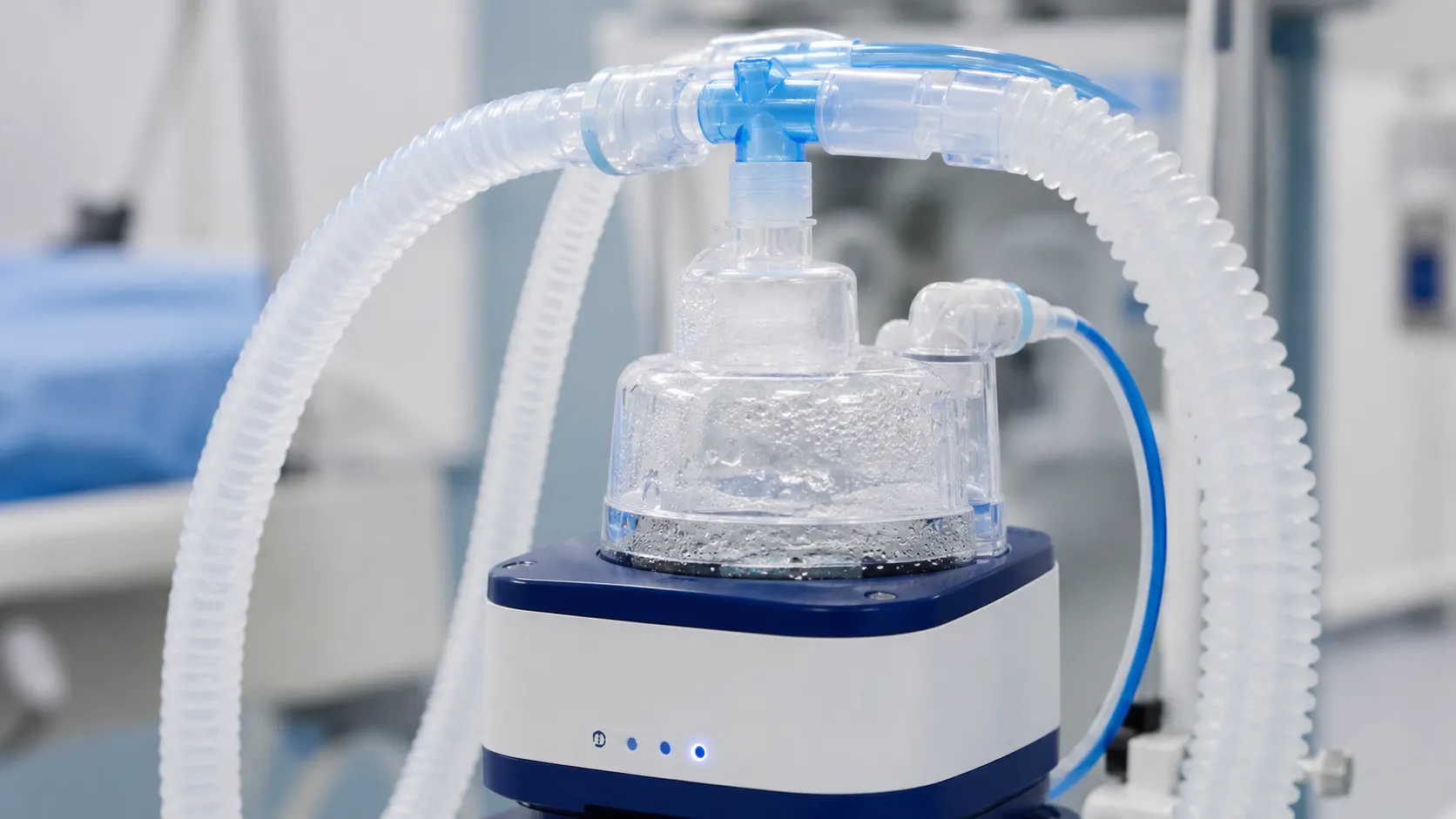
A heated humidifier is an active device that warms and saturates the dry gas leaving a ventilator so it reaches the patient at close to body conditions. Gas passes through or over a heated water reservoir, picks up water vapour, and is then carried along a heated-wire circuit to the airway. The clinical target is delivery near 37°C and around 44 mg/L of absolute humidity at the tube tip, matching the natural output of the upper airway that an endotracheal or tracheostomy tube bypasses.
For procurement teams supplying critical care, theatres and long-term ventilation, the humidifier is a small purchase with a large consumables tail. Getting the controller, chamber and circuit right protects the airway, the ventilator and the annual budget.
How Active Heated Humidification Works
The core is a heater plate under a water chamber. A servo controller drives the plate to a set chamber-outlet temperature, and a second temperature probe near the patient closes the loop at the airway. Most systems run the airway probe a degree or two above the chamber outlet, for example a chamber setpoint near 37°C with an airway target around 39 to 40°C, so the gas stays above its dew point and does not shed water as it travels. That deliberate offset stops condensation, or “rain-out,” from pooling in the tubing.
Water is fed automatically from a sterile water bag through a float or level valve, keeping the chamber filled without breaking the circuit. Auto-feed chambers reduce handling and the infection risk of manual top-ups. The whole assembly is a closed, single-patient system from bag to airway.
The Heated-Wire Circuit
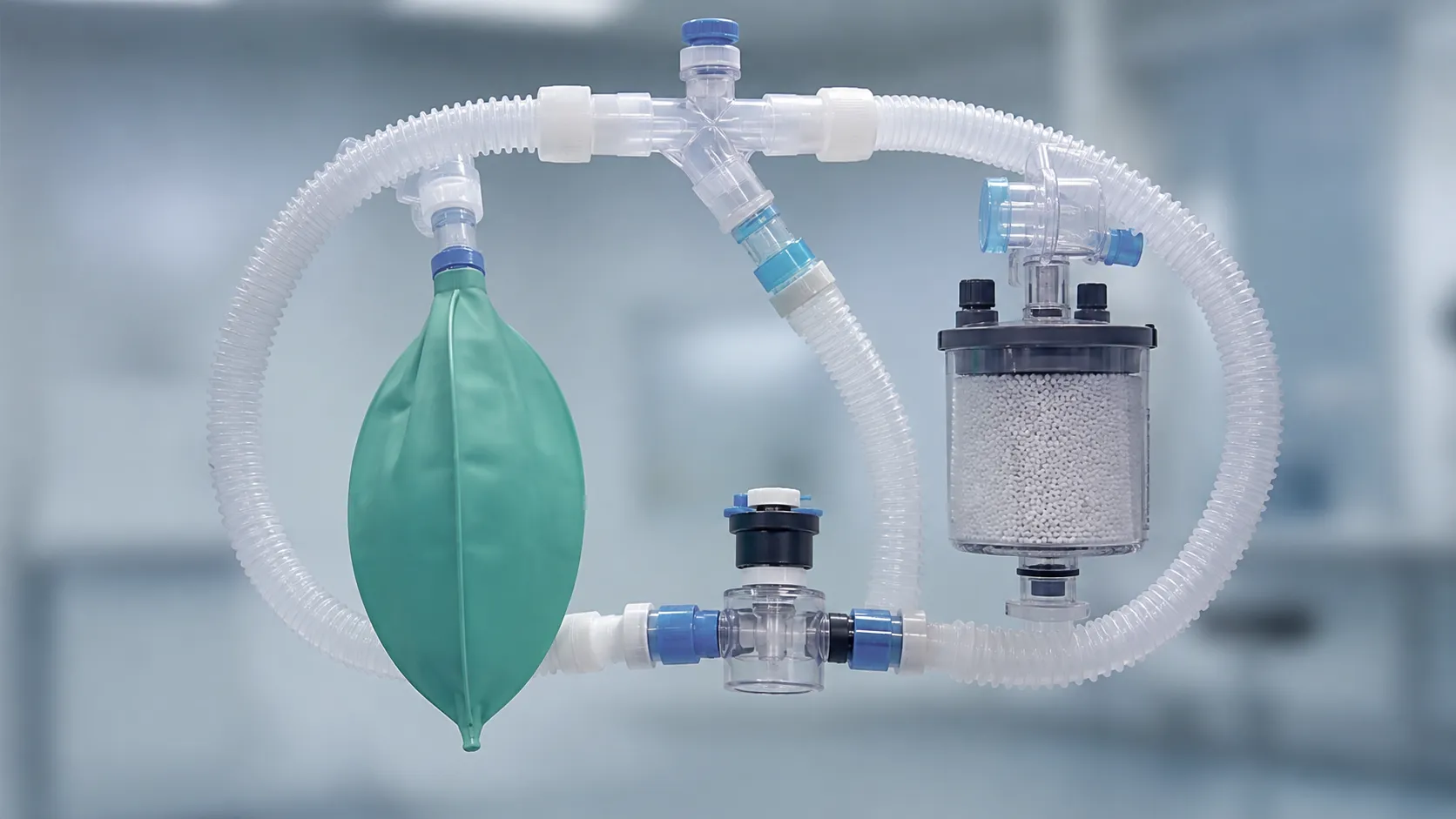
A heated-wire breathing circuit carries a fine resistive wire inside the inspiratory limb, and often the expiratory limb too on dual-heated designs. Keeping the tubing wall warm prevents gas from cooling and condensing before it reaches the patient. Dual-limb heating also cuts expiratory water build-up, which matters for exhaled-flow measurement and filter loading. Circuits are matched to the controller family, so buyers should confirm the circuit, chamber and heater base are a validated set rather than mixed brands.
Active Humidification Versus a Passive HME
The alternative is a passive heat and moisture exchanger (HME), which recycles the patient's own exhaled heat and moisture with no power or water. HMEs are simple and cheap but deliver less moisture and add dead space, so they suit shorter cases and transfer. Active heated humidifiers are preferred for prolonged invasive ventilation, thick or bloody secretions, low tidal volumes, high minute ventilation and neonatal or paediatric care, where maximum, reliable humidity is needed. Do not stack the two approaches in series.
Key Specifications to Check
Compare devices on the humidity output they can sustain at clinical flows, not just a headline figure. Useful points to weigh include:
-
Humidity and temperature control: stable delivery near 37°C and 33 to 44 mg/L across the flow range you actually use, from neonatal to adult.
-
Modes: separate invasive and non-invasive or high-flow settings, since NIV and nasal high-flow need different targets and leak tolerance.
-
Chamber type: auto-fill versus manual, single-patient disposable versus reusable, and priming volume.
-
Circuit compatibility: 22 mm and 15 mm connectors to ISO 5356-1, single- or dual-heated wire, and adult, paediatric and neonatal lengths.
-
Alarms and safety: high and low temperature, probe disconnect, dry chamber and over-temperature cut-out.
-
Interlocks: automatic detection of chamber and probe presence before heating.
Standards, Safety and Regulation
Respiratory humidifying equipment is covered by ISO 80601-2-74, the particular standard for the basic safety and essential performance of active humidifiers, which sits under the IEC 60601-1 general safety framework and its IEC 60601-1-2 electromagnetic-compatibility collateral. Connectors follow the ISO 5356-1 conical family. Devices placed on the UK market must carry UKCA or recognised CE marking, and buyers can confirm regulatory status and reporting routes through the MHRA. The over-temperature protection required by these standards is central, because delivering gas that is too hot risks airway injury.
Care Settings and Circuit Choice
In adult critical care, dual-heated circuits with auto-fill chambers are the norm for invasive ventilation. Nasal high-flow oxygen therapy uses the same humidifier family with dedicated cannula circuits. Neonatal and paediatric units need low-compliance, low-volume circuits and chambers calibrated for very low flows. Hence, a single controller that accepts the full circuit range is efficient to stock. For domiciliary and long-term ventilation, quieter units with simpler interfaces and lower running costs are usually specified.
Decontamination and Consumables
Breathing circuits and auto-fill chambers are generally single-patient-use disposables, changed on a defined schedule or when visibly soiled rather than routinely daily, following local infection-control policy. The heater base is wiped down between patients with a compatible surface disinfectant and never immersed. Temperature probes may be reusable and require validated cleaning, or single-use to remove reprocessing burden. The real spend is the recurring circuit, chamber, probe and sterile-water stream, so model total cost of ownership across a year, not the base unit price.
Alarms, Interlocks and Failure Modes
The failure modes worth designing out are predictable. A dry chamber overheats and can scorch, so a dry-out cut-out and low-water alarm matter. A dislodged airway temperature probe removes the feedback that stops overheating, so probe-disconnect detection is essential. Pooled condensate can be aspirated or can flood a flow sensor, so the heated wire and the airway-above-chamber offset are more than a convenience. Good controllers fail-safe by cutting the heater plate rather than continuing blind if a sensor reads implausibly. When comparing units, ask to see the alarm list, the priority levels, and how the device behaves when a probe or chamber is missing at power-up.
Compressible Volume and Circuit Compliance
Every added circuit component and the humidifier chamber contribute compressible volume, the gas that compresses inside the circuit instead of reaching the patient. Modern ventilators compensate for measured circuit compliance, but the chamber and its water volume still affect the figure, so run the ventilator's compliance compensation with the chamber in place. Larger internal volumes also slow the response to changes in delivered humidity and temperature. For low-tidal-volume ventilation, this matters, another reason to match chamber and circuit to patient size rather than using one adult set for everyone.
Neonatal and Paediatric Considerations
Small patients need chambers and circuits validated at very low flows, low compressible volume to keep delivered tidal volumes accurate, and tighter temperature control because their airways tolerate neither dryness nor overheating well. A controller that automatically recognises a neonatal circuit and adjusts its targets, rather than relying on staff to change a setting, reduces error. Confirm the neonatal circuit range, the minimum reliable flow, and whether the same base unit serves adult and neonatal use, since one controller family across the unit simplifies training and spares.
Servicing, Spares and Total Cost
Ask about the recommended service interval, calibration of the temperature channels, and the price and lead time of heater plates and probe leads. A humidifier that shares circuits and chambers with ventilators you already run reduces SKUs and training. Standardising one controller family across critical care and transport simplifies biomedical support and spares holding.
Conclusion
A heated humidifier earns its place by delivering warm, fully saturated gas reliably and safely, with alarms and interlocks that protect the airway. Judge it on humidity performance across your flow range, circuit and chamber compatibility, standards compliance and the true cost of consumables. To compare active humidifiers and heated-wire circuits, or to line up servicing and spares, talk to the MediGear team or register your requirements through our buyer services.
Disclaimer
This article is for informational purposes only. MediGear (medigear.uk) publishes it for general information and procurement guidance. It is not clinical, diagnostic, treatment, technical, engineering, legal,l or regulatory advice, nor a product endorsement, guarantee,e or substitute for professional assessment. MediGear does not provide medical consultations. Buyers should consult their clinical, biomedical, estates and regulatory contacts, and the manufacturer's documentation, and independently verify all specifications, certifications, compatibility and suitability before purchase. Specifications, certifications and availability are correct at the time of publication and may change without notice. MediGear is a medical-equipment distributor and does not sell medicines or pharmaceutical products.