What is the first thing a patient notices when they sit in your chair? Not the diploma on the wall. Not the paint on the ceiling. The chair itself. Whether it moves smoothly and holds their body in a way that says this clinic takes its dental equipment seriously. Then the light. Then the handpiece. Then the sound of suction that either works or does not. Then the feeling — spoken or unspoken — that the tools surrounding them are either trusted or tolerated. That feeling decides whether the patient comes back. For a new dentist, the dental equipment invested in on day one shapes every decision, every patient, and every year that follows.
She qualified eighteen months ago. Took over a retiring dentist's practice with a twenty-year-old chair, a compressor that leaked, and an autoclave that beeped but did not reach temperature. She treated her first patient with a handpiece that vibrated and a light that flickered. Month one — new chair, autoclave, compressor. Month three — handpieces, suction, imaging. Within a year, her list doubled. Not better skills. Better dental equipment — letting her work faster, safer, and with confidence — would do what she asked.
This guide covers the essential dental equipment every new dentist should invest in — with the honest detail that new graduates, practice owners, and procurement leads need. Medigear supplies certified dental equipment to practices across the UK — and every point here comes from real clinical demand, not showroom demos.
The Dental Chair
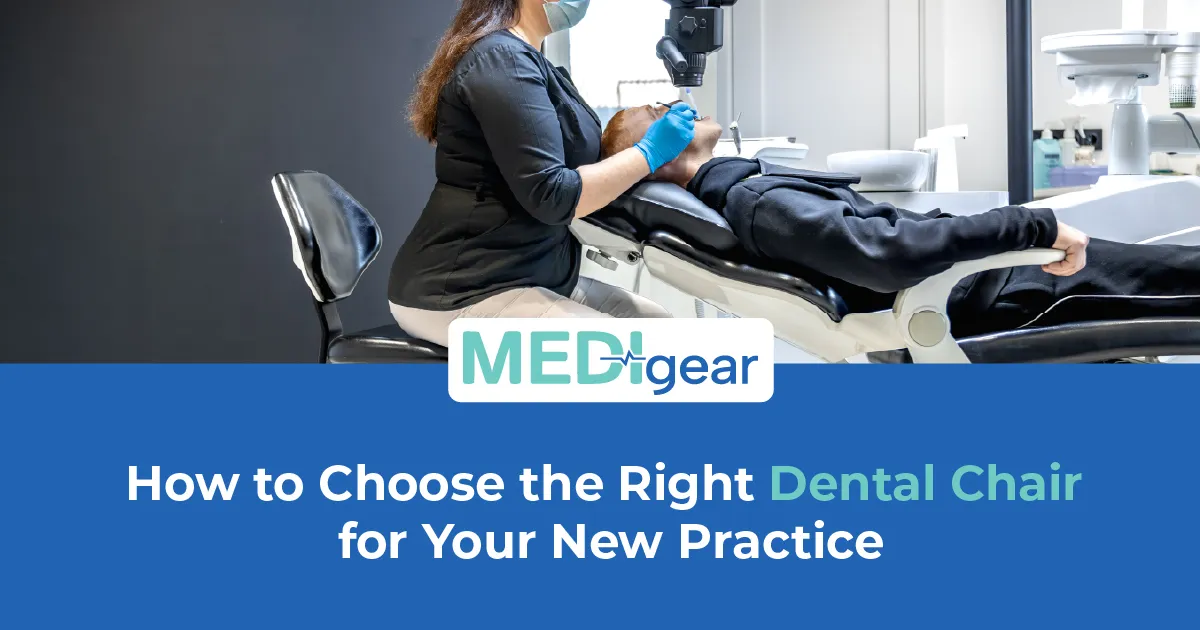
The dental chair is the foundation of the practice. Every procedure happens in it. Every patient sits in it. Every day depends on it. A chair that positions, reclines, and adjusts without complaint. Smooth hydraulics. Programmable positions. Comfortable headrest. Easy-clean upholstery. That is the standard. A chair that sticks, tilts, or cannot be adjusted to the right height causes back pain for the dentist and anxiety for the patient. Buy the best the budget allows. It is the one piece of dental equipment that touches every case.
Handpieces
Dental handpieces — high-speed and low-speed — are the tools that define the clinical feel of the practice. High-speed, fibre-optic light, smooth bearings, and low vibration cut the tooth cleanly. Low-speed with torque control handles polishing, endo, and prosthetics. Cheap ones burn bearings, vibrate on the tooth, and lose accuracy within months. Invest in quality dental equipment here. The handpiece is in the mouth more than any other tool.
Air Compressor
The air compressor powers the handpieces, the air-water syringe, and the air-driven scalers. Oil-free and dental-grade. Clean, dry air without the contamination of oil units' risk. Tank size must match the chairs. Too small and pressure drops mid-procedure — the handpiece slows when you need it most. Quiet matters when the compressor sits behind a thin wall and the patient hears everything.
Suction
Suction systems — high-volume and low-volume — keep the field clear during every procedure. Reliable suction removes water, blood, debris, and aerosol without the patient choking or the dentist losing view. Wet-ring and dry systems each have strengths. What matters is it works. Every time. Without gurgling, blockages, or the failures cheap systems bring inside a year.
Autoclave
The autoclave is the most important infection control device in the practice. Every reusable tool — handpieces, burs, scalers, mirrors, probes — passes through it. Class B vacuum sterilises hollow instruments, wrapped loads, and porous materials to the HTM 01-05 standard. Class N handles only unwrapped solids. Not enough for a general practice. Buy Class B. No exceptions. An autoclave that misses temp, drops pressure, or skips logging is dental equipment that risks patients and fails CQC.
Linked Guides
For practices managing dental equipment alongside broader clinical needs, our guide to the best nebulisers covers the respiratory devices that dental practices may need for medical emergency kits — because a patient who collapses in the chair with bronchospasm needs a nebuliser before the ambulance arrives. Our guide to setting up patient monitoring on a budget covers the pulse oximeters and vital signs tools that support conscious sedation and medical emergency readiness in dental settings.
Digital X-Ray
Digital X-ray systems have replaced film in modern dental practice — and for good reason. An intraoral sensor gives an image in seconds at a fraction of the dose. An OPG provides a full panoramic view in a single shot. Images store, share, enhance, and compare over time. Higher upfront. Lower running cost. Better image. Faster patient flow. For a new practice, digital imaging is not optional dental equipment. It is the standard.
Dental Light
Dental lights must provide shadow-free, colour-accurate illumination of the oral cavity. LED with adjustable intensity, colour control, and a small head that stays out of the way gives the best view. A light that overheats, flickers, or casts shadows turns a routine procedure into a frustrating one. One job. Show what is inside the mouth. Perfectly.
Intraoral Camera
Intraoral cameras let the dentist show the patient what they see. A cavity. A crack. A failing filling — on the screen beside the chair in real time. The conversation changes. The patient sees the problem. Understands the treatment. Consents with confidence. An intraoral camera is not traditional diagnostic dental equipment. It is trust-building dental equipment — and trust keeps patients in the chair.
Ultrasonic Scaler
Ultrasonic scalers remove calculus from teeth faster and more comfortably than hand instruments alone. Magnetostrictive or piezoelectric with swappable tips handles scaling, endo irrigation, and implant care. For a new dentist building a hygiene list, a reliable scaler is dental equipment that pays for itself from day one.
Cabinetry and Delivery
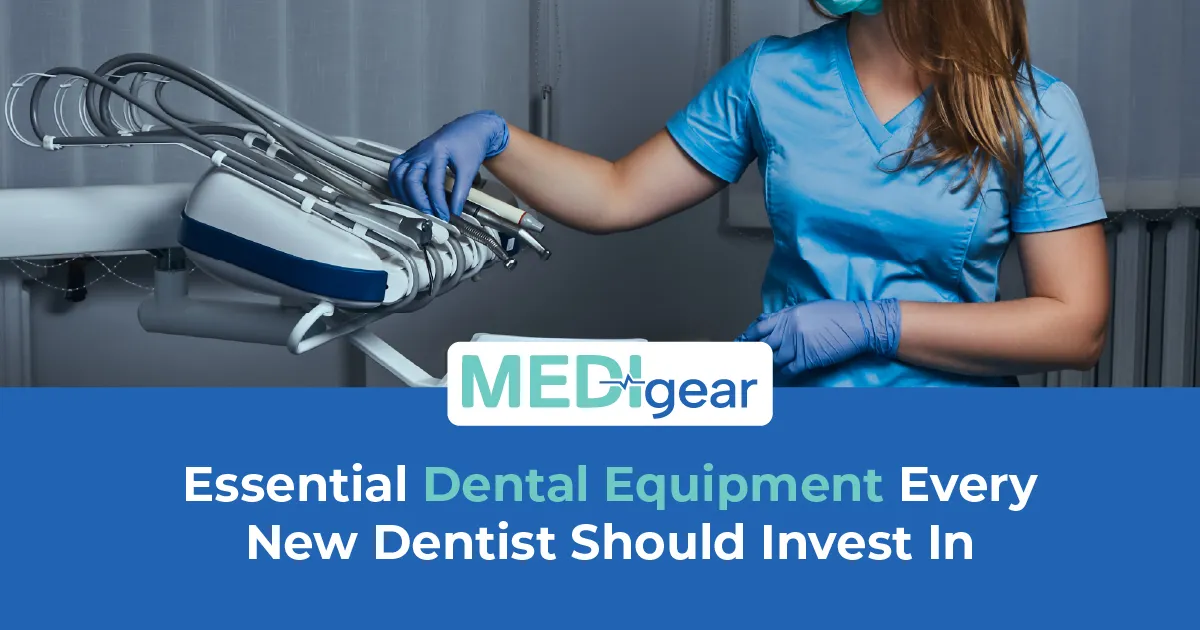
Dental cabinetry and delivery systems organise the instruments, materials, and connections that the dentist reaches for hundreds of times a day. Good design puts everything within reach. Bad design forces twisting and hunting — adding fatigue and seconds that add up to hours over a week.
Emergency Equipment
Emergency equipment is dental equipment that every practice must own and hope never to use. An automated external defibrillator — AED. Oxygen with a bag-valve mask. Adrenaline auto-injectors. A blood pressure monitor. A pulse oximeter. A glucometer. Suction for airway clearance. Medical emergencies in practice are rare. But when they come, the team has minutes. Not hours. Dental equipment that is present, tested, and understood saves the patient, who the ambulance may not reach.
Ergonomic Seating
Ergonomic seating for the dentist is dental equipment that most new graduates overlook — and most experienced dentists wish they had bought twenty years ago. A saddle stool with lumbar support, adjustable height, and armrests protects the spine during hours of leaning. Back pain is dentistry's occupational disease. The stool prevents it. The regret of skipping it does not.
New vs Refurbished
How do you choose between new and refurbished dental equipment when the budget is tight? A refurbished chair from a certified supplier — tested, reupholstered, and warranted — saves thirty to fifty percent. A used handpiece from an unknown seller with no service history saves money today and costs the practice a patient tomorrow. Buy certified or buy risk. The dental equipment in the room reflects the practice's standard.
Maintenance
Does your new practice have a maintenance plan from day one? Handpieces need oiling after every session. Autoclaves need validation quarterly. Compressors need filter changes. X-ray sensors need calibration. Dental equipment that is not maintained drifts, fails, and ends up costing more in breakdown repairs than a service contract would have cost from the start. Budget maintenance alongside the purchase. Not after the first failure.
Infection Control Beyond Autoclave
What dental equipment does your practice need for infection control beyond the autoclave? Washer-disinfectors for pre-cleaning instruments before sterilisation. Ultrasonic cleaning baths for removing debris from complex instruments. Surface disinfectant systems for operatory turnaround between patients. Barrier products for covers, tubing, and handles. Infection control is a chain — and the autoclave is only one link. Every step from the patient to the steriliser requires dental equipment that meets HTM 01-05.
Waiting Room
Does your waiting room equipment reflect the standard of the surgery behind the door? A patient who sits on a torn chair under a flickering light in a waiting room that smells of the last decade does not expect precision behind the surgery door. Reception furniture, air purification, patient communication screens, and a clean, modern feel are dental equipment in the broadest sense — because the patient's trust starts before they open their mouth.
Lease vs Buy
Should you lease or buy your dental equipment? Leasing spreads the cost over months — freeing capital for materials, marketing, and staffing in the critical first year. Buying gives ownership and avoids long-term interest. Some suppliers offer lease-to-own. The right choice depends on the practice's cash position and growth plan. Ask the question before signing the invoice — because the payment structure shapes the practice's finances as much as the equipment shapes the clinical work.
Waterline Treatment
Water treatment systems protect both the patient and the dental equipment. Dental unit waterlines harbour biofilm that contaminates the water reaching the patient's mouth. Independent water supply bottles, chemical dosing systems, and regular waterline testing keep bacterial counts below safe limits. A practice that ignores waterline contamination risks patient infection and equipment corrosion — both of which cost more than the treatment system that prevents them.
Why Choose Medigear
Medigear supplies certified dental equipment — including chairs, handpieces, autoclaves, compressors, imaging systems, and clinical accessories — to dental practices across the UK. Whether you are opening a new practice, upgrading inherited equipment, or adding a second surgery, our team matches the right tools to your clinical need and your budget. Reach out to our team directly for guidance built around the practice you are building — and the patients who will judge it by the chair they sit in.
Conclusion
What is the first thing a patient notices? The chair. The light. The handpiece. The suction. The feeling that the tools surrounding them are either trusted or tolerated. For a new dentist, the dental equipment chosen on day one writes the standard every patient will judge the practice by — and every year of clinical work will be shaped by. A chair that moves. A handpiece that cuts. An autoclave that sterilises. An X-ray that shows. These are not purchases. They are the foundation of a career. Medigear stands alongside new dentists with certified equipment and the honest guidance that building a practice demands. Speak to our team today — because the practice you are building deserves equipment the patients will trust and the clinician will rely on for years to come.
⚠️ This post is for general information only. We do not sell medications or provide prescriptions — Medigear.uk is a medical equipment supplier only.