
INTRODUCTION
Easter is one of the most widely observed public holidays across Europe — and for hospitals, it is one of the most challenging operational periods of the year. Hospital readiness during Easter requires careful planning, including verifying that all medical equipment is fully functional and ensuring that clinical teams have enough staff to handle emergencies.
When offices close and supply chains slow down, patients still need care. Accident and emergency departments often see higher admission rates during long weekends, while routine maintenance support and supplier deliveries become difficult to arrange. If you are responsible for managing a hospital, clinic, or healthcare facility, the days leading up to Easter are when preparation becomes critical.
Medigear works alongside hospitals and clinics to ensure that certified, reliable medical devices are in place before holiday periods begin. This guide covers every aspect of hospital readiness — from equipment checks and staffing to procurement and compliance — so your facility can operate with confidence throughout the Easter break and beyond.
Why Hospital Readiness Matters During Easter
Easter is not just a single day. In most European countries, it spans four or more days — from Good Friday through Easter Monday — creating an extended period when normal hospital operations face significant disruption. During these long weekends, emergency departments often see a surge in admissions. Road traffic incidents, sporting injuries, and domestic accidents all rise as families travel and participate in outdoor activities. Meanwhile, the clinical workforce decreases as staff take scheduled leave.
Here is what most equipment guides will not tell you — the biggest risk during holiday periods is not a sudden crisis but the slow buildup of small failures. A monitor that hasn't been calibrated, a defibrillator with a low battery, or a steriliser running behind on servicing can each create dangerous gaps when they are needed most.
Hospitals that approach Easter with a structured readiness plan avoid these preventable risks and ensure patient safety throughout.
How Easter Public Holidays Affect Healthcare Operations
The impact of Easter on hospital operations varies across Europe, but the underlying challenges remain the same. Most countries observe Good Friday and Easter Monday as public holidays, with some also including Holy Saturday or Easter Tuesday. This leads to ripple effects that affect every department. Elective procedures are delayed, outpatient clinics close, and diagnostic labs operate with minimal staff. Meanwhile, the emergency department stays fully open and often sees more activity than on a typical weekday. Before purchasing backup equipment or arranging cover, it is important to consider how your country's holiday calendar influences the operational window. In Germany and Poland, hospitals may experience four consecutive days of reduced capacity. In the UK, two public holidays create a long weekend that still requires careful planning. The key is recognising that Easter is not an ordinary weekend — it is a period that demands the same level of planning as any scheduled major event within a healthcare facility.
Medical Equipment Checks Before Holiday Periods
Every piece of clinical equipment in active use should undergo a pre-holiday review. This is not about replacing devices — it is about confirming that existing equipment will perform reliably when routine technical support is unavailable.
Priority checks should include:
- Patient monitors — verify sensor accuracy, alarm settings, and battery backup
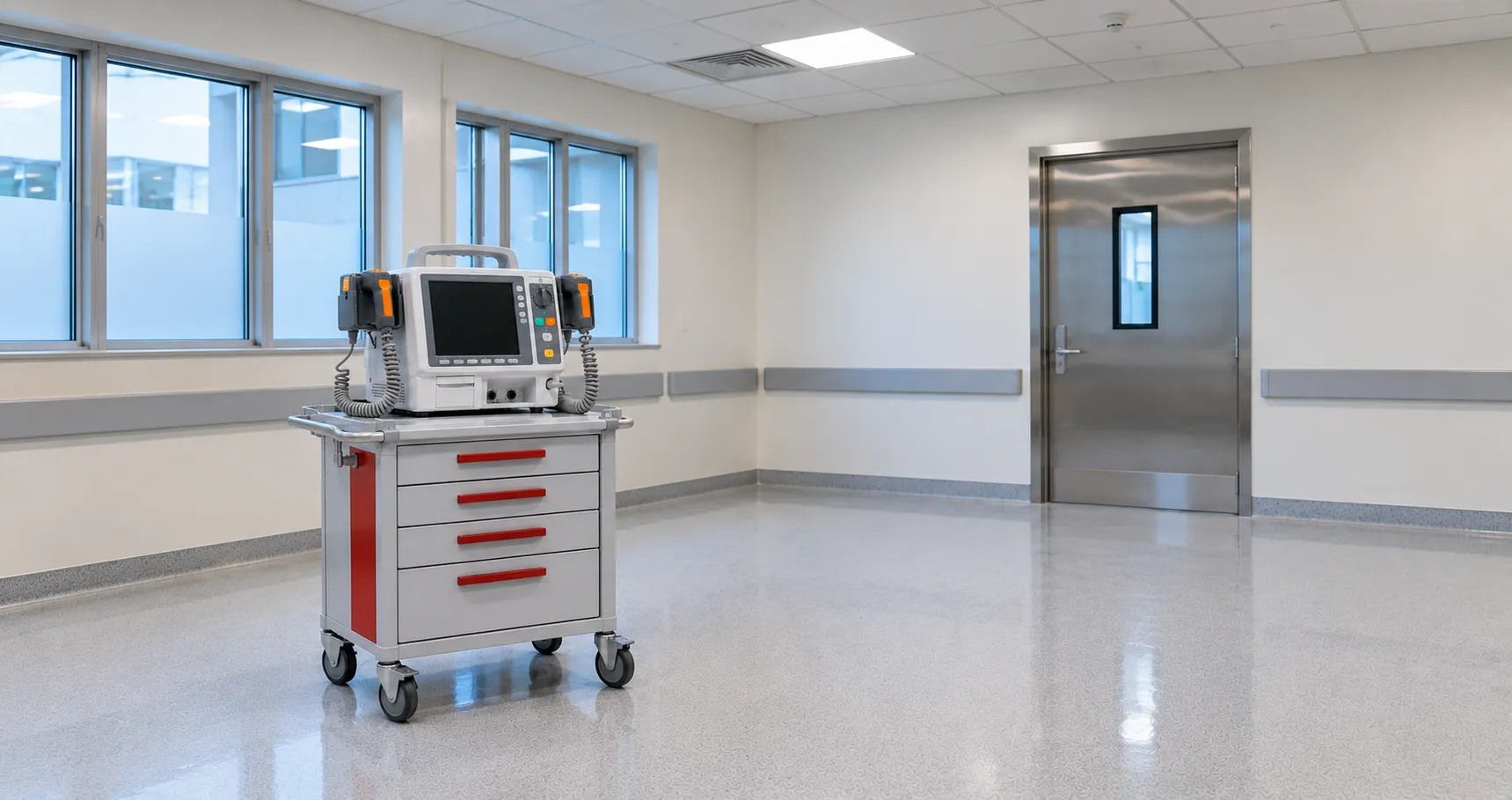
- Defibrillators — test charge cycles, pad expiry dates, and software versions
- Ventilators — confirm calibration, circuit integrity, and oxygen flow accuracy
- Infusion pumps — check delivery accuracy and line integrity
- Sterilisation units — verify cycle completion records and water quality
- Diagnostic imaging — confirm uptime logs, software stability, and consumable stock
One common mistake buyers make is assuming that recently purchased equipment does not need pre-holiday checks. Even new devices can develop issues during transport, installation, or initial use. A quick functional test before the holiday window closes takes minutes but can prevent hours of disruption during a critical period.
Emergency Preparedness and Critical Device Planning
Emergency preparedness during Easter extends beyond simply having a crash cart in the corridor. It requires a structured plan that maps each critical device to a backup and ensures rapid-access protocols are in place.Start by identifying your facility's highest-risk scenarios — cardiac arrest, respiratory failure, major trauma, and acute surgical needs. For each scenario, list the required devices and verify their locations, operational status, and the staff trained to operate them.Backup devices deserve the same attention as primary units. A portable ventilator stored in a cupboard since the last holiday is not a reliable backup unless it has been tested, charged, and confirmed as functional within the past month.Emergency drug fridges, point-of-care blood gas analysers, and portable ultrasound units should all be included on the preparedness checklist. These devices are often overlooked in routine planning but become essential during high-pressure holiday admissions.
Hospital Staffing Challenges During Easter in Europe
Staffing is arguably the biggest challenge hospitals face during Easter. Clinical professionals are entitled to time off, and holiday rosters must balance staff welfare with patient safety. If you are planning to equip your clinic with the right devices but overlook who will operate them, the investment loses its value. Equipment readiness and staffing readiness must be planned together.
Effective holiday staffing requires:
- Finalising rosters at least four weeks before Easter
- Identifying on-call specialists for each critical department
- Cross-training nurses and technicians on backup equipment
- Briefing temporary or agency staff on device locations and protocols
- Ensuring communication channels remain active throughout the break
Countries with strong labour protections—such as France, Germany, and the Netherlands—have specific rules around holiday working. Hospital managers must navigate these regulations while maintaining safe clinical coverage.
Sourcing the right medical equipment is a critical decision. Medigear connects hospitals and clinics with certified, reliable devices — backed by expert guidance at every stage.
Supply Chain Continuity for Medical Consumables
Medical supply chains slow down considerably during Easter. Distributors close, couriers reduce their schedules, and warehouses operate at minimal capacity. For hospitals, this means that consumables ordered during the holiday may not arrive until the following week.
Planning ahead is crucial. Stock audits for high-turnover items — gloves, syringes, IV fluids, wound dressings, and catheter kits — should be completed at least two weeks before the break. Orders for anything in short supply need to be placed even earlier.
Partnering with a supplier that understands healthcare urgency makes a noticeable difference. Medigear provides pre-holiday fulfilment options designed specifically for hospitals with tight timelines, ensuring that critical consumables and replacement parts arrive before the operational window closes.
Infection Control and Hygiene During Holiday Weekends
Infection control standards must remain consistent regardless of staffing levels. Holiday periods often bring higher patient turnover, increased use of temporary staff, and reduced cleaning schedules — all of which raise the risk of hospital-acquired infections.
Key actions include:
- Confirming that sterilisation and decontamination equipment is fully operational
- Stocking sufficient PPE for the entire holiday period plus a buffer
- Briefing all staff — permanent and temporary — on hand hygiene and waste disposal protocols
- Auditing isolation room readiness and negative-pressure ventilation systems
- Ensuring laundry and linen services have pre-holiday delivery schedules confirmed
A single lapse in infection control during a busy Easter weekend can lead to outbreaks that disrupt wards for weeks afterward. Prevention costs far less than response.
Country-Specific Easter Healthcare Challenges Across Europe
Easter impacts healthcare operations differently depending on the country. Understanding these differences helps hospital managers with facilities in multiple locations plan better. In Germany, Easter includes four public holidays, and many hospitals operate near minimum capacity. Equipment maintenance windows shrink, and supplier access becomes very limited. Spain and Italy are known for extended Easter celebrations. Processions and public events can affect road access near hospitals, while staff availability drops sharply across clinical and support roles. In Poland, strong cultural traditions mean many staff request leave well in advance. Hospitals that fail to plan rosters early face significant last-minute gaps. The UK observes Good Friday and Easter Monday. While the break is shorter than in some continental countries, the combination of bank holidays and school breaks leads to increased emergency admissions from travel and leisure activities. France closes most services on Easter Monday, and many staff extend the break by using additional leave. Hospitals need to secure supplies and confirm staffing well ahead of the holiday.
The Complete Hospital Holiday Readiness Checklist
A structured checklist removes guesswork and ensures nothing is missed. This should be distributed to department heads at least three weeks before Easter.
Equipment readiness:
- All critical devices tested and calibrated
- Backup devices verified and accessible
- Battery-operated devices fully charged
- Consumable stock levels confirmed
- Emergency equipment locations mapped and communicated
Staffing readiness:
- Holiday rosters finalised and distributed
- On-call specialists confirmed for each department
- Temporary staff briefed on protocols and device use
- Communication channels tested
Supply chain readiness:
- Orders placed for high-turnover consumables
- Supplier holiday schedules confirmed
- Emergency contact details for key suppliers on file
Compliance readiness:
- CE marking verified on all active devices
- Maintenance logs up to date
- Incident reporting systems active and accessible
CE Marking and Compliance During Reduced Operations
Regulatory compliance does not take a holiday. Every medical device in active use during Easter must carry valid CE marking and meet the applicable standards under the Medical Devices Regulation. During reduced operations, the temptation to use older devices pulled from storage increases. Before deploying any device that has been out of active service, confirm its CE status, calibration records, and maintenance history. An uncertified device introduces both clinical risk and legal liability. Hospitals should also ensure that incident reporting systems remain accessible throughout the holiday. If a device malfunctions or a safety concern arises, the ability to log and escalate the issue must not depend on staff who are off-site.
Common Mistakes Hospitals Make During Public Holidays
Even well-managed facilities fall into predictable traps during holiday periods. Recognising these mistakes in advance is the most effective way to avoid them.Delaying equipment maintenance until after the holiday — this creates a window where unchecked devices are in active use without backup support.Underestimating consumable usage — holiday emergency surges often burn through supplies faster than projected, especially in trauma and acute care departments.Failing to test backup devices — a device that last worked six months ago is not a reliable backup. Every backup unit must be tested within the month before deployment.Neglecting communication plans — if the on-call consultant cannot be reached because the phone system has not been updated, the entire emergency chain breaks down.Treating the holiday as routine — Easter is not a standard weekend. Hospitals that recognise this distinction perform significantly better during the break.
Portable and Backup Medical Devices for Holiday Cover
Portable medical devices play a crucial role during holiday periods. They offer flexibility when primary systems are under maintenance or when patient volumes exceed normal capacity.
Key portable devices for holiday cover include:
- Portable patient monitors for overflow areas
- Handheld pulse oximeters for triage
- Mobile ECG units for cardiac assessment
- Portable ultrasound for rapid diagnostics
- Battery-operated suction units for airway management
These devices must meet the same certification and calibration standards as fixed installations. Medigear supplies a range of portable, CE-marked diagnostic and monitoring devices specifically suited to hospitals needing reliable holiday cover solutions.
How Smart Procurement Prevents Holiday Disruptions
Procurement decisions made weeks before Easter determine how smoothly a hospital operates during the break. Reactive purchasing — placing orders after problems arise — is expensive, slow, and often impossible during extended public holidays.
Smart procurement means:
- Reviewing equipment service contracts for holiday coverage terms
- Ordering replacement parts and consumables with buffer stock
- Confirming supplier delivery windows against the holiday calendar
- Identifying single points of failure in the equipment inventory
- Arranging rental or loan devices for departments with aging equipment
Hospitals that build relationships with dependable suppliers gain a significant advantage. When a device fails on Easter Saturday, having a supplier who answers the phone and can arrange next-day delivery transforms a potential crisis into a manageable issue.
Why Hospitals Trust Medigear for Holiday Preparedness
Medigear understands that healthcare does not pause for public holidays. Hospitals and clinics across Europe rely on Medigear as a trusted medical equipment supplier for certified devices, responsive service, and expert guidance — especially during high-pressure periods like Easter.
Whether your facility needs pre-holiday equipment checks, emergency backup devices, or priority delivery on consumables, Medigear provides the support that clinical teams depend on. Every device supplied carries full CE certification, and the Medigear team offers procurement advice tailored to your facility's holiday readiness plan.
Choosing the right equipment partner is not just about price — it is about reliability when it matters most. Medigear delivers both.