What happens when the body runs out of insulin and starts eating itself? What if the sugar cannot get into the cells? So the cells burn fat instead. Flooding the blood with acids. Kidneys cannot clear them. Lungs cannot blow them off. What if the blood turns so acidic that the heart rhythm breaks, the brain swells, and every organ shuts down? Not infection. Not injury. A chemical crisis. A hormone that was not there. That is diabetic ketoacidosis. DKA. The emergency that kills. Fine one day. Not breathing the next.
She was nineteen. Type one diabetic since she was eight. She ran out of insulin on a Friday and decided to wait until Monday to collect her prescription. By Saturday night she was vomiting. By Sunday morning, her breathing was deep and fast — Kussmaul breathing — the body's last attempt to blow off the acid building in her blood. Her flatmate called an ambulance. Blood sugar thirty-eight. pH 7.1. Potassium climbing. Consciousness dropping. Three days in ICU. Insulin infusion. IV fluids. Hourly blood gases. She survived. But three days in ICU because she skipped two days of insulin is the kind of preventable catastrophe that DKA delivers when people do not understand what the hormone does and what happens when it disappears.
This guide explains diabetic ketoacidosis with the urgency it demands. How DKA develops, what the acid does to the body, who is at risk, what the symptoms look like, how diagnosis works, and how the right clinical equipment supports the emergency care that DKA patients need. Medigear supplies certified diagnostic and monitoring equipment to hospitals and clinics across the UK — because DKA, when caught in hours, is treatable. Caught in days, it fills an ICU bed that should never have been needed.
How DKA Develops
Insulin unlocks the cell door for glucose. Without it, glucose stays in the blood. Levels rise. Cells starve. The body breaks down fat for energy instead. Fat breakdown produces ketones. Acetoacetate. Beta-hydroxybutyrate. Acetone. In small amounts, ketones are normal. In DKA, the amounts overwhelm the blood's buffers. pH drops. Blood turns acidic. Acidosis — too much acid — hits every system it touches. Diagnostic centres and hospitals sourcing certified monitoring equipment for DKA pathways can explore the Medigear buyers portal for pricing and procurement support built for emergency clinical buying.
Dehydration
The kidneys try to compensate. They dump glucose and ketones into urine. Water and electrolytes follow. The patient urinates excessively. Dehydration follows. Sodium drops. Potassium shifts. Fluid loss can hit six to ten litres before the patient reaches the hospital. A DKA patient arriving is not just acidotic. They are profoundly dry. The dehydration makes every other problem worse.
The Lungs
The lungs compensate, too. Deep, rapid breathing — Kussmaul respiration — blows off carbon dioxide to reduce blood acidity. It is the body's emergency ventilation system. The breath smells of acetone — a sweet, fruity odour that experienced clinicians recognise before the blood gas confirms what the nose already knows. When breathing slows in a patient who is still acidotic, it indicates that compensation is failing. That is when DKA kills.
The Heart
The heart is vulnerable to the potassium shifts DKA causes. Potassium moves out of cells as hydrogen ions move in — a swap driven by the acidosis. Serum potassium may look normal on admission. But total body potassium is depleted. As treatment corrects the acidosis, potassium rushes back into cells. Serum level crashes. Below three — the heart risks arrhythmia. ECG monitoring during DKA treatment is not optional. Safe correction on one side. Cardiac arrest from the treatment itself, on the other hand.
The Brain
The brain is the organ most at risk in young patients with DKA. Cerebral oedema — brain swelling — occurs in roughly one per cent of paediatric DKA cases but carries a mortality rate above twenty per cent. It happens during treatment — not before — when rapid fluid correction or too-fast glucose lowering shifts osmolality, drawing water into brain cells. Slow correction saves the brain. Fast correction risks destroying it. For hospitals managing DKA alongside broader respiratory and monitoring needs, our guide to the best nebulisers covers the devices that support airway management in patients whose consciousness drops during DKA treatment. Lab equipment makers wanting to list blood gas analysers, glucose monitors, and ketone meters where emergency departments are actively searching can reach clinics through the Medigear advertising platform.
Diagnosis
Diagnosis is clinical and biochemical. Blood glucose above eleven with ketones and acidosis confirms DKA. Blood gas shows pH below 7.3. Bicarbonate below fifteen. Serum ketones are raised. Urine ketones are positive but less reliable than blood. The anion gap is elevated. Vomiting. Abdominal pain. Dehydration. Kussmaul breathing. Fruity breath. Altered consciousness. The picture lasts for sixty seconds.
Treatment
Treatment follows a protocol that balances five corrections at once. IV fluids replace the litres lost. Insulin drops glucose and stops ketones. Potassium is replaced before it crashes. Glucose enters the fluids once blood sugar falls below 14 — preventing a hypo while insulin continues clearing ketones. Bicarbonate — only in severe acidosis below 6.9 — buffers the acid directly. Each affects the others. Too much fluid swells the brain. Too much insulin causes potassium levels to crash. Too little monitoring misses the shift that kills.
Monitoring
Our guide to setting up patient monitoring on a budget covers the vital signs tools that DKA management demands — because heart rate, blood pressure, oxygen, and ECG monitoring during insulin infusion and potassium replacement must run continuously until the acidosis clears. Companies seeking long-term collaboration to supply monitoring and diagnostic equipment to emergency departments and ICUs can explore the Medigear partnership programme for opportunities that extend beyond a single sale.
Who Gets DKA
Who gets DKA? Type one diabetics who miss insulin — deliberately or accidentally. New-onset diabetics who have never been diagnosed — DKA is the first presentation in roughly a quarter of type one cases. Type two diabetics under physiological stress — infection, surgery, steroids, or dehydration that pushes a stable patient into metabolic crisis. And patients who do not understand what insulin does — who think skipping a dose is like skipping a vitamin, not like removing the only chemical keeping their blood from turning to acid.
Prevention
Prevention is education. A patient who understands that missing insulin causes DKA — not just a high sugar reading but a life-threatening emergency — does not skip doses to save money, avoid injections, or wait until Monday. Sick-day rules — checking ketones when unwell, increasing fluids, adjusting insulin, and seeking help early — prevent the spiral that turns a mild illness into an ICU admission. Every type one diabetic should own a ketone meter and know what the numbers mean.
Recurrent DKA
Recurrent DKA is the signal that something beyond the biology is failing. Mental health. Eating disorders. Insulin omission for weight loss — diabulimia. Social isolation. Poverty. Needle phobia. Burnout from years of managing a disease that never takes a day off. A patient admitted for their third or fourth DKA does not need another lecture on sick-day rules. They need a team that asks why. Suppliers of glucose monitors, ketone meters, blood gas analysers, and infusion devices can register through the Medigear supplier portal to connect with the hospitals and emergency units building DKA-ready pathways.
Ketone Meters
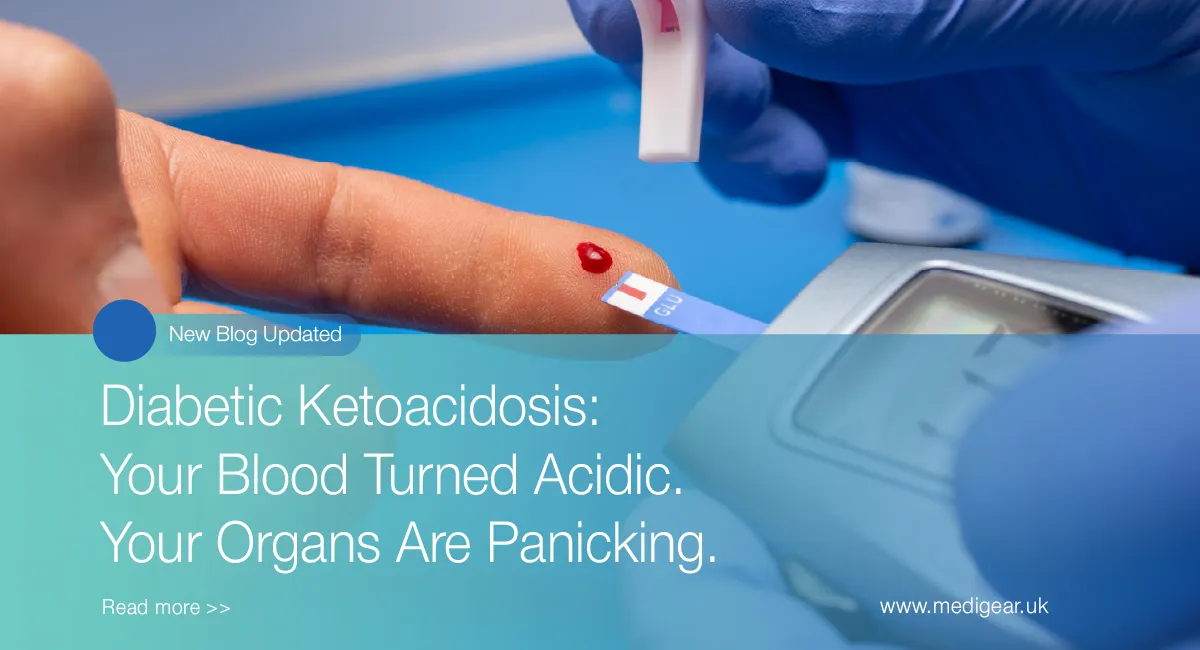
Does your emergency department stock point-of-care ketone meters alongside glucose monitors? A glucose reading alone does not diagnose DKA. Ketones do. A patient with a blood sugar of fifteen and ketones of six is in a different clinical universe from one with a sugar of fifteen and ketones of 0.3. The ketone meter is the device that separates hyperglycaemia from DKA — and the treatment for each is not the same. Treating DKA as simple high sugar costs time the patient does not have.
Paediatric DKA
Can your paediatric team correct DKA slowly enough to protect the brain? Cerebral oedema in children happens during treatment — not before. Fast fluids. Fast glucose drops. Osmolality shifts. Water floods the brain. The protocol that saves an adult can damage a child. Paediatric DKA needs paediatric rates, paediatric monitoring, and a team that knows the difference between correcting too slowly and correcting too fast.
Third Admission
What does your diabetes team do when the same patient arrives in DKA for the third time? A protocol for the blood. A plan for the person. Psychological support. Social work input. Eating disorder screening. Insulin access review. The body can be corrected in hours. The reason it happened again takes longer. Without that work, the fourth admission is already on its way. DKA does not stop recurring until someone asks what is really going on.
Why Choose Medigear
Medigear supplies certified diagnostic and monitoring equipment to hospitals, emergency departments, and clinics across the UK. Whether you are equipping a resuscitation bay, upgrading monitoring for DKA protocols, or building emergency readiness for metabolic crises, our team matches the right tools to your clinical need. Reach out to our team for guidance built around the patients whose blood has turned acidic — and the clinicians who bring the pH back before the organs give out.
Conclusion
What happens when the body runs out of insulin? The cells starve. The fat burns. The ketones flood. The blood turns acidic. And the organs — heart, brain, kidneys, lungs — panic. She was nineteen. Skipped two days of insulin. Spent three days in ICU. Preventable. Entirely. DKA does not arrive without warning. It arrives without understanding. A ketone meter in the patient's hand. Sick-day rules on the fridge. A team that asks why when the same patient comes back. That is what stops DKA before it fills another ICU bed. Medigear stands alongside emergency and diabetes teams with certified monitoring equipment and the honest support that metabolic crises demand. Speak to our team today — because the blood that turned acidic needs tools as fast as the acid that changed it.
⚠️ This post is for general information only. We do not sell medications or provide prescriptions — Medigear.uk is a medical equipment supplier only.