Continuous nebulisation is the uninterrupted delivery of a bronchodilator aerosol, most often high-dose salbutamol, over an extended period rather than in separate spaced treatments. In acute, severe, life-threatening asthma, it maintains a steady dose to the airways when repeated intermittent nebulisers do not control the attack, and it is delivered using a large-volume nebuliser driven by oxygen.
This guide is for emergency, acute-medicine and critical-care procurement and biomedical teams equipping resus and high-dependency areas. It explains how continuous delivery differs from intermittent dosing, the large-volume hardware involved, the oxygen and monitoring demands, and the specifications to confirm before buying.
Continuous Versus Intermittent Delivery
A standard nebuliser gives a fixed drug volume that runs dry in several minutes, and repeat doses mean refilling and restarting, leaving gaps in delivery. Continuous nebulisation removes those gaps by feeding a large reservoir, or by metering drug into the nebuliser from a syringe pump, so aerosol is produced without pause for as long as the clinical situation demands. The effect is a sustained airway concentration of bronchodilator during the window when a severe attack is being brought under control, typically titrated by the treating team and monitored closely. In practical terms, the device must run for a set period without the interruptions that intermittent dosing forces, and it must let staff see and adjust what is being delivered without breaking the aerosol stream.
The Large-Volume Nebuliser
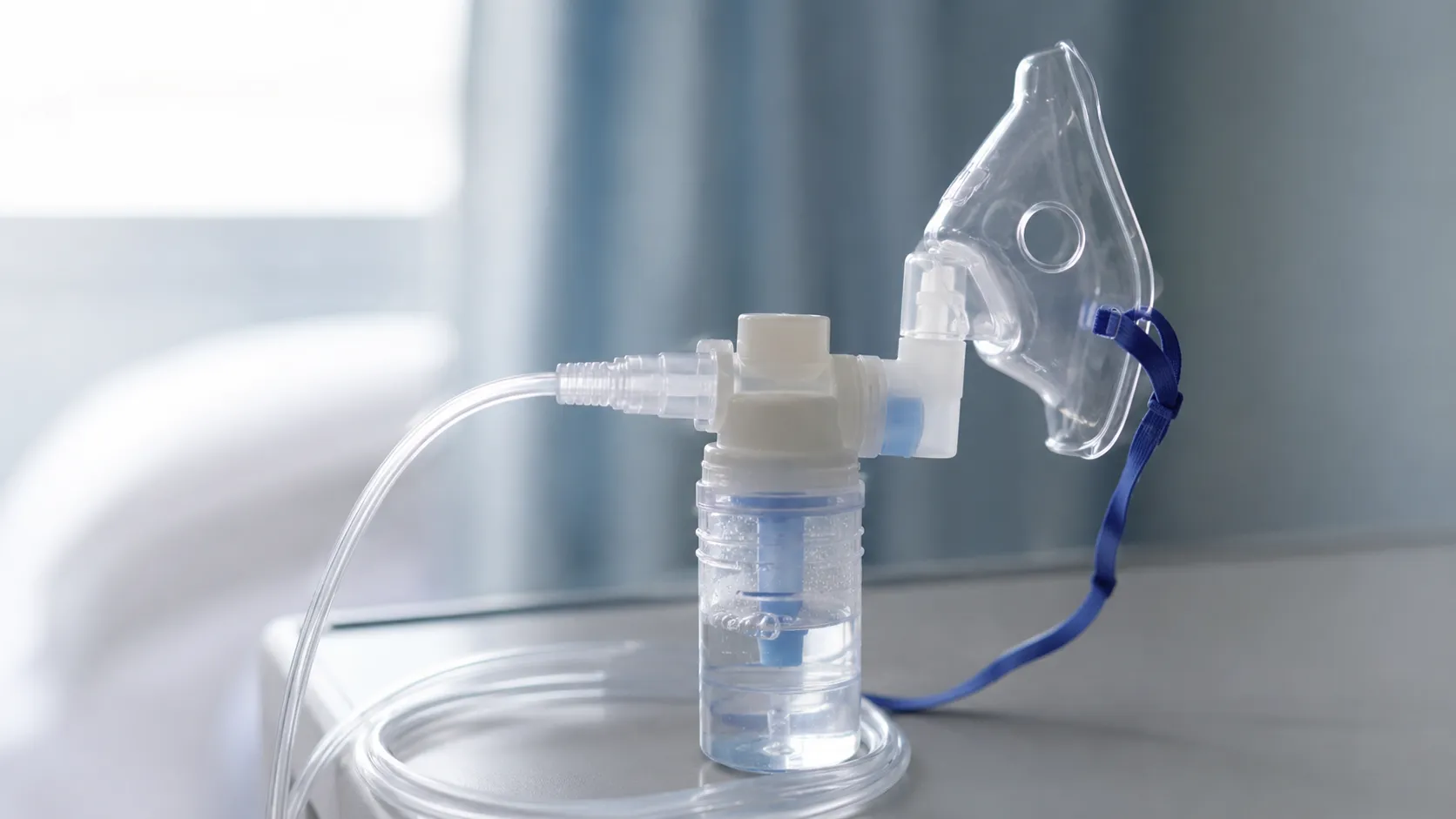
Two hardware approaches dominate. The first is a dedicated large-volume nebuliser with a reservoir holding far more solution than a standard cup, often filled to run for an hour or more at the set output. The second uses a conventional jet nebuliser fed continuously from a syringe driver deli, delivering drug at a controlled millilitres-per-hour rate, topping up the chamber as it nebulises. Both aim for the same outcome, an unbroken aerosol, and the choice turns on the reservoir capacity, the drug volumes your protocols use and how the delivered dose per hour is controlled and recorded.
Driven by Oxygen at High Flow
In acute asthma, the nebuliser is driven by oxygen rather than air to avoid worsening hypoxaemia during treatment, so continuous nebulisation places a real demand on the oxygen supply. A large-volume jet nebuliser needs a sustained driving flow, commonly in the region of six to eight litres per minute or higher depending on the device, held for the full duration. Confirm the wall or cylinder supply and the flowmeter can maintain that flow continuously, and that the driving-gas fitting matches your pipeline outlets. On transport or in a cylinder-fed setting, consumption over an hour is substantial and must be planned for.
D forose, Monitoring and the Care Setting
Continuous high-dose beta-agonist therapy is used in a monitored environment because sustained delivery brings recognised systemic effects such as tachycardia, tremor and a fall in serum potassium. Continuous nebulised salbutamol features in national asthma guidance for life-threatening or near-fatal presentations that respond poorly to initial treatment; clinicians follow current NICE and joint asthma guidance for dosing and monitoring, while the equipment has to deliver re From a procurement view, that means the device belongs in areas with continuous cardiac and oxygen-saturation monitoring, not on a general ward as loan stock.
Consumables, Infection Control and Setup
Continuous circuits are single-patient items: the reservoir or nebuliser chamber, the drive tubing, the mask or mouthpiece and any expiratory filter are used once and discarded. Because the device runs for a prolonged period, check how it is filled and topped up without breaking delivery, whether a fill port allows drug to be added mid-treatment, and how the residual volume and delivered dose are tracked. Stock the matching masks and reservoirs in the sizes your paediatric and adult areas need, and confirm the consumable supply line before standardising a protocol around one device.
Dose Control and Record-Keeping
Because the drug runs for a prolonged, uninterrupted period, being able to track the clinical record and handover to state how much was delivered matters. With a filled large-volume reservoir, the delivered amount is inferred from the fill volume, the output rate, and the elapsed time, so the device should make the fill volume and start time easy to note. Whichever approach a service adopts, agree at purchase how the delivered dose will be documented, and confirm the device does not have to be stopped and dismantled simply to top up the remaining volume.
Standardising Across Acute Areas
Severe asthma presents to several places: the emergency department, acute medical units, paediatric areas, and critical care, and using a single continuous-nebulisation setup across them simplifies training and restocking. That argues for one platform with masks and reservoirs in adult and paediatric sizes, a driving-gas connector common to all those areas, and a familiar way of setting the dose. Where paediatric and adult caseloads differ markedly, confirm the same platform can be interface-matched across ages rather than buying separate systems. Consistency also helps during the rare, high-pressure moments these devices exist for, when staff should not be learning unfamiliar hardware while managing a deteriorating patient.
Standards, Regulation and Verification
Large-volume and continuous nebulisers are medical devices requiring valid UKCA or CE marking and MHRA registration. Aerosol output and particle characterisation fall under ISO 27427 for nebulising systems, drug-pathway materials under ISO 18562, and any powered pump element under the IEC 60601-1 family, with syringe drivers additionally covered by their own IEC 60601-2 particular standard. Ask for the declared output rate, the fill volume and run-time relationship, and the driving-flow requirement, and verify the delivered flow against a calibrated meter as part of planned maintenance.
Procurement Checklist
-
Confirm UKCA or CE marking, MHRA registration and declared aerosol output.
-
Choose a reservoir large-volume nebuliser or a syringe-driver-fed circuit to suit your protocol.
-
Verify the oxygen flowmeter and pipeline can sustain the driving flow continuously.
-
Check the driving-gas fitting matches your wall and cylinder outlets.
-
Confirm a fill port allows mid-treatment top-up without breaking delivery.
-
Ensure delivered dose per hour and residual volume can be tracked and recorded.
-
Specify single-patient reservoirs, masks, tubing and filters in adult and paediatric sizes.
-
Site the device only in areas with continuous cardiac and saturation monitoring.
Where It Fits Against Other Nebulisers
Continuous nebulisation is an acute, high-dose modality, distinct from a quiet portable mesh device for maintenance dosing and from a high-output ultrasonic unit used for saline induction. Its defining features are the large reservoir or pump feed, the sustained oxygen drive and the monitored setting. Do not try to cover emergency continuous delivery with a standard single-fill nebuliser, and equally do not deploy a large-volume asthma setup for routine ward treatments. Matching the modality to the clinical task keeps both the equipment budget and the safety case coherent.
Conclusion
Continuous nebulisation sustains a high-dose bronchodilator aerosol through the critical window of a severe asthma attack, using a large-volume nebuliser driven by oxygen in a monitored area. Specify reservoir capacity, dependable continuous oxygen drive, dose tracking, and single-patient consumables, and keep it separate from routine nebuliser stock. To compare compliant large-volume nebulisers, syringe-fed circuits, and consumable range a facpublished bye, or cofor general information a buyer account.
Disclaimer
This is not for clinical or informational purposes only. It is published legally as information and guidance. It is not only clinical, diagnostic, treatment, technical, engineering, legal, or regulatory advice, nor a product endorsement, guarantee, or substitute for professional assessment. MediGear does not provide medical consultations. Buyers should consult their clinical, biomedical, estates, and regulatory contacts, and the manufacturer's documentation, and independently verify all specifications, certifications, compatibility, and suitability before purchase. Specifications, certifications and availability are correct at the time of publication and may change without notice. MediGear is a medical-equipment distributor and does not sell medicines or pharmaceutical products.