What does it feel like to breathe through a straw? All day. Every day. For the rest of your life. That is the closest description many people with COPD give for daily breathing. Not a single dramatic event. A constant, grinding effort. Lungs that have lost their stretch. Airways narrowed for good. COPD has no cure. But it has equipment. Devices that do not reverse the disease. They give back the breath, mobility, and independence the disease tries to take away.
He was sixty-eight. Forty-year smoker. Diagnosed eight years ago. At diagnosis, he could walk to the shops. Now — breathless crossing the living room. His daughter found him gripping the kitchen counter. Unable to speak. Oxygen saturation was seventy-nine on the pulse oximeter that the nurse had given him. She called for help. Started on home oxygen. A nebuliser for the flares. A walking frame with a seat for the breathlessness that stopped him mid-corridor. None of it cured his COPD. All of it gave him a life. Visiting grandchildren. Sitting in the garden. Sleeping without the panic of not getting enough air.
This guide covers what COPD is and what equipment helps patients cope daily with the honest detail that patients, carers, and clinicians need. Medigear supplies certified respiratory equipment to hospitals, clinics, and home care providers across the UK and every point here comes from real clinical demand. Clinics sourcing certified COPD equipment can explore the Medigear buyers portal for pricing, availability, and procurement built for respiratory care purchasing.
What Is COPD
Chronic obstructive pulmonary disease is a progressive lung condition. Two processes combine. Emphysema — destroyed air sacs. Less surface for gas exchange. Bronchitis — inflamed, narrowed airways. More mucus. Persistent cough. Both restrict airflow. Both worsen over time. Mostly caused by smoking. Job exposure and genes play a part for some. Lung damage from COPD does not reverse. Treatment and equipment manage symptoms and slow the decline. They do not undo what has happened.
Pulse Oximetry
Pulse oximetry is the starting point for monitoring. A small clip on the fingertip measures oxygen saturation. The COPD patient learns their normal range. Often eighty-eight to ninety-two. Lower than most because of the lung damage. A drop below this range signals deterioration. The pulse oximeter gives an objective number. Not a guess about whether the breathlessness is worse than usual. Equipment manufacturers wanting to list pulse oximeters, nebulisers, and oxygen equipment where respiratory clinics are searching can reach buyers through the Medigear advertising platform.
Home Oxygen
Home oxygen therapy is prescribed when blood gas testing confirms chronically low oxygen levels. Long-term oxygen — LTOT — for patients who qualify. Used at least fifteen hours a day. Improves survival and quality of life. Concentrators extract oxygen from room air. Continuous supply. No refillable cylinders needed. Portable concentrators let the patient leave the house. To the shops. To visit family. To keep the life beyond the living room. Ambulatory oxygen is prescribed separately for patients who drop on exertion but not at rest. Carried during activity, it prevents the drop that triggers breathlessness and panic.
Nebulisers
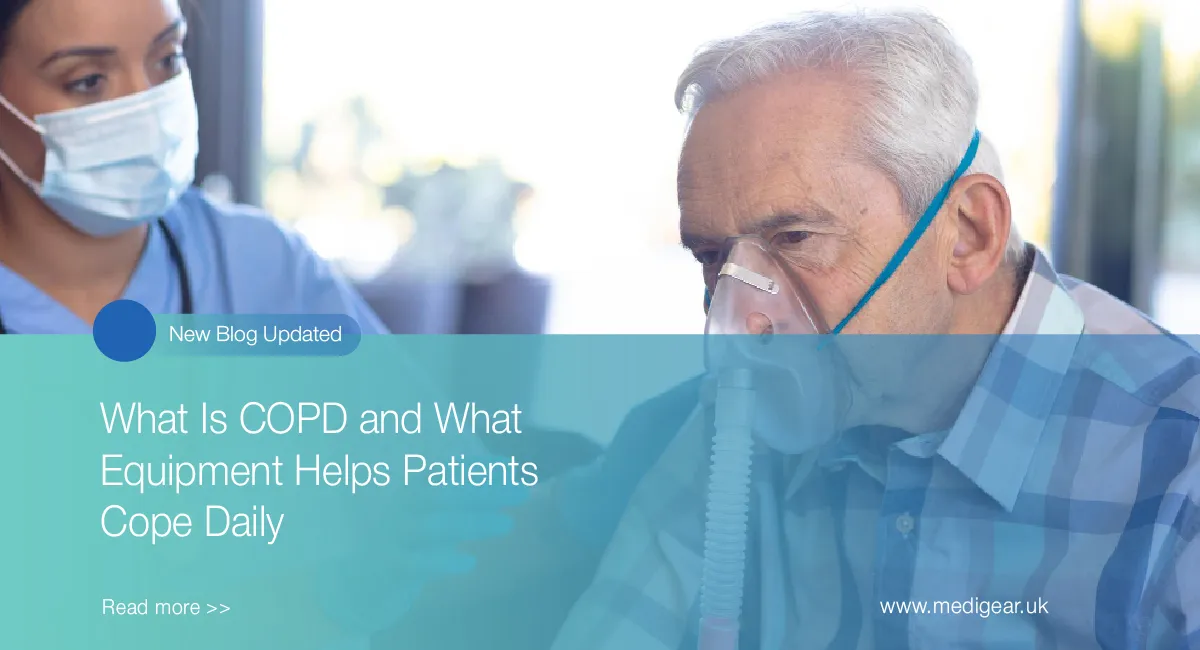
Nebulisers deliver medication directly to the lungs as a fine mist, inhaled through a mask or mouthpiece. Used during flares when inhalers alone are not enough. Or when hand-breath coordination makes inhaler technique difficult. Bronchodilators and sometimes steroids delivered this way reach deep into the airways. Having a nebuliser ready at home means the flare can be treated now. Not after the ambulance arrives. Treatment that may prevent admission. Reach out to our team for guidance on matching respiratory equipment to your COPD patient population and care pathway.
Pulmonary Rehabilitation
Pulmonary rehabilitation combines structured exercise with education. Walking aids, resistance bands, and adapted exercise bikes allow controlled, supervised exertion. They build the muscle strength and fitness that COPD steals through inactivity. Avoid exercise because it causes breathlessness? Get weaker. More breathless with less and less exertion. Pulmonary rehab breaks this cycle. Rehab equipment — supervised, monitored, and paced — restores capacity that the disease and inactivity have together removed. Our guide to diabetes and medical devices covers the importance of structured monitoring in progressive conditions — the same structured, monitored approach applies when COPD patients rebuild capacity through pulmonary rehabilitation.
Mobility Equipment
Mobility equipment addresses the breathlessness that limits daily life. Walking frames with seats allow rest mid-journey. No sitting on the floor or against a wall. Wheelchairs and scooters extend the range a breathless patient can travel. Without exhausting the oxygen, a short walk consumes. Perching stools in the kitchen and bathroom allow tasks to be done seated. Lower oxygen demand than standing. Tasks healthy people do without thought. Our guide to myasthenia gravis covers the principle of equipment matched precisely to need — the same principle applies when mobility aids are selected to match the specific limitation COPD has created for each individual patient.
NIV
Non-invasive ventilation — NIV — supports breathing in patients with significant respiratory failure, particularly during acute exacerbations or in advanced disease. A tight-fitting mask delivers pressurised air. Assists with breathing. No tube down the throat is needed. Home NIV for selected patients reduces hospital admissions and improves quality of life. A significant step up. Reserved for patients whose disease has gone beyond what oxygen and nebulisers alone can manage.
Peak Flow
Peak flow meters and spirometers track lung function over time. Simple devices. Used at home. Track trends. A falling peak flow may signal a flare before symptoms turn severe. Time to act early — more medication, closer monitoring. Not waiting for the A&E crisis. Suppliers of pulse oximeters, oxygen concentrators, nebulisers, and mobility equipment can register through the Medigear supplier portal to connect with hospitals, clinics, and home care providers building their COPD equipment pathways.
Equipment Planning
Can your respiratory team provide a complete equipment assessment at the point of diagnosis — not just at the point of crisis? Diagnosed today with mild COPD? Will likely need oxygen, mobility aids, and a nebuliser eventually. Plan the equipment journey alongside the disease journey. Stay ahead of the decline. Not catching up. Companies seeking long-term collaboration on respiratory equipment supply, servicing, and patient care programmes can explore the Medigear partnership programme for ongoing opportunities beyond a single order.
Inhaler Technique
Does your team educate every COPD patient on inhaler technique before assuming the inhaler is failing? Poor technique is the most common reason inhalers seem to fail. Cannot coordinate the press and breath? Get a fraction of the prescribed dose. A spacer device solves this for many. Removes the timing requirement entirely. Check technique before escalating treatment. Saves the patient from unnecessary medication changes that solve nothing.
Technique Reviews
Does your respiratory team review inhaler technique at every COPD review appointment — not just when symptoms worsen? Technique drifts over time. Slowly. Without the patient ever noticing. The patient who was taught correctly five years ago may have developed habits that reduce the dose reaching the lungs. A two-minute check at every appointment catches what the patient never reports because they do not know it has gone wrong.
Home Saturation Checks
Can your clinic provide pulse oximeters to every COPD patient on long-term oxygen therapy for self-monitoring at home? The patient who checks their own saturation knows when to increase oxygen within prescribed limits. When to use rescue medication. When to call for help. The one without a device guesses. Guessing with COPD is dangerous. The margin between coping and crisis can be a single percentage point of saturation.
Self-Management Plans
Does your team provide a clear written plan for what the patient should do when their COPD symptoms worsen? Self-management plans use traffic-light thresholds. Green for stable. Amber for early warning. Red for emergency. A script to follow — not a decision to make alone in a frightening moment. A plan made before the crisis is read calmly. No plan means panic improvisation.
Home Assessment
Can your service provide home assessment visits to identify the equipment a COPD patient actually needs in their actual home — not a generic list from a clinic? The stairs they climb daily. The bathroom layout. The distance from the bedroom to the kitchen. Equipment chosen from a clinic checklist may not fit the actual home. The therapist who visits the home prescribes equipment that works in the real space. Not the imagined one.
Family Support
What does your team do to support the family and carers of a COPD patient — not just the patient themselves? Watching someone fight for breath every day is exhausting and frightening for the family. COPD does not only affect the patient. Carer education on equipment use, on recognising deterioration, and on when to call for help protects both the patient and the carer.
Why Choose Medigear
Medigear supplies certified pulse oximeters, oxygen equipment, nebulisers, mobility aids, and respiratory monitoring devices to hospitals, clinics, and home care providers across the UK. Whether you are equipping a respiratory clinic, building a home oxygen service, or supporting patients through pulmonary rehabilitation, our team matches the right equipment to the patients living with COPD every day. Reach out to our team for guidance built around the breath that does not come easily — and the equipment that helps it come anyway.
Conclusion
What does it feel like to breathe through a straw, all day, every day? That is COPD. No cure. But equipment. He was sixty-eight. Found gripping the kitchen counter. Saturation seventy-nine. Home oxygen started. A nebuliser for the flares. A walking frame with a seat. None of it cured his COPD. All of it gave him a life — grandchildren, the garden, sleep without panic. Pulse oximetry for monitoring. Home oxygen for chronic low levels. Nebulisers for the flares that need treatment now. Pulmonary rehab to rebuild what inactivity stole. Mobility aids matched to the actual home. NIV for advanced disease. Peak flow to catch the warning before the crisis. Inhaler technique checked every visit. A self-management plan read calmly before the panic, not improvised during it. Medigear stands alongside respiratory teams with certified equipment for every stage of COPD. Speak to our team today — because the breath that does not come easily deserves the equipment that helps it come anyway.
Conclusion
What does it feel like to breathe through a straw, all day, every day? That is COPD. No cure. But equipment. He was sixty-eight. Found gripping the kitchen counter. Saturation seventy-nine. Home oxygen started. A nebuliser for the flares. A walking frame with a seat. None of it cured his COPD. All of it gave him a life — grandchildren, the garden, sleep without panic. Pulse oximetry for monitoring. Home oxygen for chronic low levels. Nebulisers for the flares that need treatment now. Pulmonary rehab to rebuild what inactivity stole. Mobility aids matched to the actual home. NIV for advanced disease. Peak flow to catch the warning before the crisis. Inhaler technique checked every visit. A self-management plan read calmly before the panic, not improvised during it. Medigear stands alongside respiratory teams with certified equipment for every stage of COPD. Speak to our team today — because the breath that does not come easily deserves the equipment that helps it come anyway.
⚠️ This post is for general information only. We do not sell medications or provide prescriptions — Medigear.uk is a medical equipment supplier only.