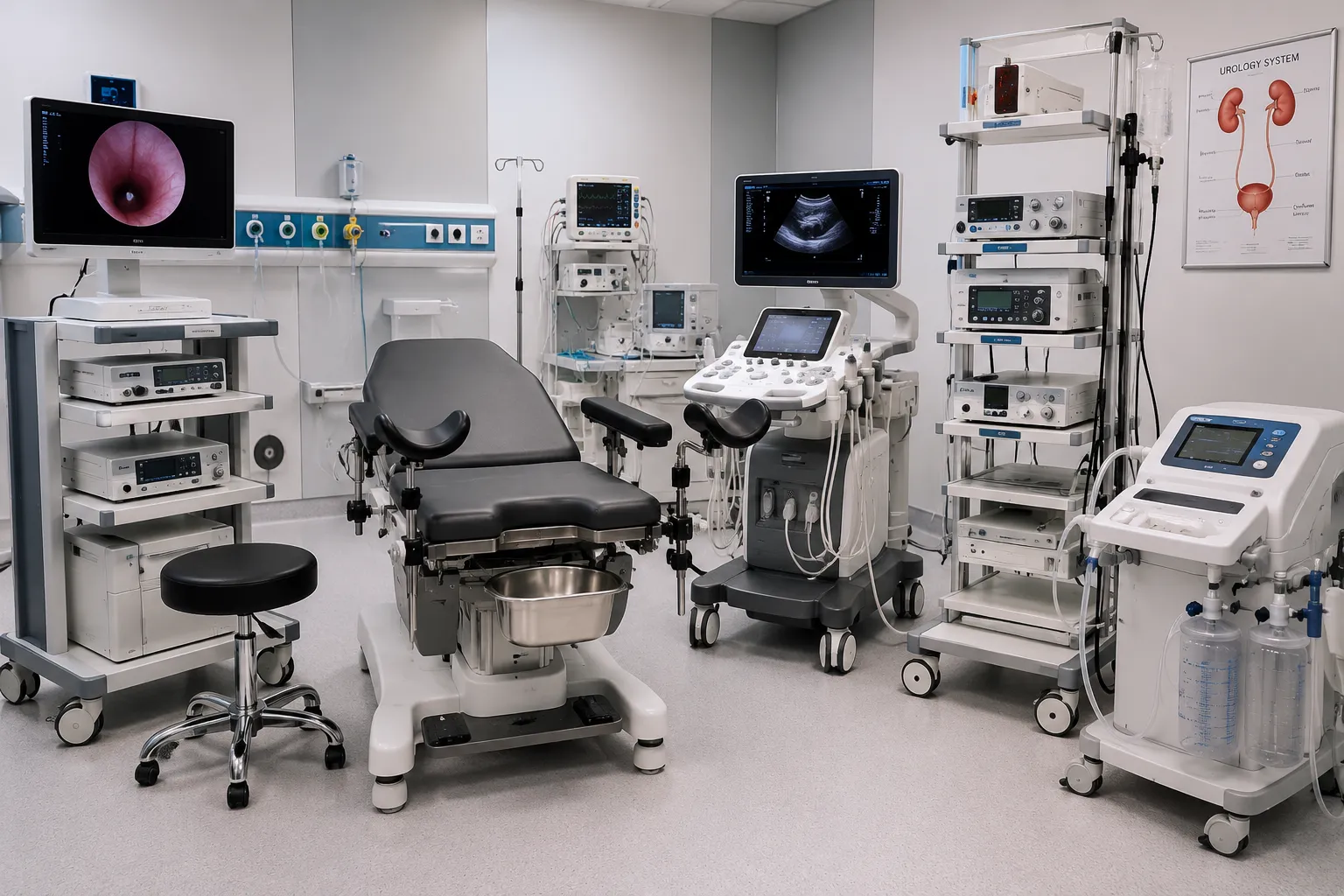
Modern urology services depend on specialised medical equipment to diagnose, monitor, and treat conditions affecting the urinary tract and the male reproductive system. Healthcare facilities ranging from specialist urology centres to large teaching hospitals increasingly invest in advanced technology to improve clinical workflows and patient care.
For buyer services, selecting urology equipment involves balancing diagnostic accuracy, procedural efficiency, reliability, maintenance planning, and long-term operational costs. Modern healthcare facilities often require integrated technology platforms that support outpatient clinics, operating theatres, diagnostic laboratories, and emergency services.
Why Advanced Urology Equipment Matters
Urological disorders affect patients across all age groups and healthcare settings. Equipment selection directly influences diagnostic capabilities and treatment options.
Comprehensive patient management — Modern urology combines imaging, endoscopy, minimally invasive surgery, and functional testing. In practice, procurement teams often prioritise equipment capable of supporting multiple clinical applications.
Improved procedural efficiency — Digital technologies streamline workflows and support clinical documentation and patient management.
Multi-department utilisation — Many urology systems integrate with surgical, radiology, emergency, and outpatient services.
Healthcare facilities sourcing through business suppliers often benefit from quality assurance documentation, technical support, and compliance with applicable local regulatory standards.
Cystoscopy Systems
Cystoscopy remains one of the most commonly performed urological procedures.
Direct visual assessment — Cystoscopes allow clinicians to examine the urethra and bladder using high-quality optical systems.
Diagnostic and therapeutic versatility — The equipment supports routine examinations, biopsies, foreign body removal, and certain minimally invasive procedures.
Technology considerations — Experienced procurement managers compare flexible and rigid systems, digital imaging quality, and instrument compatibility.
Common applications include:
-
Bladder evaluation
-
Haematuria investigation
-
Urinary tract abnormalities
-
Stone management
-
Follow-up examinations
Ultrasound Imaging Systems
Ultrasound plays an important role in modern urology.
Real-time imaging capability — Ultrasound supports evaluation of the kidneys, bladder, prostate, and urinary tract structures.
Point-of-care convenience — Portable systems increase accessibility across outpatient and inpatient settings.
Clinical flexibility — Facilities often compare image quality, probe selection, and workflow integration.
Urodynamic Testing Equipment
Urodynamic systems measure bladder and urinary tract function.
Functional assessment — Testing provides objective information regarding urinary storage and emptying.
Support for treatment planning — Clinicians use results to investigate various lower urinary tract disorders.
Workflow integration — Procurement teams frequently evaluate software's reporting capabilities and patient-comfort features.
Lithotripsy Systems
Lithotripsy technology supports non-invasive or minimally invasive management of kidney stones.
Stone fragmentation technology — Shockwave or laser systems break stones into smaller fragments.
Reduced procedural burden — Selected patients may avoid more invasive interventions depending on clinical circumstances.
Operational considerations — One aspect that surprises first-time buyers is the importance of imaging integration and maintenance planning.
Healthcare facilities commonly evaluate:
-
Energy delivery technology
-
Imaging compatibility
-
Treatment flexibility
-
Safety systems
-
Service support
Endoscopic Camera and Video Systems
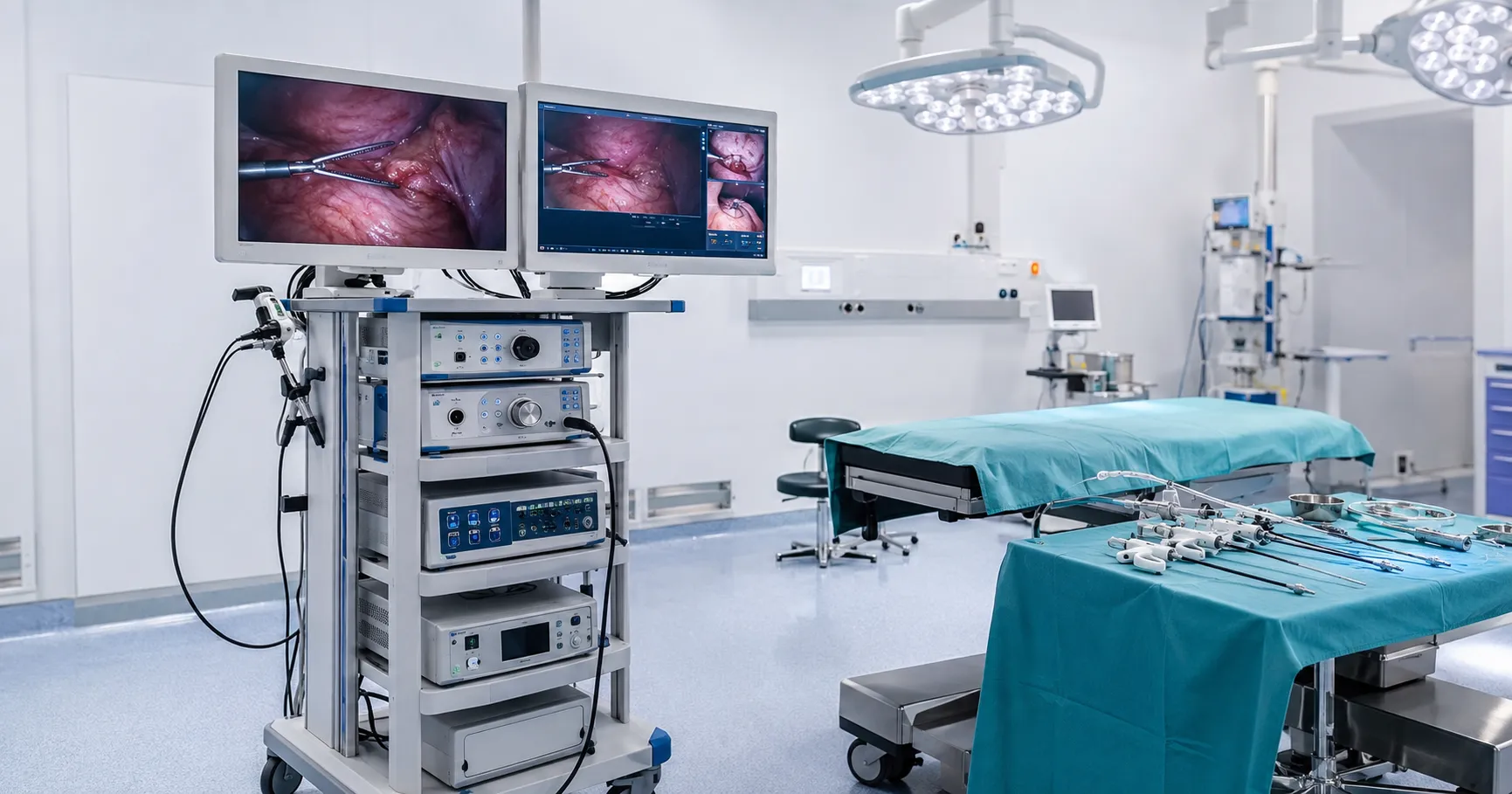
Digital visualisation technology supports a wide range of urological procedures.
High-definition imaging — Advanced camera systems improve procedural visualisation.
Operating theatre integration — Video platforms support documentation, education, and multidisciplinary collaboration.
Long-term value — Experienced clinical supply managers often prioritise upgrade capability and compatibility across surgical specialities.
Urology Laser Systems
Laser technology has become an important component of modern urological practice.
Minimally invasive treatment support — Urology lasers are commonly used for kidney stone management, prostate procedures, and selected soft tissue interventions. Experienced clinicians select laser systems according to procedural requirements and clinical workflows.
Precision energy delivery — Controlled laser energy allows targeted treatment while reducing unnecessary tissue disruption in appropriate clinical settings.
Operational flexibility — Modern laser platforms often support multiple urological applications, improving equipment utilisation across healthcare facilities.
Healthcare organisations typically evaluate:
-
Laser type
-
Power output
-
Fibre compatibility
-
Cooling systems
-
Service agreements
Urology Operating Tables
Specialised operating tables support a wide range of diagnostic and surgical procedures.
Patient positioning capability — Adjustable systems facilitate access during endourological and minimally invasive interventions.
Procedure versatility — Modern tables accommodate multiple surgical specialities beyond urology.
Workflow efficiency — Procurement managers often prioritise imaging compatibility, weight capacity, and ease of operation.
Facilities commonly compare:
-
Positioning functions
-
Imaging access
-
Mobility
-
Control systems
-
Maintenance requirements
Robotic-Assisted Surgical Systems
Robotic technology continues to expand within modern urological surgery.
Enhanced instrument control — Robotic platforms provide precise movement during selected minimally invasive procedures.
Advanced visualisation — Three-dimensional imaging supports detailed surgical views.
Healthcare planning considerations — Large healthcare organisations often evaluate training requirements, infrastructure needs, and long-term operating costs alongside clinical applications.
Common procedures may include:
-
Prostate surgery
-
Kidney surgery
-
Bladder procedures
-
Reconstructive surgery
Urinary Flow Measurement Systems
Urinary flow measurement devices support functional assessment of the lower urinary tract.
Objective data collection — Systems measure urine flow patterns during non-invasive evaluations.
Support for diagnostic pathways — Results contribute to the investigation of urinary symptoms.
Patient-friendly operation — Modern digital systems simplify testing while improving reporting capabilities.
Healthcare facilities evaluate:
-
Measurement accuracy
-
Reporting software
-
Data storage
-
User interface
-
Integration capability
Endoscope Reprocessing and Sterilisation Equipment
Safe reprocessing is an essential component of urology service delivery.
Infection prevention support — Cleaning and disinfection systems help maintain equipment hygiene in accordance with local protocols.
Workflow standardisation — Automated systems improve consistency and documentation.
Long-term equipment protection — Appropriate reprocessing may contribute to instrument longevity and operational reliability.
Procurement factors often include:
-
Automation capability
-
Documentation systems
-
Cycle duration
-
Capacity
-
Service support
Choosing Urology Equipment for Modern Healthcare Facilities
Urology equipment procurement requires balancing diagnostic capability, procedural flexibility, operational efficiency, and long-term reliability.
Clinical service planning — Large teaching hospitals may require advanced robotic and laser technologies, while district hospitals and outpatient clinics often prioritise flexible diagnostic and endoscopic systems.
During procurement evaluations, many businesses report increasing demand for independently verified performance data, maintenance planning, and lifecycle cost analysis.
Equipment integration — Procurement teams carefully evaluate compatibility with imaging systems, electronic documentation platforms, and operating theatre infrastructure.
Lifecycle value assessment — Experienced clinical supply managers assess consumables, software updates, maintenance schedules, training requirements, and technical support before final purchasing decisions.
Healthcare organisations operating multiple facilities frequently discover that establishing business partner programmes improves equipment standardisation and long-term service coordination.
Emerging Trends in Urology Technology
Artificial Intelligence in Urology- AI-supported software is increasingly being evaluated for imaging interpretation and clinical workflow management.
Clinical decision support — AI complements professional expertise while supporting efficiency.
Digital Endoscopy Platforms- Modern digital imaging systems continue to improve procedural visualisation.
Integrated workflow management — Connected systems simplify documentation and image storage.
Advanced Laser Technology: Laser platforms continue to evolve, offering greater procedural flexibility.
Multi-procedure capability — Healthcare facilities increasingly seek systems that support a range of applications.
Robotic Surgical Innovation: Robotic technologies continue to expand across urological procedures.
Final Thoughts
Modern urology departments rely on specialised medical equipment to diagnose, monitor, and treat a wide variety of urinary tract and male reproductive conditions. From cystoscopy systems and urodynamic testing equipment to laser technologies and robotic surgical platforms, each device contributes to efficient and patient-focused care.
In practice, procurement teams often achieve better long-term outcomes by selecting equipment that combines clinical performance with operational reliability, maintenance support, staff training, and scalability. Healthcare facilities that align technology investments with service demands are generally better positioned to deliver comprehensive urological care across diverse healthcare environments.
Disclaimer
Medigear.uk is a global medical equipment supplier, exporter, and distributor. The content published on this site is intended for educational and product awareness purposes only. Nothing on this page constitutes medical advice, clinical guidance, or treatment recommendations. All healthcare procurement and clinical decisions should be made by qualified medical professionals and compliant procurement teams operating within the regulatory frameworks of their respective countries.