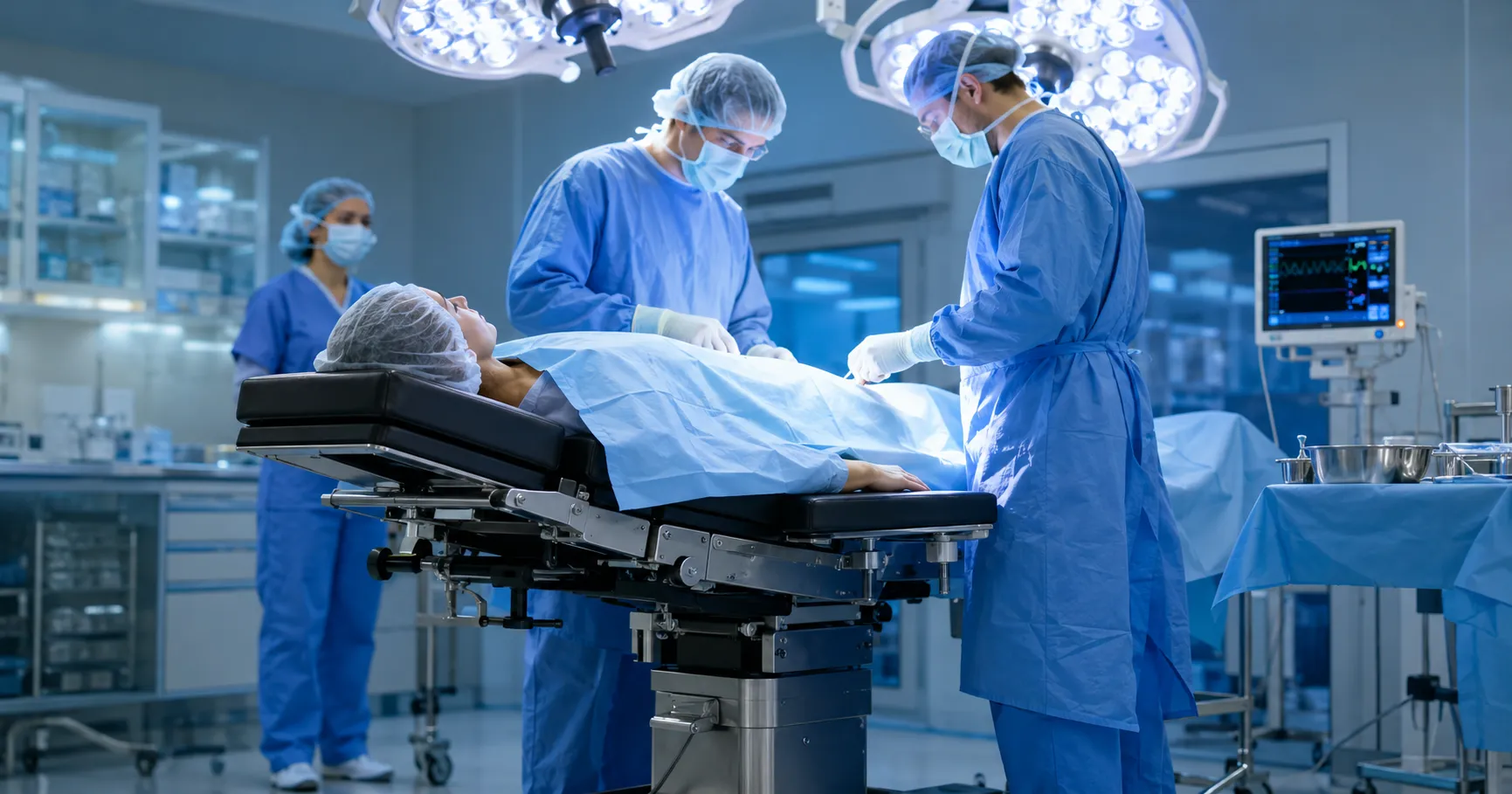
Surgical precision depends on far more than the expertise of the surgical team. Every successful procedure requires equipment that provides stability, flexibility, and precise patient positioning throughout the operation. Among the most critical components of every operating theatre is the operating table, which serves as the foundation for safe surgical access, ergonomic workflow, and accurate procedural execution. As surgical techniques become increasingly sophisticated, hospitals require operating tables capable of supporting minimally invasive procedures, robotic-assisted surgery, advanced imaging technologies, and complex multidisciplinary operations.
For hospital and clinic buyers, services teams responsible for sourcing surgical equipment worldwide, selecting the right operating table involves more than comparing technical specifications. Modern operating tables influence patient safety, surgeon comfort, imaging compatibility, operating room efficiency, and long-term operational costs. Understanding how these systems contribute to surgical precision helps healthcare organisations make informed procurement decisions while improving clinical outcomes. This article explores how today's operating tables enhance surgical performance, the features that matter most, and the procurement considerations healthcare facilities should evaluate before investing in new surgical platforms.
How Modern Operating Tables Support Greater Surgical Precision
Operating tables have evolved from basic patient support platforms into highly engineered surgical systems designed to improve access, stability, and procedural accuracy. Their advanced positioning capabilities enable surgeons to perform increasingly complex operations with greater confidence while reducing physical strain on operating room staff.
Accurate Patient Positioning — Precise patient positioning is fundamental to successful surgery. Modern operating tables provide motorised adjustments for height, lateral tilt, Trendelenburg, reverse Trendelenburg, back section, leg section, and longitudinal slide. Experienced surgeons frequently note that accurate positioning improves access to the surgical field while reducing unnecessary tissue manipulation. Stable positioning also helps maintain consistent anatomical alignment throughout lengthy procedures.
Enhanced Surgical Access — Advanced operating tables enable clinicians to position patients to meet the unique requirements of each surgical speciality. Orthopaedic, cardiovascular, neurosurgical, urological, and minimally invasive procedures often require highly specific positioning that standard tables cannot provide. Flexible articulation enables surgical teams to optimise visibility and instrument access without compromising patient stability.
Supporting Patient Safety — Patient safety remains a primary objective during every surgical procedure. Modern operating tables distribute body weight evenly, minimise pressure points, and provide secure restraint systems that reduce the risk of patient movement during surgery. Integrated safety mechanisms, emergency override functions, and controlled positioning movements further enhance procedural safety, particularly during complex operations requiring frequent table adjustments.
Improving Surgical Team Ergonomics — Surgeon fatigue can affect efficiency during lengthy procedures. Adjustable table heights and programmable positioning controls enable surgeons to work in more comfortable postures, reducing musculoskeletal strain while improving precision. In practice, operating theatre teams often report smoother workflows when operating tables can be repositioned quickly without interrupting the procedure.
Healthcare Environments Where Advanced Operating Tables Deliver the Greatest Value
Modern operating tables are used across a wide variety of healthcare environments, each with distinct clinical requirements and workflow priorities. Their versatility allows healthcare providers to support diverse surgical specialities while maintaining high standards of patient safety and operational efficiency.
General Surgery Operating Theatres — General surgery departments perform a broad range of abdominal, gastrointestinal, endocrine, and emergency procedures requiring adaptable patient positioning. Motorised operating tables allow surgical teams to reposition patients efficiently throughout procedures while maintaining stable surgical access. Hospitals that source equipment through verified global medical equipment business suppliers often benefit from comprehensive installation support, user training, and maintenance documentation that simplifies long-term equipment management.
Orthopaedic and Trauma Surgery — Orthopaedic procedures frequently require specialised positioning accessories, high patient weight capacities, and compatibility with traction systems. Carbon fibre tabletops allow unobstructed imaging during fracture fixation and spinal procedures, while precise articulation improves surgical access for complex reconstructive operations.
Hybrid Operating Rooms — Hybrid operating theatres combine traditional surgery with advanced imaging technologies, including fluoroscopy, angiography, and intraoperative CT. Operating tables designed for hybrid environments incorporate radiolucent tabletops, extended longitudinal movement, and seamless compatibility with C-arm imaging systems. These capabilities improve image quality while supporting minimally invasive and image-guided procedures.
Specialist Surgical Centres — Neurosurgery, cardiovascular surgery, urology, bariatric surgery, and robotic-assisted procedures each require unique positioning capabilities. Advanced operating tables support interchangeable accessories, programmable positioning presets, and precise movement controls, enabling healthcare facilities to perform highly specialised procedures with greater efficiency and consistency.
Technical Features That Improve Surgical Precision
Modern operating tables are engineered to support increasingly complex surgical procedures while improving patient safety, workflow efficiency, and clinical outcomes. Beyond basic positioning, today's systems incorporate advanced technologies that enable surgeons to perform procedures with greater accuracy and confidence. Procurement teams should evaluate these technical characteristics carefully, as they directly influence surgical performance and long-term operational value.
Motorised Multi-Axis Positioning — Advanced operating tables provide smooth electric or electro-hydraulic adjustments for height, lateral tilt, Trendelenburg, reverse Trendelenburg, longitudinal slide, backrest, and leg sections. These movements allow surgeons to position patients precisely according to procedural requirements without interrupting the operation. Experienced operating theatre teams often find that accurate motorised positioning reduces procedure time while improving access to difficult surgical sites.
Radiolucent Tabletops for Advanced Imaging — Many modern operating tables feature carbon fibre tabletops that minimise X-ray interference during imaging-guided procedures. This design enables unobstructed use of C-arm fluoroscopy, digital subtraction angiography, and intraoperative imaging without patient repositioning. For hospitals performing orthopaedic, cardiovascular, spinal, or vascular procedures, radiolucent tabletops significantly improve imaging quality and procedural accuracy.
Programmable Position Memory — Premium operating tables include programmable memory settings that allow frequently used surgical positions to be recalled instantly. Instead of manually adjusting multiple table sections before every procedure, surgical teams can activate pre-configured positioning profiles. This feature improves operating room efficiency while ensuring positioning consistency across similar procedures.
Accessory Compatibility and Modular Design — Surgical procedures often require specialised accessories, including headrests, arm supports, traction systems, kidney bridges, shoulder supports, leg holders, and imaging extensions. Modular operating tables allow hospitals to configure the same platform for multiple surgical specialities, increasing equipment utilisation while reducing the need for separate procedure-specific tables. Procurement teams should evaluate accessory compatibility based on their hospital's surgical case mix and future expansion plans.
Procurement Considerations When Selecting Operating Tables
Purchasing an operating table is a long-term investment that influences surgical performance, operational efficiency, and equipment lifecycle costs. Healthcare organisations should evaluate clinical requirements, technical capabilities, maintenance support, and supplier reliability before making procurement decisions.
Evaluating Total Cost of Ownership — The purchase price is only one component of the overall investment. Procurement professionals should assess installation costs, staff training, preventive maintenance, software updates, replacement accessories, spare parts availability, warranty coverage, and expected equipment lifespan. Hospitals that evaluate lifecycle costs rather than acquisition costs alone typically achieve better long-term financial outcomes.
Assessing Supplier Service and Technical Support — Reliable after-sales support is essential for maintaining operating room availability. Healthcare organisations should verify that suppliers provide qualified service engineers, preventive maintenance programmes, operator training, technical documentation, and timely access to replacement parts. Increasingly, suppliers and manufacturers in the business advertise to global healthcare buyers, emphasising that hospitals expect comprehensive lifecycle support alongside advanced surgical equipment.
Reviewing Compliance and Safety Standards — Operating tables should comply with applicable local regulatory standards and, where appropriate, internationally recognised safety and quality requirements. Procurement teams should confirm load-capacity certification, electrical-safety documentation, imaging compatibility, infection-control design, and manufacturer testing records before purchasing. Comprehensive documentation supports accreditation processes and simplifies regulatory inspections.
Building Long-Term Equipment Partnerships — Hospitals managing multiple operating theatres often benefit from establishing long-term medical equipment supply business partners that provide consistent servicing, technical training, software updates, and equipment lifecycle planning. Long-term supplier relationships also improve spare parts availability, reduce service response times, and simplify future equipment upgrades as surgical technologies continue to evolve.
Maintaining Operating Tables for Long-Term Performance
Regular maintenance ensures that operating tables continue to deliver the precision, reliability, and safety required in modern surgical environments. Preventive servicing also protects the hospital's investment by reducing unexpected downtime and extending equipment lifespan.
Preventive Maintenance Programmes — Routine preventive maintenance should include inspections of hydraulic or electric drive systems, control panels, locking mechanisms, batteries, positioning motors, and emergency override functions. Scheduled servicing allows biomedical engineers to identify component wear before failures interrupt surgical services. Hospitals implementing structured maintenance programmes generally experience greater equipment reliability and lower emergency repair costs.
Cleaning and Infection Prevention — Operating tables are exposed to demanding clinical environments and require thorough cleaning after every procedure. Healthcare facilities should follow manufacturer-approved cleaning and disinfection protocols that protect both patients and sensitive equipment components. Regular inspection of upholstery, seals, joints, and removable accessories also helps maintain infection-prevention standards while preserving the equipment's condition.
Performance Testing and Safety Inspections — Operating tables should undergo regular functional testing to verify positioning accuracy, weight capacity, emergency controls, and electrical safety. In facilities with intensive operating schedules, proactive performance monitoring helps identify potential issues before they affect surgical workflow. Continuous maintenance, combined with accurate service records, supports regulatory compliance, extends equipment service life, and maximises return on investment.
Final Thoughts
Modern operating tables have become indispensable components of today's operating theatres, providing the stability, flexibility, and precision required for increasingly complex surgical procedures. From routine general surgery to minimally invasive, robotic-assisted, and image-guided interventions, the ability to position patients accurately directly impacts surgical access, workflow efficiency, and clinical outcomes. As healthcare providers continue adopting advanced surgical technologies, selecting the right operating table is no longer simply a purchasing decision—it is a strategic investment in patient safety and long-term operational performance.
Healthcare organisations should evaluate operating tables based on clinical functionality, imaging compatibility, positioning capabilities, weight capacity, modular accessories, and total cost of ownership rather than focusing solely on the initial purchase price. Equally important are preventive maintenance programmes, comprehensive staff training, and dependable technical support, all of which contribute to consistent equipment performance throughout its service life. Procurement teams that involve surgeons, operating theatre managers, biomedical engineers, and infection prevention specialists during the evaluation process are better positioned to identify solutions that meet both current and future surgical requirements.
As surgical practices continue to evolve, operating tables will remain central to improving procedural accuracy, supporting multidisciplinary surgical teams, and enhancing patient care. Investing in high-quality operating tables backed by reliable service and lifecycle support enables healthcare facilities to strengthen operating room efficiency while maintaining the flexibility needed for future surgical innovation.
Disclaimer
Medigear.uk is a global medical equipment supplier, exporter, and distributor. The content published on this site is intended for educational and product awareness purposes only. Nothing on this page constitutes medical advice, clinical guidance, or treatment recommendations. All healthcare procurement and clinical decisions should be made by qualified medical professionals and compliant procurement teams operating within the regulatory frameworks of their respective countries.