Healthcare providers worldwide face increasing demands to improve patient outcomes while managing operational complexity, workforce shortages, and rising healthcare costs. Traditional medical equipment is no longer expected to perform clinical functions. Healthcare organisations now require technologies that can generate actionable insights, automate routine tasks, and support data-driven decision-making.
For buyers' services, intelligent healthcare devices have become a strategic investment priority. These technologies combine artificial intelligence, connectivity, automation, and advanced analytics to improve patient care, optimise workflows, and enhance operational visibility across healthcare environments.
From smart monitoring systems to AI-assisted diagnostic technologies, intelligent healthcare devices are reshaping healthcare delivery across hospitals, clinics, community healthcare centres, and mobile healthcare environments. Understanding these developments helps healthcare leaders evaluate future technology investments more effectively.
How Intelligent Healthcare Devices Are Transforming Clinical Operations
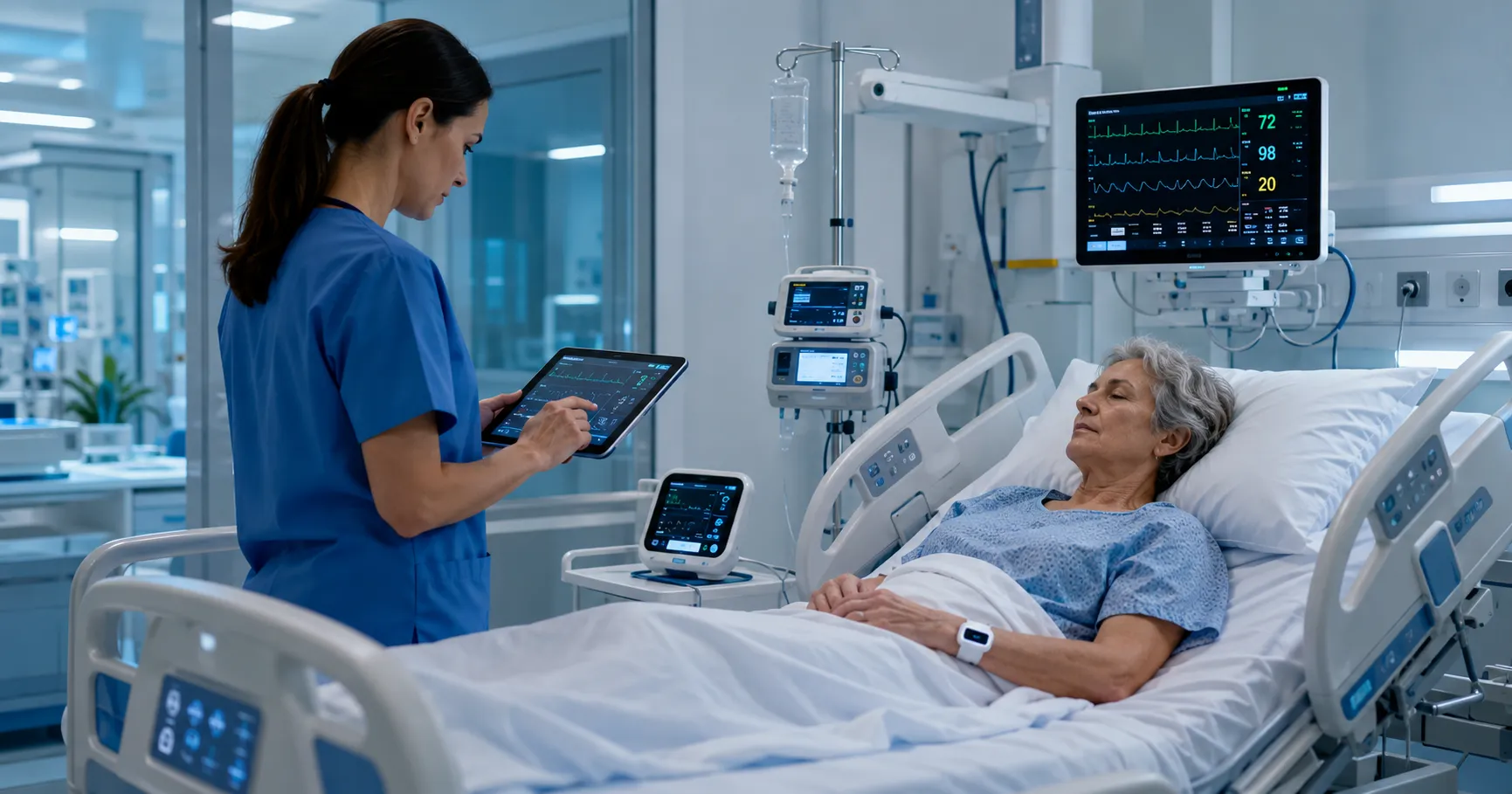
Continuous Patient Monitoring — Intelligent healthcare devices continuously collect, analyse, and transmit patient information in real time. Clinical teams gain immediate visibility into patient status, helping them respond more quickly to changes in condition. Facilities that have deployed advanced monitoring systems at scale tend to report stronger operational awareness and improved workflow efficiency.
Artificial Intelligence Decision Support — AI-enabled healthcare devices assist clinicians by identifying patterns, prioritising information, and supporting diagnostic workflows. Experienced clinical supply managers typically evaluate how AI functionality integrates with existing clinical processes before approving technology investments.
Automated Clinical Documentation — Smart devices automatically capture and transmit healthcare data, reducing manual documentation requirements. This improves data accuracy and helps healthcare professionals spend more time focused on patient care activities. One aspect that surprises first-time buyers is the significant reduction in administrative workload created by automation.
Connected Healthcare Ecosystems — Intelligent devices function within larger digital healthcare infrastructures. Connected technologies improve information sharing, support coordinated care delivery, and enhance visibility across multiple departments and facilities.
Where Intelligent Healthcare Devices Are Being Deployed Globally
Large teaching hospitals often serve as early adopters of intelligent healthcare technologies because they manage complex clinical environments and extensive equipment inventories. These organisations deploy smart monitoring systems, AI-assisted diagnostic tools, and intelligent asset management solutions to improve operational performance.
District hospitals increasingly utilise intelligent devices to maximise clinical efficiency while managing staffing and resource constraints. Connected technologies support patient monitoring, workflow optimisation, and equipment management.
Facilities that source equipment through business suppliers frequently prioritise intelligent functionality, interoperability, and analytics capabilities during procurement evaluations. Smart technologies have become an important factor influencing healthcare equipment purchasing decisions.
Community healthcare centres benefit from intelligent devices through connected diagnostic platforms, remote monitoring solutions, and data-driven care management systems. These technologies help improve access to healthcare services while supporting distributed patient populations.
Mobile healthcare units use intelligent technologies to support remote care delivery and maintain operational continuity. In practice, procurement teams often find that intelligent devices provide greater long-term value than traditional standalone medical equipment.
Technical Characteristics Driving Intelligent Device Adoption
Artificial Intelligence Integration — AI-powered devices support diagnostic assistance, predictive analytics, anomaly detection, and clinical decision support. Healthcare organisations should evaluate validation processes and operational outcomes when assessing AI-enabled technologies.
Cloud Connectivity and Data Sharing — Intelligent healthcare devices increasingly connect to cloud-based platforms that support monitoring, analytics, and remote management capabilities. Connectivity improves operational visibility and enables coordinated healthcare delivery.
Interoperability Capabilities — The ability to exchange information with healthcare information systems and connected technologies is critical. Interoperability directly influences workflow efficiency, scalability, and long-term technology value.
Predictive Analytics Functions — Smart devices analyse operational and clinical trends to identify potential risks and support proactive interventions. Predictive capabilities are becoming increasingly valuable across healthcare environments.
Cybersecurity Architecture — Connected medical technologies require strong cybersecurity protections. Healthcare providers should assess software update processes, security controls, and data protection frameworks alongside clinical performance specifications.
Evaluating Intelligent Healthcare Devices for Long-Term Healthcare Value
Lifecycle Cost Considerations — Intelligent healthcare devices often entail software subscriptions, cybersecurity management, connectivity infrastructure, and technical support. Procurement teams should evaluate the total cost of ownership rather than focusing exclusively on acquisition costs. Facilities that assess lifecycle expenses early frequently make more sustainable technology investments.
Vendor Expertise and Service Capabilities — Smart healthcare technologies require dependable technical support throughout their operational lifespan. Healthcare organisations should review service coverage, implementation support, software maintenance programs, and training resources. Many business Advertise increasingly offer digital support services and performance-monitoring tools because healthcare providers expect long-term technology partnerships.
Compliance and Cybersecurity Readiness — Intelligent healthcare devices operate within connected environments where cybersecurity and compliance are critical. Healthcare providers should verify conformity with applicable local regulatory standards and assess cybersecurity frameworks before deployment. Requirements differ considerably across healthcare systems.
Integration with Existing Infrastructure — Intelligent technologies generate the greatest value when integrated into healthcare information systems, monitoring platforms, and operational workflows. Procurement teams should carefully assess compatibility requirements and implementation strategies before making purchasing decisions.
Healthcare networks managing technology deployments across multiple facilities often benefit from business partners that support standardisation, technical expertise, and long-term technology planning.
Supporting Equipment Reliability Through Intelligent Maintenance Strategies
Predictive Maintenance Monitoring — Intelligent healthcare devices continuously monitor operational performance and identify potential issues before failures occur. Predictive maintenance helps engineering teams schedule interventions proactively, reducing downtime and improving equipment reliability. Facilities that have deployed predictive maintenance systems at scale tend to report stronger equipment availability.
Software Management and Security Updates — Connected devices rely on software functionality to deliver intelligent capabilities. Regular updates help maintain performance, address cybersecurity risks, and ensure compatibility with evolving healthcare infrastructures. Healthcare organisations should establish structured update management procedures.
Performance Analytics and Lifecycle Tracking — Intelligent devices generate valuable operational insights that support lifecycle management decisions. Biomedical engineering teams can monitor performance trends, maintenance histories, and utilisation patterns to optimise equipment management strategies.
Service Accessibility Across Diverse Markets — One aspect that surprises first-time buyers is how strongly local service availability can affect ownership costs. In regions with limited technical support resources, maintenance planning becomes a critical component of long-term technology management.
Why Global Demand for Intelligent Healthcare Devices Continues to Accelerate
Healthcare Digital Transformation Initiatives — Healthcare systems worldwide continue investing in technologies that improve operational efficiency, patient safety, and clinical outcomes. Intelligent healthcare devices are increasingly viewed as foundational components of digital healthcare strategies.
Expansion of Connected Care Models — Hospitals and healthcare networks increasingly depend on connected technologies to support coordinated care delivery. Intelligent devices improve information sharing, reduce manual processes, and enhance operational visibility.
Growth of Remote Patient Monitoring — Healthcare providers are expanding remote monitoring programs to improve patient management outside traditional healthcare facilities. Intelligent healthcare devices play a central role in supporting these evolving care models.
International Procurement Priorities — Global healthcare buyers increasingly prioritise interoperability, analytics capabilities, cybersecurity readiness, and intelligent functionality when evaluating healthcare technology investments. Smart technologies have become mainstream considerations in procurement.
Final Thoughts
The rise of intelligent healthcare devices is transforming the delivery of healthcare by enabling smarter diagnostics, real-time patient monitoring, and data-driven clinical decision-making. Equipped with advanced technologies such as artificial intelligence, connectivity, and automation, these devices improve patient outcomes and enhance operational efficiency across healthcare facilities. As intelligent medical technologies continue to advance, they will play a vital role in creating more connected, efficient, and patient-centred healthcare systems.
Disclaimer
Medigear.uk is a global medical equipment supplier, exporter, and distributor. The content published on this site is intended for educational and product awareness purposes only. Nothing on this page constitutes medical advice, clinical guidance, or treatment recommendations. All healthcare procurement and clinical decisions should be made by qualified medical professionals and compliant procurement teams operating within the regulatory frameworks of their respective countries.