What if the immune system built something it was never asked to build — and put it everywhere? What if tiny clusters of inflamed cells formed in the lungs, the skin, the eyes, the liver, the heart, the brain — without infection, without cancer, without any trigger anyone can name? What if the body built its own disease from its own defences? And no specialist could say why. That is sarcoidosis. Granulomas. Tiny. Everywhere. And the cause remains unknown.
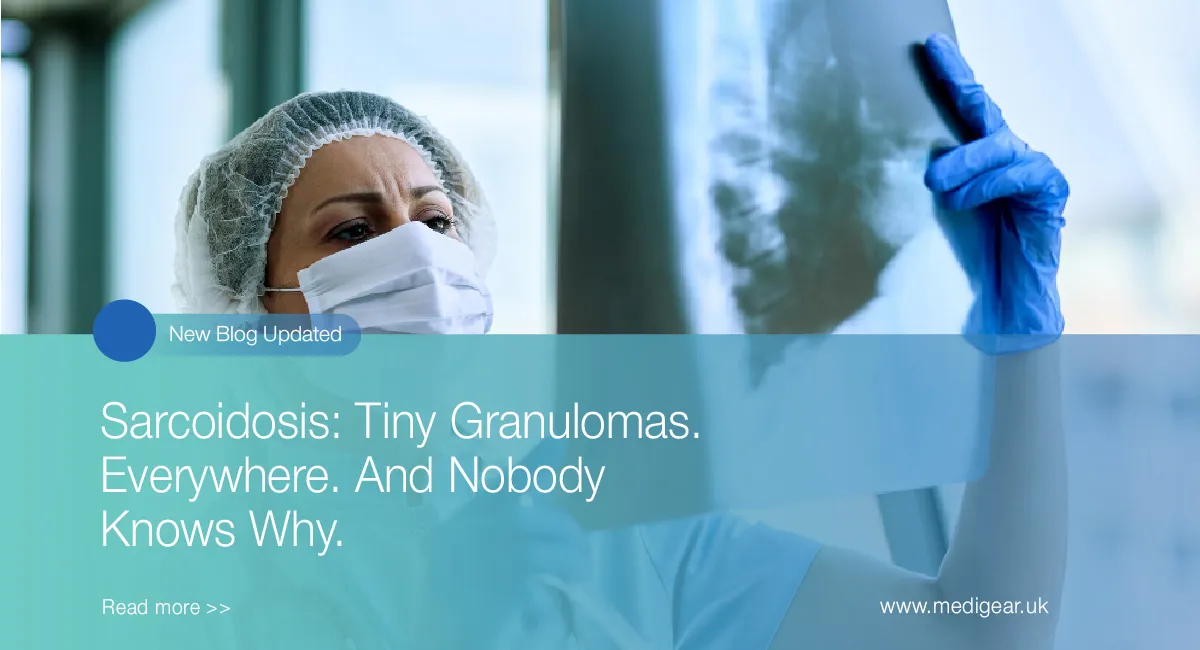
She was thirty-six. Felt tired for months. Dry cough that would not clear. Rash on her shins — raised, tender, purple-red nodules, her GP called erythema nodosum. Raised calcium. Chest X-ray — bilateral hilar lymphadenopathy. Swollen nodes at the root of each lung. The consultant said sarcoidosis before the biopsy confirmed it. Granulomas in her lungs. Her skin. Her blood. What caused it? Nobody could answer. Will it go away? Maybe. Could it spread? It already had.
This guide explains sarcoidosis with the honesty it demands. How granulomas form, where they go, who is at risk, what the symptoms look like, how diagnosis works, and how the right clinical equipment supports the detection and monitoring that sarcoidosis patients need. Medigear supplies certified diagnostic and monitoring equipment to hospitals and clinics across the UK — because sarcoidosis found early in the lungs is manageable. Found late in the heart or brain, the granulomas have already done damage that treatment cannot fully reverse.
What Are Granulomas
It is a systemic granulomatous disease. The immune system forms non-caseating granulomas — tiny clusters of immune cells — in affected organs. Non-caseating — no central death. No cheese-like core. Separates sarcoidosis from TB. They may resolve. Or scar. What they scar determines what the patient loses. Lung scar — breathing fails. Heart — rhythm breaks. Eyes — sight goes. Same granuloma. Different consequence. It all depends on where it sits. Hospitals and respiratory units sourcing certified imaging and monitoring equipment can explore the Medigear buyers portal for pricing and procurement built for multi-system diagnostics.
The Unknown Cause
The cause is unknown. Leading theory — susceptible person inhales an unknown trigger. The immune system overreacts. Granulomas form. Normal resolution does not happen. Trigger clears. Granulomas stay. Structures that serve no purpose. Damage what they occupy. The immune system builds walls inside its own house. Genetics matters. Clusters in families. Ethnicity matters too. African and Caribbean populations are hit more often. More severely. But nobody has found the switch yet. On or off.
Lungs
The lungs are involved in over ninety percent of cases. Staged by chest X-ray. Zero — normal. One — nodes, no lung changes. Two nodes with lung infiltrates. Three — lung infiltrates, no nodes. Four — fibrosis. Stage predicts outcome. One often resolves. Four does not. Stage one may never need treatment. Stage four means irreversible scarring of the granulomas already caused.
Skin
Skin involvement affects roughly a third of patients. Erythema nodosum — red nodules on the shins — is the classic acute sign. Lupus pernio — purple plaques on nose, cheeks, ears — signals chronic disease. Correlates with worse systemic disease. Papules and plaques appear anywhere. Old scars. Even tattoos. Sarcoidosis infiltrates them. Skin tells the story lungs may not yet show. Spot lupus pernio. The referral finds lungs, liver, and eyes before the patient knows.
Eyes
Eye involvement affects up to half of sarcoidosis patients. Anterior uveitis — iris inflammation. Pain. Redness. Light sensitivity. Blurred vision. Posterior uveitis hits the retina. Lacrimal swelling dries the eyes. Optic nerve granulomas threaten sight. Every patient diagnosed needs an eye review. Eyes hit without symptoms. Until the damage is done. Our guide to the best nebulisers covers the respiratory devices that support inhaled steroid delivery in sarcoidosis patients whose lung involvement needs direct airway treatment.
Heart
The heart is the organ that makes sarcoidosis lethal. Five per cent clinically. Autopsy studies say far higher. Granulomas in the heart muscle disrupt the electrics. Block. Arrhythmias. Sudden death. Patient with the diagnosis of fainting without explanation? ECG. Echo. Cardiac MRI. PET. Immediately. Lung granuloma — breathlessness. Heart granuloma — death. Our guide to setting up patient monitoring on a budget covers the ECG and vital signs tools that cardiac sarcoidosis monitoring demands. Diagnostic equipment makers wanting to list cardiac monitors, ECG machines, and imaging tools where respiratory and cardiology units are searching can reach buyers through the Medigear advertising platform.
Nervous System
The nervous system is affected in five to ten per cent. Neurosarcoidosis targets cranial nerves. Especially the facial nerve. Bell's palsy that may be sarcoidosis. Meningitis. Seizures. Spinal granulomas. Neuropathy. Young patient with bilateral facial palsy? Think sarcoidosis until proven otherwise.
Liver
The liver is involved in over half of cases on biopsy, but clinically significant liver disease is less common. Raised ALP and GGT signal liver granulomas. Severe — cholestasis. Cirrhosis. The liver manages silently. Until it does not.
Calcium
Raised calcium — the granulomas make active vitamin D outside normal control. Excess calcium — fatigue, thirst, kidney stones, renal damage. Check calcium at diagnosis. At follow-up. The metabolic problem the granulomas create outside the organs they sit in.
Diagnosis
Diagnosis needs three things. Right clinical picture. Granulomas on biopsy. Other causes were ruled out. Biopsy is the gold standard. Bronchoscopy for the lung. Skin for lesions. Node for what CT shows. Pathology confirms. Rules out TB. Fungal. Cancer. Without biopsy — presumptive. With it — confirmed. Suppliers of bronchoscopy accessories, biopsy tools, and respiratory monitoring devices can register through the Medigear supplier portal to connect with hospitals building sarcoidosis diagnostic pathways.
Treatment
Treatment is not always needed. Stage one with no symptoms and stable imaging? Observe. Granulomas may resolve on their own. Months. Years. Treatment when organs are at risk. Lungs declining. Heart involved. Eyes diseased. High calcium. Skin disfigured. Prednisolone first-line. Suppresses the immune response to building them. Second-line — methotrexate, azathioprine, mycophenolate. For steroid intolerance or taper relapse. Infliximab for refractory disease that resists everything else. Reach out to our team for guidance on matching monitoring equipment to sarcoidosis and multi-system inflammatory protocols.
Screening at Diagnosis
Can your respiratory team screen every sarcoidosis patient for cardiac and eye involvement at diagnosis? Lungs brought the patient in. Heart and eyes may already be hit. ECG. Echo. Eye review. At diagnosis. Catch what kills and blinds before lung treatment starts. Companies seeking long-term collaboration on multi-system diagnostic supply and monitoring can explore the Medigear partnership programme for opportunities beyond a single transaction.
Follow-Up
Does your respiratory team follow up sarcoidosis patients with serial lung function and imaging, or discharge after the first stable result? The condition relapses. Granulomas that resolved may return. The lungs that were stable may scar. PFTs are active every three to six months. Annually in remission. Catches the decline that a single normal result cannot predict. This is not a diagnosis that stays still. The follow-up must match the disease.
Fatigue
What does your service offer the sarcoidosis patient who looks well but feels exhausted? Fatigue in sarcoidosis is real, disabling, and poorly understood. It persists even when the granulomas resolve, and the imaging normalises. The patient whose lungs are clear but whose energy is gone needs acknowledgement, not dismissal. Fatigue clinics. Pacing strategies. Psychological support. Addressing what blood tests cannot measure and treatment cannot always fix.
Lofgren Syndrome
Can your GP recognise the combination of bilateral hilar lymphadenopathy, erythema nodosum, and raised calcium as sarcoidosis before referring for investigation? This triad has a name — Lofgren syndrome. Good prognosis. GP spots it — one referral to respiratory. Does not — three referrals. Derm for rash. Endo for calcium. Haem for nodes. Three waits instead of one answer.
Multi-Disciplinary
Does your multi-disciplinary team include respiratory, cardiology, ophthalmology, dermatology, and neurology when managing sarcoidosis? The granulomas do not respect organ boundaries. Manage lungs without checking the heart — miss the arrhythmia. Check the heart without eyes — miss the uveitis. The disease requires a team that sees the whole patient. Not just the organ that referred them.
New Symptoms
What happens when your sarcoidosis patient develops new symptoms two years after the diagnosis? New cough — relapse? New rash — progression? New palpitations — cardiac involvement that was not there at the start? Every new symptom needs assessment against the disease. Not assumption it is something else. Two organs at diagnosis may be four now.
Scans Clear. Still Exhausted.
Can your respiratory clinic explain to the sarcoidosis patient why fatigue persists even when the scans look clear? The granulomas resolve. The tiredness does not. The patient who looks well on imaging but cannot function is not imagining it. Sarcoidosis fatigue is poorly understood. Deeply disabling. Acknowledging it is the first step. Treating the person — not just the scan — is the next.
Why Choose Medigear
Medigear supplies certified diagnostic and monitoring equipment to hospitals, respiratory clinics, and multi-specialty services across the UK. Whether you are equipping a respiratory assessment service, upgrading cardiac monitoring for inflammatory disease, or building diagnostic readiness for multi-organ conditions, our team matches the right tools to your clinical need. Reach out to our team for guidance built around the patients whose immune system built something it was never asked to build — and the clinicians who find every organ it reached.
Conclusion
What if the immune system built something nobody asked for — and put it everywhere? She was thirty-six. Tired. Coughing. Red nodules on her shins. Raised calcium. Swollen lymph nodes. Sarcoidosis. Granulomas in her lungs, her skin, her blood. What caused it? Nobody knows. Same granuloma. Different consequence. Lungs — breathlessness. Heart — death. Eyes — sight gone. The cause remains unknown. But the screening that catches cardiac and eye involvement at diagnosis saves the life and the vision that late detection loses. ECG. Echo. Eye review. At the start. Not after the arrhythmia. Not after the blindness. Medigear stands alongside respiratory and multi-specialty teams with certified diagnostic equipment and the honest support that multi-system disease demands. Speak to our team today — because the granulomas do not respect organ boundaries, and neither should the team that manages them.
⚠️ This post is for general information only. We do not sell medications or provide prescriptions — Medigear.uk is a medical equipment supplier only.