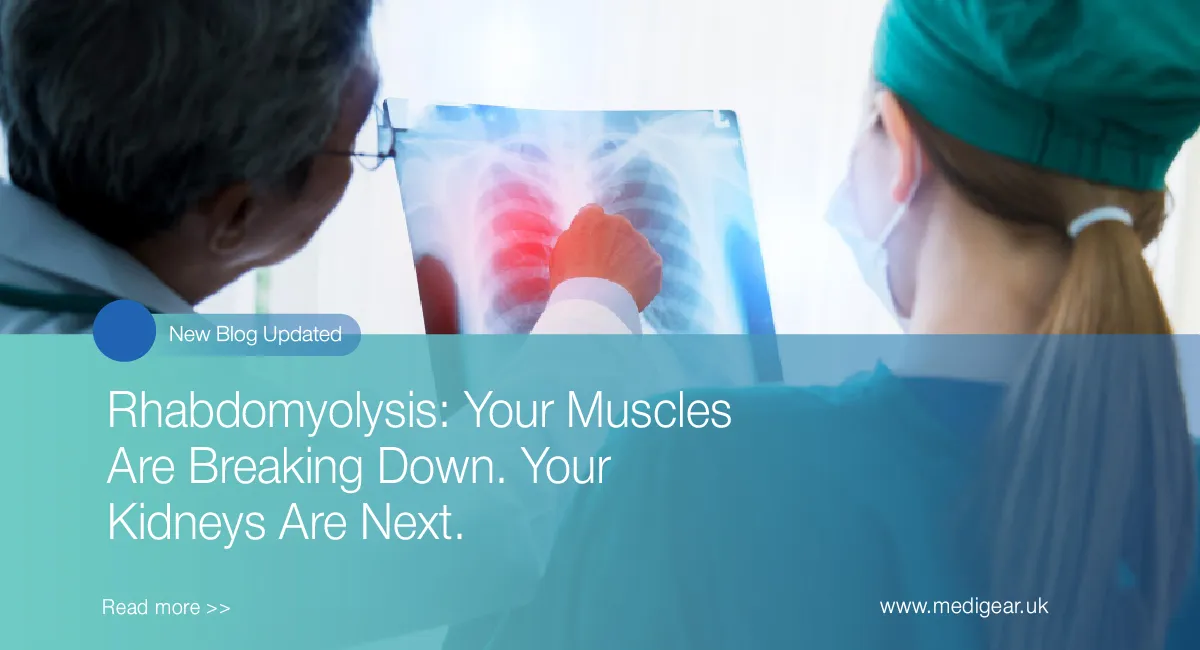
What if your own muscles were killing you? What if the fibres that carried every step began to die? And what they spilt into the blood poisoned the organs downstream? What if the protein that makes muscle work became the toxin, shutting the kidneys down? That is rhabdomyolysis. Muscle breaks. Myoglobin floods. Kidneys clog. Sore legs on arrival. Dialysis on departure. Or no departure at all.
He was twenty-four. Gym session. First in months. Pushed too hard. Leg press. Squats. Lunges. Felt great leaving. Stiff the next morning. Day two — thighs swollen, rigid, painful. Urine dark brown. Cola colour. Thought dehydration. It was myoglobin. Muscles breaking down. Contents flushing into the blood. A&E — CK eighty thousand. Normal under two hundred. Kidneys struggling. IV fluids. Catheter. Hourly output. Renal team on standby. Avoided dialysis. But six weeks to recover the muscles. Longer for the kidneys.
This guide explains rhabdomyolysis with the urgency it demands. How muscles break, what the breakdown releases, who is at risk, what the warning signs are, how diagnosis works, and how the right clinical equipment supports the treatment that rhabdomyolysis patients need. Medigear supplies certified monitoring and diagnostic equipment to hospitals and clinics across the UK — because rhabdomyolysis caught early with aggressive fluids saves kidneys. Caught late, the damage is done, and dialysis follows.
How It Works
Rhabdomyolysis means skeletal muscle death. Cell membrane breaks. Contents spill — myoglobin, potassium, phosphate, CK, urate. Myoglobin is the problem. Large protein. Carries oxygen in the muscle. Harmless at low blood levels. High levels reach the kidneys. Precipitates in the tubules. Blocks them. Free radicals. Acute kidney injury. Dead muscle upstream. Poisoned kidney downstream. Hospitals and acute medical units sourcing certified monitoring equipment for AKI and metabolic emergencies can explore the Medigear buyers portal for pricing and procurement.
Causes
The causes are broad. Crush — building collapse, road accidents, long immobilisation. Exertional — extreme exercise in untrained bodies, military training, marathon in heat. Drugs — statins, fibrates, antipsychotics, cocaine, MDMA, amphetamines. Alcohol — lying still while drunk compresses muscles against hard surfaces. Heat stroke. Seizures — prolonged fitting destroys muscle. Infections — flu, Legionella, HIV. Electrolyte crash — severe low potassium and phosphate. Genetic — McArdle disease, carnitine deficiency. Common thread — muscle cell death. The pathway to the kidney is always the same.
Symptoms
The classic triad is muscle pain, weakness, and dark urine. But the triad shows in fewer than ten per cent. Many show one or two. Some show none. Silent damage. The first sign is the blood test. Pain in the large groups. Thighs. Calves. Shoulders. Back. Swollen. Tender. Rigid. Urine darkens as myoglobin spills. Amber to brown to cola. Dark urine after exertion, trauma, or drugs is rhabdomyolysis until proven otherwise.
CK
Creatine kinase is the diagnostic marker. CK rises within hours. Peaks at twenty-four to seventy-two. Above one thousand confirms rhabdomyolysis. Above ten thousand — AKI risk. Above fifty thousand — severe. He was eighty thousand. CK tells how much muscle died. Not whether the kidneys survive. That depends on fluids. Diagnostic equipment makers wanting to list blood analysers, monitors, and renal tools where acute units are searching can reach buyers through the Medigear advertising platform.
Acute Kidney Injury
Acute kidney injury is the complication that makes rhabdomyolysis dangerous. Myoglobin precipitates in acidic, concentrated urine. Blocks tubules. Direct toxicity. Oxidative stress. Filtering this morning. Failing tonight. AKI hits twenty to thirty per cent of rhabdomyolysis cases. Risk rises with higher CK. Dehydration. Acidosis. Pre-existing renal disease. Our guide to emphysema covers the respiratory monitoring tools that acute units use across deteriorating patients — because the pulse oximeters and vital signs screens tracking oxygen in lung disease are the same ones tracking renal output and potassium in rhabdomyolysis.
Potassium
Potassium is the electrolyte that kills fastest. Dying muscle dumps potassium into the blood. Above 6.0 — cardiac arrhythmias. VF. Arrest. Rhabdomyolysis with potassium at 7.2? The heart may stop before the kidneys fail. ECG monitoring is mandatory. Calcium gluconate for the heart. Insulin and dextrose push potassium into cells. Dialysis if drugs fail. Our guide to physiotherapy equipment covers the rehab tools that support recovery once the acute phase of rhabdomyolysis has passed — because the patient whose kidneys survived still needs the muscle rebuilt.
Fluids
Treatment is fluids. Aggressive IV saline. Dilute the myoglobin. Alkalinise the urine. Target — two to three hundred mils per hour. Litres in the first twenty-four hours. Fluid before the block saves the tubule. Fluid after does not. Early saves the kidneys. Late watches dialysis begin. Reach out to our team for guidance on matching IV infusion and renal monitoring equipment to your acute and emergency care protocols.
Urine Output
Urine output is the clinical measure that tracks whether the fluids are winning. Catheterise. Measure hourly. Target two to three hundred. Below one hundred — failing. Below fifty — AKI declaring itself. The catheter bag matters more than the blood test. Blood says what happened. Urine says what is happening now.
Compartment Syndrome
Compartment syndrome is a surgical complication. A swollen muscle in a fascial compartment compresses vessels and nerves. Limb tense. Painful. Pulseless. Pressure above thirty demands fasciotomy. In time — saves the limb. Late — saves a limb that no longer works. Suppliers of infusion pumps, ECG monitors, urine measurement systems, and renal monitoring devices can register through the Medigear supplier portal to connect with hospitals managing rhabdomyolysis and AKI pathways.
Speed
Can your A&E check CK, potassium, and renal function within one hour of arrival for every patient presenting with dark urine, muscle pain after exertion, or crush injury? Blood back in sixty minutes. Fluids in sixty-one. Four hours? Myoglobin has reached the kidneys. Speed is kidneys.
Potassium Monitoring
Does your acute team monitor potassium four-hourly in every rhabdomyolysis patient until CK is falling and renal function is stable? Potassium 5.8 at noon. 7.0 by four. ECG normal then peaked. Heart beating then not. Companies seeking long-term collaboration on acute monitoring, infusion supply, and renal equipment can explore the Medigear partnership programme for opportunities beyond a single order.
Gym Recognition
Does your gym or sports medicine service know when to send a patient to A&E after extreme exertion? Dark urine after training is not dehydration. Swollen, rigid thighs after a first session are not just DOMS. The personal trainer who recognises rhabdomyolysis symptoms and sends the client for blood tests prevents the kidney failure that the client did not know was coming. Rhabdomyolysis does not wait for the next appointment. It needs the next hour.
Immobilised Patients
Can your ward team distinguish rhabdomyolysis from simple muscle soreness in an immobilised patient? A patient who has been on the floor for hours — after a fall, a stroke, or an overdose — may have crush-related muscle death without a visible injury. The CK tells the story of the appearance that hides. Any patient found after prolonged immobility requires blood tests. Not reassurance.
When Fluids Fail
What does your renal team do when IV fluids alone are not enough? When urine output stays below fifty despite aggressive saline. When potassium keeps climbing despite insulin and dextrose. When acidosis worsens despite bicarbonate. The answer is dialysis. And the rhabdomyolysis patient who reaches dialysis early survives the kidney injury that the one who reaches it late may not.
Care Bundle
Does your A&E have a rhabdomyolysis care bundle that starts fluids before the CK result returns? The clinical picture — dark urine, muscle pain, swelling after exertion or immobility — is enough to start IV saline. Waiting for the number wastes the hours the kidneys need. Start fluids on clinical suspicion. Confirm with bloods. Adjust with results. The rhabdomyolysis patient whose fluids started on arrival survives differently from the one whose fluids started after the lab called back.
Drug-Induced
Can your acute team recognise drug-induced rhabdomyolysis in a patient who is not exercising? Statins cause it. Antipsychotics cause it. Recreational drugs cause it. The patient on atorvastatin who reports muscle pain and dark urine does not need a physio referral. They need a CK. The rhabdomyolysis caused by medication is the one the prescriber must catch — because the prescriber started the drug and the prescriber must know when it is destroying the muscle it was never meant to touch.
Discharge
What does your discharge protocol include for the rhabdomyolysis patient going home? Renal function follow-up at one week. CK recheck. Hydration advice. Activity restriction until CK normalises. A return plan if symptoms recur. The patient discharged without follow-up is the patient who returns with the second episode the first one should have prevented.
ICU Multi-Trauma
Does your ICU have protocols for rhabdomyolysis in the multi-trauma patient? The patient with crush injuries from a road accident. The patient pulled from building rubble. The patient who seized for thirty minutes before the seizure stopped. These patients develop rhabdomyolysis on top of everything else. The fluids that save the kidneys must compete with the fluids the cardiovascular system needs. The balance between renal rescue and fluid overload is the tightrope the ICU walks — and the monitoring equipment that tracks urine output, potassium, and cardiac function on every screen is the net underneath.
Why Choose Medigear
Medigear supplies certified monitoring, infusion, and diagnostic equipment to hospitals, acute medical units, and emergency departments across the UK. Whether you are equipping an acute assessment unit, upgrading renal monitoring, or building emergency readiness for metabolic crises, our team matches the right tools to your clinical need. Reach out to our team for guidance built around the patients whose muscles are breaking down — and the clinicians racing to save the kidneys before the myoglobin arrives.
Conclusion
What if your own muscles were killing you? He was twenty-four. Gym. First in months. Day two — thighs rigid, urine brown, CK eighty thousand. Rhabdomyolysis. Myoglobin flooding the blood. Kidneys clogging. Potassium rising. Heart at risk. Treatment is fluids — aggressive, early, measured by the catheter bag every hour. Early saves kidneys. Late watches dialysis. Speed is kidneys. The blood test that returns in sixty minutes starts fluids in sixty-one. The one that takes four hours arrives after the myoglobin has already done the damage. Medigear stands alongside acute and emergency teams with certified monitoring, infusion, and diagnostic equipment. Speak to our team today — because the muscles that are breaking down will not wait for the equipment to arrive.
⚠️ This post is for general information only. We do not sell medications or provide prescriptions — Medigear.uk is a medical equipment supplier only.