
What does a rehabilitation clinic need before the first patient walks through the door? Not the sign. Not the reception desk. The physiotherapy equipment behind the treatment room door. Table. Ultrasound. Bands. Bars. TENS. The tools that turn a room into a clinic. Without physiotherapy equipment, a rehab clinic is a room with a couch. With it, crutches come in and do not go home.
She opened a rehab clinic in a town that sent every post-op patient to a hospital thirty miles away. Six-week waits. Patients are losing strength while waiting to rebuild it. Hi-lo table. Ultrasound. Shortwave. Parallel bars. Bands. TENS. Smart physiotherapy equipment for a nearby town in need of rehab. First week — twelve patients. Month three — every knee replacement, frozen shoulder, and low back from the GP down the road. No more injuries. The physiotherapy equipment turned a six-week wait into a same-week wait.
This guide covers the best physiotherapy equipment for rehabilitation clinics with the honest detail that clinic owners, physiotherapists, and procurement teams need. Medigear supplies certified physiotherapy equipment to clinics across the UK, and every point here comes from real clinical demand, not catalogue theory. Clinics sourcing certified physiotherapy equipment can explore the Medigear buyers portal for pricing, availability, and procurement built for rehab purchasing.
Treatment Table
A treatment table is the first piece of physiotherapy equipment every clinic buys. Electric hi-lo raises and lowers to match the treatment and the patient. High for mobilisation. Low for transfers. Without hi-lo, the therapist bends and strains — the problem the table should solve. Two or three sections let the head and legs adjust independently. Narrow enough to reach across. Wide enough to feel secure. Firm enough to support. Soft enough for an hour.
Ultrasound
Ultrasound sends sound waves into soft tissue. Heals. Reduces swelling. Breaks scar tissue. The workhorse of MSK physio. Tendinopathy. Sprains. Tears. Adhesions. Adjustable frequency — one and three meg — gives control over depth and dose. One meg goes deeper. Three treat the surface. Without it, the clinic misses out on one of the most widely used modalities in outpatient rehab. Physiotherapy equipment manufacturers wanting to list products where clinics are searching can reach buyers through the Medigear advertising platform.
Electrotherapy
Electrotherapy covers a range of modalities beyond ultrasound. TENS manages pain with low-voltage current through the skin. Interferential goes deeper. Muscle spasm. Chronic pain. NMES fires muscles that the patient cannot. Essential after surgery or neuro injury. All three cover the electrotherapy demands that outpatient rehab generates daily.
Shortwave Diathermy
Shortwave diathermy. Deep heat via electromagnetic energy. Into joints and muscles. Reaches what hot packs cannot. Deep joints. Large muscles. Around the capsule. Hip OA. Knee OA. Chronic low back. Post-op restriction. Deeper than surface methods reach. Reach out to our team for guidance on matching electrotherapy and thermal equipment to your clinic's treatment profile and patient mix.
Exercise Equipment
Exercise tools turn the treatment room into a gym that the therapist controls. Resistance bands — light to heavy — grade loading for every joint and muscle. Therapy balls challenge balance and core. Wobble boards train proprioception after ankle and knee injuries. Putty and grip tools rebuild fine motor function after hand surgery or stroke. Pedal exercisers provide low-impact cardio for patients who are too deconditioned for a treadmill. Each costs little. Together, they cover the exercise prescription driving most rehab.
Parallel Bars
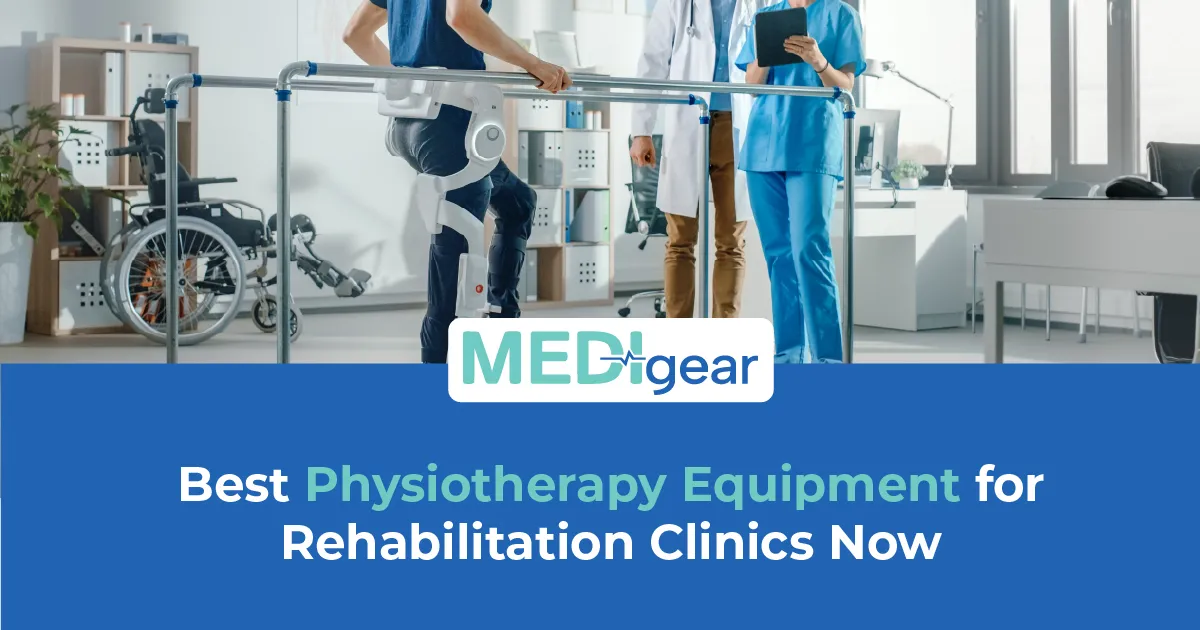
Parallel bars support gait retraining — the process of teaching a patient to walk again after surgery, fracture, stroke, or amputation. Height-adjustable for different statures. Width-adjustable for progression — narrow supported to wider independent. Patient holds. Therapist guides. Walking begins again. Without bars, gait training goes elsewhere. With them, the full pathway stays under one roof.
Traction
Traction pulls the spine. Sustained or intermittent. Decompresses discs. Opens foramina. Eases nerve pain. Cervical for neck with root compression. Lumbar for disc-related low back. Programmable force and rest give precision. Manual pull gives guesswork. Suppliers of treatment tables, electrotherapy units, and rehabilitation accessories can register through the Medigear supplier portal to connect with clinics building or upgrading their rehab equipment.
Linked Guides
For clinics managing physiotherapy equipment alongside broader clinical needs, our guide to the best nebulisers covers the respiratory devices rehab clinics may stock for patients with respiratory conditions undergoing pulmonary rehabilitation. Our guide to setting up patient monitoring on a budget covers the pulse oximeters and vital signs tools that support exercise testing and cardiac rehab monitoring in physiotherapy settings.
Cold and Heat
Cold and heat therapy remain foundational. Ice packs and cryo wraps reduce acute swelling. Hot packs and wax baths relax muscles and prep tissue for hands-on work. Without cold and heat, the clinic treats the middle but misses the bookends.
Measurement
Goniometers measure joint range. The outcome that shows whether the physiotherapy equipment and plan work. Before and after. Degree by degree. Without measurement, progress is opinion. With it, data. Dynamometers measure grip and strength. Together, they give a number. Working or needs changing.
Posture
Posture tools — plumb lines, grids, digital — find alignment faults behind pain. Chronic neck pain with forward head posture? Correct the posture before the pain resolves. Treat the pain without the posture, and you treat the symptom. Not the cause.
Taping
Taping supplies — rigid, kinesio, cohesive — support joints. Offload tendons. Give feedback during rehab. A roll costs pence. The support it provides costs nothing compared to the setback a re-injury would cause.
Infection Control
Cleaning between patients applies to every piece of physiotherapy equipment touching skin. Wipeable tables. Disposable gel. Alcohol wipes for pads. Bands that clean between uses. Skip it, and the last patient's flora hits the next. Infection control is not optional. Every surface must meet it. Companies seeking long-term collaboration on physiotherapy equipment supply, servicing, and clinic fit-outs can explore the Medigear partnership programme for ongoing opportunities beyond a single order.
Outcomes
Can your clinic demonstrate measurable outcomes for every patient on the caseload? Goniometry. Strength. Functional scores. Pain scales. Recorded at every assessment. These prove that the physiotherapy equipment and programme deliver results. Without outcomes, activity. With them, recovery.
Caseload Changes
Does your clinic reassess physiotherapy equipment needs when the caseload changes? A clinic that opened for MSK outpatients and now takes neurological rehab needs different tools. Tilt tables for standing tolerance. FES units for foot drop. Parallel bars with harness attachments. The physiotherapy equipment that served the original caseload may not serve the clinic as it has grown.
Referrer Confidence
Can your therapist demonstrate to the referrer that the physiotherapy equipment and programme achieved what the referral asked for? A GP who refers a frozen shoulder and notes range improved from 90 to 160 on the discharge summary refers the next one too. Measure. Record. Report. That builds referral confidence; word of mouth cannot.
First Impressions
What does your waiting area say about the physiotherapy equipment behind the door? Patients judge before they are treated. Visible tools. Clean rooms. Professional gear. The patient knows the recovery is in capable hands. A couch, a hot pack, and a band tell a different story. First impressions shape compliance. Compliance shapes results.
Maintenance
Does your clinic have a maintenance schedule for every piece of physiotherapy equipment? Ultrasound heads lose output. Pads degrade. Table mechanisms wear. Bands perish. Eighty per cent output means eighty per cent treatment. Calibration and replacement schedules ensure the physiotherapy equipment delivers what the therapist prescribes. Not what the ageing unit decides.
Referral Limits
How does your clinic handle the patient who needs more than the physiotherapy equipment can offer? A referral pathway back to the consultant. Access to imaging. Communication with the GP. The therapist who knows the limit and refers protects the patient — right tool, right problem.
Space Planning
Space planning shapes where every piece of physiotherapy equipment sits and how the therapist moves between them. Table in the centre. Ultrasound at arm's reach. Exercise area clear. Bars with space at both ends. A layout that forces the therapist to navigate around obstacles wastes time with every patient. Design around treatment. Not furniture.
Home Exercise
Does your clinic stock physiotherapy equipment that supports home exercise programmes? Resistance bands the patient takes home. Printed exercise sheets with photos from the clinic's own equipment. A pedal exerciser loaned between appointments. What the patient does at home between sessions decides whether clinic progress holds or fades. The physiotherapy equipment that goes home with the patient extends the session beyond the appointment.
Backup
What happens when a key piece of physiotherapy equipment breaks and the clinic has no backup? The treatment table motor fails. The ultrasound dies. The shortwave trips. Patients arrive for appointments the clinic cannot deliver. One backup — even a simpler model — keeps the schedule running while the primary is repaired. The cost of a spare is nothing against a day of cancelled patients and lost referrer confidence.
Why Choose Medigear
Medigear supplies certified physiotherapy equipment, electrotherapy units, exercise tools, and rehab accessories to clinics, hospitals, and community services across the UK. Whether you are opening a new clinic, upgrading ageing equipment, or expanding the treatment menu, our team matches the right tools to your patients and your practice. Reach out to our team for guidance built around the patients who arrive on crutches — and the physiotherapy equipment that helps them leave without.
Conclusion
What does a rehabilitation clinic need before the first patient walks in? The physiotherapy equipment behind the door. She opened a clinic in a town sending patients thirty miles. Six-week waits became same-week. Hi-lo table. Ultrasound. Shortwave. Parallel bars. Bands. TENS. Month three — every knee replacement, every frozen shoulder, every low back from the GP down the road. Not more injuries. Better equipment. Closer care. Faster recovery. The treatment table is the first buy. The ultrasound is the workhorse. The parallel bars keep gait training under one roof. And the measurement tools prove it all worked. Medigear stands alongside rehab clinics with certified physiotherapy equipment and the honest support that patient recovery demands. Speak to our team today — because the patients who arrive on crutches deserve the equipment that helps them leave without.
⚠️ This post is for general information only. We do not sell medications or provide prescriptions — Medigear.uk is a medical equipment supplier only.