What if the device meant to prevent falls was the thing causing them? What if the frame was too wide for the hallway, the stick was the wrong height, the rollator had no brakes, and every step the patient took was less safe than the step before? What if nobody measured the patient, nobody assessed the grip, and nobody checked whether it matched the body it was used on? That is what the wrong walking aid does. It does not support. It misleads. And in elderly care, a misleading support is a fall waiting to happen.
She was eighty-one. Fell at home. Fractured her wrist catching herself on the kitchen counter. Her daughter bought a walking frame from a pharmacy — standard size, no assessment, no adjustment. Within a week, the patient was leaning forward because the frame was too low. Her shoulders ached. Her wrists hurt. Her back rounded. She stopped using it. Fell again. Fractured her hip. The physiotherapist who assessed her in hospital adjusted the frame height, changed to a wheeled model, and added ferrule grips. The patient walked the ward the next day. The right one kept her upright. The guessed one put her on the floor.
This guide covers how to select the right walking aid for elderly patients with the honest detail that clinicians, carers, therapists, and families need. Medigear supplies certified walking aids to hospitals, care homes, and clinics across the UK, and every point here comes from real patient need, not catalogue theory. Facilities sourcing certified walking aids can explore the Medigear buyers portal for pricing, availability, and procurement built for mobility purchasing.
Walking Stick
A walking stick is the simplest walking aid. It offloads weight from one leg and improves balance. Suitable for patients with mild unilateral weakness, joint pain, or minor balance deficit. The stick is held in the opposite hand to the affected leg — right leg pain, left hand stick. Height is set so the elbow bends at fifteen to twenty degrees when the hand grips the handle. Too high and the shoulder hikes. Too low and the patient leans. One measurement. Two angles. The difference between a stick that helps and one that hurts.
Quad Stick
A quad stick — four small feet at the base — provides a wider base of support than a single-point stick. It stands independently. It suits patients who need more stability but do not need a frame. The trade-off is speed — a quad stick is slower to advance and heavier to lift. On uneven ground, it can catch and tip. Indoors on flat floors, the quad stick works well. Outdoors on slopes and kerbs, it may create the instability it was bought to prevent.
Walking Frame
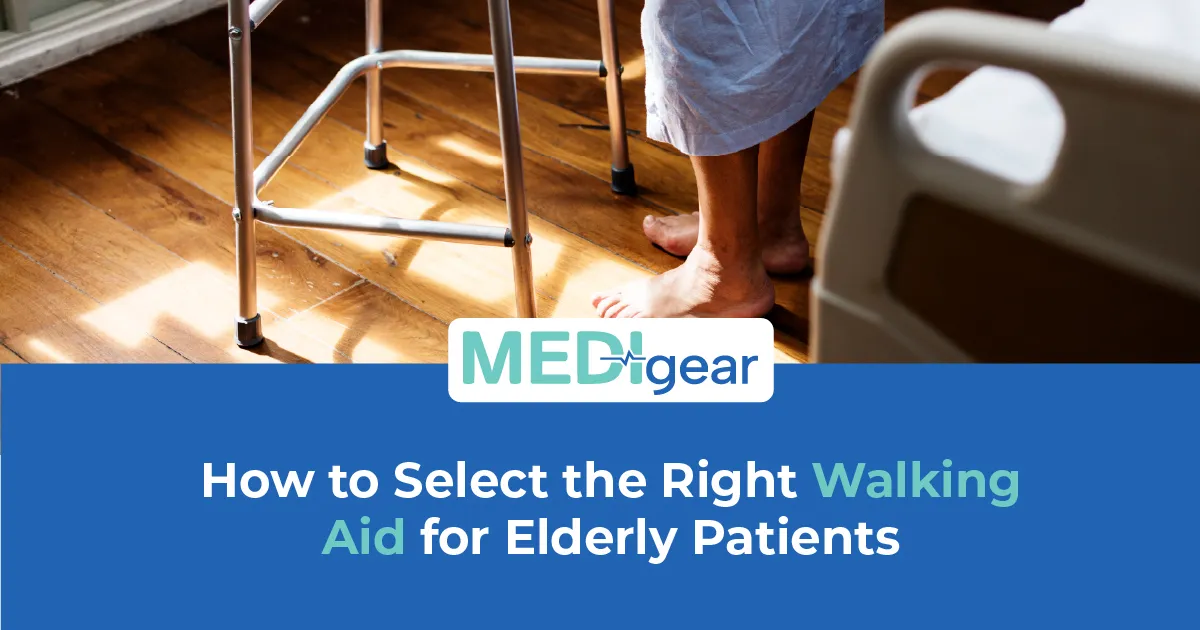
A walking frame — the Zimmer frame — is the walking aid most commonly prescribed for elderly patients after falls, surgery, or acute illness. It provides bilateral support. The patient lifts the frame, places it forward, and steps into it. Stable. Predictable. But slow — and the lifting action requires upper limb strength that some patients do not have. A patient who cannot lift the frame drags it. Dragging creates a trip risk. The frame becomes the obstacle. Walking aid manufacturers wanting to list products where clinics and hospitals are searching can reach buyers through the Medigear advertising platform.
Wheeled Frame
A wheeled walking frame — two front wheels with rear ferrules — rolls forward without lifting. It suits patients with upper-limb weakness, arthritis, or poor grip strength who cannot manage a standard frame. The wheels reduce the effort. The rear ferrules create drag, slowing the frame and preventing it from running away. A wheeled frame prescribed for a patient on a polished floor, without an adequate ferrule grip, rolls too fast, and the patient falls forward, chasing the frame they should be walking behind.
Rollator
A rollator — three or four wheels with handbrakes and a seat — gives the most independent walking aid for patients with moderate mobility. The patient pushes. Steers. Brakes on slopes. Sits when tired. A basket underneath carries shopping. The rollator suits community-dwelling elderly patients who walk outdoors, visit shops, and manage their own mobility. But a rollator prescribed for a patient who cannot operate the brakes is a rollator that runs downhill with the patient attached. Brake assessment before prescription is not optional. Reach out to our team for guidance on matching walking aids to your patients and clinical setting.
Gutter Frame
A gutter frame supports the forearms instead of the hands. It suits patients with wrist fractures, rheumatoid hands, or upper-limb conditions that prevent them from gripping a handle. The weight transfers through the forearms and elbows. The frame is heavier. The walking pattern changes. A gutter frame is not a standard frame with armrests added. It is a different walking aid that needs specific assessment and fitting.
Height Adjustment
Height adjustment on every walking aid must match the patient. Elbow at fifteen to twenty degrees for sticks and frames. Forearms level for rollators. Too high — shoulders rise, neck tenses, balance shifts backwards. Too low — the patient leans forward, loads the wrists, rounds the spine. The wrong height turns every step into a strain. The right height turns every step into support. For facilities managing walking aids alongside broader clinical needs, our guide to the best nebulisers covers the respiratory devices elderly patients may need alongside mobility equipment. Our guide to setting up patient monitoring on a budget covers the vital signs tools that track the patients whose mobility aids keep them moving between clinical assessments.
Ferrules
Ferrules — the rubber tips on the bottom of sticks and frames — are the grip between the walking aid and the floor. Worn ferrules slip. New ferrule grip. Checking ferrules takes seconds. Replacing them costs pence. The fall they prevent costs thousands in fracture treatment, hospital admission, and rehabilitation. Worn ferrules are ice under the patient.
Indoor vs Outdoor
Indoor versus outdoor changes what the walking aid needs. Indoor — flat floors, narrow doorways, tight turns. A slim frame or stick suits. Outdoor — slopes, kerbs, uneven pavement, rain. A rollator with pneumatic wheels suits. Chosen for the home but used on the pavement? The surface demands more stability than the indoor model gives. Ask where the patient walks. Not just whether they walk.
Weight Capacity
Weight capacity must match the patient. Standard walking aids are rated for 100 to 120 kilograms. Bariatric models handle more. Used beyond rating — the frame bends, buckles, or collapses. Check the rating before issuing. Not after the frame fails under the patient it was not built for. Suppliers of walking frames, sticks, rollators, and mobility accessories can register through the Medigear supplier portal to connect with hospitals and care homes building or upgrading their mobility stock.
Folding vs Fixed
Folding versus fixed frames change storage and transport. A folding frame fits in a car boot and a cupboard. A fixed frame does not collapse but may be more rigid and stable. The patient who travels needs a folding frame. The patient who stays home may prefer the stability of a fixed one.
Assessment
Assessment by a physiotherapist or occupational therapist before prescription prevents the wrong walking aid reaching the wrong patient. Strength. Balance. Cognition. Environment. Grip. Weight. Condition. These determine which walking aid fits. Prescribed by a catalogue instead of an assessment? Fits the form. Not the patient. Companies seeking long-term ties on walking aid supply, servicing, and bulk procurement can explore the Medigear partnership programme for ongoing collaboration beyond a single order.
Reassessment
Reassessment matters because the patient changes. Strength declines. Balance shifts. Conditions progress. What was right six months ago may be wrong today. A frame that suited post-operative recovery may need to be upgraded to a rollator as confidence returns. A stick that worked when the knee was the only problem may need to be replaced with a frame when a second joint fails. Review every time the patient is reviewed. Not once and never again.
Day-One Issue
Can your care home issue a walking aid within twenty-four hours of admission? A patient admitted without mobility support waits in bed. Deconditioning starts within hours. Muscle loss starts within days. The walking aid that arrives on day one keeps the patient moving. The one that arrives on day five keeps a patient who has already lost the strength to use it.
Ward Audit
Does your falls prevention team audit every walking aid in use on the ward? Wrong height. Worn ferrules. Missing brake function. Cracked handles. A quarterly audit catches the walking aids that have drifted from safe to dangerous. One walk-around. One checklist. Every frame and stick on the ward was checked against the patient using it.
Carer Training
What training does your team give family carers before the patient goes home with a walking aid? How to adjust the height. How to check the ferrules. How to walk beside the patient — not behind. How to manage doorways, thresholds, and slopes. The carer who understands the walking aid supports it. The one who does not becomes another obstacle the patient must navigate.
Why Choose Medigear
Medigear supplies certified walking aids, mobility accessories, and rehabilitation equipment to hospitals, care homes, and clinics across the UK. Whether you are equipping a ward, stocking a care home, or matching a single walking aid to a single patient's body, our team matches the right support to the person who needs it. Reach out to our team for guidance built around the patients whose independence depends on a walking aid that fits — not one that was guessed at.
Conclusion
What if the walking aid meant to prevent falls was the thing causing them? She was eighty-one. Daughter bought a frame. No assessment. Too low. Stopped using it. Fell again. Hip fractured. In hospital the physio adjusted the height, changed to wheeled, and added proper grips. She walked the next day. The right one kept her upright. The guessed one put her on the floor. One measurement. Two angles. The difference between a walking aid that helps and one that hurts. Ferrules checked. Height matched. Brakes tested. Assessment before prescription. Reassessment when the patient changes. Medigear stands alongside clinical and care teams with certified walking aids and the honest support that elderly mobility demands. Speak to our team today — because the patient's independence depends on a walking aid that fits their body, not one that fits the catalogue.
⚠️ This post is for general information only. We do not sell medications or provide prescriptions — Medigear.uk is a medical equipment supplier only.