What if the room started spinning without warning? Not dizziness. Not light-headedness. The room is rotating. A roar fills one ear. Hearing dropping to nothing. Vomiting from motion is an invention of the body. Cannot stand. Cannot walk. Cannot focus. Lie on the floor. Wait for it to stop. Knowing it comes back. Never knowing when. That is Meniere's disease. Vertigo. Tinnitus. Hearing loss. One ear. No cure.
She was forty-four. Office manager. First attack at her desk. The room tilted. Grabbed the table. Ear roaring. Could not hear the colleague speaking. Nausea in seconds. Vomited. Could not stand. Ambulance. A&E said labyrinthitis. Sent home with tablets. Three weeks later. Same ear. Same spin. Same roar. Same hearing drop. A month later — third attack. Referred to ENT. Audiogram — low-frequency loss, left ear. Meniere's disease. Attacks kept coming. Random. Brutal. Lost her licence. Lost confidence. Lost the career. Never knew when the next attack would floor her.
This guide explains Meniere's disease with the seriousness it demands. How the inner ear fails, what the attacks do to the patient, who is at risk, what the signs are, how diagnosis works, and how the right clinical equipment supports the assessment and management that Meniere's disease patients need. Medigear supplies certified diagnostic and audiometric equipment to hospitals and clinics across the UK — because Meniere's disease is diagnosed accurately with proper audiometry and vestibular testing, giving the patient a name for the chaos and a plan for managing it.
The Inner Ear
Menieres disease is a disorder of the inner ear. Excess fluid — endolymphatic hydrops. Two systems inside. Cochlea — hearing. Vestibular labyrinth — balance. Both are filled with fluid. In Meniere's disease, fluid increases. Membranes distend. Pressure rises. Signals distort. Cochlea sends garbled sound — tinnitus, hearing loss. Vestibular sends false motion — vertigo. Both at once. One ear. Hospitals and ENT units sourcing certified audiometric and vestibular equipment can explore the Medigear buyers portal for pricing and procurement built for audiology and ENT diagnostics.
The Attack
The classic Meniere's disease attack has four features. Vertigo — true rotation. Twenty minutes to hours. Not seconds like BPPV. Not constant like neuritis. Tinnitus — low roar or hum in the ear. Hearing loss — low-frequency, one ear, during the attack. Aural fullness — pressure. The ear feels blocked. Attack builds. Vertigo peaks. Nausea. Vomiting. Cannot stand. Cannot focus. Then it passes. Hearing may recover early on. Over time, it does not. Came back after attack one. May not be after attack twenty.
Diagnosis
Diagnosis is clinical and audiometric. The AAO-HNS criteria require at least two spontaneous episodes of vertigo lasting 20 minutes to 12 hours, audiometrically documented low- to mid-frequency sensorineural hearing loss in the affected ear on at least one occasion, and fluctuating symptoms—hearing, tinnitus, fullness—in the affected ear. Other causes excluded. Audiometry is the key test. Pure tone audiogram — low-frequency loss, one ear, during or after attack. Confirms the cochlear involvement. Normal between attacks. Abnormal during one. Timing matters. Diagnostic equipment makers wanting to list audiometers, tympanometers, and vestibular testing tools where ENT clinics are searching can reach buyers through the Medigear advertising platform.
Vestibular Testing
Vestibular testing supports the diagnosis and tracks progression. VNG records eye movements during positional and caloric testing. Caloric testing — warm and cool air or water in the ear canal. Reduced response on one side — vestibular damage confirmed. ECoG measures the ratio inside the ear. Elevated supports hydrops. MRI rules out vestibular schwannoma. The tumour that copies Meniere's disease. Must be excluded.
Treatment
Treatment manages the symptoms. There is no cure. Acute attacks — anti-sickness medication. Bed rest. Dark room. Quiet. Attack passes. Between attacks — betahistine. Most prescribed preventive in the UK. Evidence debated. Some improve. Some do not. Salt restriction may cut inner ear fluid. Diuretics are sometimes added. Evidence limited. The idea is less fluid. Reach out to our team for guidance on matching audiometric and vestibular equipment to your ENT and audiology clinical protocols.
Vestibular Rehabilitation
Vestibular rehabilitation helps the brain compensate for the damaged vestibular input. Exercises that challenge balance. Retrain gaze. Reduce motion sensitivity. A physio or audiologist with vestibular training delivers it. Brain trusts the good ear. Ignores the damaged. Confidence returns. Avoid movement from fear? Disabled by what the brain could have adapted to. Our guide to cauda equina syndrome covers the emergency diagnostic standards that apply across neurological and sensory conditions — because the same clinical urgency that drives spinal diagnosis drives the exclusion of dangerous causes in the dizzy patient.
Hearing Loss
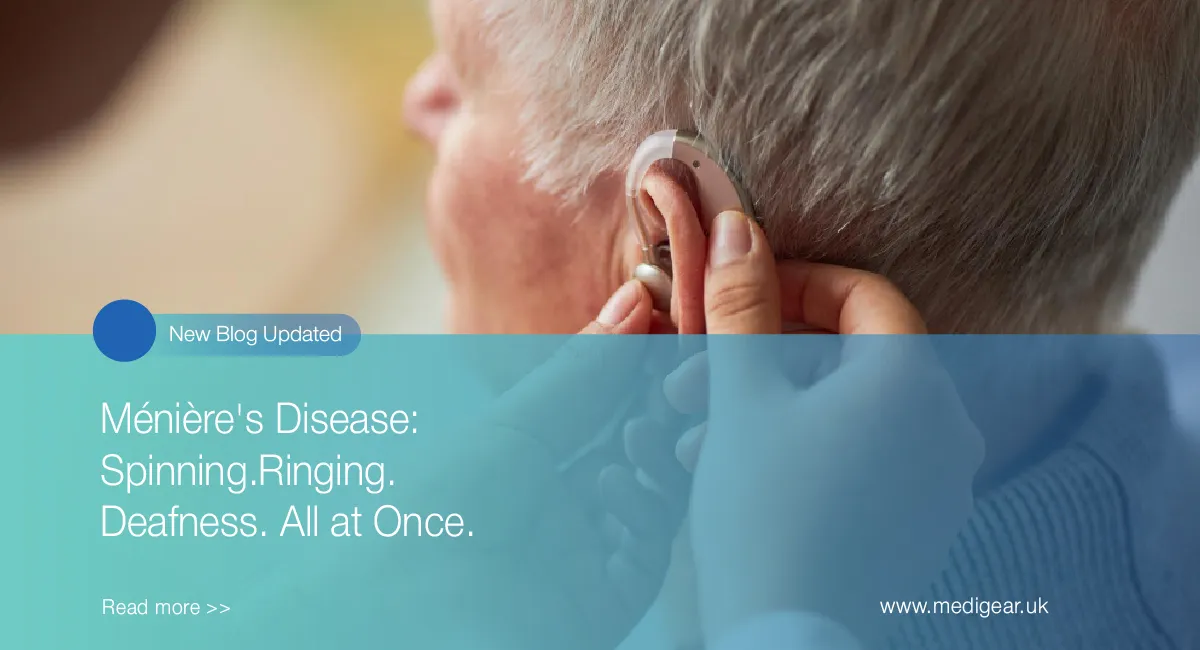
Hearing deteriorates over time in most Meniere's disease patients. Low-frequency loss becomes flat loss. Fluctuating becomes permanent. Hearing aids — once the loss settles — restore what Meniere's disease took. Aid fitted to the specific loss pattern — sound restored. Generic fit — frustration. Our guide to rhabdomyolysis covers the monitoring tools that track clinical outcomes in real time — the same outcome-tracking discipline applies when audiometry must be repeated over months and years to track the hearing that Meniere's disease is taking.
Intratympanic Injections
Intratympanic injections are used when medical management fails. Steroids through the eardrum into the middle ear. May reduce vertigo. Gentamicin destroys vestibular function in that ear. Stops vertigo. Kills the false signal. Works. Cannot be undone. Vertigo gone — no false input. The brain uses the other ear. Trade function for freedom.
Surgery
Surgery is reserved for severe, refractory Meniere's disease. Sac decompression — cut fluid pressure. The evidence is mixed long-term. Nerve section — cut the false signal. Keep hearing. Labyrinthectomy — destroys the inner ear. Vertigo gone. Hearing gone. Forever. Each trades something. Weigh what the disease takes against what surgery removes. Suppliers of audiometers, tympanometers, VNG systems, and vestibular testing equipment can register via the Medigear supplier portal to connect with hospitals and ENT clinics that manage Meniere's disease pathways.
Urgent Audiometry
Can your audiology service provide urgent audiometry during an acute Meniere's disease attack — not just a routine appointment three weeks later? The audiogram during the attack captures what the one between attacks may miss. Test during the crisis confirms what the scheduled one cannot. Companies seeking long-term collaboration on the supply of audiometric and vestibular equipment can explore the Medigear partnership programme for ongoing opportunities beyond a single order.
GP Recognition
Does your GP recognise Meniere's disease in the patient presenting with recurrent vertigo, tinnitus, and fluctuating hearing loss — or does every attack get labelled labyrinthitis? Labyrinthitis is usually single. Meniere's disease recurs. A GP who asks about hearing and tinnitus alongside vertigo catches the pattern. Treat vertigo alone? Miss the disease behind it.
Same-Day Referral
Can your GP surgery provide a same-day referral to ENT when a patient presents with the classic Meniere's disease triad for the third time? The patient who has had three attacks with vertigo, tinnitus, and hearing loss in the same ear does not need another course of tablets for labyrinthitis. They need an audiogram and an ENT opinion. Referral after an attack, three saves years of misdiagnosis. Waiting until attack ten creates them.
Tinnitus Support
Does your audiology team offer tinnitus support alongside Meniere's disease management? The tinnitus that persists between attacks may be more disabling than the vertigo. Sound therapy. CBT. Tinnitus retraining. The roar from the first attack may never fully stop. Managed tinnitus — coping. Ignored tinnitus — suffering in silence that is never silent.
Driving
What does your team tell the Meniere's disease patient about driving? DVLA rules — stop driving during active vertigo. Notify them of the diagnosis. The licence may remain in effect until attacks are controlled. Not told — loses the licence and the trust. Told — plans around it. Honesty prevents the shock.
Bilateral Disease
How does your team assess the Meniere's disease patient who presents with bilateral symptoms? Fifteen to forty per cent develop Meniere's disease in both ears over time. Bilateral disease changes the management. Gentamicin — risky when both sides are affected. Both ears may need aids. Bilateral faces a different future from unilateral. Reassess as the disease evolves.
Beyond the Ear
What does your team do for the Meniere's disease patient whose attacks have taken their driving licence, their job, and their confidence? Not just medical. Social. Financial. Psychological. Cannot predict the next attack? Cannot plan anything. Support groups. Psychology. Occupational health. Manage the life around the ear. Not just the ear itself.
Long-Term Follow-Up
Does your ENT service follow the Menieres disease patient long term — or discharge after diagnosis? Hearing preserved at diagnosis? May not be in five years. Betahistine may stop working. Tinnitus may become unbearable. Annual audiometry. Annual review. Menieres disease is not diagnosed and done. It is followed.
When Betahistine Fails
Does your practice have a clear pathway for the Menieres disease patient who cannot tolerate betahistine or in whom it has failed? Not every patient responds. Not every patient tolerates the side effects. Next step — steroids through the ear, vestibular rehab, diet change, or surgery. Plan it before the patient runs out of options and hope.
Why Choose Medigear
Medigear supplies certified audiometric, vestibular, and ENT diagnostic equipment to hospitals, clinics, and audiology services across the UK. Whether you are equipping an audiology suite, upgrading vestibular testing, or building diagnostic readiness for complex balance and hearing conditions, our team matches the right tools to your clinical need. Reach out to our team for guidance built around the patients whose world is spinning — and the clinicians who must find out why.
Conclusion
What if the room started spinning and never warned you first? She was forty-four. Three attacks. Same ear. Same spin. Same roar. Same hearing drop. Menieres disease. Excess fluid in the inner ear. Cochlea garbles sound. Vestibular invents motion. Vertigo, tinnitus, hearing loss — all at once. No cure. But diagnosis gives a name. Audiometry captures the loss. Vestibular testing confirms the damage. Betahistine. Salt restriction. Rehab. When medical fails — injections or surgery. Each trades something. The hearing that came back after attack one may not after attack twenty. Annual audiometry. Annual review. Menieres disease is followed — not diagnosed and done. Medigear stands alongside ENT and audiology teams with certified diagnostic equipment. Speak to our team today — because the patients whose world is spinning need the clinicians who can find out why.
⚠️ This post is for general information only. We do not sell medications or provide prescriptions — Medigear.uk is a medical equipment supplier only.