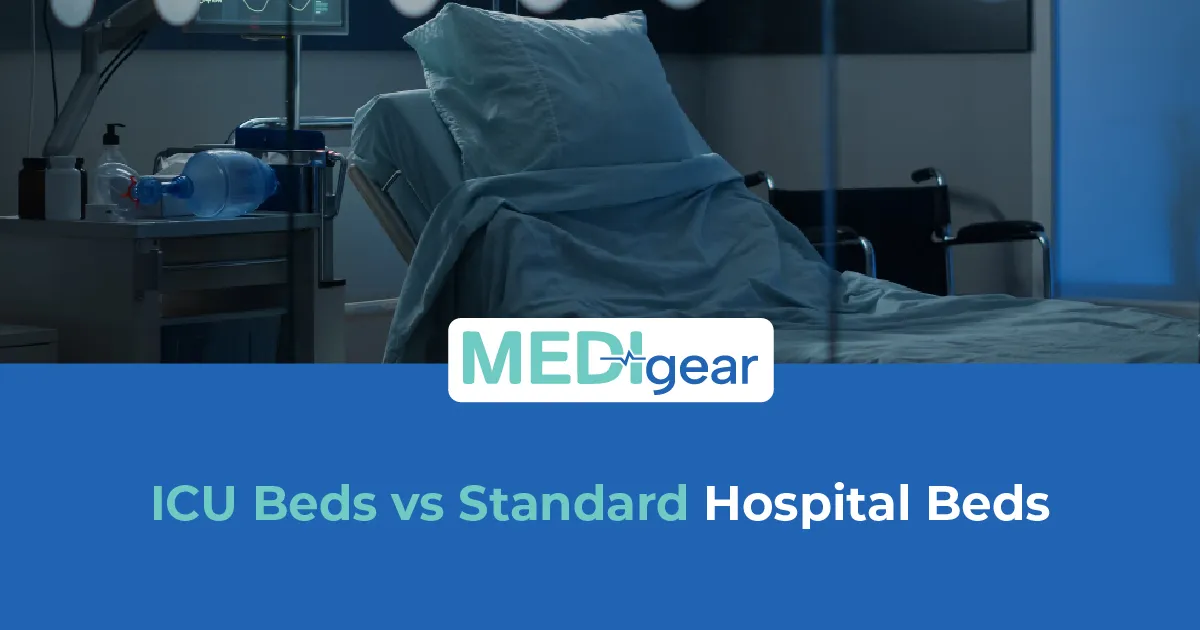
A patient recovering from routine surgery and a patient receiving intensive care have very different clinical needs. Although both may occupy hospital beds, the equipment supporting their care can vary significantly.
For healthcare procurement teams, understanding the differences between ICU beds and standard hospital beds is essential. The choice affects patient safety, caregiver efficiency, clinical workflows, maintenance planning, and long-term operational costs.
This guide examines how ICU beds compare with standard hospital beds, where each type is used, and what buyers should consider before making purchasing decisions.
Why Bed Selection Matters More Than Many Buyers Realise
Hospital beds are among the most frequently used pieces of equipment in healthcare environments. They support patients around the clock while helping healthcare professionals perform daily care activities.
Supporting Different Levels of Care – Not every patient requires the same level of monitoring, positioning, or mobility assistance. Bed functionality should align with patient requirements.
Influencing Clinical Efficiency – Bed design affects patient transfers, repositioning, cleaning procedures, and caregiver workflows.
Contributing to Patient Safety – Appropriate bed selection can support fall-prevention strategies, patient comfort, and overall quality of care.
Understanding the Purpose of ICU Beds
ICU beds are specifically designed for critically ill patients who require continuous observation and advanced clinical support.
Accommodating Complex Care Requirements – Intensive care patients often require frequent repositioning, integration of monitoring equipment, and advanced mobility support.
Supporting Continuous Patient Management – ICU environments demand beds that can adapt quickly to changing patient conditions.
Unlike standard hospital beds, ICU beds are typically integrated into broader critical care workflows.
The Role of Standard Hospital Beds
Standard hospital beds are designed for general patient care and recovery environments.
Providing Reliable Everyday Support – These beds accommodate patients recovering from procedures, undergoing observation, or receiving routine treatment.
Balancing Functionality and Cost Efficiency – Standard hospital beds offer essential positioning capabilities while remaining practical for widespread deployment across healthcare facilities.
They are commonly found in medical wards, surgical recovery areas, rehabilitation units, and long-term care environments.
Comparing ICU Beds and Standard Hospital Beds
Patient Positioning Capabilities
Advanced Adjustment Functions in Critical Care – ICU beds generally offer a wider range of positioning options to meet the complex needs of patient management.
Essential Mobility Features for General Care – Standard hospital beds typically offer core adjustments, such as head elevation and height adjustment, without the extensive functionality found in intensive care units.
Monitoring and Equipment Integration
Designed for Technology-Rich Environments – ICU beds frequently accommodate multiple monitoring systems, infusion devices, and support equipment.
Simplified Setup for Routine Care Areas – Standard hospital beds typically prioritise patient comfort and caregiver accessibility over extensive equipment integration.
Mobility and Transportation Features
Facilitating Internal Patient Movement – ICU beds often include enhanced mobility systems to support patient transportation while maintaining critical care support.
Meeting Everyday Operational Needs – Standard beds prioritise reliable mobility in general care settings.
Safety Support Systems
Enhancing Patient Protection – ICU beds commonly incorporate additional safety technologies designed to support critically ill patients.
Providing Practical Safety Measures – Standard hospital beds emphasise stability, accessibility, and everyday patient protection.
Procurement Considerations for Healthcare Buyers
Selecting the appropriate bed category requires careful evaluation of facility requirements.
Understanding Patient Demographics
Before purchasing, healthcare facilities should assess:
-
Patient acuity levels
-
Bed occupancy patterns
-
Speciality care requirements
-
Future expansion plans
-
Staffing considerations. Organisations evaluating healthcare equipment investments can explore sourcing opportunities through the Medigear.uk buyer services platform.
Evaluating Total Cost of Ownership
Looking Beyond Purchase Price – ICU beds generally require larger initial investments due to their advanced functionality.
Considering Lifecycle Expenses – Maintenance, servicing, staff training, and replacement parts all contribute to long-term ownership costs.
Planning for Operational Flexibility
Facilities often benefit from maintaining a balanced mix of ICU and standard beds rather than relying exclusively on one category.
Supporting Better Clinical Workflows
Bed selection influences more than patient accommodation.
Improving Caregiver Accessibility – Adjustable positioning systems can assist healthcare professionals during examinations, treatments, and patient-handling activities.
Enhancing Patient Movement Processes – Facilities frequently combine bed-selection strategies with patient-transferring equipment planning to improve mobility workflows. Healthcare teams exploring broader mobility solutions may find value in educational resources discussing patient transfer equipment and hospital furniture procurement strategies.
Reducing Workflow Disruptions – Beds designed for their intended care environments often contribute to smoother daily operations.
Healthcare organisations seeking qualified suppliers can review available options through: business suppliers
Maintenance and Asset Management Considerations
Healthcare beds represent significant long-term investments.
Routine Inspection Requirements
Regular evaluations should include:
-
Side rail functionality
-
Wheel and caster performance
-
Electrical components
-
Adjustment mechanisms
-
Structural stability
-
Control systems
Preventive maintenance helps maintain reliability while reducing unexpected downtime.
Cleaning and Infection Prevention
Supporting Environmental Hygiene Goals – Frequent cleaning is essential because beds remain in continuous contact with patients.
Protecting Equipment Longevity – Appropriate cleaning practices help preserve surfaces and mechanical systems.
Replacement Planning
Healthcare facilities should establish lifecycle management programs that account for usage intensity, maintenance history, and evolving clinical requirements.
Emerging Developments in Healthcare Bed Technology
Healthcare furniture continues evolving to support modern care environments.
Growing Interest in Connected Bed Systems – Some advanced beds now support digital monitoring and asset management capabilities.
Greater Focus on Patient Comfort – Manufacturers increasingly emphasise ergonomic design and pressure-management support.
Integration with Smart Healthcare Infrastructure – Future bed systems may become more closely connected with broader healthcare technology ecosystems.
Organisations interested in healthcare collaborations can explore opportunities through a business partner.s
Healthcare companies seeking increased visibility within the medical equipment sector can learn more through business advertising.
For assistance with healthcare equipment sourcing or procurement inquiries, visit the contact team.
Disclaimer
Medigear.uk is a medical equipment supplier and distributor. We do not provide medical advice, diagnosis, or treatment recommendations. All information is for educational and product awareness purposes only. Qualified medical professionals should always make healthcare decisions.