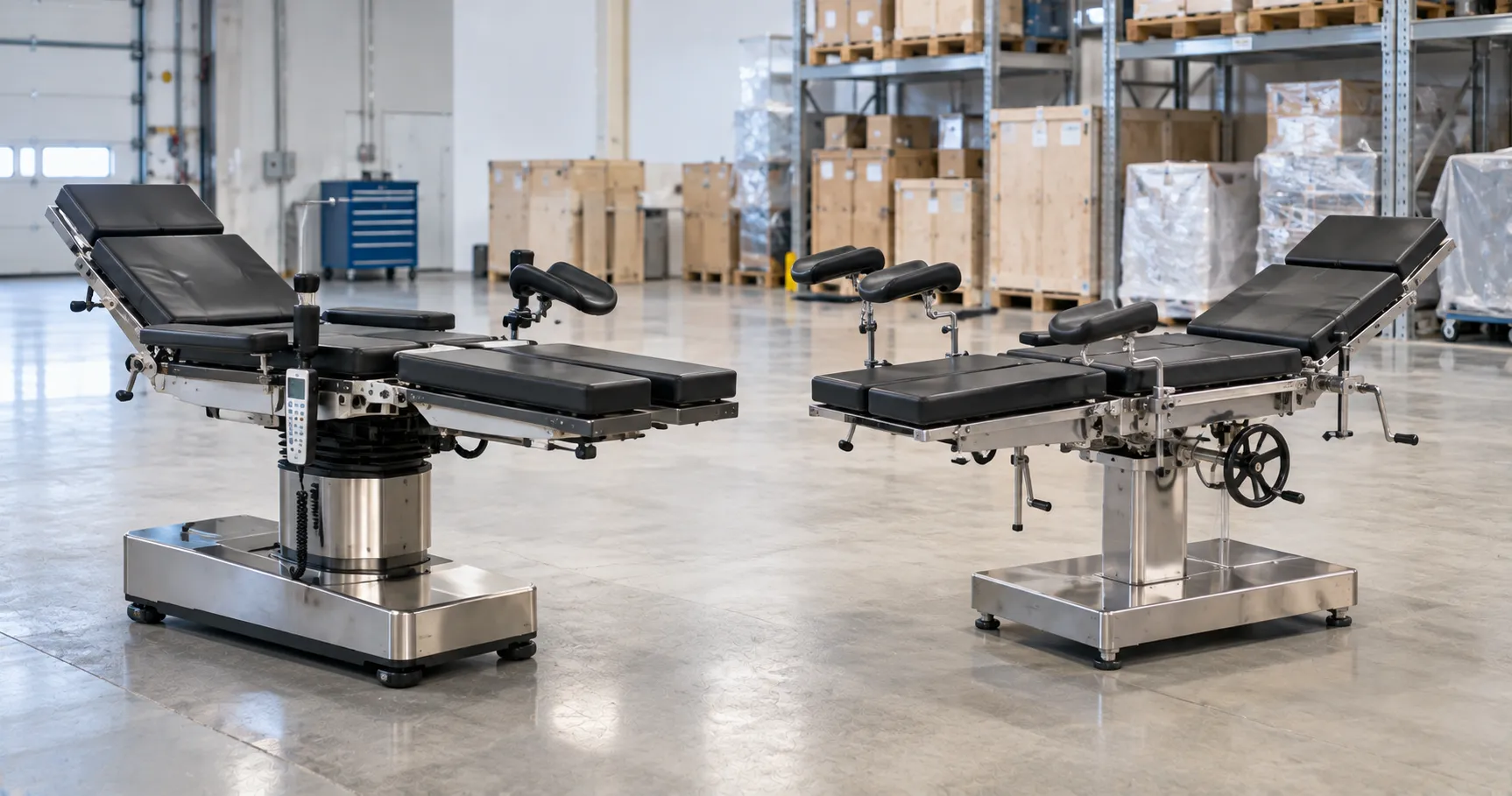

Buying managers often face the same problem across hospitals, clinics, diagnostic centres, and project sites: too many equipment models doing similar jobs in slightly different ways. One ward may use one brand of patient monitor, another department may use a different model, and a third facility may order replacement accessories from a separate supplier. Over time, this variation increases training needs, spare parts complexity, maintenance cost, supplier confusion, and procurement workload.
For healthcare buyers, hospital equipment standardisation is a practical way to improve purchasing control without ignoring clinical requirements. WHO states that technical specifications support procurement and acquisition of medical devices, making structured specification control essential when buyers want consistent purchasing decisions across departments or facilities. This guide explains how buying managers can standardise hospital equipment while still allowing flexibility for specialist clinical needs.
How Standardisation Supports Clinical Equipment Decisions
Clinical Need Before Standard Model Selection — Standardisation should begin with clinical need, not brand preference. A standard monitor, bed, trolley, suction unit, infusion pump, or examination lamp should be selected because it fits the care setting, patient workflow, staff skill level, and maintenance capacity.
Reduced Operational Variation — Standardised equipment makes daily use easier for clinical teams. In practice, buying managers often find that staff training improves when similar controls, accessories, alarms, cleaning steps, and user manuals are used across multiple departments.
Specification-Led Control — Standardisation works best when approved specifications are written clearly. WHO notes that technical specifications can support the tendering, procurement, and purchasing of medical equipment, reinforcing the need to define performance, accessories, installation, maintenance, and documentation before ordering.
Balanced Clinical Flexibility — Standardisation should not force every department to use the same device when clinical risk differs. A general ward and an ICU may both need monitoring equipment, but capacity, alarm functions, battery support, connectivity, and accessory requirements can differ considerably.
Where Equipment Standardisation Matters Across Healthcare Settings
Large Teaching Hospitals — These facilities often operate multiple departments, each with distinct clinical pressures and equipment histories. Facilities that have deployed equipment at scale tend to report fewer training and maintenance issues when approved model groups are agreed for routine care, critical care, diagnostics, sterilisation, and patient movement.
District and Regional Hospitals — These hospitals usually need equipment that is durable, serviceable, and easy for staff to use under high daily demand. Standardisation helps buying managers avoid unnecessary model variation while improving spare parts planning and supplier accountability.
Facilities sourcing equipment through regulated and certified suppliers worldwide should request consistent specifications, accessory lists, warranty terms, service documentation, conformity records, and maintenance expectations before approving standard models.
Community Health Centres — Smaller facilities benefit from simple standardised equipment because staffing and technical support may be limited. One aspect that surprises first-time buyers is how much easier procurement becomes when common items such as examination couches, vital signs monitors, trolleys, lamps, scales, and basic emergency devices use consistent accessories.
Mobile and Point-of-Care Services — Mobile healthcare teams need equipment that is portable, durable, easy to clean, battery-supported, and simple to replace. Standardisation helps ensure that mobile teams carry compatible chargers, probes, consumables, cases, and backup accessories.
Standardisation Details That Change Buying Outcomes
Approved Specification Libraries — Buying managers should create approved specification templates for recurring equipment categories. These templates should include intended use, minimum performance, accessories, consumables, power needs, installation requirements, cleaning expectations, service requirements, warranty terms, and documentation.
Accessory and Consumable Control — Standardisation reduces confusion when common accessories are shared across units. Experienced clinical supply managers typically check cuffs, probes, cables, sensors, filters, batteries, bulbs, reagents, chargers, and mounting options because accessory variation can quietly increase cost.
Supplier and Model Rationalisation — Standardisation does not always mean one supplier for everything. It means reducing unnecessary variation and choosing approved suppliers or model groups where clinical, technical, and financial reasons support consistency.
Digital Compatibility and Interoperability — Connected equipment may need to work with hospital information systems, central monitoring, maintenance dashboards, imaging platforms, or laboratory software. The FDA describes medical device interoperability as the safe, secure, and effective exchange and use of information among devices, products, technologies, or systems, so standardisation should include data compatibility where connected devices are involved.
Procurement Evaluation Guidance for Buying Managers
Total Cost of Ownership Review — Standardisation should compare the purchase price with the costs of accessories, consumables, maintenance, calibration, training, software, spare parts, downtime, replacement timing, and service contracts. WHO states that effective health technology procurement practices lead to safe, equitable, and high-quality healthcare, supporting value-based purchasing rather than price-only approval.
Supplier Governance and Documentation — Buying managers should evaluate whether suppliers can provide consistent model availability, clear specifications, conformity documents, warranty terms, service manuals, spare parts, and training support. Suppliers and manufacturers advertising to global healthcare buyers should expect procurement teams to request evidence that supports standardisation, not only individual product quotations.
Compliance Variation by Destination Market — Requirements differ considerably across healthcare systems. Standardisation plans should still confirm compliance with applicable local regulatory standards and with standards such as CE, FDA, or their regional equivalents, where relevant to the device category, intended use, and destination market.
Training and Change Management — Equipment standardisation can fail if staff are not prepared for model changes. Buying managers should plan user training, biomedical handover, department communication, updated checklists, maintenance records, and transition support.
Healthcare networks managing equipment across multiple locations can improve consistency through structured distribution and reseller partnerships. Buyers with standardisation reviews, supplier comparison needs, or project sourcing questions can contact the Medigear.uk team for supply support before confirming procurement decisions.
Maintenance, Service Life, and Standardisation Control
Preventive Maintenance Efficiency — Standardised equipment can streamline inspection schedules, service checklists, spare parts planning, and biomedical training. WHO explains that maintenance strategies include inspection, preventive maintenance, and corrective maintenance, with preventive maintenance aimed at extending equipment life and reducing failure rates.
Spare Parts and Repair Familiarity — Standardisation helps biomedical teams become familiar with common device models. In markets where local service support is limited, this familiarity can reduce downtime because engineers know which parts, tools, software, and manuals are needed.
Replacement and Upgrade Planning — Buying managers should use asset records to identify which models are ageing, which parts are difficult to source, and which devices are prone to frequent faults. Standardisation should be reviewed regularly so hospitals do not continue buying outdated equipment simply because it was once approved.
Global Demand and International Standardisation Planning
Different Priorities by Facility Type — Large hospital networks often standardise across departments, regions, or project sites to improve training and supplier accountability. Clinics, district hospitals, community health centres, and mobile providers may standardise smaller groups of equipment, such as monitors, trolleys, examination lights, basic diagnostic equipment, emergency devices, and cleaning systems.
Documentation and Export Readiness — International buyers should confirm invoices, packing lists, conformity records, warranty files, user manuals, service manuals, and shipping responsibilities before dispatch. Standardisation is stronger when all approved suppliers provide the same level of documentation and traceability.
New and Refurbished Equipment Controls — New equipment may support standardisation through updated models, warranty coverage, and consistent accessories. Refurbished equipment may still be suitable for selected settings, but buying managers should verify condition, service history, calibration evidence where applicable, warranty limits, and remaining service life before adding it to a standardised list.
Final Thoughts
Hospital equipment standardisation helps buying managers reduce unnecessary variation, improve supplier comparison, simplify training, support spare parts planning, and strengthen lifecycle procurement control. It is not about choosing one device for every situation. It is about creating clear, justified standards that support daily clinical work and long-term equipment management.
Procurement teams should involve clinicians, biomedical engineers, finance leaders, facility managers, IT teams, logistics coordinators, and compliance staff before approving standard models. Clear specifications, verified suppliers, complete documentation, maintenance planning, and regular review help healthcare facilities build more reliable and cost-conscious equipment purchasing systems.
Disclaimer
Medigear.uk is a global medical equipment supplier, exporter, and distributor. The content published on this site is intended for educational and product awareness purposes only. Nothing on this page constitutes medical advice, clinical guidance, or treatment recommendations. All healthcare procurement and clinical decisions should be made by qualified medical professionals and compliant procurement teams operating within the regulatory frameworks of their respective countries.