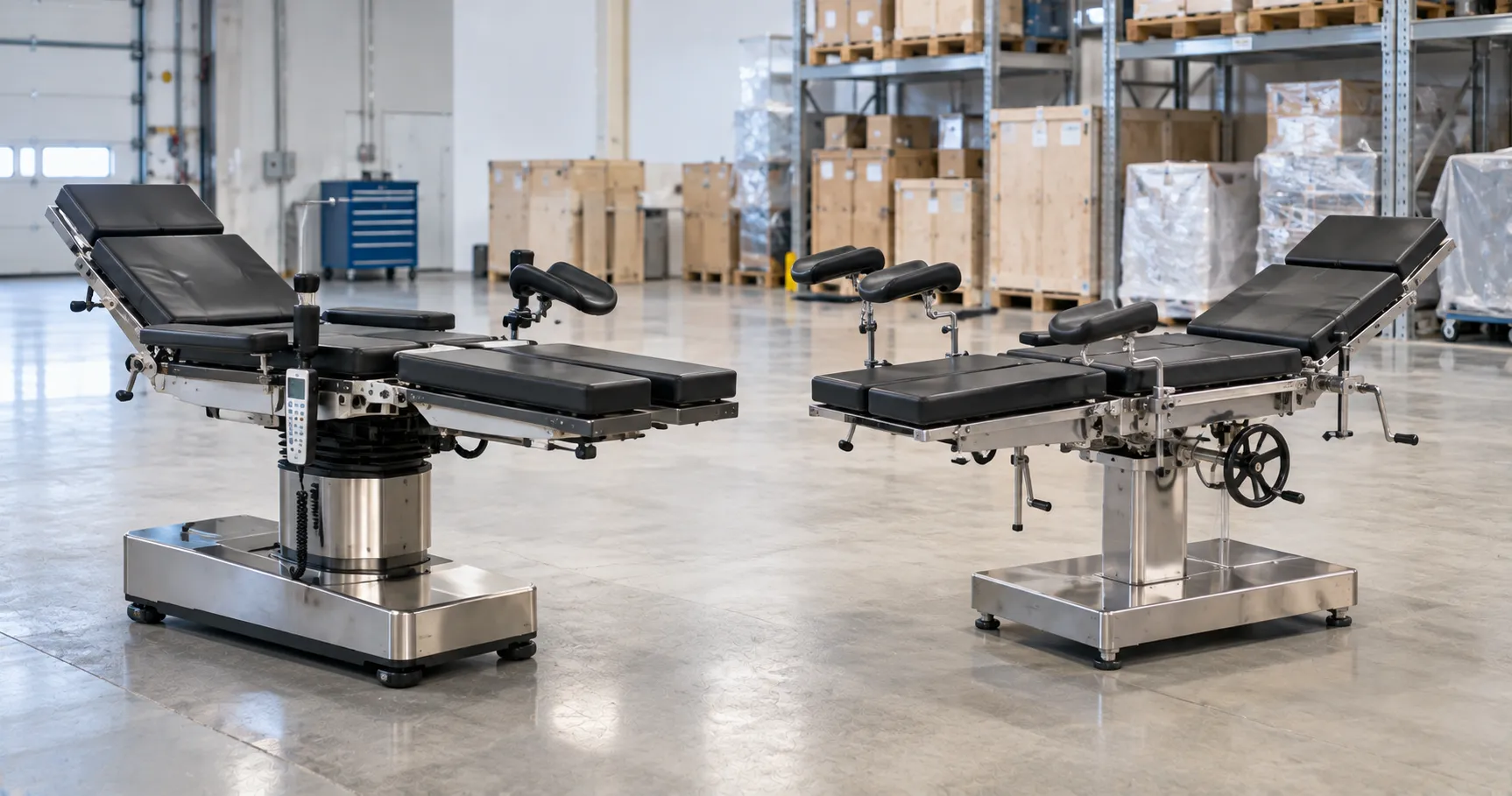

Medical buyers often receive equipment requests from different departments at the same time: ICU monitors, diagnostic systems, surgical instruments, laboratory equipment, sterilisation equipment, hospital furniture, emergency equipment, and patient care accessories. Without a structured checklist, procurement teams may compare quotations by price while missing installation needs, accessories, service responsibilities, documentation gaps, and long-term maintenance costs.
For healthcare buyers, a hospital equipment procurement strategy across departments and suppliers is necessary. WHO states that technical specifications support the procurement and acquisition of medical devices, making structured requirements essential before quotations are compared. This guide explains what medical buyers should check before approving equipment orders, from clinical fit and supplier documents to warranty, service support, compliance variation, and international sourcing.
How a Procurement Checklist Supports Clinical Equipment Decisions
Clinical Use Confirmation — Every checklist should begin with the intended clinical use. A monitor for ICU, ward observation, transport, and emergency care may look similar in a quotation, but each use case changes battery expectations, alarms, mounting, durability, connectivity, and accessory needs.
Department Workflow Fit — Equipment should fit how clinicians, nurses, technicians, biomedical engineers, and support teams actually work. In practice, procurement teams often find that missing cables, trolleys, probes, mounting brackets, software access, or cleaning accessories create delays after delivery.
Specification-Led Purchase Control — A checklist helps buyers compare products' specifications instead of supplier descriptions alone. WHO notes that technical specifications improve access to safe, efficacious, and high-quality medical devices, which supports checklist-based equipment review.
Lifecycle Responsibility — Medical equipment is not finished at delivery. Buyers should confirm installation, training, preventive maintenance, calibration where relevant, spare parts, software updates, service documents, and end-of-life replacement planning before approval.
Where Procurement Checklists Matter Across Healthcare Settings
Large Teaching Hospitals — These facilities often manage complex procurement across operating rooms, intensive care, imaging, laboratories, emergency departments, and CSSD areas. Facilities that have deployed equipment at scale tend to report fewer delays when the same checklist is used across clinical, biomedical, finance, and procurement teams.
District and Regional Hospitals — These hospitals usually require equipment that can withstand heavy daily use with minimal downtime. A checklist helps buyers prioritise durable mid-range equipment, user training, practical maintenance, and spare parts availability over unnecessary premium functions.
Facilities sourcing through regulated and certified equipment suppliers worldwide should request itemised quotations, conformity records, accessory lists, warranty terms, service manuals, and installation notes before purchase approval.
Community Health Centres — Smaller healthcare facilities may not have large technical teams, so the checklist must be simple and practical. One aspect that surprises first-time buyers is how often small items such as batteries, cuffs, probes, lamps, filters, or replacement cables affect daily service readiness.
Mobile and Point-of-Care Services — Mobile healthcare programmes require compact equipment, battery power, robust packaging, easy cleaning, and field-ready accessories. A checklist should confirm transport protection, charging requirements, power adapters, data export, and service support before procurement.
Checklist Items That Change Procurement Outcomes
Technical Specification Match — Buyers should compare model, intended use, capacity, operating modes, accessories, consumables, power requirements, environmental conditions, and compatibility. A vague specification can make two quotations look similar even when one device is unsuitable for the intended workload.
Included Accessories and Exclusions — The checklist should separate included items from optional or excluded items. Experienced clinical supply managers typically request probes, cables, batteries, tubing, filters, lamps, sensors, trolleys, mounts, software licences, reagents, and starter consumables, as these can significantly affect the final procurement cost.
Compliance and Documentation Review — Requirements differ considerably across healthcare systems. Buyers should confirm applicable local regulatory standards and request standards such as CE, FDA, or their regional equivalents where relevant to the device category, risk class, and destination market.
Connectivity and Data Compatibility — Connected devices may need to work with hospital records, laboratory systems, imaging platforms, maintenance dashboards, or monitoring networks. A checklist should confirm network needs, software compatibility, data export, cybersecurity notes, and user access requirements before purchase.
Procurement Evaluation Guidance for Medical Buyers
Total Cost of Ownership Review — The checklist should compare purchase price with accessories, consumables, freight, customs, where applicable, installation, staff training, preventive maintenance, calibration, spare parts, software, downtime, and the procurement process resource guide states that effective health technology procurement practice leads to safe, equitable, and quality healthcare, which supports value-based review rather than price-only purchasing.
Supplier Verification and Transparency — Buyers should review a supplier's identity, product experience, documentation quality, warranty clarity, export readiness, service responsiveness, payment terms, and communication reliability. Suppliers and manufacturers advertising to global healthcare buyers should expect procurement teams to request checklist-ready evidence before shortlisting.
Warranty and After-Sales Support — A checklist should ask who provides warranty support, what is covered, what is excluded, how claims are submitted, how parts are supplied, and whether service is local, remote, or supplier-led. An extended warranty can still be weak if repair options are unclear.
Training and Implementation Planning — Equipment should not be considered ready only because it has arrived. Buyers should check whether user training, biomedical handover, installation instructions, acceptance testing, cleaning guidance, and service records are included.
Healthcare networks that manage repeat purchases can reduce variation through structured distribution and reseller partnership arrangements. Buyers with checklist review needs, export documentation questions, or international sourcing requirements can contact the Medigear.uk team for supply support before confirming procurement decisions.
Maintenance, Service Life, and Checklist Control
Preventive Maintenance Requirements — The checklist should record service intervals, inspection needs, calibration requirements, and safety teams. WHO explains that a maintenance strategy includes inspection, preventive maintenance, and corrective maintenance, and that preventive maintenance aims to extend equipment life and reduce failure rates.
Spare Parts and Consumable Availability — Buyers should confirm part numbers, replacement cycles, consumable requirements, storage conditions, and supplier availability before procurement. In markets where local service support is limited, maintenance costs can quickly exceed the savings from a low initial purchase price.
Storage and Handling Conditions — Some devices require clean storage, charging space, controlled temperature, dry handling, protected accessories, or secure software access. A checklist helps buyers confirm these requirements before equipment reaches the facility, reducing avoidable downtime after delivery.
Global Demand and International Sourcing Through Checklists
Different Facility Priorities — Large hospital networks may use checklists to standardise models, service contracts, accessories, and supplier records across several departments. Clinics, district hospitals, community health centres, and mobile healthcare providers may use checklists to focus on practicality, simple maintenance, training, and replacement accessories.
Export Documentation and Lead-Time Review — International buyers should check quotation validity, invoice details, packing lists, certificates of origin, conformity records, manuals, warranty, and lead times before dispatch. FDA import guidance explains that imported medical devices may be checked against requirements when offered for import, so destination documentation should be reviewed before shipment.
New Versus Refurbished Equipment Review — New equipment may offer a longer warranty, up-to-date software, and clearer access to spare parts. Refurbished equipment should be checked for condition, service history, calibration evidence, accessories, warranty limits, and remaining service life before purchase approval.
Final Thoughts
A hospital equipment procurement checklist helps medical buyers make structured decisions instead of relying on price, supplier claims, or incomplete quotations. The strongest checklists connect clinical need, technical specifications, supplier verification, compliance documents, warranty, service support, logistics, maintenance, and lifecycle cost.
Procurement teams should involve clinicians, biomedical engineers, finance leaders, facility planners, logistics coordinators, and compliance staff before approving major equipment orders. A clear checklist reduces hidden costs, improves supplier accountability, and helps healthcare facilities prepare equipment for practical daily use.
Disclaimer
Medigear.uk is a global medical equipment supplier, exporter, and distributor. The content published on this site is intended for educational and product awareness purposes only. Nothing on this page constitutes medical advice, clinical guidance, or treatment recommendations. All healthcare procurement and clinical decisions should be made by qualified medical professionals and compliant procurement teams operating within the regulatory frameworks of their respective countries.