Pain affects millions of people across healthcare systems worldwide and remains one of the leading causes of disability, reduced mobility, and long-term healthcare expenditure. For buyers, services selecting appropriate pain management devices requires balancing clinical effectiveness, operational reliability, maintenance demands, and patient comfort.
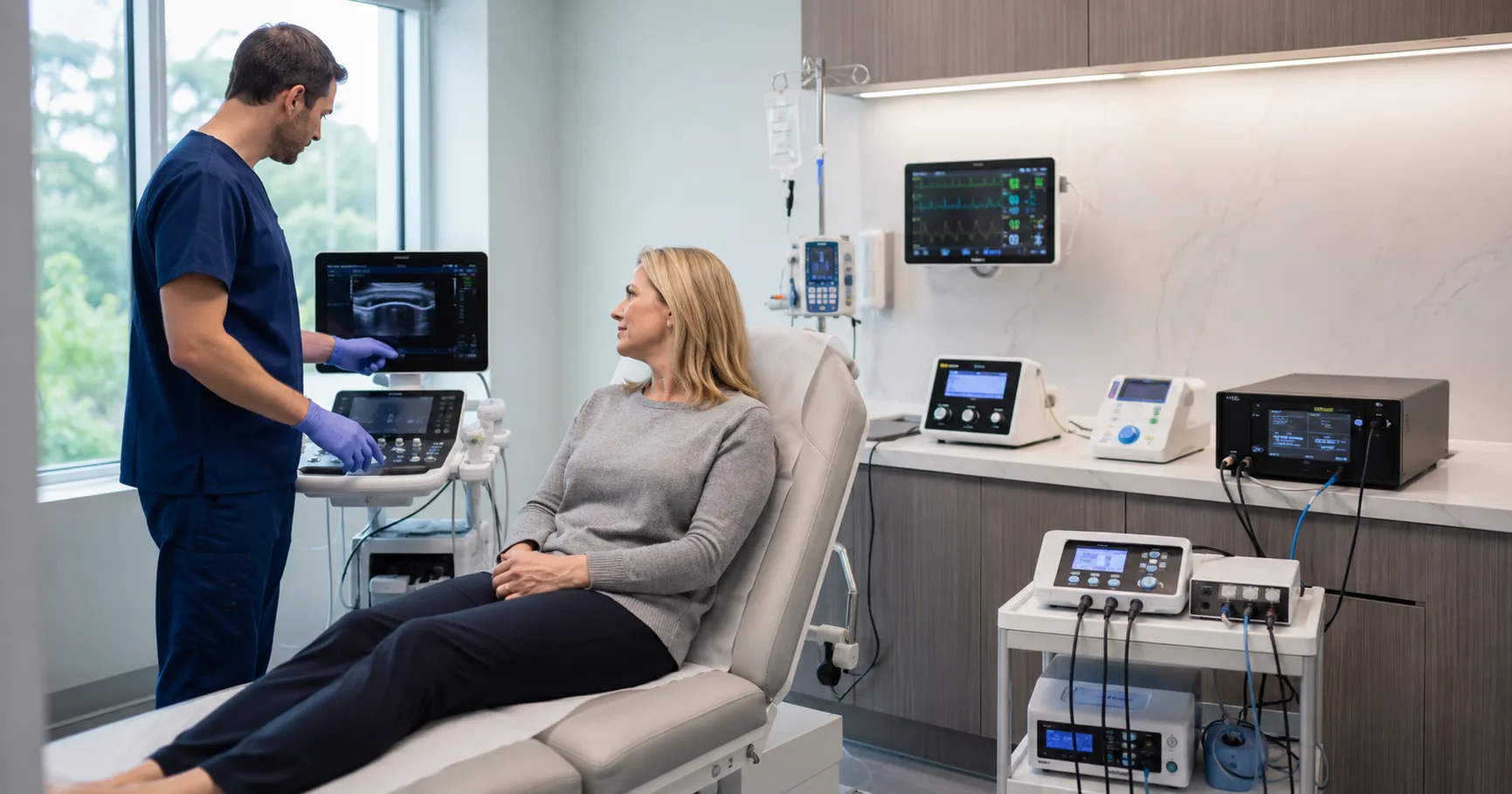
Modern pain management care rarely depends on medication alone. Large teaching hospitals, specialist pain clinics, rehabilitation centres, sports medicine facilities, and community healthcare providers increasingly combine physical therapies with advanced medical technology to support recovery and improve quality of life.
Why Technology Plays a Growing Role in Pain Management
Pain management has become increasingly multidisciplinary. Clinicians may combine medication, rehabilitation, minimally invasive procedures, and therapeutic devices according to patient needs.
Non-invasive treatment support — Devices such as electrical stimulators and ultrasound systems can complement broader treatment strategies while reducing dependence on invasive procedures. In practice, procurement teams often prioritise equipment that can serve multiple departments.
Better patient engagement — Portable systems encourage active participation in rehabilitation programmes. Facilities that have deployed these technologies at scale often report improved compliance when devices are easy to operate.
Operational flexibility — Modern equipment can be used across outpatient clinics, physiotherapy departments, sports medicine centres, and rehabilitation units, improving utilisation rates.
Healthcare facilities that source equipment through regulated, certified business suppliers often benefit from documented quality assurance, service support, and compatibility with applicable local regulatory standards.
Devices Frequently Found in Modern Pain Management Facilities
Transcutaneous Electrical Nerve Stimulation (TENS) Units
TENS devices deliver low-voltage electrical impulses through electrodes attached to the skin.
Pain signal modulation — Electrical stimulation may interfere with the transmission of pain signals to the brain. Experienced clinical supply managers typically evaluate channel options and treatment programmability rather than simply output strength.
Portable treatment capability — Compact systems support outpatient care and home rehabilitation programmes.
Multi-condition support — Commonly used for:
-
Back pain
-
Neck pain
-
Arthritis
-
Sports injuries
-
Neuropathic pain
Procurement teams should evaluate electrode availability and replacement costs since consumables contribute significantly to long-term operating expenses.
Therapeutic Ultrasound Systems- Therapeutic ultrasound differs from diagnostic ultrasound in that it delivers acoustic energy intended to support soft-tissue recovery.
Deep tissue energy delivery — Controlled ultrasound waves reach structures difficult to access through manual therapy alone.
Physiotherapy integration — Frequently incorporated into rehabilitation protocols for tendon injuries and muscle conditions.
Clinical versatility — One aspect that surprises first-time buyers is the broad range of treatment heads and operating frequencies available for different clinical requirements.
Important procurement considerations include:
-
Frequency options
-
Power output
-
Treatment presets
-
Applicator durability
-
Calibration schedules
Interferential Therapy Equipment
Interferential therapy uses intersecting electrical currents to stimulate deeper tissues.
Comfort during treatment — Patients often tolerate interferential currents better than some alternative electrical therapies.
Coverage of larger treatment areas — This makes the technology useful for musculoskeletal conditions affecting extensive anatomical regions.
Department efficiency — Facilities operating busy physiotherapy departments appreciate programmable treatment protocols that reduce setup time.
Radiofrequency Ablation Systems
Radiofrequency ablation equipment represents an important technology in interventional pain medicine.
Targeted nerve treatment — Controlled thermal energy is applied to selected nerve structures under imaging guidance.
Longer-lasting outcomes — Depending on patient selection and clinical circumstances, symptom relief may continue for several months.
Precision requirements — Experienced procurement managers carefully evaluate needle compatibility, imaging integration, and generator reliability before purchase.
Radiofrequency systems are commonly considered for:
-
Facet joint pain
-
Sacroiliac joint disorders
-
Chronic spinal pain
-
Certain nerve-related pain syndromes
Cryotherapy Equipment
Cryotherapy systems use controlled cold exposure to manage inflammation and discomfort.
Post-operative support — Orthopaedic and sports medicine departments frequently incorporate cold therapy into recovery protocols.
Portable solutions — Modern systems range from simple circulation units to programmable advanced devices.
Maintenance practicality — Facilities that have deployed cryotherapy equipment at scale tend to favour designs with straightforward cleaning procedures and durable reservoirs.
Patient-Controlled Analgesia Pumps
Patient-controlled analgesia systems allow carefully regulated medication administration.
Controlled dosing — Built-in safety features help minimise dosing errors.
Hospital workflow support — Digital monitoring capabilities improve nursing oversight.
Integration capability — Procurement teams increasingly consider compatibility with electronic clinical documentation systems.
Pinal Cord Stimulation Systems
Spinal cord stimulation (SCS) systems are implantable neuromodulation devices designed for selected patients with chronic pain conditions that have not responded adequately to conservative treatment.
Electrical nerve pathway modulation — Small electrical impulses are delivered to the spinal cord to alter pain signal transmission. Experienced pain specialists carefully select candidates because patient assessment significantly influences outcomes.
Programmable therapy settings — Modern systems offer multiple stimulation modes and personalised treatment programmes, allowing clinicians to adjust therapy according to patient response.
Long-term management option — While implantation requires specialist expertise, suitable patients may experience sustained symptom improvement, potentially reducing reliance on long-term medication.
Common indications include:
-
Failed back surgery syndrome
-
Complex regional pain syndrome
-
Chronic neuropathic pain
-
Peripheral nerve disorders
Low-Level Laser Therapy Equipment
Laser therapy devices use controlled light energy to support tissue healing and pain management.
Cellular energy stimulation — Low-level laser technology aims to stimulate biological processes involved in tissue repair without generating significant heat.
Broad rehabilitation use — Physiotherapy departments frequently use laser systems for tendon injuries, muscle strains, and inflammatory conditions.
Treatment flexibility — Facilities often prefer systems offering multiple wavelength options to accommodate different clinical protocols.
Procurement considerations include:
-
Laser classification
-
Wavelength selection
-
Output power
-
Safety systems
-
Protective accessories
Extracorporeal Shockwave Therapy Systems
Shockwave therapy has become increasingly common in musculoskeletal pain management.
Acoustic pulse delivery — High-energy sound waves stimulate targeted tissues to support healing processes.
Orthopaedic and sports medicine applications — Commonly considered for plantar fasciitis, tennis elbow, Achilles tendinopathy, and calcific shoulder disorders.
Operational efficiency — One aspect that surprises first-time buyers is the relatively short treatment sessions, allowing busy clinics to manage patient flow effectively.
Facilities should evaluate:
-
Focused versus radial technology
-
Energy range
-
Applicator options
-
Treatment protocols
-
Service support
Fluoroscopy and Ultrasound Guidance Systems
Image guidance has transformed many interventional pain procedures.
Improved procedural accuracy — Real-time imaging helps clinicians visualise anatomical structures during injections and minimally invasive treatments.
Reduced procedural uncertainty — Accurate needle placement supports safer and more consistent interventions.
Departmental versatility — Imaging platforms often serve orthopaedics, vascular access, anaesthesia, emergency medicine, and pain management, improving equipment utilisation.
Experienced procurement teams evaluate:
-
Image quality
-
Mobility
-
Radiation management features
-
Software upgrades
-
Integration capabilities
Infusion Pump Technology for Chronic Pain Care
Infusion pumps deliver controlled medication doses over predetermined periods.
Precise drug administration — Programmable settings improve consistency compared with manual delivery methods.
Long-duration treatment support — Certain chronic conditions may require carefully managed continuous therapy.
Safety monitoring features — Alarm systems and digital controls enhance operational reliability.
Healthcare organisations typically assess:
-
Pump accuracy
-
Battery life
-
User interface
-
Maintenance requirements
-
Drug library compatibility
Choosing Pain Management Equipment for Healthcare Facilities
Pain management equipment procurement involves balancing clinical needs with operational realities.
Clinical service requirements — Large hospitals may require advanced interventional systems, while outpatient rehabilitation centres often prioritise portable electrotherapy equipment.
Midway through the vendor evaluation process, business Advertise recognise that buyers increasingly request independent clinical evidence, maintenance data, and long-term ownership costs alongside product specifications.
Training and implementation — Equipment that requires extensive staff education should include structured training programmes and technical support.
Service network availability — Procurement managers frequently evaluate access to spare parts, maintenance response times, and calibration services before making purchasing decisions.
Healthcare organisations managing multiple locations often discover that establishing long-term business partners improves equipment standardisation, service coordination, and inventory management across facilities.
Emerging Trends in Pain Management Technology
Wearable Neuromodulation
Portable wearable devices allow patients to continue therapy outside traditional healthcare settings.
Remote treatment opportunities — Home-based care models are expanding across many healthcare systems.
Smart Monitoring Integration
Digital connectivity enables clinicians to track therapy usage and patient adherence.
Data-driven care — Objective usage patterns can inform treatment adjustments.
AI-Assisted Pain Assessment
Artificial intelligence tools are being investigated to support pain assessment and treatment planning.
Decision support potential — Requirements vary considerably across healthcare systems, and AI complements rather than replaces clinical judgement.
Regenerative Technology Support
Pain management increasingly intersects with regenerative medicine and rehabilitation technologies.
Integrated treatment pathways — Healthcare facilities often combine multiple therapeutic approaches to improve patient outcomes.
Final Thoughts
Modern pain management care relies on a combination of clinical expertise and carefully selected medical technology. From portable TENS units and therapeutic ultrasound systems to advanced spinal cord stimulators and image-guided interventional platforms, each device serves a distinct role within comprehensive pain management programmes.
In practice, procurement teams often achieve the best long-term value by focusing not only on initial purchase price but also on clinical suitability, maintenance requirements, training support, equipment reliability, and supplier capability. Healthcare facilities that align technology investments with the needs of their patient populations and operational workflows are generally better positioned to deliver efficient, sustainable pain management services across diverse care settings.
Disclaimer
Medigear.uk is a global medical equipment supplier, exporter, and distributor. The content published on this site is intended for educational and product awareness purposes only. Nothing on this page constitutes medical advice, clinical guidance, or treatment recommendations. All healthcare procurement and clinical decisions should be made by qualified medical professionals and compliant procurement teams operating within the regulatory frameworks of their respective countries.