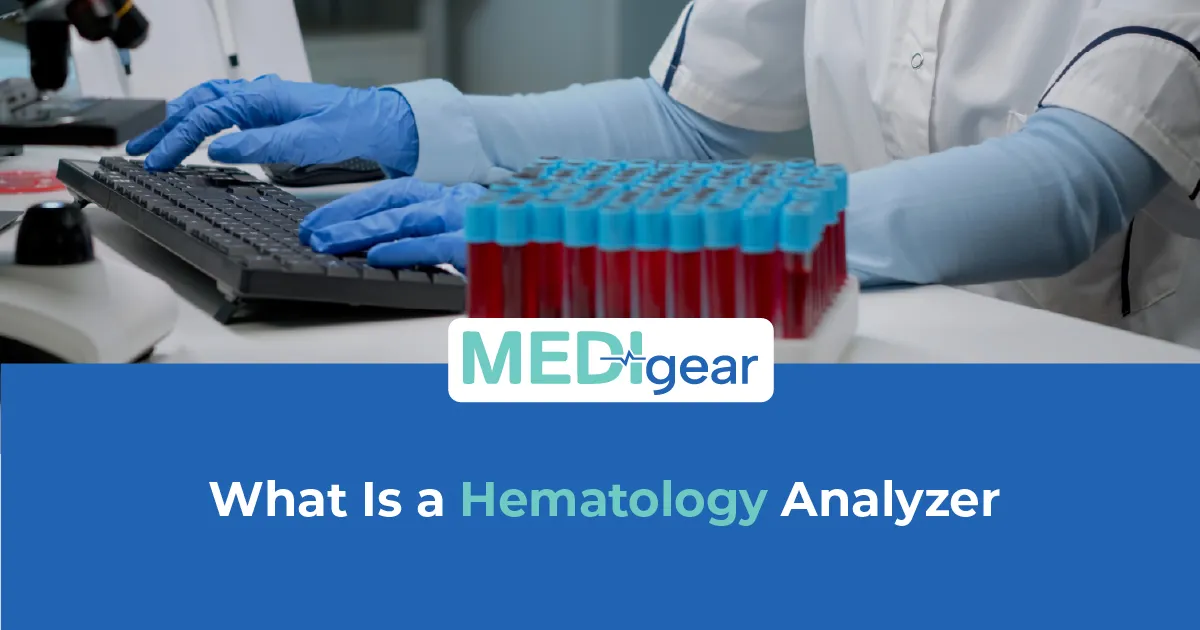
Blood testing plays a central role in modern diagnostics, and one of the most important instruments in this process is the haematology analyser. These systems help laboratories examine blood samples quickly, consistently, and more efficiently than manual testing methods.
From routine health screenings to emergency diagnostic support, haematology analysers are widely used in hospitals, diagnostic laboratories, pathology centres, and other healthcare facilities that handle high daily testing volumes.
This guide explains what an ahaematology analyser is, how it works, the types available, and the operational considerations that healthcare facilities should understand before selecting one.
Understanding the Role of a Haematology Analyser
A haematology analyser is a laboratory instrument designed to automatically evaluate blood components. These systems assist laboratories in measuring and analysing blood cells, including red blood cells, white blood cells, haemoglobin levels, haematocrit value, and platelet counts.
Why Haematology Testing Is Important
Blood analysis supports a broad range of healthcare workflows by helping laboratories process routine diagnostic investigations efficiently.
Supporting High-Volume Blood Testing – Automated analysers enable laboratories to process multiple samples more quickly than manual methods.
Improving Reporting Consistency – Standardised automation reduces variability in routine blood analysis procedures.
Healthcare facilities planning diagnostic infrastructure upgrades often review sourcing support resources available through Buyers Services.
How a Haematology Analyser Works
Modern haematology analysers use automated technologies to evaluate blood samples through electrical impedance, optical detection, flow cytometry, or laser-based measurement systems.
Basic Workflow Inside the Analyser
-
A blood sample is introduced into the system.
-
The analyser separates and measures blood components.
-
Data is processed electronically.
-
Results are displayed or transferred digitally.
Reducing Manual Counting Requirements – Automated systems significantly decrease reliance on manual microscopy for routine blood counts.
Supporting Faster Laboratory Turnaround – Laboratories handling large patient volumes benefit from improved workflow efficiency.
Diagnostic centres evaluating their broader laboratory infrastructure may also find value in Medigear. The UK's educational guide on essential laboratory equipment.
Common Parameters Measured by Haematology Analysers. Haematology systems can evaluate multiple blood-related parameters during a single analysis cycle.
Frequently Reported Blood Parameters
-
Red blood cell count (RBC)
-
White blood cell count (WBC)
-
Haemoglobin (Hb)
-
Hematocrit (HCT)
-
Platelet count
-
Mean corpuscular volume (MCV)
-
Mean corpuscular haemoglobin (MCH)
Providing Multi-Parameter Analysis Quickly – Modular analysers generate comprehensive blood reports within short processing times.
Helping Laboratories Improve Workflow Capacity – Automated reporting supports faster patient sample management.
Types of Hematology Analyzers Used in Laboratories
Different laboratory environments require different analyser configurations depending on testing volume and operational complexity.
3-Part Differential Haematology Analysers
These systems classify white blood cells into three basic groups and are commonly used in smaller laboratories or moderate-volume diagnostic centres.
Supporting Routine Blood Count Testing – Suitable for standard laboratory workflows and general screening applications.
5-Part Differential Haematology Analysers
These analysers provide more detailed white blood cell differentiation and are often used in larger hospitals and advanced diagnostic laboratories.
Improving Detailed Blood Cell Analysis – Enhanced classification capabilities support broader laboratory evaluation requirements.
High-Throughput Haematology Systems
Large healthcare facilities may use advanced analysers capable of processing hundreds of samples per hour.
Supporting High-Volume Laboratory Operations – Ideal for centralised diagnostic facilities and busy pathology laboratories.
Healthcare suppliers supporting laboratory modernisation projects may also explore collaboration opportunities with business suppliers.
Where Hematology Analyzers Are Commonly Used
Haematology analysers are found across multiple healthcare settings.
Common Healthcare Settings
-
Diagnostic laboratories
-
Hospitals
-
Pathology centers
-
Research laboratories
-
Blood banks
-
Medical colleges
Supporting Daily Diagnostic Operations – Blood analysis remains one of the most frequently performed laboratory investigations worldwide.
Improving Testing Workflow Efficiency – Automated systems help laboratories manage increasing patient demand more effectively.
Operational Benefits of Automated Haematology Systems
Automation has significantly changed laboratory workflow management.
Reducing Manual Processing Time – Automated sample handling improves productivity during high testing demand.
Improving Result Standardisation – Consistent analytical methods help maintain reporting reliability.
Enhancing Laboratory Throughput – Faster processing supports improved turnaround times.
Additional Workflow Advantages
-
Digital result management
-
Reduced sample handling
-
Integrated reporting systems
-
Barcode compatibility
-
Quality control tracking
Healthcare organisations exploring laboratory technology partnerships may also review opportunities available through Medigear's UK Partnership business partner.
Important Factors to Consider Before Purchasing a Haematology Analyser
Laboratories should evaluate operational needs carefully before selecting equipment.
Key Procurement Considerations
-
Expected daily sample volume
-
Differential analysis capability
-
Reagent availability
-
Maintenance support
-
Calibration requirements
-
Software integration
-
Laboratory space availability
-
Power infrastructure compatibility
Balancing Workflow Needs With Operational Costs – Larger analysers may improve throughput but require greater infrastructure investment.
Evaluating Long-Term Service Support – Reliable access to maintenance remains essential for uninterrupted laboratory operation.
Facilities reviewing healthcare equipment purchasing strategies often compare operational planning guidance related to laboratory infrastructure procurement.
Maintenance Requirements for Hematology Analyzers
Regular servicing helps maintain analyser performance and reporting consistency.
Common Maintenance Priorities
-
Calibration verification
-
Sample probe cleaning
-
Reagent management
-
Quality control testing
-
Software updates
-
Waste disposal management
Reducing Unexpected Downtime – Preventive maintenance supports continuity of laboratory workflow.
Maintaining Analytical Reliability – Consistent servicing helps preserve reporting accuracy over time.
Healthcare companies seeking industry visibility opportunities may also explore promotional support through Advertising Services.
Emerging Trends in Haematology Analyser Technology
Laboratory automation continues evolving rapidly.
Digital Laboratory Integration
Modern analysers increasingly support centralised data management and cloud-enabled reporting workflows.
AI-Assisted Blood Analysis
Advanced systems are gradually incorporating intelligent flagging and automated review support features.
Compact Point-of-Care Haematology Devices
Portable analysers are becoming more common in decentralised healthcare environments.
Improved Workflow Automation
Integrated sample loading and automated quality control systems are helping laboratories reduce manual intervention.
Healthcare facilities seeking laboratory planning support or sourcing guidance can contact the Contact Team for additional information.
Disclaimer
Medigear.uk is a medical equipment supplier and distributor. We do not provide medical advice, diagnosis, or treatment recommendations. All information is for educational and product awareness purposes only. Qualified medical professionals should always make healthcare decisions.