Healthcare facilities continually seek practical ways to improve environmental hygiene and support infection prevention strategies. Among the technologies gaining wider adoption, ultraviolet (UV) sterilisation has become a valuable addition to healthcare cleaning and disinfection programmes.
Rather than replacing traditional cleaning methods, UV systems are often incorporated into broader facility management plans to support high hygiene standards across healthcare settings.
Healthcare organisations can explore Medigear's buyer network to source reliable equipment.
Understanding UV Sterilisation
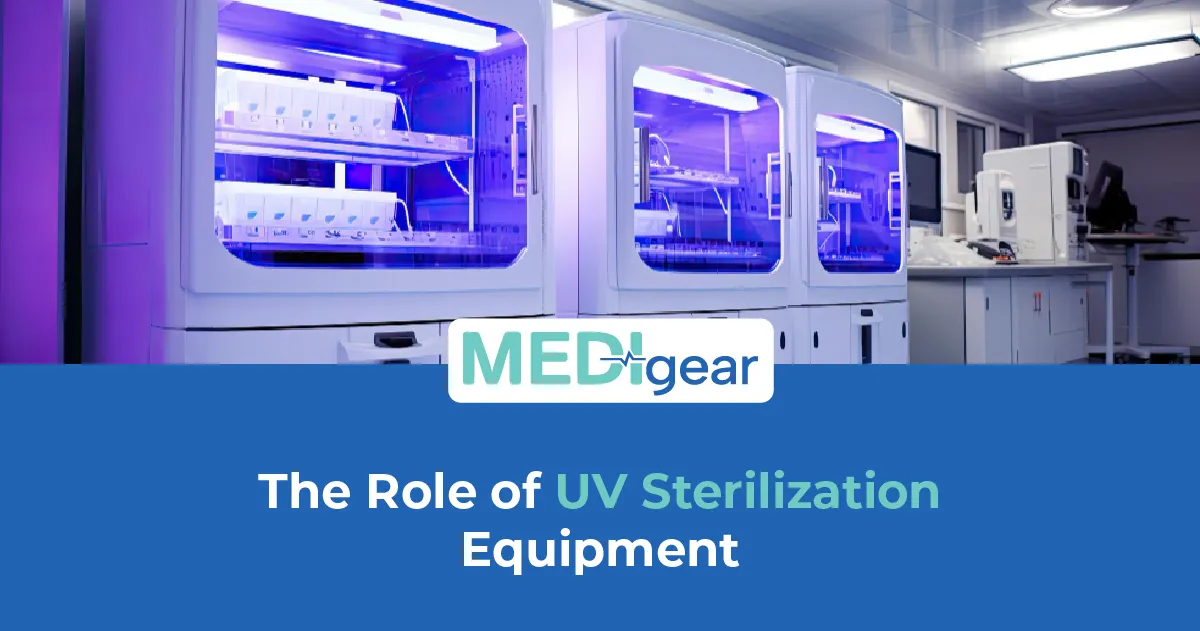
Ultraviolet technology uses specific wavelengths of light to reduce the presence of microorganisms on exposed surfaces and in controlled environments. Various UV systems are designed for different healthcare applications, with UV-C technology commonly associated with environmental disinfection programmes.
Supporting environmental hygiene – UV systems may be used after conventional cleaning procedures.
Reducing manual workload – Automated equipment can assist housekeeping and facility teams.
Improving workflow consistency – Programmed operating cycles help standardise processes.
Enhancing difficult-to-access areas – UV systems can reach spaces that are challenging to clean during routine cleaning.
Where UV Equipment Fits in Healthcare Facilities
UV sterilisation can be integrated into several operational areas.
Patient rooms may undergo UV disinfection as part of turnover procedures.
Procedure areas can include UV technology within environmental cleaning plans.
Laboratory environments may use specialised systems for selected applications.
Waiting areas and common spaces can benefit from environmental hygiene strategies.
Healthcare teams interested in broader equipment planning may also find value in Medigear's educational content on sterilisation standards and healthcare facility maintenance.
Different Types of UV Sterilisation
Healthcare facilities use various UV technologies depending on operational needs.
Mobile UV units – Portable systems designed for room disinfection.
Fixed UV installations – Permanent solutions integrated into facility infrastructure.
Air treatment systems – Equipment supporting environmental air management.
Cabinet-based systems – Designed for processing selected equipment or items.
Medical equipment suppliers can discover collaboration opportunities through business suppliers.
Important Considerations Before Equipment Selection
Healthcare buyers should evaluate several practical factors.
Facility size – Coverage requirements influence equipment choice.
Workflow compatibility – Systems should fit existing operational procedures.
Ease of operation – User-friendly controls may improve efficiency.
Maintenance requirements – Regular servicing supports reliable performance.
Data reporting features – Digital records can assist quality management programmes.
Healthcare organisations considering strategic industry partnerships can learn more from their business partners.
Maintenance and Operational Insights
Routine inspection helps maintain equipment reliability.
Lamp performance should be monitored according to maintenance schedules.
Equipment surfaces should remain clean for effective operation.
Software updates may support system functionality.
Staff training helps encourage proper equipment use.
Healthcare professionals who require additional information can contact the Medigear Contact Team.
Industry Trends
Healthcare facilities continue exploring technologies that improve environmental management.
Smart monitoring systems provide operational data.
Automated scheduling simplifies equipment deployment.
Energy-efficient designs help reduce operating costs.
Digital reporting platforms support documentation.
Integrated facility management systems improve coordination across departments.
Healthcare readers may also enjoy Medigear's articles covering operating theatre equipment planning and healthcare equipment procurement strategies.
Disclaimer
Medigear.uk is a medical equipment supplier and distributor. We do not provide medical advice, diagnosis, or treatment recommendations. All information is for educational and product awareness purposes only. Qualified medical professionals should always make healthcare decisions.