Healthcare facilities depend on reliable sterilisation practices to maintain safe environments for patients, healthcare professionals, and support staff. Every reusable medical instrument, whether used in surgery, diagnostics, or routine care, follows a carefully managed process before returning to service. Effective sterilisation standards help healthcare organisations improve operational efficiency, support quality assurance programmes, and maintain confidence in equipment readiness.
Modern healthcare sterilisation extends beyond operating an autoclave or processing instruments through a single cycle. It involves cleaning, inspection, packaging, sterilisation, storage, transportation, documentation, and routine equipment maintenance. Each stage contributes to a broader system designed to support safe healthcare operations.
Healthcare organisations exploring equipment procurement and sourcing opportunities can discover industry solutions through Medigear's Buyers Network for buyers services.
Why Sterilisation Standards Matter
Sterilisation standards create a structured approach for handling reusable medical equipment throughout its lifecycle.
Supporting safer healthcare environments – Proper processing reduces contamination risks associated with reusable instruments.
Maintaining operational consistency – Standardised procedures help departments work efficiently and minimise disruptions.
Strengthening quality management – Documented workflows improve traceability and accountability.
Protecting valuable equipment investments – Correct handling and maintenance contribute to longer equipment life.
The Journey of a Medical Instrument
Reusable instruments pass through several carefully controlled stages before they can be used again.
Cleaning removes visible debris and biological material from surfaces.
Inspection identifies wear, damage, or cleaning concerns that may require attention.
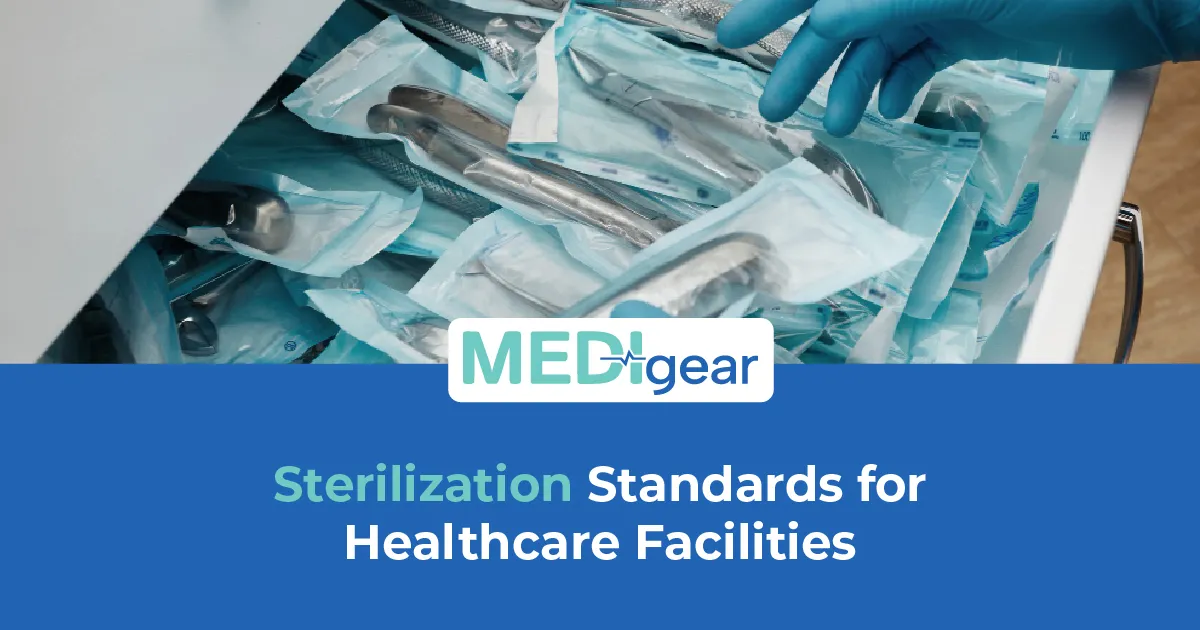
Packaging protects processed instruments and helps maintain sterile conditions.
Sterilisation applies validated methods suitable for the equipment being processed.
Storage preserves sterile integrity until the instrument is required.
Documentation records each step to support quality assurance.
Readers interested in healthcare equipment upkeep may also benefit from Medigear's maintenance planning content for laboratory facilities.
Equipment Supporting Sterile Processing
Healthcare facilities rely on several categories of equipment to support effective workflows.
Steam sterilisation systems - remain widely used for heat-resistant instruments.
Low-temperature processing technologies - accommodate heat-sensitive devices.
Ultrasonic cleaning units - assist with pre-sterilisation cleaning.
Drying and storage solutions - help preserve processed equipment.
Monitoring systems - provide additional confidence in cycle performance.
Medical equipment suppliers seeking industry visibility can explore opportunities through business suppliers.
Building a Reliable Sterile Processing Department
Successful sterile processing relies on more than equipment alone.
Routine staff education supports consistent procedures.
Preventive maintenance reduces unexpected downtime.
Equipment calibration helps maintain reliable performance.
Quality monitoring programmes identify potential issues early.
Internal audits encourage continuous improvement.
Practical Considerations for Healthcare Buyers
Selecting sterilisation equipment requires careful planning.
Matching capacity with demand - prevents bottlenecks.
Considering facility layout - improves workflow efficiency.
Evaluating maintenance support - contributes to long-term reliability.
Reviewing digital reporting features may simplify documentation.
Planning for future expansion - allows facilities to adapt to changing requirements.
Healthcare organisations interested in strategic industry collaboration can learn more through business partners.
Maintenance and Operational Insights
Daily inspections help identify small issues before they become significant problems.
Routine servicing supports reliable operation throughout the equipment lifecycle.
Consumable replacement schedules help maintain consistent performance.
Accurate record keeping supports internal quality programmes.
Staff refresher training helps reinforce best practices.
Healthcare teams requiring equipment guidance can contact Medigear through Contact Team.
Emerging Trends Shaping Sterilisation
Healthcare facilities continue to adopt technologies that support operational improvements.
Digital tracking systems provide enhanced instrument visibility.
Automated reporting simplifies documentation processes.
Energy-efficient equipment reduces operational costs.
Predictive maintenance systems help identify service requirements earlier.
Integrated workflow management platforms improve departmental coordination.
Healthcare professionals interested in broader equipment planning may also explore Medigear articles covering operating theatre equipment and healthcare procurement strategies.