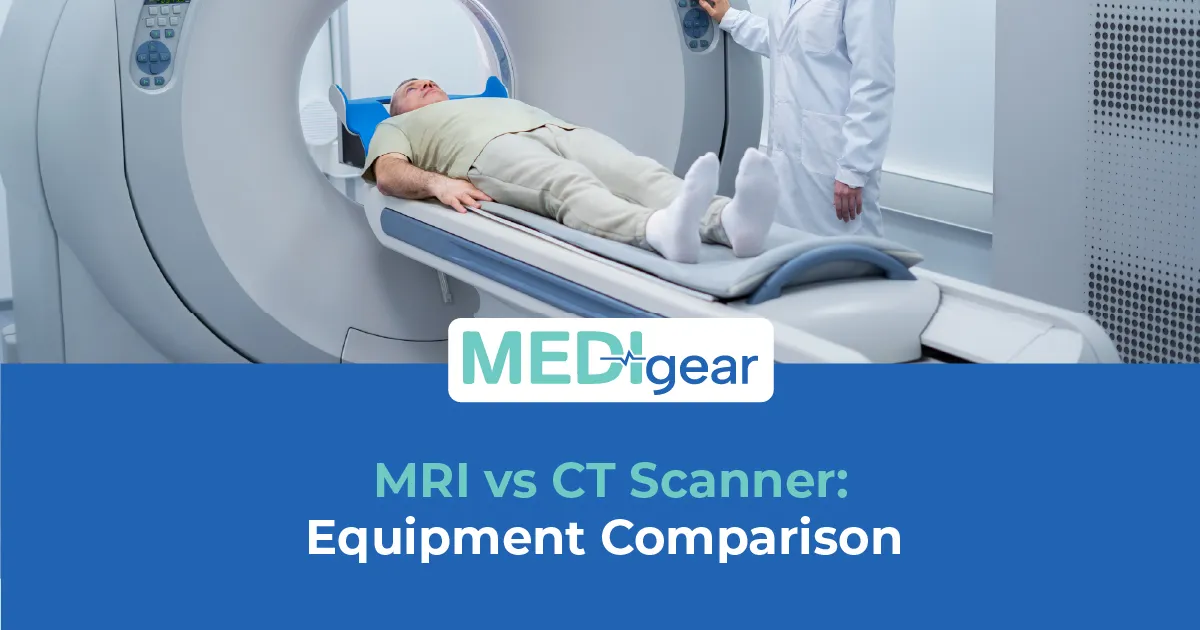
A hospital imaging department rarely depends on one imaging system alone. CT scanners may handle emergency trauma workflows throughout the day, while MRI suites operate on carefully scheduled imaging sessions requiring more detailed scan protocols. Both technologies are essential, but they solve very different operational challenges inside healthcare environments.
For procurement teams and radiology planners, comparing MRI and CT systems is not only about imaging capability anymore. Workflow efficiency, infrastructure readiness, maintenance planning, patient throughput, digital integration, and long-term operational scalability now influence imaging investment decisions just as heavily.
Healthcare facilities building or upgrading imaging departments must understand how these technologies differ before committing to large-scale infrastructure planning.
Why MRI and CT Systems Are Used Side by Side
MRI and CT scanners are often viewed together because they both support diagnostic imaging, but operationally, they serve different priorities.
CT imaging systems are generally associated with:
-
Fast diagnostic workflows
-
Emergency imaging support
-
Trauma department operations
-
High patient throughput
MRI systems are more commonly linked to:
-
Detailed soft tissue imaging
-
Neurological imaging workflows
-
Spine evaluations
-
Complex musculoskeletal imaging
Healthcare facilities typically design radiology departments around both technologies because each supports different operational demands.
CT Systems Prioritise Speed and Workflow Efficiency
CT scanners use rotating X-ray technology combined with computerized image processing to create cross-sectional imaging studies rapidly.
In busy healthcare environments, scan speed becomes one of the biggest operational advantages.
Supporting Emergency Department Imaging – CT systems help radiology teams process urgent trauma workflows quickly during high-pressure operational periods.
Helping Manage Heavy Patient Volume – Faster image acquisition allows healthcare facilities to reduce imaging delays during busy scheduling periods.
Improving Department Throughput – Shorter scan sessions support smoother coordination between emergency care, surgical teams, and radiology departments.
Many healthcare facilities expanding emergency services prioritize CT infrastructure because of its workflow efficiency under time-sensitive conditions.
Healthcare organizations exploring imaging infrastructure collaborations can review opportunities through the Healthcare Partnership Programs.
MRI Systems Focus on Detailed Imaging Workflows
MRI systems operate using magnetic fields and radiofrequency technology rather than X-ray-based imaging methods.
These systems are often selected for imaging environments requiring highly detailed visualization.
Supporting Complex Imaging Protocols – MRI systems help healthcare providers perform advanced imaging studies involving neurological and musculoskeletal workflows.
Expanding Diagnostic Imaging Capability – Modern MRI platforms increasingly support specialized imaging applications and flexible scan configurations.
Strengthening Long-Term Imaging Infrastructure – Many hospitals integrate MRI systems as part of broader advanced imaging expansion strategies.
MRI workflows generally require longer imaging sessions compared to CT systems, which affects scheduling and operational coordination.
Infrastructure Planning Often Shapes Procurement Decisions
One major difference between MRI and CT systems involves installation and infrastructure preparation.
CT scanner installations commonly require:
-
Radiation shielding
-
Electrical infrastructure
-
Cooling systems
-
Imaging room preparation
MRI systems typically involve more complex environmental planning because of magnetic field management requirements.
Facilities may require:
-
Magnetic shielding
-
Controlled access zones
-
Specialized ventilation systems
-
Structural reinforcement planning
Influencing Construction Timelines – MRI installations often involve more extensive infrastructure coordination compared to CT deployments.
Affecting Long-Term Operational Planning – Infrastructure complexity can influence maintenance planning, energy management, and departmental scalability.
Healthcare buyers researching imaging suppliers can explore sourcing assistance through the Healthcare Equipment Supplier Directory.
Workflow Timing Creates Different Operational Pressures
Radiology departments manage CT and MRI scheduling very differently because operational timing varies significantly between the systems.
CT workflows often prioritize:
-
Rapid imaging turnaround
-
Emergency patient coordination
-
Fast scheduling flexibility
-
High daily scan capacity
MRI workflows commonly involve:
-
Longer imaging appointments
-
Specialized imaging preparation
-
More detailed protocol management
-
Complex scheduling coordination
Helping Imaging Departments Balance Resources – Facilities often allocate staffing differently between MRI and CT operations based on workflow complexity.
Supporting Specialized Imaging Services – MRI departments frequently require more operational planning for advanced diagnostic imaging sessions.
Healthcare professionals comparing imaging workflows may also find valuable insights in the Medigear.uk guide discussing how digital radiography is improving healthcare operations.
Digital Imaging Infrastructure Is Connecting Both Platforms
Modern MRI and CT systems increasingly operate within connected healthcare ecosystems rather than isolated imaging environments.
Healthcare facilities now prioritize systems supporting:
-
Cloud-based imaging storage
-
Centralized reporting systems
-
AI-assisted workflow coordination
-
Multi-department accessibility
-
Digital scheduling integration
Improving Imaging Accessibility Across Facilities – Connected platforms help healthcare providers retrieve imaging studies more efficiently.
Reducing Administrative Delays – Automated workflow systems improve reporting coordination and operational visibility.
Maintenance Workflows Differ Between MRI and CT Systems
Imaging system maintenance directly affects operational stability inside radiology departments.
CT servicing commonly includes:
Monitoring X-Ray Tube Performance – Helps maintain imaging consistency during high-volume operations.
Inspecting Cooling Infrastructure – Cooling stability is critical for long-term operational reliability.
Updating Imaging Software Systems – Digital workflow integration requires ongoing software management.
MRI maintenance often focuses on:
Managing Magnetic System Stability – Magnetic field consistency is essential for imaging performance.
Inspecting Coils and Gradient Systems – MRI imaging accuracy depends heavily on stable hardware performance.
Monitoring Cryogen Infrastructure – Specialized cooling systems require structured servicing oversight.
Many healthcare facilities now use predictive maintenance systems to improve visibility across imaging infrastructure operations.
Healthcare facilities needing technical assistance or operational guidance can contact Medigear.UK Technical Support Services for infrastructure support.
Procurement Teams Increasingly Evaluate Long-Term Scalability
Healthcare buyers rarely focus only on initial imaging equipment costs anymore. Long-term operational impact now plays a much larger role during procurement planning.
Important evaluation factors often include:
-
Patient throughput requirements
-
Infrastructure readiness
-
Maintenance accessibility
-
Workflow coordination goals
-
Software integration capability
-
Energy management planning
-
Department scalability
-
Future healthcare expansion
Healthcare procurement teams researching operational planning strategies can explore guidance through the Healthcare Buyers Resource Platform.
Healthcare readers exploring broader imaging technologies may also benefit from the Medigear.uk article discussing different types of X-ray systems used in healthcare environments.
Imaging Technology Continues Moving Toward Automation
MRI and CT technologies continue evolving through digital healthcare integration and operational automation.
AI-Assisted Workflow Coordination – Artificial intelligence systems increasingly support imaging prioritization and workflow management.
Cloud-Connected Imaging Platforms – Multi-location healthcare systems are expanding centralized imaging accessibility.
Compact Infrastructure Designs – Manufacturers continue developing more space-efficient imaging systems.
Predictive Maintenance Technologies – Smart servicing platforms help facilities reduce downtime and improve lifecycle management.
Healthcare organizations interested in increasing healthcare industry visibility can explore Healthcare Advertising Opportunities.
Final Thoughts
MRI and CT systems remain two of the most important imaging technologies inside modern healthcare infrastructure. CT scanners are often valued for speed, emergency workflow support, and operational throughput, while MRI systems provide detailed imaging capabilities suited for complex diagnostic workflows.
Healthcare facilities comparing these technologies must evaluate far more than imaging performance alone. Infrastructure readiness, workflow efficiency, digital integration, maintenance planning, staffing coordination, and long-term scalability all influence imaging procurement decisions.
For radiology managers, procurement teams, and healthcare infrastructure planners, understanding these operational differences is essential when building imaging environments designed for long-term healthcare demands.
Disclaimer
Medigear.uk is a medical equipment supplier and distributor. We do not provide medical advice, diagnosis, or treatment recommendations. All information is for educational and product awareness purposes only. Healthcare decisions should always be made by qualified medical professionals.