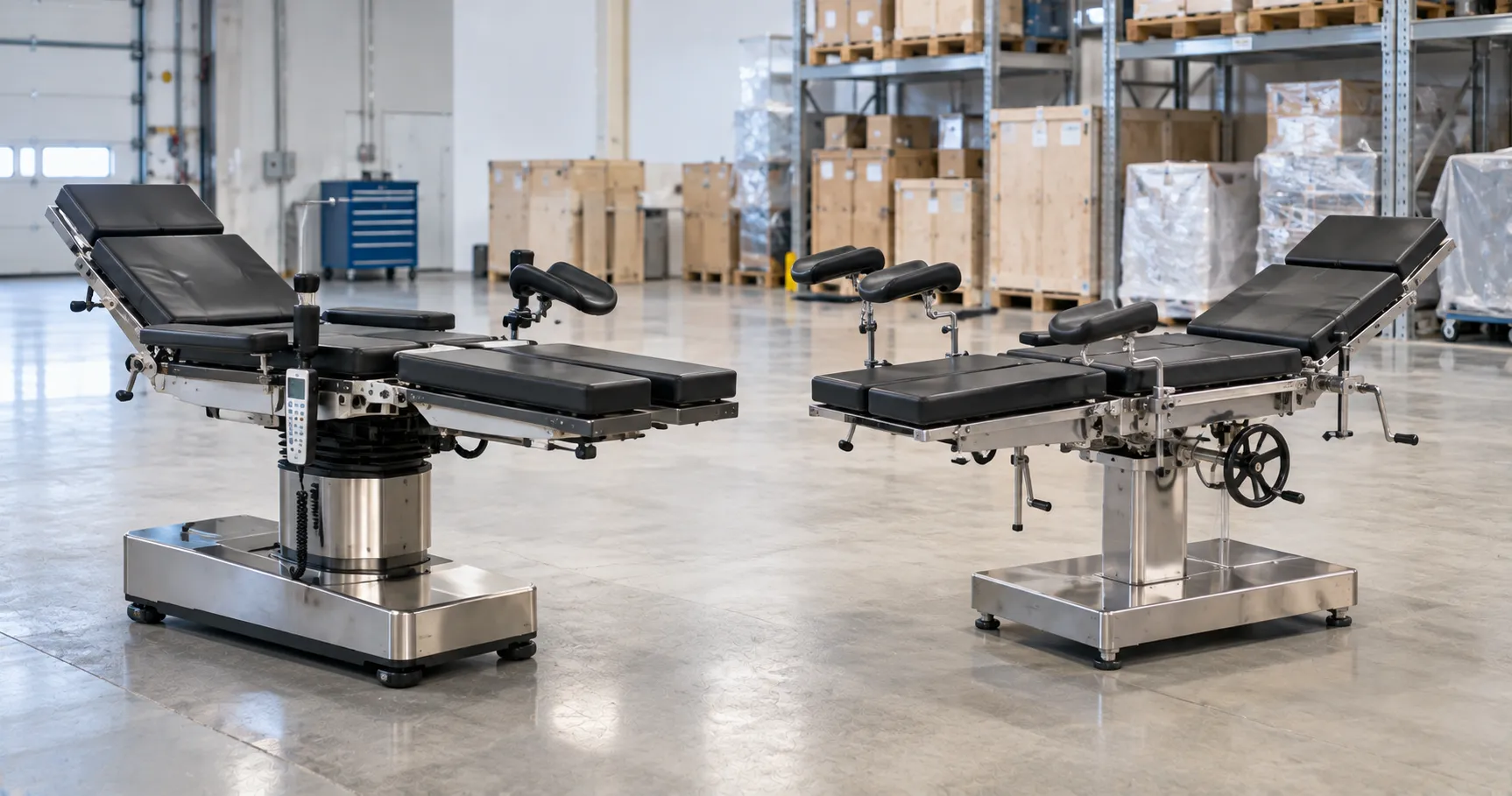
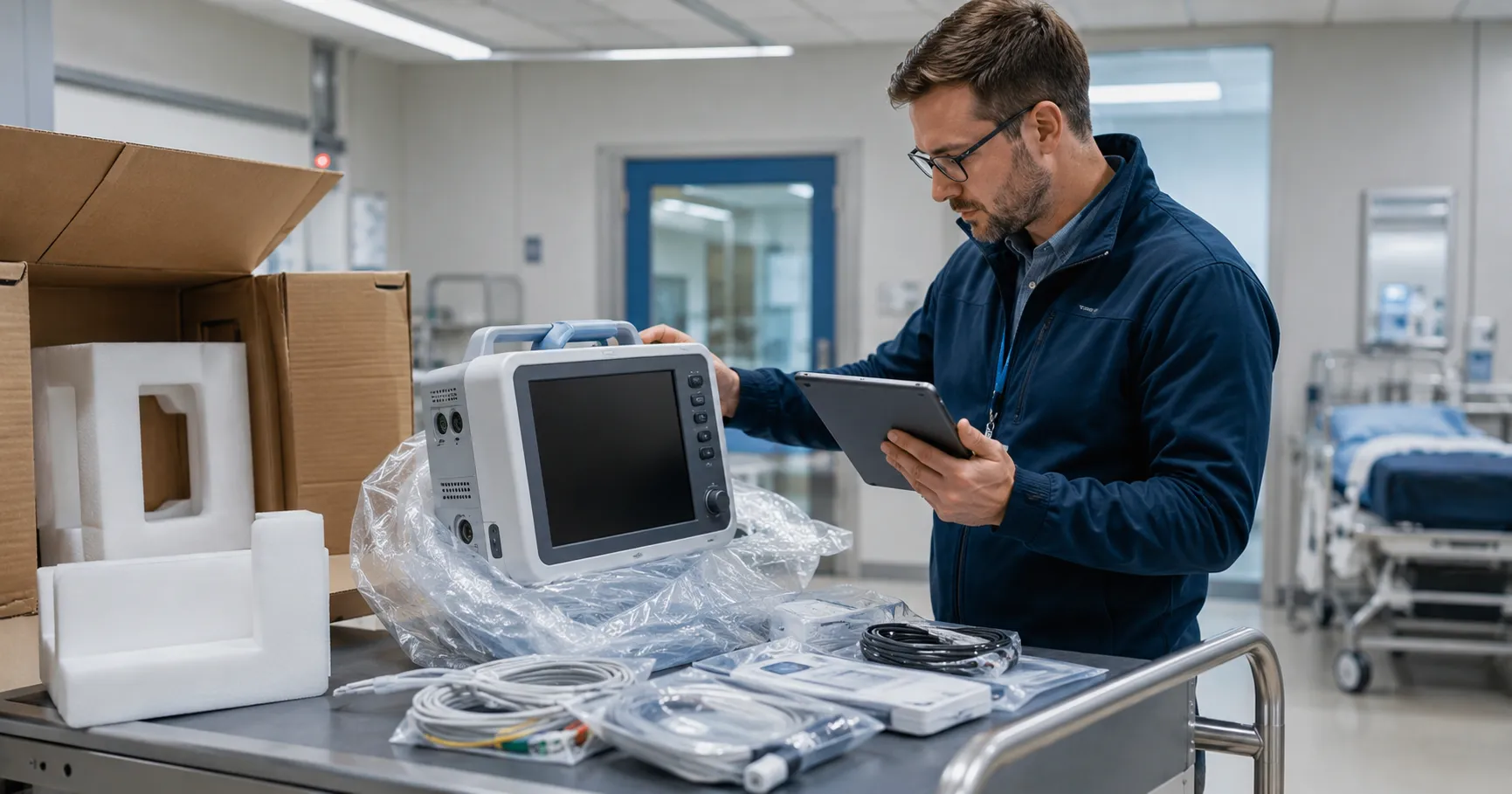
Medical equipment delivery may appear complete when boxes arrive at the facility, but the actual receiving process begins before anything is accepted, installed, or put into clinical use. A device may arrive with damaged packaging, missing accessories, unclear serial numbers, incomplete manuals, or warranty documents that do not match the purchase order. These issues are easier to resolve at delivery than weeks later.
For healthcare buyers, medical equipment delivery inspection should be treated as a procurement control point rather than a routine warehouse task. WHO states that technical specification and acquisition of medical devices are important, making it necessary to verify delivered equipment against approved requirements before acceptance. This guide explains how buyers can inspect deliveries, record documents, report damage, protect warranty position, and prepare equipment for safe handover.
How Delivery Inspection Supports Clinical Equipment Decisions
Order Match Before Acceptance — Delivery inspection should confirm that the received model, quantity, accessories, documents, and configuration match the approved purchase order. A delivery that looks correct from the outside can still include an incorrect probe, a missing battery, a wrong voltage option, or an incomplete accessory set.
Clinical Readiness Review — Medical equipment should not move directly from the delivery area to patient care without a structured check. In practice, procurement teams often find that small items, such as power cords, sensor cables, mounting kits, software keys, filters, cuffs, or tubing, can delay use even when the main device has arrived.
Biomedical Receiving Control — Biomedical engineers should, where appropriate, review higher-risk or technical equipment before acceptance. Their checks may include serial numbers, service manuals, safety labels, installation requirements, calibration needs, software version notes, and warranty start conditions.
Supplier Accountability at Handover — Delivery inspection provides buyers with evidence of damage, shortages, incorrect supply, or documentation mismatches. Experienced clinical supply managers typically record issues immediately because supplier responsibility becomes harder to prove after packaging is discarded or equipment is moved.
Where Delivery Inspection Matters Across Healthcare Settings
Large Teaching Hospitals — These facilities often receive equipment for multiple departments simultaneously, including the ICU, operating rooms, imaging, laboratories, CSSD, emergency care, wards, and outpatient areas. Facilities that have deployed equipment at scale tend to report fewer handover disputes when receiving teams use standard inspection forms.
District and Regional Hospitals — These hospitals often have limited backup and equipment, so that delivery errors can quickly affect clinical readiness. Inspection should confirm the presence of accessories, spare parts, manuals, warranty files, and installation notes before the supplier's delivery is closed.
Facilities sourcing through regulated and certified equipment suppliers worldwide should request packing lists, conformity records, warranty documents, accessory lists, user manuals, service manuals, and delivery notes before acceptance.
Community Health Centres — Smaller facilities may rely on simple receiving processes, but inspection still matters. One aspect that surprises first-time buyers is how often small missing accessories delay the delivery of basic equipment such as monitors, examination devices, trolleys, lamps, sterilisation units, and diagnostic tools.
Mobile and Point-of-Care Services — Mobile healthcare programmes should inspect transport cases, batteries, chargers, protective packaging, cleaning accessories, cables, and field-use documentation. Equipment used outside fixed facilities is more likely to be affected by movement, repeated handling, and transport wear.
Delivery Inspection Details That Change Buying Outcomes
Packaging and Damage Evidence — Buyers should check the outer packaging, internal protection, signs of moisture, broken seals, crushed corners, shock labels where used, and the visible condition. If damage is found, photos should be taken before unpacking continues, as the packaging condition may support freight or supplier claims.
Serial Number and Model Verification — Every device should be checked against the purchase order, invoice, packing list, and warranty file. Serial number errors can create problems for asset registration, warranty claims, preventive maintenance records, software support, and future spare parts ordering.
Document and Manual Review — Delivery inspection should confirm that user manuals, service manuals, warranty files, conformity records, installation notes, and test documents, where applicable, are present. WHO’s procurement process resource guides, with the technology procurement practice, support safe, equitable, and quality healthcare, reinforcing the need for evidence-based completion.
Installation and Compatibility Check — Some equipment cannot be accepted fully until the receiving team confirms room readiness, power compatibility, accessories, data connections, mounting requirements, or supplier installation support. A device may be undamaged but still not ready for use if the delivered configuration does not match the facility’s operating environment.
Procurement Evaluation Guidance for Delivery Inspection
Total Cost of Delivery Gaps — Buyers should treat delivery errors as cost risks. Missing accessories, incorrect models, damaged packaging, incomplete documents, and delayed claims can lead to additional freight costs, downtime, repeated supplier follow-up, postponed installation, and clinical workflow disruption.
Supplier Receiving Evidence — A reliable supplier should provide an itemised packing list, delivery note, warranty files, model details, serial numbers, an accessory list, and documentation matching the quoted equipment. Suppliers and manufacturers advertising to global healthcare buyers should expect procurement teams to request delivery-ready evidence, not only pre-sale brochures.
Compliance Variation by Destination Market — Requirements differ considerably across healthcare systems. Buyers should confirm applicable local regulatory standards, such as CE, FDA, or their regional equivalents, where relevant to the device category, import route, labelling, and receiving documentation.
Claim and Escalation Process — Delivery inspection should define who signs for goods, who reports shortage, who photographs damage, who contacts the supplier, and who approves acceptance. If the receiving process is unclear, claims can become delayed or disputed.
Healthcare networks managing repeated deliveries can reduce variation through structured distribution and reseller partnership arrangements. Buyers with delivery inspection questions, supplier documentation needs, or international sourcing requirements can contact the Medigear.uk team for supply support before confirming procurement decisions.
Maintenance, Service Life, and Receiving Records
Asset Register Entry — Delivery inspection should feed directly into asset registration. Model number, serial number, location, supplier, warranty date, accessory details, and receiving condition should be recorded before equipment is released for installation or clinical use.
Warranty and Service Start Point — Warranty terms may depend on invoice date, delivery date, installation date, or commissioning date. Buyers should confirm this during delivery because unclear warranty start points can shorten practical coverage.
Storage Before Installation — Some equipment may need controlled storage, dry handling, clean areas, secure packaging, battery management, or protection from movement before installation. In markets where local service support is limited, poor storage after delivery can increase repair costs and reduce the usable life of the equipment
Global Demand and International Delivery Inspection
Different Facility Priorities — Large hospitals may use formal receiving bays, barcode scanning, digital asset records, and biomedical sign-off. Clinics, district hospitals, community health centres, and mobile healthcare services may need simpler inspection forms that still capture damage, documents, accessories, and supplier responsibility.
Export and Import Document Review — International deliveries should be checked against the acking list, certificate of origin (with origin warranty files, conformity records, manuals, and shipment details. FDA import guidance explains that it should be checked against requirements when imported or offered for import, so buyers should verify destination documents before and during receipt.
New and Refurbished Delivery Checks — New equipment should arrive with current manuals, warranty terms, accessory lists, and complete packaging. Refurbished equipment should receive an additional inspection of condition, service history, calibration evidence where applicable, accessories, warranty limits, and remaining service life information.
Final Thoughts
Medical equipment delivery inspection helps buyers protect procurement value before equipment is accepted, installed, or moved into clinical use. Strong inspection checks packaging, serial numbers, accessories, documents, warranty files, evidence of damage, storage conditions, and supplier responsibilities at the point when issues are easiest to resolve.
Procurement teams should involve receiving staff, biomedical engineers, logistics coordinators, clinical users, suppliers, and finance teams where relevant. Clear inspection forms, complete records, prompt damage reporting, and organised asset registration help healthcare facilities reduce receiving errors, avoid hidden costs, and improve control over equipment handovers.
Disclaimer
Medigear.uk is a global medical equipment supplier, exporter, and distributor. The content published on this site is intended for educational and product awareness purposes only. Nothing on this page constitutes medical advice, clinical guidance, or treatment recommendations. All healthcare procurement and clinical decisions should be made by qualified medical professionals and compliant procurement teams operating within the regulatory frameworks of their respective countries.