Medical equipment plays a vital role in delivering accurate diagnoses, effective treatments, and safe patient care. However, even the most advanced medical devices can experience performance issues if they are not maintained properly throughout their operational life. Unexpected equipment failures can disrupt clinical workflows, delay treatments, increase repair costs, and compromise patient safety. As healthcare organisations continue investing in sophisticated technologies, preventive maintenance has become a fundamental component of effective equipment lifecycle management.
For buyers' services responsible for acquiring and managing medical equipment globally, preventive maintenance should be considered from the earliest stages of procurement planning. A structured maintenance programme not only protects valuable assets but also improves equipment availability, supports compliance with applicable local regulatory standards, and reduces the total cost of ownership. This article explores why preventive maintenance matters, how it supports healthcare operations, and the best practices organisations can adopt to maximise equipment performance throughout its service life.
How Preventive Maintenance Supports Safe and Reliable Healthcare Operations
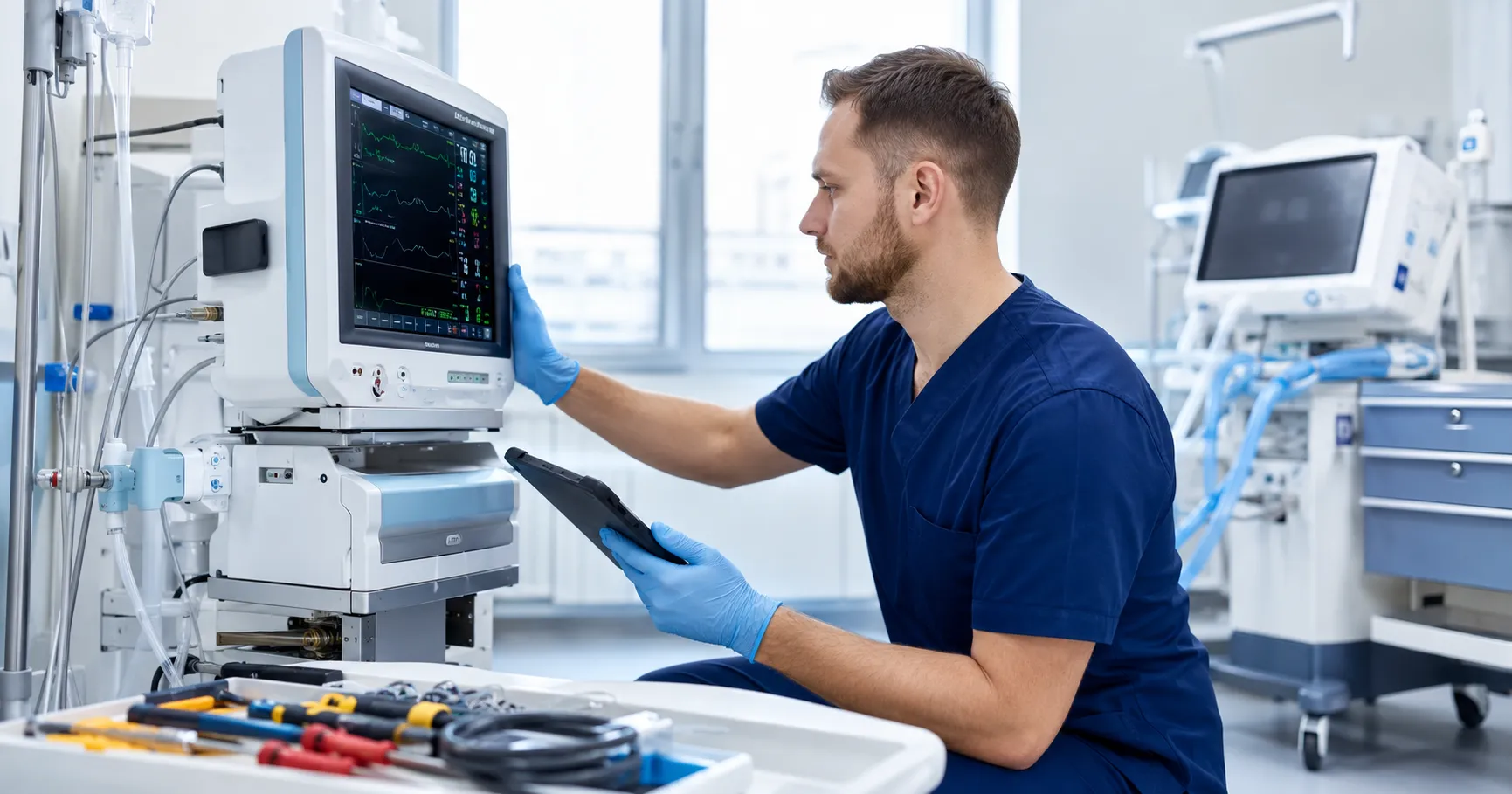
Preventive maintenance is a planned approach to inspecting, testing, calibrating, cleaning, and servicing medical equipment before faults develop into major failures. Unlike reactive maintenance, which occurs after equipment breaks down, preventive maintenance focuses on maintaining consistent performance and minimising operational interruptions.
Protecting Patient Safety — Medical equipment must perform accurately every time it is used. Diagnostic systems, patient monitors, ventilators, infusion pumps, and surgical devices all contribute directly to patient care. Experienced biomedical engineering teams often identify minor performance deviations during routine inspections before they affect clinical outcomes. Addressing these issues early reduces the risk of equipment-related incidents and supports safer healthcare delivery.
Maintaining Clinical Accuracy — Many medical devices require periodic calibration to ensure measurements remain within manufacturer specifications. Even slight inaccuracies can influence diagnostic decisions or treatment delivery. Preventive maintenance helps preserve precision by verifying equipment performance, replacing worn components, and recalibrating systems at recommended service intervals.
Reducing Unexpected Equipment Downtime — Equipment failures rarely occur at convenient times. An unexpected breakdown can interrupt patient appointments, postpone procedures, or increase pressure on other departments. In practice, healthcare facilities with well-established preventive maintenance programmes experience fewer emergency repairs and higher equipment availability, enabling clinicians to deliver uninterrupted patient care.
Supporting Regulatory Compliance — Healthcare organisations are responsible for maintaining equipment in accordance with applicable local regulatory standards and manufacturer recommendations. Preventive maintenance records demonstrate that equipment has been serviced appropriately and can support inspections, accreditation processes, and quality management programmes. Maintaining accurate service documentation also improves traceability throughout the equipment lifecycle.
Where Preventive Maintenance Delivers the Greatest Operational Value
Preventive maintenance benefits every healthcare environment, from large tertiary hospitals to community clinics and mobile healthcare units. While maintenance priorities vary depending on equipment type and clinical workload, a proactive approach consistently improves operational efficiency and equipment reliability.
Acute Care Hospitals — High-use environments rely on continuous equipment availability to support emergency medicine, surgery, intensive care, and inpatient services. Routine maintenance reduces the likelihood of unexpected failures that could delay critical clinical interventions. Experienced clinical engineering teams typically schedule servicing during planned maintenance windows to minimise disruption to patient care.
Diagnostic Imaging Departments — Imaging systems such as X-ray, CT, MRI, ultrasound, and mammography equipment require regular inspection, calibration, and performance verification to maintain image quality. Facilities sourcing equipment through business suppliers often receive comprehensive maintenance documentation, recommended service schedules, and technical support that simplify long-term asset management. Consistent maintenance also helps preserve diagnostic accuracy and extends the operational life of complex imaging systems.
Clinical Laboratories — Laboratory analysers and diagnostic instruments operate under demanding conditions with high daily workloads. Preventive servicing helps maintain analytical accuracy, reduces the risk of test interruptions, and supports consistent laboratory performance. Regular replacement of consumable components and calibration checks are particularly important in environments where diagnostic precision is essential.
Primary Care and Community Healthcare Facilities — Smaller healthcare providers often operate with limited technical resources, making equipment reliability especially important. Preventive maintenance allows these facilities to reduce costly emergency repairs while ensuring essential diagnostic and treatment equipment remains available for everyday clinical use. Structured maintenance planning also helps organisations manage budgets more effectively by preventing unexpected service expenses.
Technical Factors That Strengthen Preventive Maintenance Programmes
An effective preventive maintenance programme depends on more than following a service schedule. Healthcare organisations should evaluate technical characteristics, manufacturer recommendations, service accessibility, and equipment design to ensure maintenance activities deliver measurable operational benefits. Procurement teams that consider maintenance requirements during equipment selection often experience lower lifecycle costs and improved asset reliability.
Manufacturer-Recommended Service Intervals — Every medical device is designed with specific maintenance requirements based on its intended use and operating conditions. Following manufacturer-recommended service intervals helps preserve equipment performance, minimise component wear, and maintain warranty coverage. Experienced biomedical engineers typically integrate these recommendations into facility-wide maintenance schedules while adjusting servicing frequency for equipment used in high-demand clinical environments.
Calibration and Performance Verification — Calibration is a critical element of preventive maintenance because it confirms that diagnostic and therapeutic equipment continues to perform within acceptable tolerances. Accurate calibration supports reliable clinical decision-making, particularly for devices that measure physiological parameters or deliver therapeutic outputs. Procurement teams should ensure calibration services are readily available before purchasing equipment, especially when sourcing internationally.
Availability of Spare Parts and Technical Support — Equipment downtime can increase significantly when replacement parts are difficult to obtain or qualified service engineers are unavailable. Healthcare facilities should evaluate supplier support, spare parts availability, software update policies, and technical response times during procurement. One aspect that surprises first-time buyers is that strong after-sales support often has a greater influence on long-term equipment availability than small differences in purchase price.
Digital Maintenance and Asset Monitoring — Modern medical equipment increasingly features built-in diagnostics, remote monitoring, and predictive maintenance. These technologies allow biomedical engineering teams to monitor equipment health, identify potential issues before failures occur, and schedule maintenance more efficiently. Digital maintenance management systems also improve record keeping, compliance reporting, and lifecycle planning across large healthcare organisations.
Evaluating Maintenance Support Before Purchasing Medical Equipment
Preventive maintenance should be considered during the procurement process rather than after equipment installation. Selecting equipment with dependable maintenance support helps healthcare organisations maximise reliability, reduce unexpected costs, and improve operational continuity throughout the equipment lifecycle.
Assessing Total Cost of Ownership — Procurement decisions should consider more than the initial purchase price. Maintenance contracts, calibration services, replacement parts, software updates, consumables, staff training, and expected service life all contribute to the total cost of ownership. Facilities that evaluate these factors early are better positioned to make financially sustainable purchasing decisions.
Reviewing Service Provider Capabilities — Healthcare organisations should assess whether suppliers provide qualified engineers, technical documentation, preventive maintenance schedules, and responsive after-sales support. Increasingly, business advertise recognise that healthcare organisations expect comprehensive service solutions alongside reliable medical equipment. Strong technical support reduces operational risks and contributes to consistent equipment performance.
Considering Regulatory and Compliance Requirements — Preventive maintenance programmes should align with applicable local regulatory standards and manufacturer recommendations. Healthcare facilities operating across multiple regions may need to comply with different inspection, calibration, and documentation requirements. Procurement professionals should verify that suppliers can provide the necessary conformity documentation and maintenance guidance for the destination market.
Building Long-Term Service Partnerships — Reliable maintenance depends on ongoing collaboration between healthcare providers and equipment suppliers. Organisations managing multiple facilities often benefit from establishing business partners that include preventive maintenance planning, technical training, priority service support, and lifecycle management assistance. These partnerships help improve equipment availability while supporting consistent maintenance standards across healthcare networks.
Extending Medical Equipment Service Life Through Best Maintenance Practices
Preventive maintenance delivers the greatest value when supported by structured operational procedures and continuous monitoring. Consistent maintenance practices not only improve equipment reliability but also reduce unexpected repair costs and protect long-term investments.
Maintaining Comprehensive Service Records — Accurate maintenance documentation enables healthcare organisations to track inspections, calibrations, repairs, software updates, and component replacements throughout the equipment lifecycle. Detailed records support compliance, simplify audits, and help biomedical engineers identify recurring performance trends before they become significant operational issues.
Training Healthcare Personnel — Equipment reliability depends on both technical servicing and correct daily operation. Clinical users should receive appropriate training on equipment handling, cleaning procedures, storage requirements, and basic operational checks. Proper user practices reduce unnecessary wear while helping identify potential issues that require technical attention.
Monitoring Equipment Performance Over Time — Preventive maintenance should include regular reviews of equipment performance indicators, maintenance history, and repair frequency. In markets where local technical support may be limited, proactive monitoring helps organisations schedule maintenance before equipment failures disrupt clinical services. This approach reduces emergency repair costs, extends equipment lifespan, and improves the overall return on investment.
Final Thoughts
Preventive maintenance is one of the most effective ways healthcare organisations can protect their investment in medical equipment while ensuring consistent clinical performance and patient safety. Rather than waiting for equipment failure, a proactive maintenance strategy helps identify potential issues early, reducing unexpected downtime, extending equipment lifespan, and improving overall operational efficiency. As medical technologies become more advanced and interconnected, maintaining equipment in accordance with manufacturer recommendations and applicable local regulatory standards is essential for delivering reliable healthcare services.
Successful preventive maintenance requires collaboration between procurement professionals, biomedical engineers, clinical users, and trusted equipment suppliers. By considering maintenance requirements during the procurement process, healthcare organisations can select equipment that is easier to service, supported by reliable technical expertise, and capable of delivering long-term value. Investing in structured maintenance programmes, staff training, and accurate service documentation strengthens asset management while reducing the total cost of ownership throughout the equipment lifecycle.
Disclaimer
Medigear.uk is a global medical equipment supplier, exporter, and distributor. The content published on this site is intended for educational and product awareness purposes only. Nothing on this page constitutes medical advice, clinical guidance, or treatment recommendations. All healthcare procurement and clinical decisions should be made by qualified medical professionals and compliant procurement teams operating within the regulatory frameworks of their respective countries.
Whether managing a single healthcare facility or a multi-site hospital network, organisations that prioritise preventive maintenance are better equipped to maintain operational continuity, support regulatory compliance, and deliver high-quality patient care. A well-planned maintenance strategy is not simply an operational requirement—it is a long-term investment in healthcare quality, equipment reliability, and sustainable clinical performance.