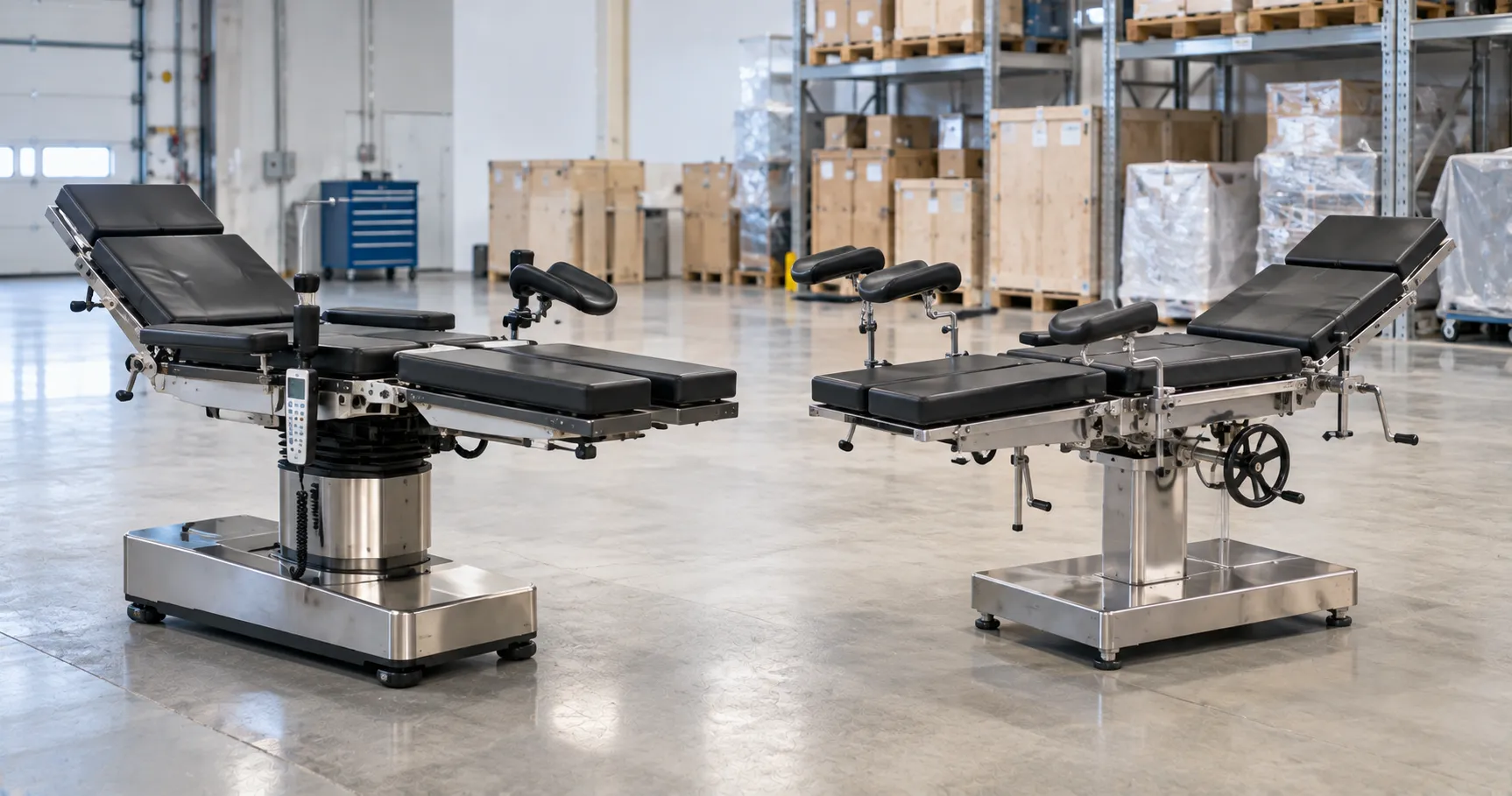
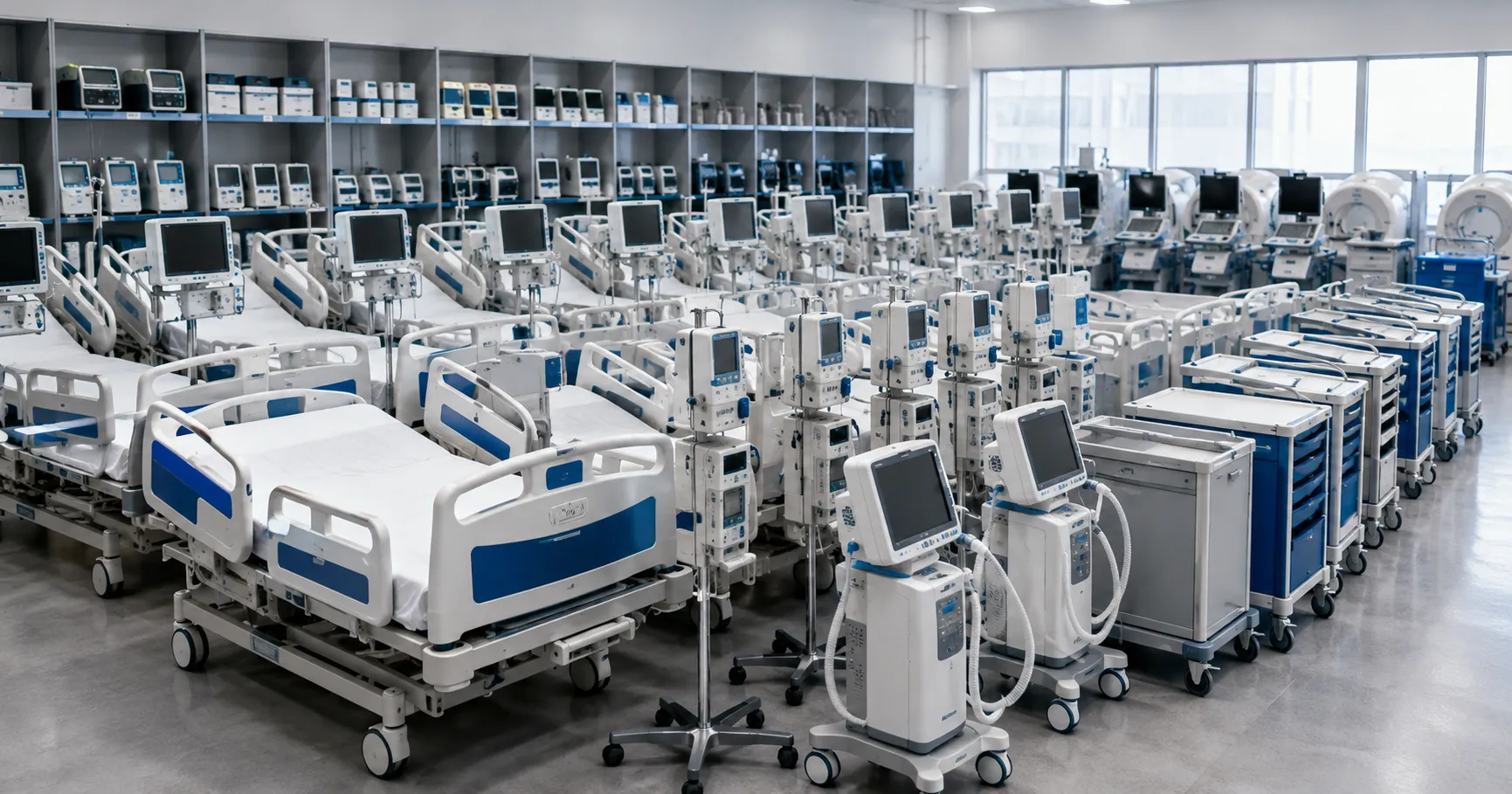
Hospital equipment standardisation helps healthcare facilities reduce unnecessary variation in medical devices, accessories, training needs, spare parts, maintenance schedules, service contracts, and procurement decisions. Instead of buying different models across departments without a clear plan, hospitals can create approved equipment lists that support clinical workflow, biomedical maintenance, supplier control, and lifecycle cost management.
For healthcare buyers, standardisation should be treated as a long-term procurement strategy. WHO notes that technical specifications provide guidelines for the procurement and acquisition of medical devices, underscoring the need for clear equipment requirements before purchase.
What Hospital Equipment Standardisation Means
Hospital equipment standardisation means selecting, purchasing, and managing medical equipment in accordance with approved specifications, preferred models, compatible accessories, service requirements, and departmental needs. It does not mean every department must use the same device for every purpose. It means equipment choices should be structured, documented, and aligned with clinical use.
For example, a hospital may standardise infusion pumps across wards, select approved patient monitor models for ICUs, use compatible accessories across emergency departments, or maintain a preferred list of hospital beds, sterilisation units, laboratory analysers, and diagnostic devices.
The goal is to make procurement more predictable, maintenance easier, staff training simpler, and equipment availability stronger.
Why Standardisation Improves Procurement
Medical equipment procurement becomes difficult when every department buys different models, brands, accessories, software platforms, and service contracts. This can increase cost and create operational confusion.
Standardisation helps hospitals:
-
Reduce duplicate buying
-
Improve price negotiation
-
Simplify spare part planning
-
Reduce training variation
-
Improve maintenance scheduling
-
Control accessory compatibility
-
Support warranty management
-
Improve supplier accountability
-
Create cleaner asset records
-
Strengthen replacement planning
WHO also highlights that medical equipment requires calibration, maintenance, repair, user training, and decommissioning, usually managed by clinical engineers. Standardisation supports these responsibilities by reducing unnecessary variation in equipment.
Key Areas to Standardise
Hospitals can standardise several parts of equipment procurement and management.
Device Models — Select approved models for commonly used equipment such as patient monitors, infusion pumps, syringe pumps, hospital beds, defibrillators, suction units, and vital signs devices.
Accessories and Consumables — Standardise cuffs, probes, sensors, cables, filters, tubing, batteries, chargers, mounts, and disposable items where clinically appropriate.
Service Contracts — Align service terms, response times, preventive maintenance schedules, spare part availability, and warranty coverage.
Training Requirements — Use consistent device platforms to reduce the need for repeated staff training and user errors.
Software and Connectivity — Review software versions, update policies, data export, interoperability, cybersecurity documents, and system compatibility.
Documentation — Maintain standard records for specifications, manuals, service history, calibration, warranty, compliance files, and decommissioning.
Facilities sourcing through regulated and certified equipment suppliers worldwide should request complete specifications, accessory lists, warranty terms, service support, spare parts, and documentation before approving any equipment category.
Standardisation and Technical Specifications
Technical specifications are the foundation of better procurement. A clear specification helps buyers compare devices fairly and avoid unsuitable purchases.
A good specification should include:
-
Intended clinical use
-
Required features
-
Patient group
-
Department use
-
Power requirements
-
Accessories
-
Consumables
-
Installation needs
-
Training needs
-
Maintenance requirements
-
Calibration requirements
-
Warranty terms
-
Service response time
-
Compliance documents
-
Cybersecurity requirements
-
Data export requirements
Specifications should be detailed enough to guide procurement but not so narrow that they unfairly block suitable alternatives.
Standardisation and Total Cost of Ownership
The lowest purchase price is not always the best procurement decision. A device may be cheaper at purchase but expensive to maintain, difficult to repair, dependent on costly consumables, or poorly supported by suppliers.
Standardisation helps procurement teams review the total cost of ownership, including:
-
Device price
-
Accessories
-
Consumables
-
Installation
-
Training
-
Software
-
Service contracts
-
Preventive maintenance
-
Calibration
-
Spare parts
-
Downtime
-
Repairs
-
Replacement planning
When hospitals standardise equipment groups, they can compare real lifecycle costs rather than only the purchase price.
Role of Biomedical Engineering
Biomedical engineering teams play an important role in standardisation. They understand service history, spare-part availability, recurring faults, calibration needs, downtime, and supplier performance.
Before procurement approval, biomedical teams should review:
-
Service requirements
-
Maintenance frequency
-
Spare part availability
-
Calibration needs
-
Technical documentation
-
Past repair history
-
Supplier support
-
Training needs
-
Device compatibility
-
End-of-life risk
WHO maintenance guidance explains that maintenance strategies include inspection, preventive maintenance, and corrective maintenance, with preventive maintenance helping extend equipment life and reduce failure rates.
Standardisation and Interoperability
Modern hospital equipment often needs to connect with other systems. Patient monitors, laboratory analysers, imaging systems, infusion platforms, smart beds, and asset management tools may exchange data with hospital systems. The
FDA defines medical device interoperability as the ability to safely, securely, and effectively exchange and use information among devices, products, technologies, or systems.
Procurement teams should review whether standardised equipment can connect with:
-
Electronic medical records
-
PACS
-
LIS
-
Nurse call systems
-
Central monitoring stations
-
Asset management systems
-
Maintenance dashboards
-
Cloud platforms
-
Reporting systems
Interoperability should be part of standardisation because disconnected equipment can create extra manual work and data gaps.
Cybersecurity in Equipment Standardisation
Standardising connected equipment also helps hospitals manage cybersecurity more consistently. When a hospital uses many unrelated device platforms, it becomes harder to track software versions, updates, remote service rules, access controls, and end-of-life risks.
Procurement teams should standardise cybersecurity expectations, such as:
-
Software update policy
-
Patch support
-
Access control
-
Remote service approval
-
Audit logs
-
Encryption
-
User permissions
-
Password rules
-
Data storage
-
End-of-life data removal
-
Supplier cybersecurity documents
Standardised cybersecurity requirements help hospitals compare suppliers more clearly and reduce unmanaged risk.
Supplier Standardisation
Supplier standardisation does not mean using only one supplier for everything. It means creating clear supplier criteria and approving vendors based on reliability, documentation, service support, spare parts, compliance, and communication.
Supplier review should include:
-
Product quality
-
Documentation quality
-
Warranty terms
-
Service response
-
Spare part access
-
Training support
-
Export support
-
Compliance records
-
Cybersecurity transparency
-
Past performance
Suppliers and manufacturers advertising to global healthcare buyers should provide clear product information, service terms, documentation, and support details so healthcare buyers can make structured procurement decisions.
Standardisation by Department
Different departments need different standardisation plans.
ICU — Standardise monitors, ventilators, infusion pumps, syringe pumps, ICU beds, oxygen accessories, and emergency devices.
Emergency Department — Standardise defibrillators, crash carts, oxygen systems, suction units, ECG machines, and transport equipment.
Operating Room — Standardise surgical lights, operating tables, electrosurgical units, anaesthesia workstations, endoscopy systems, and surgical displays.
Laboratory — Standardise analysers, sample handling systems, reagents, service contracts, quality-control records, and result interfaces.
Wards — Standardise vital signs monitors, hospital beds, medication trolleys, infusion pumps, nurse call accessories, and patient mobility devices.
CSSD — Standardise autoclaves, washer-disinfectors, sterilisation packaging, indicators, tracking records, and maintenance schedules.
Department-level standardisation should be practical and based on real workflows.
Common Mistakes to Avoid
Hospitals should avoid these standardisation mistakes.
Standardising Without Clinical Input — Doctors, nurses, technicians, and department users should review equipment before final approval.
Choosing One Model for Every Use — Different departments may need different specifications.
Ignoring Accessories — Accessories can create major cost and compatibility problems.
Skipping Biomedical Review — Maintenance history and spare part availability should influence buying decisions.
Focusing Only on Purchase Price — Lifecycle cost is often more important than initial price.
Ignoring Interoperability — Connected equipment should fit hospital systems where required.
No Review Cycle — Standardised lists should be reviewed when equipment becomes outdated or unsupported.
International Sourcing Considerations
Hospital equipment standardisation is especially useful when sourcing equipment internationally. Buyers should define approved specifications, documentation requirements, warranty terms, spare parts and accessories, service expectations, training requirements, cybersecurity documents, and compliance requirements before ordering.
Healthcare groups managing several facilities may benefit from structured distribution and reseller partnership arrangements. Standardised equipment lists, service records, spare part planning, supplier requirements, and procurement documents can reduce variation across hospitals.
Buyers should confirm whether they need standardised equipment packages for ICUs, wards, emergency departments, operating rooms, laboratories, CSSD areas, diagnostic centres, or complete hospital projects. For project-based sourcing, buyers can contact the Medigear.uk team for supply support to discuss availability, documentation, export needs, and procurement requirements.
Future Role of Equipment Standardisation
Hospital equipment standardisation will continue to support better procurement as healthcare facilities use more connected devices, smart systems, software-enabled equipment, digital maintenance records, and lifecycle dashboards.
The strongest procurement strategies will combine clinical input, biomedical review, supplier evaluation, maintenance planning, interoperability checks, cybersecurity review, and total cost analysis.
Standardisation should not limit innovation. It should help hospitals buy the right equipment more consistently, maintain it more effectively, and replace it at the right time.
Final Thoughts
Hospital equipment standardisation helps healthcare facilities improve procurement quality, reduce unnecessary variation, simplify maintenance, control accessory planning, improve supplier management, and support lifecycle cost decisions.
The right standardisation strategy should include clinical input, biomedical review, technical specifications, supplier evaluation, interoperability checks, cybersecurity requirements, training plans, maintenance records, and total cost analysis. Standardisation works best when it supports real hospital workflow rather than only administrative control.
Disclaimer
Medigear.uk is a global medical equipment supplier, exporter, and distributor. The content published on this site is intended for educational and product awareness purposes only. Nothing on this page constitutes medical advice, clinical guidance, procurement consulting, cybersecurity advice, legal advice, regulatory advice, or treatment recommendations. All healthcare procurement, technology, legal, regulatory, facility, biomedical, and clinical decisions should be made by qualified professionals and compliant procurement teams operating within the regulatory frameworks of their respective countries.