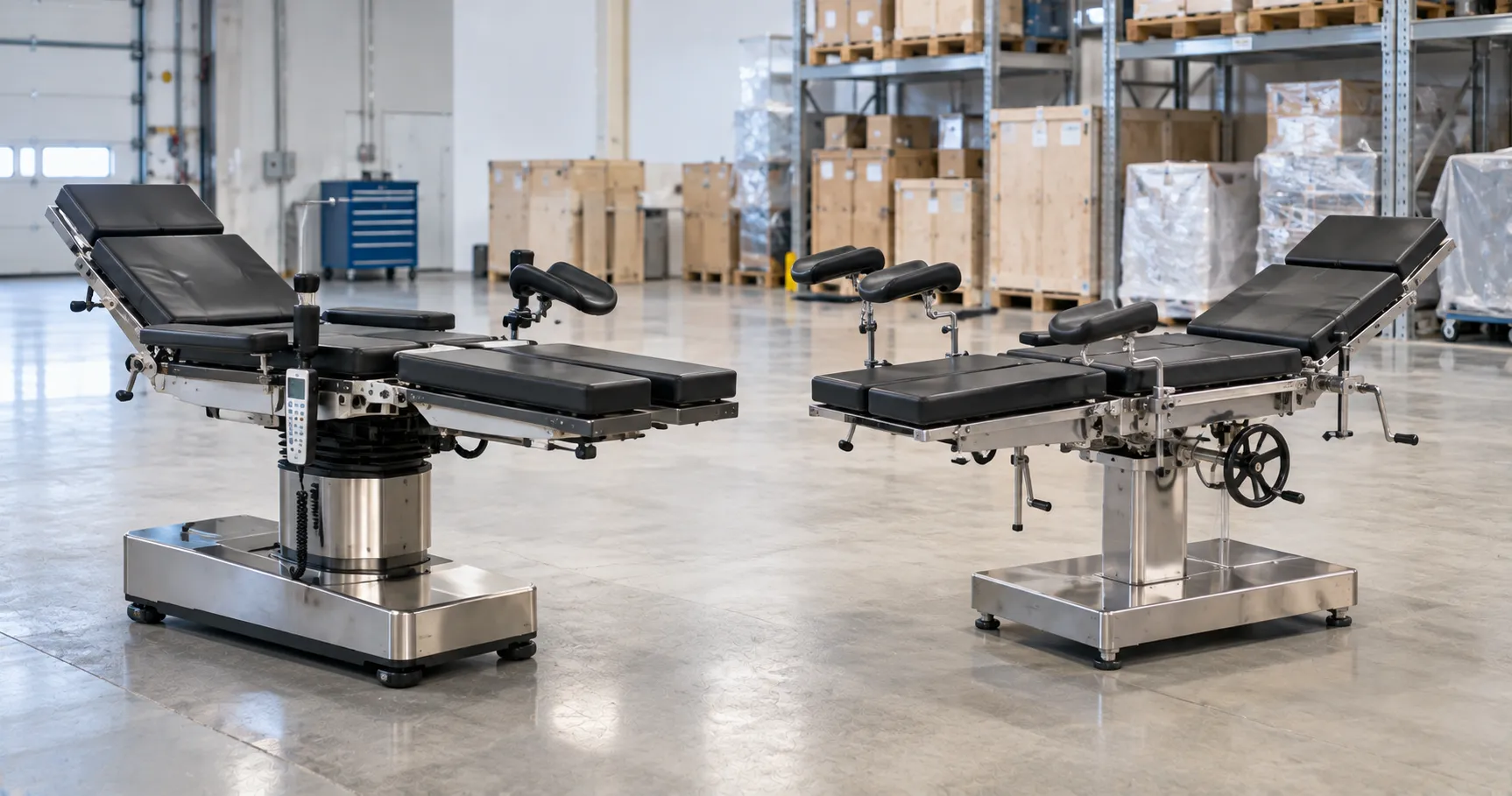

Healthcare teams often notice equipment maintenance problems only after a device fails, a department faces downtime, or a service record is missing during review. A patient monitor may need repeated repairs, an infusion pump may be overdue for inspection, or a diagnostic device may stay unused because a small replacement part is unavailable. These situations affect clinical workflow, staff confidence, procurement budgets, and long-term equipment value.
For healthcare buyers, hospital equipment maintenance planning should begin before equipment is purchased. WHO explains that a maintenance strategy includes inspection, preventive maintenance, and corrective maintenance, with preventive maintenance intended to extend equipment life and reduce failure rates. This guide explains how healthcare teams can plan service schedules, maintain records, manage supplier support, manage spare parts, control downtime, and make lifecycle replacement decisions.
How Maintenance Planning Supports Clinical Equipment Decisions
Clinical Risk-Based Maintenance — Maintenance planning should reflect the criticality of each device to patient care, workflow, and departmental continuity. A ventilator, defibrillator, patient monitor, anaesthesia workstation, laboratory analyser, sterilisation unit, or infusion pump may require closer planning than low-risk furniture or basic accessories.
Inspection Before Failure — Maintenance should not wait for breakdowns. In practice, biomedical teams often find that small issues such as weak batteries, worn cables, loose connectors, alarm faults, sensor drift, or damaged accessories can be detected before they interrupt service.
Preventive and Corrective Maintenance Balance — Preventive maintenance reduces avoidable failure, while corrective maintenance responds to actual faults. WHO’s maintenance guidance describes performance inspections, safety inspections, preventive maintenance, and corrective maintenance as parts of a maintenance strategy, making planned inspection a central part of equipment control.
Lifecycle Service Accountability — A maintenance plan gives clear responsibility to biomedical engineers, clinical users, procurement teams, suppliers, finance teams, and facility managers. It helps teams decide who reports faults, who approves repairs, who manages spare parts, and who reviews replacement timing.
Where Maintenance Planning Matters Across Healthcare Settings
Large Teaching Hospitals — These facilities manage thousands of assets across ICU, operating rooms, emergency departments, imaging, laboratories, CSSD, outpatient areas, wards, and rehabilitation services. Facilities that have deployed equipment at scale tend to report better uptime when asset registers, service schedules, and maintenance responsibilities are standardised across departments.
District and Regional Hospitals — These hospitals often depend on durable equipment with limited backup capacity. Maintenance planning helps teams reduce disruption by scheduling inspections, keeping essential parts in stock, and reviewing recurring fault patterns before devices become unreliable.
Facilities sourcing through regulated and certified equipment suppliers worldwide should request service manuals, maintenance schedules, warranty terms, spare parts lists, conformity records, and supplier support routes before confirming equipment orders.
Community Health Centres — Smaller facilities may have limited technical staff, so maintenance plans should be simple, visible, and practical. One aspect that surprises first-time buyers is how often basic items such as batteries, cuffs, probes, cables, filters, lamps, or chargers affect device availability.
Mobile and Point-of-Care Services — Mobile healthcare teams need maintenance planning for transport wear, battery charging, protective cases, cleaning routines, field troubleshooting, and replacement accessories. Equipment used outside fixed clinical rooms often faces more movement, variable power conditions, and higher handling risk.
Maintenance Details That Change Equipment Value
Asset Register Accuracy — A maintenance plan starts with a clean asset register. Each device should have a model number, serial number, asset code, department, location, supplier, warranty date, service interval, and responsible team.
Service Schedule and Inspection Type — Healthcare teams should define which checks are visual, functional, electrical, safety-related, performance-based, or calibration-related. WHO’s laboratory quality guidance recommends planning preventive maintenance and calibration for each piece of equipment on an annual schedule so teams can see when equipment must be maintained or calibrated.
Calibration and Performance Verification — Some equipment needs calibration or performance checks to support reliable use. Devices such as infusion pumps, patient monitors, ventilators, laboratory analysers, weighing systems, anaesthesia devices, and selected diagnostic equipment should be reviewed according to device type, manufacturer guidance, and applicable local regulatory standards.
Digital Records and Data-Driven Decisions — Modern maintenance planning increasingly relies on digital systems, service dashboards, fault logs, and asset records. WHO’s recent publication on inventory and maintenance management information systems addresses preventive, corrective, and predictive maintenance approaches, quality management systems, reporting, and data-driven decision-making.
Procurement Evaluation Guidance for Maintenance Planning
Total Cost of Ownership Review — Healthcare teams should compare purchase price with maintenance intervals, spare parts, consumables, calibration, service contracts, engineer access, downtime risk, warranty support, and replacement timing. WHO states that effective health technology procurement practice leads to safe, equitable, and high-quality healthcare, thereby supporting evaluation of long-term service value rather than the purchase price alone.
Supplier Service Evidence — Procurement teams should request service manuals, preventive maintenance instructions, warranty terms, spare part lists, training support, fault-reporting routes, and repair responsibilities before purchase. Suppliers and manufacturers advertising to global healthcare buyers should expect healthcare teams to request service evidence, not only quotation details.
Compliance Variation by Destination Market — Requirements differ considerably across healthcare systems. Buyers should confirm applicable local regulatory standards, such as CE, FDA, or their regional equivalents, where relevant to the device category, risk level, maintenance expectations, and destination market.
Training and User Reporting — Maintenance planning depends on staff reporting faults early and using equipment correctly. Clinical users should know how to identify visible damage, low-battery performance, alarm issues, accessory faults, cleaning problems, and service labels indicating maintenance due dates.
Healthcare networks managing equipment across multiple facilities can reduce service variation through structured distribution and reseller partnership arrangements. Buyers with maintenance planning questions, supplier documentation needs, or international sourcing requirements can contact the Medigear.uk team for supply support before confirming procurement decisions.
Service Life, Repair Planning, and Downtime Control
Preventive Maintenance Discipline — Preventive maintenance should be scheduled from the installation stage. A device that is entered into the asset register late may miss early inspection dates, warranty opportunities, or service planning records.
Spare Parts and Consumables Control — Spare parts availability directly affects uptime. In markets where local support is limited, a device can become unavailable because of small but essential parts such as probes, batteries, sensors, filters, lamps, cables, boards, or reagents.
Corrective Maintenance Pathways — Corrective maintenance should have a clear route from fault reporting to repair approval and return to service. The plan should define who logs the fault, who checks clinical risk, who contacts the supplier, who approves costs, and who confirms the device is safe to use again.
Global Demand and International Maintenance Sourcing
Different Facility Priorities — Large hospitals may prioritise digital maintenance systems, service contracts, asset dashboards, and replacement forecasting. Clinics, district hospitals, community health centres, and mobile healthcare providers may focus more on simple service routines, durable equipment, local spare parts, and clear warranty routes.
Export Documentation and Service Continuity — International buyers should request manuals, service guides, spare parts lists, conformity records, invoices, packing lists, warranty files, and supplier contact details before shipment. Equipment sourcing is stronger when maintenance support is confirmed before the device reaches the facility.
Connected Equipment and Interoperability — Connected medical equipment may need software records, data export guidance, cybersecurity notes, and system compatibility details. The FDA defines medical device interoperability as the ability to safely, securely, and effectively exchange and use information among devices, products, technologies, or systems.
Final Thoughts
Hospital equipment maintenance planning helps healthcare teams protect equipment availability, control service costs, reduce downtime, and extend useful service life. The strongest plans start before purchase, continue through installation, and remain active through daily use, repair, replacement, and decommissioning decisions.
Procurement teams should involve biomedical engineers, clinicians, finance leaders, facility managers, IT teams, logistics coordinators, and suppliers when planning maintenance requirements. Clear service schedules, complete records, reliable spare parts, supplier accountability, and structured replacement triggers help healthcare facilities manage equipment more confidently across the full lifecycle.
Disclaimer
Medigear.uk is a global medical equipment supplier, exporter, and distributor. The content published on this site is intended for educational and product awareness purposes only. Nothing on this page constitutes medical advice, clinical guidance, or treatment recommendations. All healthcare procurement and clinical decisions should be made by qualified medical professionals and compliant procurement teams operating within the regulatory frameworks of their respective countries.