Future-ready ICU equipment helps hospitals prepare critical care units for complex patient monitoring, respiratory support, emergency response, infection control, clinical documentation, and equipment uptime. A modern ICU depends on reliable devices that support continuous care, rapid decision-making, and coordinated workflows among doctors, nurses, respiratory teams, biomedical engineers, and procurement teams.
For healthcare Buyers, ICU equipment planning should focus on clinical need, patient volume, device reliability, service support, interoperability, cybersecurity, maintenance, documentation, and total cost of ownership. The FDA describes digital health technologies as systems that use computing platforms, connectivity, software, and sensors for healthcare and related uses, which is relevant to connected ICU devices and smart monitoring systems.
What Future-Ready ICU Equipment Means
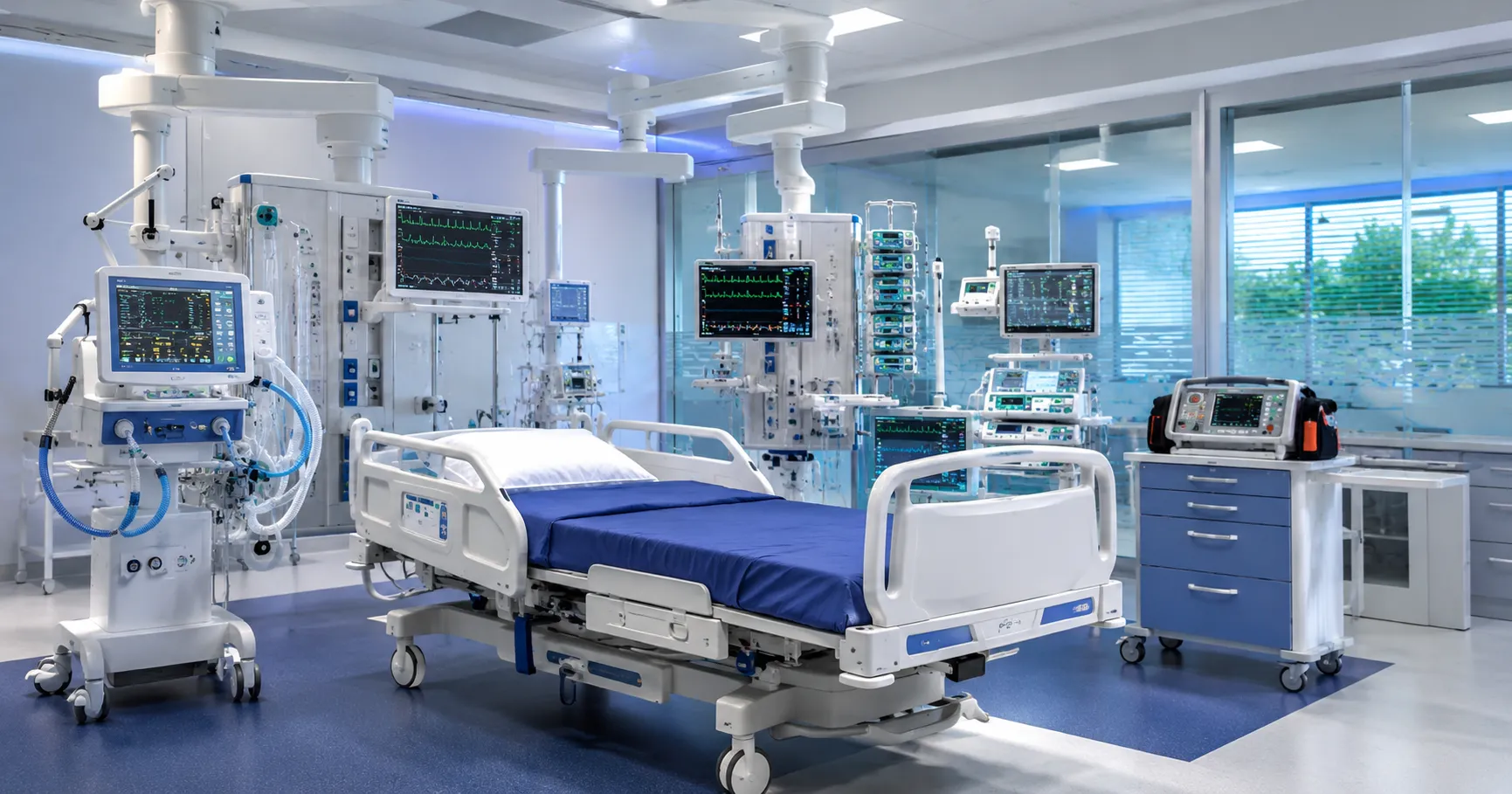
Future-ready ICU equipment refers to critical care devices that are reliable, serviceable, connected where required, scalable, and suitable for intensive care workflows. These devices may include patient monitors, ventilators, infusion pumps, syringe pumps, ICU beds, oxygen systems, suction units, defibrillators, central monitoring stations, blood gas analysers, ultrasound devices, patient warming systems, and asset tracking tools.
Future-ready does not mean buying the most expensive technology. It means choosing equipment that can support current clinical needs while remaining useful as hospital workload, digital systems, maintenance requirements, and critical care services develop.
Key Equipment Needed in Critical Care Units
ICU planning should include both primary life-support devices and supporting equipment.
Patient Monitoring Systems — Multiparameter monitors track vital signs and may connect to central stations or clinical systems.
Ventilators — ICU ventilators support patients who need respiratory assistance. Buyers should review modes, alarms, oxygen compatibility, humidification, accessories, and service support.
Infusion and Syringe Pumps — These devices support controlled delivery of fluids and medicines. Standardisation can help reduce variation in training and accessories.
ICU Beds — Critical care beds should support positioning, pressure injury prevention, patient handling, weighing, and safe access for staff.
Oxygen and Suction Systems — Oxygen supply, flowmeters, regulators, suction units, and pipeline support are essential for critical care readiness.
Defibrillators and Emergency Devices — Emergency response equipment should be available, maintained, and charged, and easily accessible to trained staff.
Point-of-Care Diagnostics — Blood gas analysers, portable ultrasound, ECG devices, and selected bedside testing tools can support faster clinical review.
Facilities sourcing through regulated and certified equipment suppliers worldwide should confirm device specifications, accessories, documentation, warranty, spare parts, training, and service access before procurement.
Why Future-Ready ICU Planning Matters
Critical care units must be ready for unstable patients, emergency admissions, respiratory support, post-operative recovery, sepsis care, trauma care, and complex monitoring. Poor equipment planning can create delays, equipment shortages, maintenance gaps, and staff workflow problems.
-
A strong ICU plan helps hospitals:
-
Improve equipment availability
-
Reduce avoidable downtime
-
Standardise accessories and training
-
Support faster clinical response
-
Improve maintenance planning
-
Prepare for future capacity needs
-
Organise compliance records
-
Control lifecycle cost
WHO maintenance guidance explains that a maintenance strategy includes inspection, preventive maintenance, and corrective maintenance, and that preventive maintenance helps extend equipment life and reduce failure rates.
Interoperability in ICU Equipment
Connected ICU equipment can support better visibility when data moves safely between devices and systems. The FDA defines medical device interoperability as the ability to safely, securely, and effectively exchange and use information among devices, products, technologies, or systems.
Buyers should check whether ICU devices can connect with central monitoring stations, electronic records, ventilator systems, infusion platforms, nurse call systems, asset management tools, and maintenance dashboards.
Important questions include:
-
Can the device export useful data?
-
Can it connect with existing hospital systems?
-
How are alarms routed?
-
How is patient identity matched?
-
What happens during downtime?
-
Are software updates controlled?
-
Can biomedical teams access service records?
Interoperability should improve ICU workflow, not create extra manual work.
Cybersecurity for Connected ICU Devices
Future-ready ICU equipment may include software, wireless connectivity, remote service tools, cloud dashboards, user accounts, or data storage. These features require a cybersecurity review before purchase and installation.
Procurement teams should ask suppliers about:
-
Access control
-
User permissions
-
Encryption
-
Remote service policy
-
Software update process
-
Patch support
-
Audit logs
-
Default password handling
-
Data storage
-
End-of-life data removal
Cybersecurity is especially important in ICUs because connected devices may support critical monitoring and workflow visibility.
Procurement Guidance for ICU Equipment
ICU procurement should involve intensivists, nurses, respiratory therapists, biomedical engineers, IT teams, infection control teams, finance teams, and procurement managers.
Define the ICU Level and Bed Count — Equipment needs depend on patient acuity, bed number, speciality services, and admission patterns.
Review Total Cost of Ownership — Buyers should include device price, accessories, consumables, software, service contracts, spare parts, maintenance, calibration, training, and replacement planning.
Check Supplier Support — Suppliers and manufacturers advertising to global healthcare buyers should provide specifications, warranty terms, service support, spare parts, user manuals, and compliance documents.
Standardise Where Possible — Standardising monitors, pumps, beds, accessories, and service contracts can reduce training burden and maintenance complexity.
Plan Backup Equipment — Critical care areas need backup devices for emergencies, breakdowns, cleaning cycles, and patient transfer.
Maintenance and Uptime Planning
ICU equipment must be ready when patients need it. Maintenance planning should include preventive maintenance schedules, calibration where required, battery checks, alarm testing, cable inspection, software updates, cleaning instructions, service records, and spare part planning.
Biomedical teams should track repeated faults, downtime, warranty claims, and repair costs. Devices with high failure rates or limited spare parts support should be considered for replacement.
Common ICU Equipment Planning Mistakes
Hospitals should avoid these mistakes.
Buying Without Capacity Review — ICU equipment should match patient volume, bed count, and clinical acuity.
Ignoring Accessories — Sensors, probes, cuffs, circuits, humidifiers, batteries, cables, and mounts affect real use.
Weak Maintenance Planning — ICU equipment needs structured service and quick repair pathways.
No Cybersecurity Review — Connected monitors, ventilators, pumps, and dashboards should be reviewed before use on the network.
Poor Alarm Planning — Alarm settings, escalation, and staff response workflows must be clear.
No Backup Devices — Critical care areas need spare equipment for breakdowns and emergencies.
Ignoring Staff Training — Equipment is only useful when staff are trained to use it safely.
International Sourcing Considerations
Future-ready ICU equipment can be sourced internationally when buyers clearly define bed count, clinical services, device categories, accessories, power requirements, oxygen compatibility, documentation, warranty, spare parts, service access, cybersecurity expectations, and compliance requirements.
Healthcare groups managing several hospitals may benefit from structured distribution and reseller partnership arrangements. Standardising ICU devices, accessories, training, service contracts, and maintenance records can reduce variation across facilities.
Buyers should confirm whether they need patient monitors, ventilators, infusion pumps, syringe pumps, ICU beds, oxygen systems, suction units, defibrillators, central stations, blood gas analysers, or complete ICU packages. For project-based sourcing, buyers can contact the Medigear.uk team for supply support to discuss availability, documentation, export needs, and procurement requirements.
Future Role of ICU Equipment Planning
Future-ready ICU planning will continue to focus on connected monitoring, respiratory support, equipment uptime, data visibility, predictive maintenance, cybersecurity, standardisation, and lifecycle cost control. Hospitals should choose ICU equipment that supports clinical reliability, staff workflow, service readiness, and long-term procurement value.
Final Thoughts
Future-ready ICU equipment helps hospitals strengthen critical care planning, improve device availability, support respiratory care, manage alarms, organise maintenance, and prepare for changing patient needs. The best ICU equipment strategy combines reliable devices, trained staff, supplier support, preventive maintenance, cybersecurity review, and strong documentation.
Healthcare buyers should compare not only the purchase price but also accessories, consumables, service access, spare parts, software support, warranty, training, and lifecycle costs. ICU planning should support daily care, emergency readiness, and long-term equipment sustainability.
Disclaimer
Medigear.uk is a global medical equipment supplier, exporter, and distributor. The content published on this site is intended for educational and product awareness purposes only. Nothing on this page constitutes medical advice, clinical guidance, critical care advice, cybersecurity advice, legal advice, regulatory advice, or treatment recommendations. All healthcare procurement, technology, legal, regulatory, facility, and clinical decisions should be made by qualified professionals and compliant procurement teams operating within the regulatory frameworks of their respective countries.