Medical equipment buyers often encounter terms such as FDA Cleared, FDA Approved, and FDA Registered when evaluating products. While these phrases are commonly used in the healthcare industry, they have different meanings and should not be used interchangeably. Understanding these distinctions is important for hospitals, clinics, laboratories, distributors, and procurement teams when making purchasing decisions.
Whether sourcing diagnostic imaging systems, patient monitoring devices, laboratory analysers, surgical equipment, or home healthcare products, understanding FDA clearance can help buyers evaluate documentation, supplier information, and regulatory compliance more effectively.
This guide explains what FDA-cleared medical equipment means, how the clearance process works, and the factors buyers should consider during procurement.
What Does FDA-Cleared Mean?
An FDA-cleared medical device is a product that has completed the applicable clearance process with the United States Food and Drug Administration (FDA), typically through the 510(k) premarket notification pathway. In general, this means the manufacturer has demonstrated that the device is substantially equivalent to a legally marketed predicate device for its intended use.
Not all medical devices require FDA clearance. The applicable regulatory pathway depends on the device type, classification, intended use, and relevant regulations.
FDA Cleared vs FDA Approved
These terms describe different regulatory pathways and should not be confused.
FDA Cleared
-
Commonly applies to many medical devices reviewed through the 510(k) process.
-
Indicates the device has met the applicable clearance requirements.
FDA Approved
-
Typically refers to products that require FDA Premarket Approval (PMA), often involving higher-risk medical devices.
-
PMA generally involves a different regulatory process than 510(k) clearance.
Understanding the distinction helps buyers interpret product documentation accurately.
Why FDA Clearance Matters
FDA clearance can be an important consideration when procuring equipment.
Benefits include:
Regulatory Documentation – Demonstrates that the applicable FDA clearance process has been completed.
Procurement Confidence – Supports product evaluation during purchasing.
Product Traceability – Helps organise regulatory documentation.
International Recognition – Some buyers consider FDA clearance, along with other regulatory requirements, when evaluating products.
Healthcare organisations should also consider local regulatory requirements in the country where the equipment will be used.
Medical Equipment That May Be FDA-Cleared
Many categories of medical equipment may be subject to FDA clearance, depending on their classification and intended use.
Examples include:
-
Patient monitoring systems.
-
Ultrasound equipment.
-
Digital X-ray systems.
-
ECG machines.
-
Pulse oximeters.
-
Infusion pumps.
-
Surgical instruments.
-
Endoscopy equipment.
-
Laboratory analysers.
-
Home healthcare devices.
Regulatory requirements vary according to the specific device and its intended application.
Healthcare organisations exploring international sourcing opportunities can discover more through buyer services.
Documentation Buyers Should Request
Healthcare buyers should request comprehensive documentation rather than relying solely on marketing statements.
Important documents may include:
-
Product specifications.
-
User manuals.
-
FDA clearance information, where applicable.
-
Technical documentation.
-
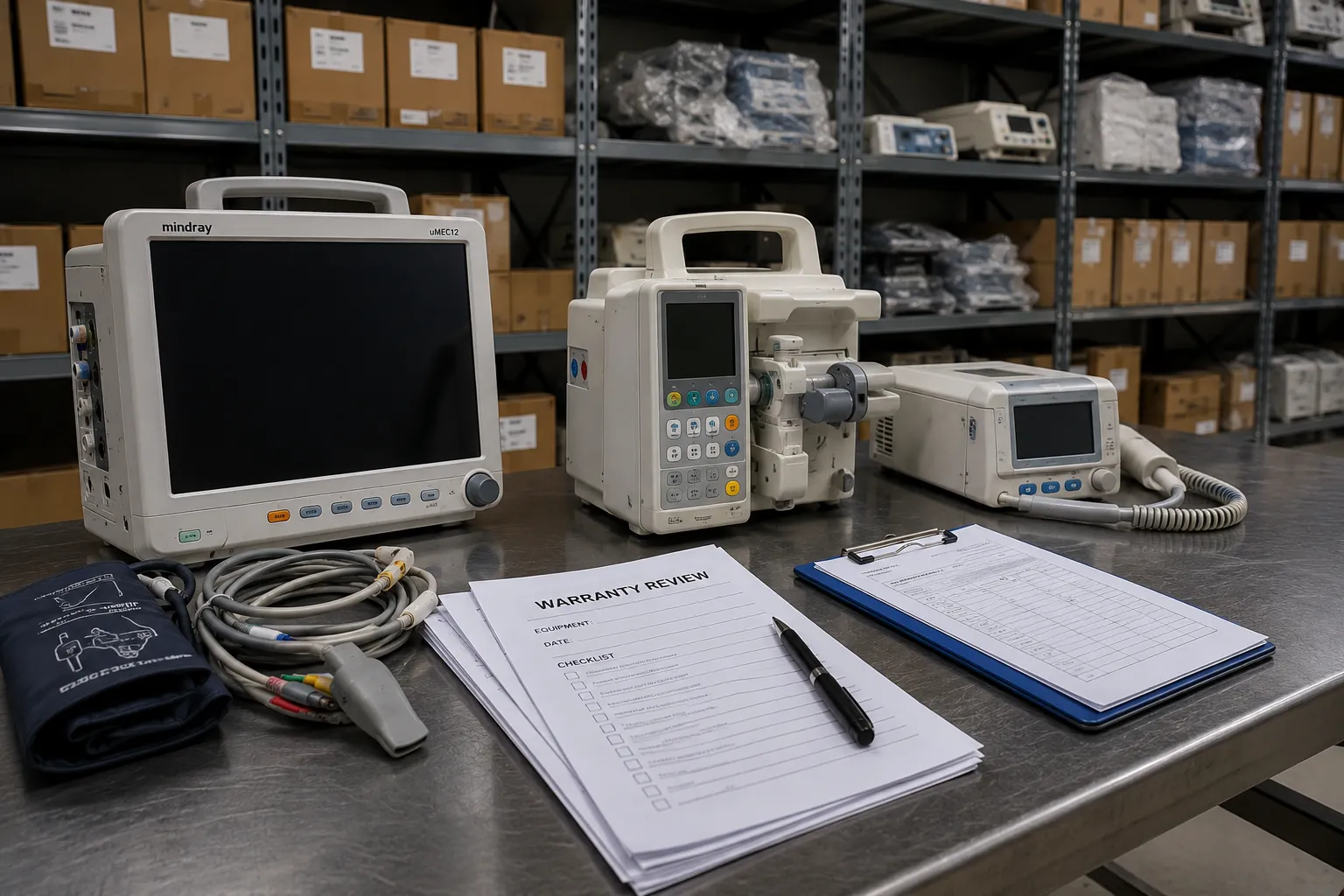
Warranty details.
-
Installation guidance.
-
Maintenance recommendations.
Reviewing complete documentation supports better procurement decisions.
Evaluating Supplier Reliability
Selecting a trusted supplier remains just as important as evaluating the equipment itself.
Look for suppliers offering:
-
Technical expertise.
-
Product consultation.
-
Transparent documentation.
-
Installation guidance.
-
Logistics support.
-
After-sales service.
-
Spare parts availability.
Reliable suppliers help simplify procurement while supporting long-term equipment ownership.
Healthcare suppliers interested in expanding their international distribution network can explore: business suppliers.
Consider Total Cost of Ownership
Regulatory status is only one part of the procurement process.
Healthcare organisations should also evaluate:
-
Purchase price.
-
Installation costs.
-
Maintenance expenses.
-
Service contracts.
-
Replacement parts.
-
Equipment lifespan.
-
Energy consumption.
-
Software updates were applicable.
Considering total ownership costs provides a more complete picture of long-term value.
International Procurement Considerations
FDA clearance may be relevant when importing equipment into certain markets, but buyers should also verify local regulatory requirements.
Important considerations include:
-
National import regulations.
-
Product registration requirements.
-
Customs documentation.
-
Local compliance obligations.
-
Installation planning.
Meeting local requirements remains essential even when equipment has FDA clearance.
Common Misunderstandings
Several misconceptions exist regarding FDA-cleared medical equipment.
FDA clearance does not automatically mean a product is suitable for every healthcare application.
FDA clearance is different from FDA approval and FDA registration.
FDA clearance does not eliminate the need for proper installation, maintenance, training, or routine servicing.
Healthcare organisations should evaluate equipment based on operational requirements, documentation, supplier support, and long-term service availability.
Procurement Best Practices
Before purchasing FDA-cleared medical equipment, healthcare buyers should:
-
Define clinical and operational requirements.
-
Verify applicable regulatory documentation.
-
Compare equipment specifications.
-
Evaluate supplier experience.
-
Review warranty and maintenance support.
-
Plan installation requirements.
-
Consider lifecycle costs.
-
Prepare staff training.
A structured procurement strategy supports successful equipment implementation and long-term operational efficiency.
Healthcare organisations interested in strategic partnerships can explore: business partners.
Businesses looking to increase their visibility within the healthcare industry can discover opportunities through business advertise.
For sourcing assistance, procurement guidance, and product enquiries, support is available through the contact team.
Conclusion
Understanding FDA-cleared medical equipment helps healthcare buyers make informed procurement decisions while navigating regulatory documentation more effectively. Although FDA clearance is an important consideration, it should be evaluated alongside equipment performance, supplier reliability, maintenance support, compatibility, and long-term operational requirements.
By combining regulatory awareness with strategic procurement planning, hospitals, clinics, laboratories, and distributors can select equipment that aligns with both operational needs and long-term healthcare goals.
Disclaimer
Medigear.uk is a medical equipment supplier and distributor. We do not provide legal, regulatory, or medical advice. This article is for general educational and informational purposes only. FDA requirements vary depending on the medical device and its intended use. Buyers should verify applicable regulatory requirements and consult the relevant authorities or manufacturers before making procurement decisions.