Medical equipment is only as reliable as the accuracy of the measurements it delivers. From patient monitors and infusion pumps to imaging systems and laboratory analysers, healthcare professionals rely on precise equipment readings to make informed clinical decisions. Even minor measurement deviations can affect diagnoses, treatment plans, and patient outcomes. Without regular calibration, equipment accuracy may gradually decline due to normal wear, environmental conditions, or continuous use, increasing the risk of errors and unexpected equipment failures.
For buyers' services responsible for selecting and managing medical equipment across healthcare facilities worldwide, calibration should be considered an essential part of equipment lifecycle management rather than a routine technical task. A structured calibration programme helps maintain measurement accuracy, supports compliance with applicable local regulatory standards, reduces operational downtime, and protects long-term investments in healthcare technology. This article explains why medical equipment calibration matters, how it supports safe healthcare delivery, and the best practices organisations should follow to maintain equipment performance throughout its operational life.
How Medical Equipment Calibration Supports Accurate Clinical Decisions
Medical equipment calibration is the process of comparing a device's measurements against recognised reference standards and making adjustments where necessary to ensure accurate performance. Regular calibration confirms that the equipment continues to operate within manufacturer specifications and delivers reliable results throughout its service life.
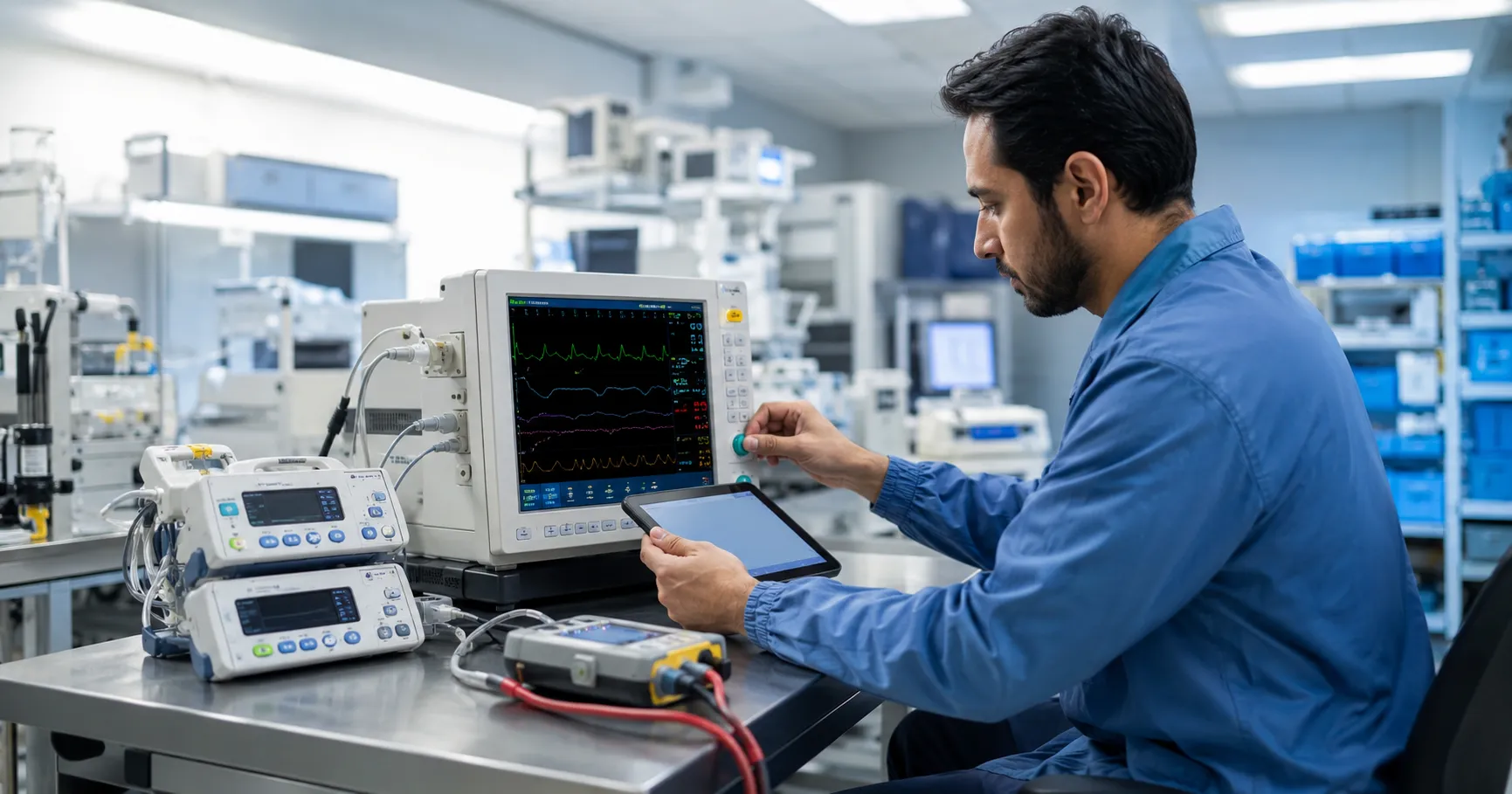
Maintaining Measurement Accuracy — Medical devices must consistently produce accurate readings to support effective diagnosis and treatment. Equipment such as blood pressure monitors, infusion pumps, ventilators, laboratory analysers, and imaging systems depends on precise measurements for safe clinical operation. Experienced biomedical engineers often identify small measurement deviations during routine calibration before they become clinically significant. Correcting these variations early helps maintain confidence in clinical decision-making.
Protecting Patient Safety — Accurate equipment directly contributes to safer patient care. An incorrectly calibrated infusion pump may deliver inaccurate medication doses, while poorly calibrated diagnostic equipment could produce misleading results. Routine calibration reduces these risks by ensuring equipment continues to perform within accepted tolerances throughout normal clinical use.
Supporting Consistent Clinical Performance — Calibration ensures that medical devices deliver repeatable, reliable results under varying operating conditions. Consistent performance is particularly important in departments where equipment is used continuously, including intensive care, emergency medicine, diagnostic imaging, and clinical laboratories. Reliable measurements improve workflow efficiency while reducing the need for repeat examinations or additional testing.
Meeting Regulatory and Quality Requirements — Healthcare organisations are expected to maintain medical equipment in accordance with manufacturer recommendations and applicable local regulatory standards. Calibration records provide documented evidence that equipment has been tested, verified, and maintained appropriately. These records also support accreditation programmes, quality management systems, and regulatory inspections throughout the equipment lifecycle.
Healthcare Environments Where Calibration Is Essential
Medical equipment calibration is required across virtually every healthcare setting. Although calibration intervals and procedures vary by equipment type and manufacturer recommendations, maintaining measurement accuracy remains critical regardless of facility size or clinical speciality.
Hospitals and Acute Care Facilities — Hospitals operate a wide range of diagnostic and therapeutic equipment that must perform accurately under demanding clinical conditions. Critical care devices, anaesthesia systems, patient monitors, ventilators, and infusion pumps require scheduled calibration to ensure dependable operation. Healthcare organisations sourcing equipment through business suppliers often receive calibration guidance, service documentation, and technical support that simplify ongoing equipment management and regulatory compliance.
Diagnostic Imaging Departments — Imaging technologies such as X-ray, CT, MRI, ultrasound, and mammography systems require regular calibration to maintain image quality and diagnostic precision. Even minor deviations can reduce image consistency, potentially affecting clinical interpretation. Routine calibration helps preserve image accuracy while supporting reliable patient diagnosis.
Clinical Laboratories — Laboratory instruments perform thousands of analytical measurements that influence medical diagnoses and treatment planning. Calibration verifies that analysers continue to deliver accurate test results despite continuous operation and changing environmental conditions. Regular performance verification also supports laboratory quality assurance programmes and international accreditation standards.
Primary Care, Community Healthcare, and Mobile Services — Healthcare providers outside major hospitals also depend on calibrated equipment to deliver safe patient care. Portable diagnostic devices, patient monitoring systems, and point-of-care testing equipment are frequently transported between locations, making regular calibration especially important. A structured calibration programme helps maintain equipment reliability regardless of where healthcare services are delivered.
Technical Factors That Influence Medical Equipment Calibration
An effective calibration programme begins with understanding the technical requirements of each medical device. Calibration is not a one-size-fits-all process, as different equipment types have unique performance tolerances, operating conditions, and manufacturer recommendations. Procurement professionals who consider calibration requirements during equipment selection often reduce long-term maintenance costs while improving equipment reliability.
Manufacturer Calibration Specifications — Every medical device is supplied with recommended calibration procedures and service intervals based on its intended clinical application. Following these specifications helps maintain measurement accuracy, supports warranty conditions, and ensures equipment performs consistently throughout its operational life. Experienced biomedical engineers generally incorporate manufacturer guidance into comprehensive maintenance schedules while adapting calibration frequency to actual equipment usage.
Reference Standards and Traceability — Reliable calibration depends on certified reference instruments traceable to recognised national or international measurement standards. Traceability provides confidence that calibration results are accurate and repeatable, supporting quality assurance programmes across healthcare facilities. Organisations should ensure calibration providers can demonstrate documented traceability and maintain appropriate certification for the equipment they service.
Environmental Conditions Affecting Accuracy — Temperature fluctuations, humidity, vibration, dust, and frequent transportation can gradually influence equipment performance. Devices used in mobile healthcare units or high-volume clinical environments often require more frequent calibration than equipment operating under controlled conditions. One aspect that surprises first-time buyers is that environmental factors can significantly affect measurement accuracy, even when equipment appears to function normally.
Digital Calibration Management Systems — Many modern healthcare organisations use computerised maintenance management systems (CMMS) or asset management platforms to schedule calibration activities, monitor due dates, store calibration certificates, and generate compliance reports. These systems reduce administrative workload while improving visibility across large equipment inventories. Digital record management also simplifies regulatory inspections and supports more effective lifecycle planning.
Evaluating Calibration Support During Medical Equipment Procurement
Calibration should be considered during the procurement process rather than after equipment has been installed. Choosing suppliers that provide comprehensive calibration support helps healthcare organisations maintain equipment accuracy, improve operational efficiency, and reduce lifecycle costs.
Assessing Total Cost of Ownership — The purchase price of medical equipment represents only part of the overall investment. Procurement teams should evaluate ongoing calibration costs, preventive maintenance requirements, replacement parts, technical support, software updates, and service availability throughout the equipment lifecycle. Facilities that include calibration expenses in their total cost-of-ownership calculations are better positioned to make financially sustainable procurement decisions.
Reviewing Supplier Service Capabilities — Healthcare organisations should determine whether suppliers offer manufacturer-approved calibration services, qualified biomedical engineers, technical documentation, calibration certificates, and responsive after-sales support. Increasingly, business advertise recognise that healthcare providers expect comprehensive technical services alongside equipment supply. Reliable calibration support contributes to consistent equipment performance and minimises operational disruption.
Understanding Compliance Requirements — Calibration programmes should comply with applicable local regulatory standards, manufacturer recommendations, and recognised quality management practices. Healthcare organisations operating internationally may encounter different documentation and inspection requirements across jurisdictions. Procurement professionals should verify that suppliers can provide calibration records and conformity documentation appropriate for the destination market.
Establishing Long-Term Technical Partnerships — Equipment calibration is an ongoing operational requirement, not a one-time service. Healthcare providers managing multiple facilities often benefit from developing business partners that include calibration planning, preventive maintenance, technical training, and lifecycle management support. These partnerships improve service continuity while helping organisations maintain consistent calibration standards across their healthcare networks.
Best Practices for Maintaining Calibration Accuracy Throughout Equipment Service Life
Regular calibration delivers the greatest value when combined with structured maintenance procedures, accurate documentation, and continuous performance monitoring. Healthcare organisations that integrate calibration into broader asset management programmes improve equipment reliability while supporting long-term operational efficiency.
Maintaining Comprehensive Calibration Records — Accurate documentation should include calibration certificates, service reports, reference standards used, performance verification results, corrective actions, and future calibration schedules. These records support quality management systems, regulatory inspections, warranty claims, and informed lifecycle management decisions. Well-maintained documentation also enables biomedical engineering teams to identify recurring performance trends and optimise future maintenance planning.
Training Clinical and Technical Personnel — Calibration accuracy depends not only on technical servicing but also on correct equipment handling by healthcare professionals. Staff should understand routine operational checks, equipment storage requirements, cleaning procedures, and the importance of promptly reporting any unusual equipment behaviour. Proper training reduces unnecessary wear while helping technical teams identify calibration issues before they affect clinical performance.
Monitoring Equipment Performance Continuously — Calibration should form part of a continuous equipment performance improvement programme rather than an isolated maintenance activity. Reviewing calibration history, repair frequency, equipment utilisation, and recurring measurement deviations helps healthcare organisations determine whether devices continue to operate safely and efficiently. In environments where local technical support may be limited, proactive monitoring helps reduce unexpected downtime, extend equipment lifespan, and maximise return on investment.
Final Thoughts
Medical equipment calibration is far more than a routine maintenance activity—it is a critical process that supports accurate diagnoses, effective treatments, and safe patient care. Every healthcare organisation depends on medical devices that deliver precise and consistent measurements, making regular calibration an essential part of equipment lifecycle management. Without a structured calibration programme, even high-quality medical equipment can gradually lose accuracy, increasing the risk of diagnostic errors, operational disruptions, and higher maintenance costs.
Successful calibration programmes combine scheduled performance verification, qualified technical expertise, comprehensive documentation, and ongoing monitoring of equipment performance. Healthcare organisations that integrate calibration into their preventive maintenance strategy are better equipped to reduce unexpected downtime, extend equipment service life, and maintain compliance with applicable local regulatory standards. Considering calibration requirements during the procurement process also enables organisations to select equipment supported by reliable technical services, certified calibration providers, and readily available spare parts.
As healthcare technology continues to advance, maintaining equipment accuracy will remain fundamental to delivering high-quality healthcare services. Investing in regular calibration not only protects valuable medical assets but also strengthens clinical confidence, improves operational efficiency, and supports better patient outcomes. A proactive approach to calibration ensures that healthcare providers can continue to deliver safe, reliable, and effective care while maximising the long-term value of their medical equipment investments.
Disclaimer
Medigear.uk is a global medical equipment supplier, exporter, and distributor. The content published on this site is intended for educational and product awareness purposes only. Nothing on this page constitutes medical advice, clinical guidance, or treatment recommendations. All healthcare procurement and clinical decisions should be made by qualified medical professionals and compliant procurement teams operating within the regulatory frameworks of their respective countries.