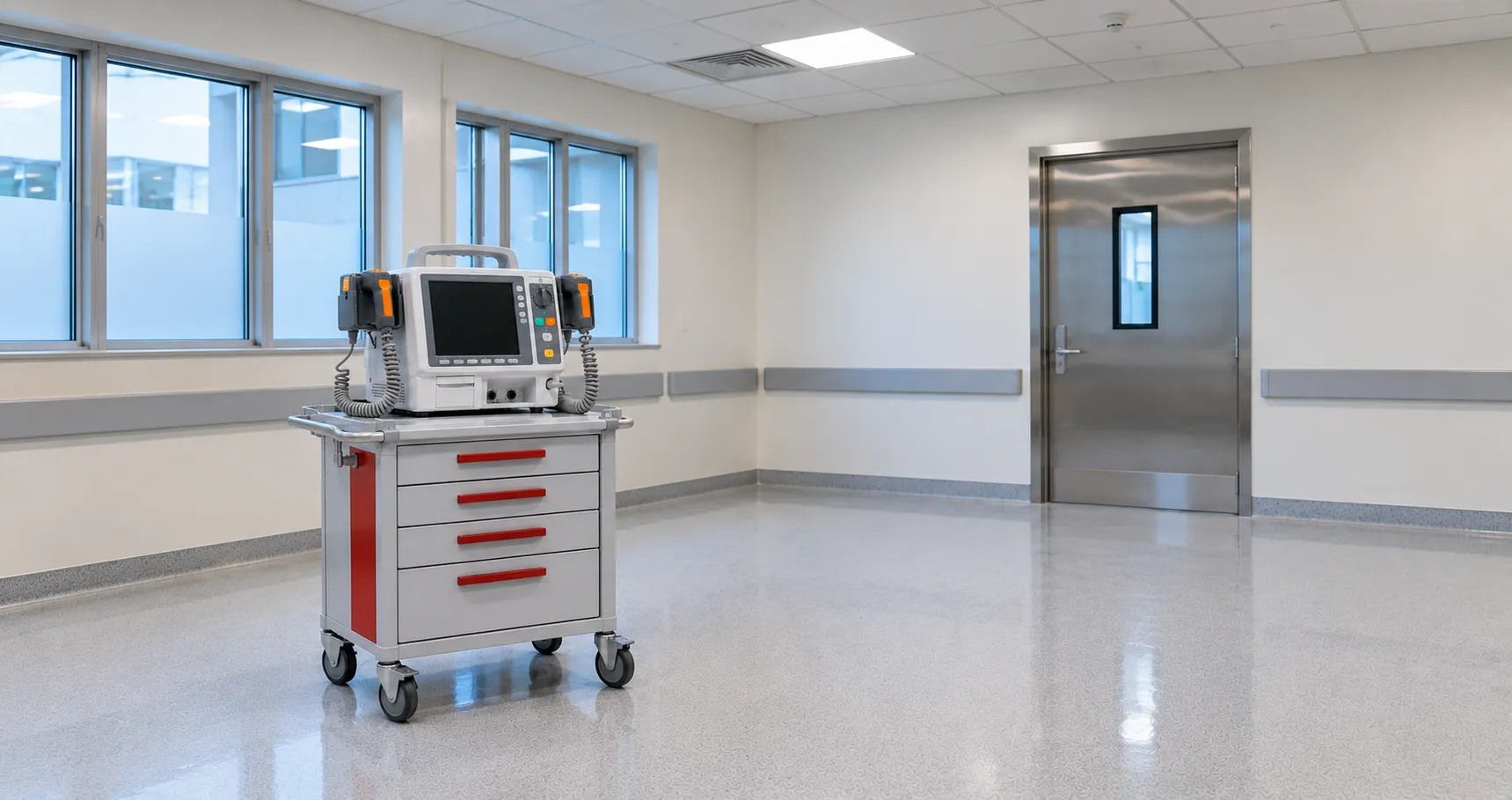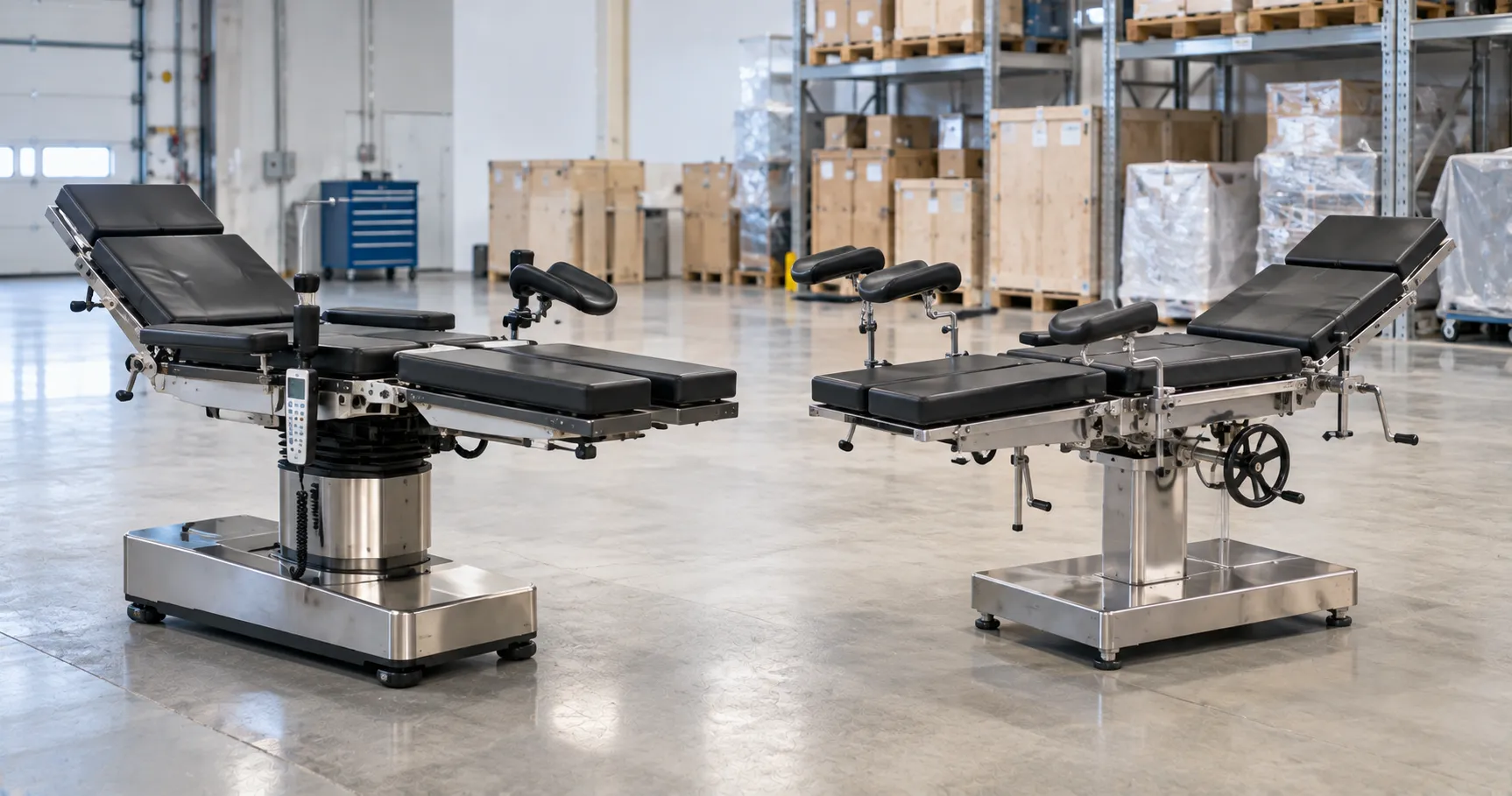
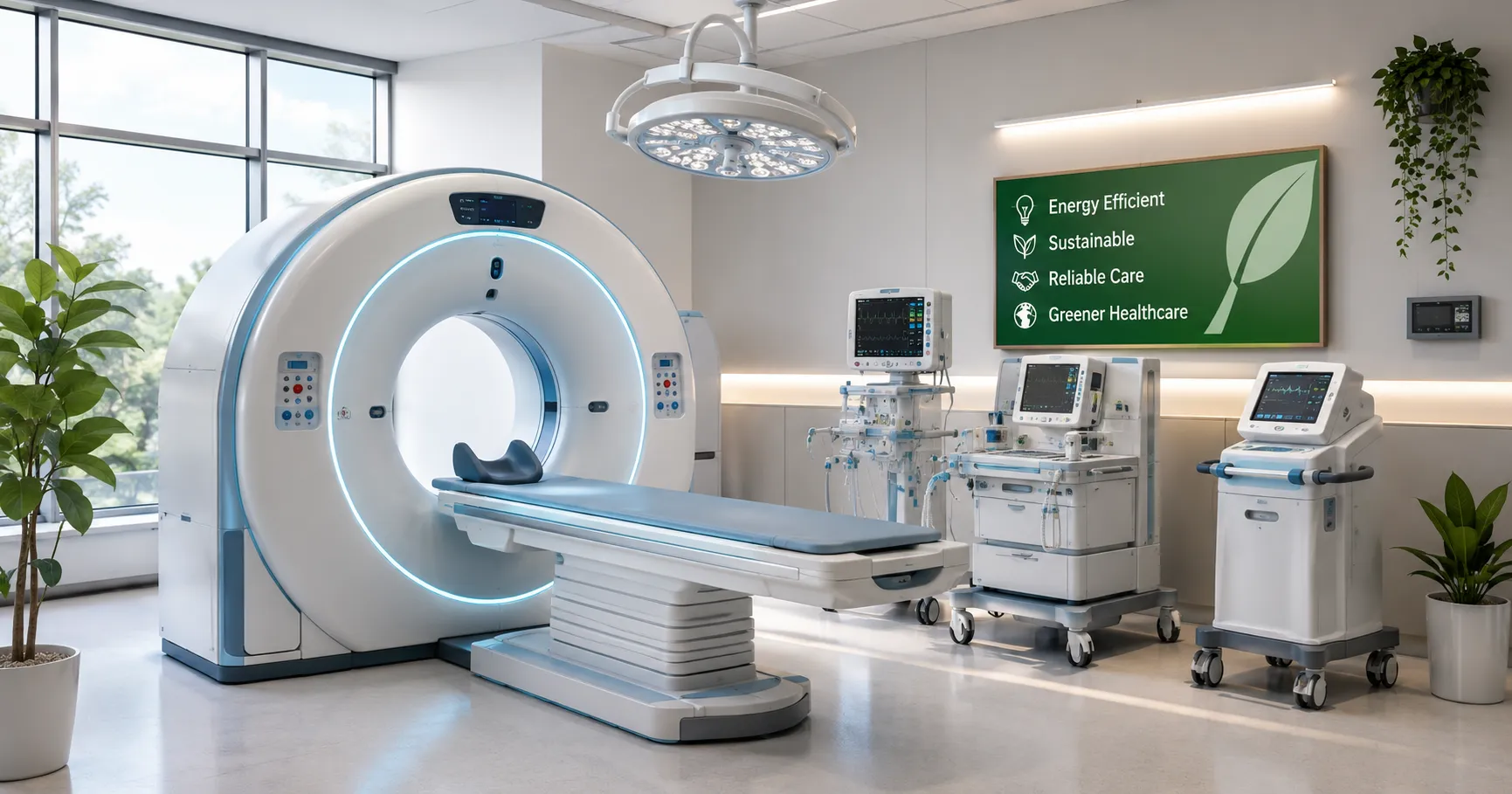
Energy-saving medical equipment helps healthcare providers reduce unnecessary power use, control operating costs, improve equipment lifecycle value, and support more sustainable healthcare facilities. It includes energy-efficient diagnostic equipment, laboratory systems, sterilisation units, medical refrigerators, patient monitoring systems, operating room technology, hospital furniture with powered functions, respiratory devices, and connected asset management tools.
For healthcare buyers, energy-saving equipment should not be selected solely based on purchase price. Buyers should review power consumption, service life, spare parts, maintenance needs, consumables, utilisation, standby modes, warranty, supplier support, compliance documents, and total cost of ownership. WHO guidance on environmentally sustainable healthcare facilities highlights the importance of optimising resources and minimising waste while continuing to provide quality healthcare services.
What Energy-Saving Medical Equipment Means
Energy-saving medical equipment refers to medical devices and healthcare systems designed or selected to use power more efficiently during operation, standby, storage, cleaning, monitoring, or service. This may include equipment with efficient motors, low-power electronics, automated shut-off modes, improved insulation, better battery performance, smart controls, efficient cooling, or optimised operating cycles.
Energy savings do not mean compromising clinical performance. Medical equipment must remain safe, reliable, accurate, and suitable for its intended use. The goal is to reduce unnecessary energy waste while maintaining the device performance required for healthcare delivery.
A good procurement decision balances energy performance with clinical need, maintenance support, service reliability, documentation, and long-term availability of parts and accessories.
Why Energy Efficiency Matters for Healthcare Providers
Healthcare facilities use equipment continuously across emergency departments, ICUs, operating rooms, laboratories, imaging areas, wards, pharmacies, CSSD units, and outpatient departments. Even small improvements in equipment efficiency can support better long-term facility planning.
Lower Running Costs — Equipment that uses less power may reduce utility costs, especially when used continuously or across multiple departments.
Better Lifecycle Value — Devices that are efficient, durable, repairable, and serviceable can deliver stronger value over their full operating life.
Reduced Heat Load — Efficient equipment may generate less heat, reducing cooling pressure in laboratories, imaging rooms, equipment rooms, and intensive-use areas.
Improved Battery Performance — Portable and transport devices with efficient power use can support longer operation during patient movement, emergency use, or temporary power disruption.
Stronger Sustainability Planning — Efficient equipment helps healthcare facilities reduce waste, improve resource use, and manage environmental responsibilities.
Better Procurement Decisions — Energy information helps buyers compare equipment beyond initial price.
Common Types of Energy-Saving Medical Equipment
Energy-saving equipment can be used across many healthcare departments.
Medical Refrigerators and Freezers — Efficient cold storage systems support the storage of vaccines, medicines, laboratory reagents, blood products, and samples. Buyers should review insulation, compressor efficiency, alarms, temperature stability, and service support.
Laboratory Analysers — Modern analysers may include standby modes, improved sample workflow, efficient reagent use, and digital monitoring. Energy use should be reviewed together with the test menu, reagent availability, quality control, and maintenance needs.
Sterilisation Equipment — Autoclaves, washer-disinfectors, drying cabinets, and CSSD equipment should be reviewed for cycle efficiency, water use, heating performance, drying efficiency, and validated processing.
Patient Monitoring Systems — Efficient monitors, central stations, telemetry tools, and wearable sensors can reduce power use while supporting clinical observation.
Respiratory Care Devices — Ventilators, oxygen concentrators, nebulisers, CPAP devices, and transport ventilators should be reviewed for power use, battery backup, oxygen efficiency, alarms, and maintenance needs.
Operating Room Equipment — Surgical lights, electrosurgical units, patient warming systems, anaesthesia workstations, and imaging tools should support procedure needs while limiting unnecessary power demand.
Imaging Equipment — Ultrasound, X-ray, CT, MRI, and C-arm systems should be assessed for clinical capability, cooling needs, power demand, software support, and service availability.
Hospital Beds and Powered Furniture — Electric beds, procedure chairs, patient lifts, and powered trolleys should offer reliable motors, safe controls, battery support, and low standby power where possible.
Facilities sourcing through regulated and certified equipment suppliers worldwide should request clear specifications, power requirements, service terms, warranty, spare parts, and user documentation before ordering.
How Buyers Should Compare Energy Use
Energy-saving claims should be reviewed carefully. Buyers should ask practical questions rather than relying solely on marketing language.
Important checks include:
-
Rated power consumption
-
Standby power use
-
Battery operating time
-
Charging time
-
Duty cycle
-
Cooling or heating demand
-
Energy-saving mode
-
Power supply requirements
-
UPS compatibility
-
Room ventilation needs
-
Consumable use
-
Maintenance impact on efficiency
A low-power device may still be expensive if the costs of consumables, service, parts, or software are high. A device with higher power use may still be justified if it offers better clinical performance, reliability, throughput, and service support.
Total Cost of Ownership
Energy-saving medical equipment should be evaluated based on the total cost of ownership. This gives buyers a clearer picture of real long-term value.
Total cost may include:
-
Purchase price
-
Power consumption
-
Installation cost
-
Accessories
-
Consumables
-
Software licences
-
Service contracts
-
Spare parts
-
Preventive maintenance
-
Calibration
-
Training
-
Downtime risk
-
Warranty coverage
-
End-of-life handling
-
Replacement planning
Procurement teams should compare lifetime costs, not just the quoted price. This is especially important for high-use devices such as analysers, refrigerators, sterilisation systems, patient monitors, ventilators, and imaging equipment.
Maintenance and Energy Efficiency
Maintenance is directly connected to energy efficiency. Poorly maintained equipment may consume more power, fail more often, generate excess heat, or deliver reduced performance.
WHO maintenance guidance explains that medical equipment maintenance includes inspection, preventive maintenance, and corrective maintenance, and that preventive maintenance helps extend equipment life and reduce failure rates.
Maintenance planning should include:
-
Cleaning filters
-
Checking batteries
-
Inspecting cables
-
Replacing worn parts
-
Checking cooling systems
-
Calibrating devices where required
-
Updating software
-
Recording service history
-
Monitoring repeated faults
-
Reviewing equipment age
A well-maintained device can remain reliable longer, reducing waste from early replacement and easing pressure on emergency repairs.
Energy-Saving Equipment and Waste Reduction
Energy-saving equipment also supports waste reduction by extending device lifespan, reducing unnecessary consumables, and enabling better stock planning. WHO notes that healthcare waste includes a wide range of materials and that healthcare waste management is an important part of safe and sustainable healthcare operations.
Healthcare providers can reduce waste by:
-
Avoiding duplicate equipment purchases
-
Maintaining devices properly
-
Choosing repairable equipment
-
Using correct consumable pack sizes
-
Reducing expired stock
-
Tracking equipment utilisation
-
Planning replacement before failure
-
Recycling electronic waste responsibly
-
Reviewing packaging and shipping waste
Energy efficiency should be part of a broader equipment lifecycle strategy.
Digital Tools for Energy-Saving Equipment Planning
Digital tools help healthcare providers understand how equipment is used and where energy waste may occur.
Useful tools include:
-
Asset management platforms
-
Equipment tracking systems
-
Maintenance dashboards
-
Energy monitoring systems
-
Cold storage monitoring
-
Procurement dashboards
-
Service record systems
-
Usage reporting tools
-
Building management systems
Digital tools can help facilities identify underused equipment, repeated faults, high-energy devices, maintenance delays, and replacement priorities. They also support better budget planning.
Connected Devices and Cybersecurity
Many energy-saving devices are now connected. They may use software, cloud dashboards, remote service tools, smart sensors, mobile apps, or network connections. This includes refrigerators, monitors, analysers, imaging systems, smart beds, asset tracking tools, and building systems.
FDA cybersecurity guidance provides recommendations on medical device cybersecurity considerations and information for premarket submissions. Buyers should review cybersecurity before connected equipment is installed.
Important cybersecurity checks include:
-
Access control
-
User permissions
-
Remote service policy
-
Software update process
-
Encryption
-
Audit logs
-
Data storage
-
Supplier cybersecurity documentation
-
End-of-life data removal
Cybersecurity should be part of procurement because connected equipment must remain secure and serviceable throughout its lifecycle.
Procurement Guidance for Energy-Saving Medical Equipment
Procurement should involve clinical teams, biomedical engineers, facility managers, IT teams, finance teams, compliance staff, and procurement teams.
Define the Clinical Need — The equipment must first match patient care, diagnostic, surgical, laboratory, or operational requirements.
Review Power Demand — Buyers should request power specifications, standby use, battery details, and utility requirements.
Check Service Support — Efficient equipment still requires robust maintenance, spare parts, a warranty, and trained engineers.
Compare Consumables — Devices that save energy but require high-cost consumables may not reduce total operating cost.
Review Supplier Transparency — Suppliers and manufacturers advertising to global healthcare buyers should provide technical specifications, operating requirements, service terms, warranty files, spare part details, and compliance documents.
Confirm Documentation — Buyers should request manuals, conformity documents, maintenance instructions, cleaning guidance, cybersecurity information where relevant, and warranty terms.
Department-Level Planning
Different departments need different energy-saving strategies.
ICU and Critical Care — Focus on reliable monitors, ventilators, infusion systems, beds, and central monitoring with strong uptime and battery support.
Laboratories — Review analysers, refrigerators, incubators, centrifuges, biosafety cabinets, reagent storage, and sample workflow.
CSSD — Assess autoclaves, washer-disinfectors, drying cabinets, packaging systems, water use, and cycle efficiency.
Operating Rooms — Review surgical lights, anaesthesia systems, patient warming, electrosurgical units, imaging systems, and room turnover workflow.
Diagnostic Imaging — Review scanner power demand, cooling needs, standby mode, software support, and service access.
Wards and Clinics — Focus on efficient monitors, examination lights, mobile devices, suction units, ECG machines, and powered furniture.
Common Mistakes to Avoid
Healthcare providers should avoid these mistakes when purchasing energy-saving medical equipment.
Buying Only by Lowest Price — Low purchase cost may lead to higher energy use, poor service, short equipment life, or expensive consumables.
Ignoring Maintenance Needs — Energy efficiency can decline if equipment is not maintained properly.
Not Checking Accessories — Batteries, chargers, sensors, probes, filters, and consumables affect real-world performance.
Skipping Supplier Review — Weak supplier support can reduce equipment uptime and increase replacement pressure.
Ignoring Connected Device Risk — Smart, connected, or remotely serviced equipment should be reviewed by IT and cybersecurity teams.
No Asset Tracking — Facilities cannot manage energy use well if they do not know what equipment they own or how it is used.
Forgetting End-of-Life Planning — Equipment disposal, data removal, recycling, and replacement should be planned before devices become unusable.
International Sourcing Considerations
Energy-saving medical equipment can be sourced internationally when buyers clearly define clinical use, device category, power requirements, voltage, plug type, battery needs, consumables, spare parts, documentation, warranty, service access, cybersecurity expectations, and compliance requirements.
Healthcare groups managing several facilities may benefit from structured distribution and reseller partnership arrangements. Standardising equipment models, service contracts, maintenance records, and supplier documentation can improve lifecycle control and reduce purchasing variation.
Buyers should confirm whether they need efficient monitors, ventilators, imaging systems, laboratory analysers, refrigeration units, sterilisation systems, operating room devices, hospital beds, respiratory equipment, asset tracking tools, or complete facility equipment packages. For project-based sourcing, buyers can contact the Medigear.uk team for supply support to discuss availability, documentation, export needs, and procurement requirements.
Future Role of Energy-Saving Medical Equipment
Energy-saving medical equipment will continue to support healthcare providers as facilities focus on cost control, resource efficiency, lifecycle value, digital maintenance, and sustainable procurement. The best equipment strategies will combine clinical reliability with reduced operational waste, improved service planning, and clearer supplier accountability.
Healthcare providers should focus on devices that are suitable, efficient, maintainable, repairable, and well-documented. Energy savings are most effective when combined with preventive maintenance, asset tracking, proper training, and lifecycle planning.
improve equipment lifecycle value, support sustainability planning, and make smarter procurement decisions. It is useful across hospitals, clinics, laboratories, diagnostic centres, operating rooms, ICUs, wards, and healthcare networks.
The right energy-saving equipment should align with clinical needs, power requirements, service capacity, maintenance planning, cybersecurity policies, staff training, compliance documentation, and total cost of ownership. Buyers should review supplier transparency, spare parts and consumables, warranty coverage, lifecycle value, and long-term support before ordering.
Disclaimer
Medigear.uk is a global medical equipment supplier, exporter, and distributor. The content published on this site is intended for educational and product awareness purposes only. Nothing on this page constitutes medical advice, clinical guidance, energy audit advice, sustainability certification advice, cybersecurity advice, legal advice, regulatory advice, or treatment recommendations. All healthcare procurement, facility, technology, environmental, legal, regulatory, and clinical decisions should be made by qualified professionals and compliant procurement teams operating within the regulatory frameworks of their respective countries.