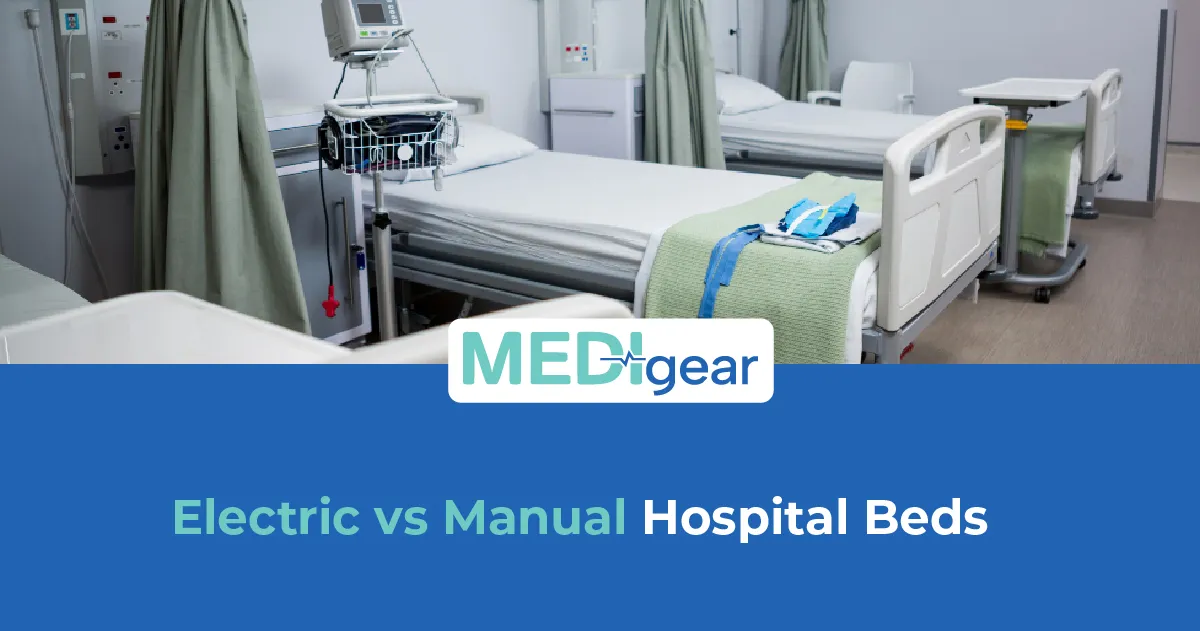
Hospital beds are a fundamental part of patient care infrastructure, supporting comfort, mobility, safety, and clinical treatment. When selecting hospital beds, healthcare facilities often choose between electric and manual models based on patient needs, operational requirements, budget considerations, and care settings.
While both bed types serve the same basic purpose, they differ significantly in functionality, ease of use, maintenance requirements, and long-term operational efficiency. Understanding these differences helps hospitals, clinics, nursing homes, and healthcare buyers make informed purchasing decisions.
This guide compares electric and manual hospital beds, highlighting their features, advantages, limitations, and ideal applications.
Understanding Hospital Bed Types
Hospital beds are designed to support patient positioning and caregiver access during treatment and recovery.
The Two Main Categories
-
Manual hospital beds
-
Electric hospital beds
Both types offer adjustable positioning, but they use different mechanisms to achieve movement.
Supporting Patient Care Needs – Proper bed selection improves comfort, accessibility, and workflow efficiency.
Enhancing Healthcare Operations – Choosing the right bed type helps facilities balance functionality and budget requirements.
Healthcare facilities evaluating patient care infrastructure often review sourcing support resources available through Buyers Services.
What Are Manual Hospital Beds?
Manual hospital beds use mechanical crank systems to adjust bed positions.
Common Manual Adjustments
-
Backrest elevation
-
Leg section adjustment
-
Height adjustment
-
Trendelenburg positioning (on some models)
How They Work - Caregivers rotate hand cranks located on the side or foot of the bed to change the patient's position.
Providing Basic Positioning Support – Manual systems allow essential patient adjustments.
Operating Without Electricity – Mechanical operation eliminates dependence on power sources.
What Are Electric Hospital Beds
Electric hospital beds use motors and electronic control systems to adjust bed positions.
Common Electric Functions
-
Height adjustment
-
Backrest positioning
-
Leg elevation
-
Trendelenburg and reverse Trendelenburg positions
-
Auto-contour functions
How They Work - Patients or caregivers use handheld controls or integrated control panels to adjust bed positions electronically.
Supporting Faster Position Changes – Motorized controls simplify repositioning tasks.
Improving Patient Independence – Many patients can adjust positions without caregiver assistance.
Healthcare suppliers supporting healthcare infrastructure development may also explore collaboration opportunities through business Suppliers.
Feature Comparison: Electric vs Manual Hospital Beds
| Feature | Manual Hospital Beds | Electric Hospital Beds |
|---|---|---|
| Adjustment Method | Hand cranks | Motorized controls |
| Ease of Use | Moderate | High |
| Patient Independence | Limited | Greater |
| Caregiver Effort | Higher | Lower |
| Power Requirement | Not required | Required |
| Initial Cost | Lower | Higher |
| Advanced Positioning | Limited | Extensive |
| Workflow Efficiency | Moderate | High |
Electric beds generally offer more convenience and functionality, while manual beds provide a cost-effective alternative.
Advantages of Manual Hospital Beds
Manual beds remain widely used in many healthcare environments.
Lower Purchase Cost - Manual beds are generally more affordable than electric alternatives.
Supporting Budget-Conscious Facilities – Lower acquisition costs make manual beds attractive for smaller facilities.
Simple Mechanical Design: Fewer electronic components simplify servicing.
Reducing Technical Complexity – Mechanical systems are often easier to troubleshoot.
No Dependence on Electricity: Manual beds continue to function during power outages.
Providing Reliable Basic Functionality – Mechanical operation supports uninterrupted use.
Common Applications
-
Nursing homes
-
Long-term care facilities
-
General wards
-
Temporary care settings
Advantages of Electric Hospital Beds
Electric beds have become increasingly common in modern healthcare facilities.
Improved Patient Comfort - Motorized positioning enables smoother, more frequent adjustments.
Supporting Better Patient Experience – Comfortable positioning contributes to overall care quality.
Reduced Caregiver Strain - Staff can reposition patients with minimal physical effort.
Improving Workplace Ergonomics – Reduced lifting and manual adjustments help decrease caregiver fatigue.
Greater Positioning Flexibility - Electric beds offer more advanced positioning capabilities.
Supporting Diverse Clinical Requirements – Enhanced functionality improves versatility.
Enhanced Workflow Efficiency - Position changes can be performed quickly and accurately.
Reducing Time Spent on Routine Adjustments – Faster positioning improves operational efficiency.
Healthcare organizations exploring healthcare technology partnerships may also review opportunities available through business Partners.
Limitations of Manual Hospital Beds
Despite their advantages, manual beds have certain limitations.
Increased Physical Effort - Caregivers must manually adjust bed positions.
Slower Repositioning - Position changes typically take longer compared to electric systems.
Limited Patient Independence - Most adjustments require caregiver assistance.
Potential Impact on Workflow Efficiency – Frequent manual adjustments may increase staff workload.
Limitations of Electric Hospital Beds
Electric beds also have considerations that healthcare facilities should evaluate.
Higher Initial Investment - Electric systems generally cost more than manual alternatives.
Dependence on Power Systems: Motorized functions require electricity or battery backup.
More Complex Maintenance: Electronic components may require specialized servicing.
Balancing Features With Budget Requirements – Facilities should evaluate total ownership costs before making a purchase.
Facilities reviewing broader patient care planning often compare workflow considerations alongside patient monitoring systems and mobility support equipment.
Which Hospital Bed Is Best for Different Settings?
Hospitals: Electric beds are commonly preferred for their advanced functionality and workflow benefits.
Intensive Care Units (ICUs) typically require advanced electric beds with integrated monitoring capabilities and multiple positioning functions.
Nursing Homes - Both manual and electric beds may be used, depending on resident needs and facility budgets.
Home Healthcare - Selection often depends on the patient's mobility requirements and the availability of caregiver support.
Matching Bed Type to Care Environment – Different healthcare settings have unique operational needs.
Maintenance Considerations
Both bed types require routine maintenance.
Manual Bed Maintenance
-
Crank inspections
-
Mechanical lubrication
-
Wheel and caster checks
-
Frame inspections
Electric Bed Maintenance
-
Motor testing
-
Electrical inspections
-
Battery verification
-
Control panel checks
-
Software updates (where applicable)
Supporting Long-Term Reliability – Preventive maintenance helps extend equipment lifespan.
Reducing Unexpected Downtime – Regular servicing supports operational readiness.
Healthcare companies interested in improving visibility within the healthcare equipment industry may also explore promotional opportunities through business advertising.
Emerging Trends in Hospital Bed Technology
Hospital bed technology continues evolving rapidly.
Smart Hospital Beds Modern systems increasingly offer:
-
Patient monitoring integration
-
Bed exit alarms
-
Automated alerts
-
Digital connectivity
Enhanced Pressure Management - Advanced beds help improve patient comfort and support long-term care management.
Connected Healthcare Infrastructure - Beds are increasingly becoming part of integrated patient care ecosystems.
Improved Ergonomics - Manufacturers continue focusing on patient comfort and caregiver efficiency.
Healthcare facilities seeking support with patient care infrastructure planning or sourcing guidance can connect with the Contact Team for additional information.
Disclaimer
Medigear.uk is a medical equipment supplier and distributor. We do not provide medical advice, diagnosis, or treatment recommendations. All information is for educational and product awareness purposes only. Qualified medical professionals should always make healthcare decisions.