Healthcare systems worldwide rely on large volumes of medical equipment to support patient care, diagnostics, treatment, monitoring, and operational efficiency. Traditionally, healthcare equipment has followed a linear model of procurement, utilisation, and disposal. However, growing environmental concerns, resource limitations, and sustainability goals are encouraging healthcare organisations to adopt circular economy principles.
A circular economy focuses on extending product lifecycles, reducing waste, improving resource efficiency, and maximising the value of existing assets. In healthcare, this approach is increasingly influencing procurement strategies, equipment management programmes, refurbishment initiatives, and sustainability planning.
For healthcare facility procurement decision-makers, circular economy principles are becoming an important consideration when evaluating long-term equipment investments and sustainability objectives.
Healthcare organisations seeking sustainable procurement strategies often include buyer services among the key stakeholders responsible for balancing clinical requirements, operational performance, and environmental responsibility.
What the Circular Economy Means for Healthcare Equipment
The circular economy aims to keep products and materials in use for as long as possible while reducing waste generation and resource consumption.
Extending Equipment Lifecycles- Rather than replacing equipment at the first sign of ageing, healthcare organisations increasingly focus on maintenance, refurbishment, upgrades, and redeployment.
Promoting Resource Efficiency- Circular economy strategies help reduce demand for raw materials and manufacturing resources while improving asset utilisation.
Reducing Waste Generation- Healthcare facilities seek to minimise equipment disposal through reuse, refurbishment, and responsible recycling initiatives.
Supporting Environmental Sustainability- Circular economy principles contribute to broader healthcare sustainability programmes by reducing environmental impact and conserving resources.
Healthcare facilities that source technologies through business suppliers increasingly evaluate lifecycle management and sustainability support when selecting equipment solutions.
Why Equipment Lifecycles Matter More Than Ever
Equipment lifecycle management sits at the heart of circular economy strategies.
Reducing Premature Replacement- Extending operational lifespan reduces demand for new manufacturing and procurement activities.
Maximising Asset Value: Healthcare organisations can achieve greater value from equipment investments when devices remain operational for longer.
Supporting Budget Efficiency- Longer lifecycles often improve return on investment and support more predictable capital planning.
Lowering Environmental Impact- Every additional year of equipment use can help reduce waste generation and resource consumption.
Experienced clinical supply managers typically evaluate lifecycle costs alongside purchase price when assessing healthcare technology investments.
Refurbishment Is Transforming Equipment Sustainability
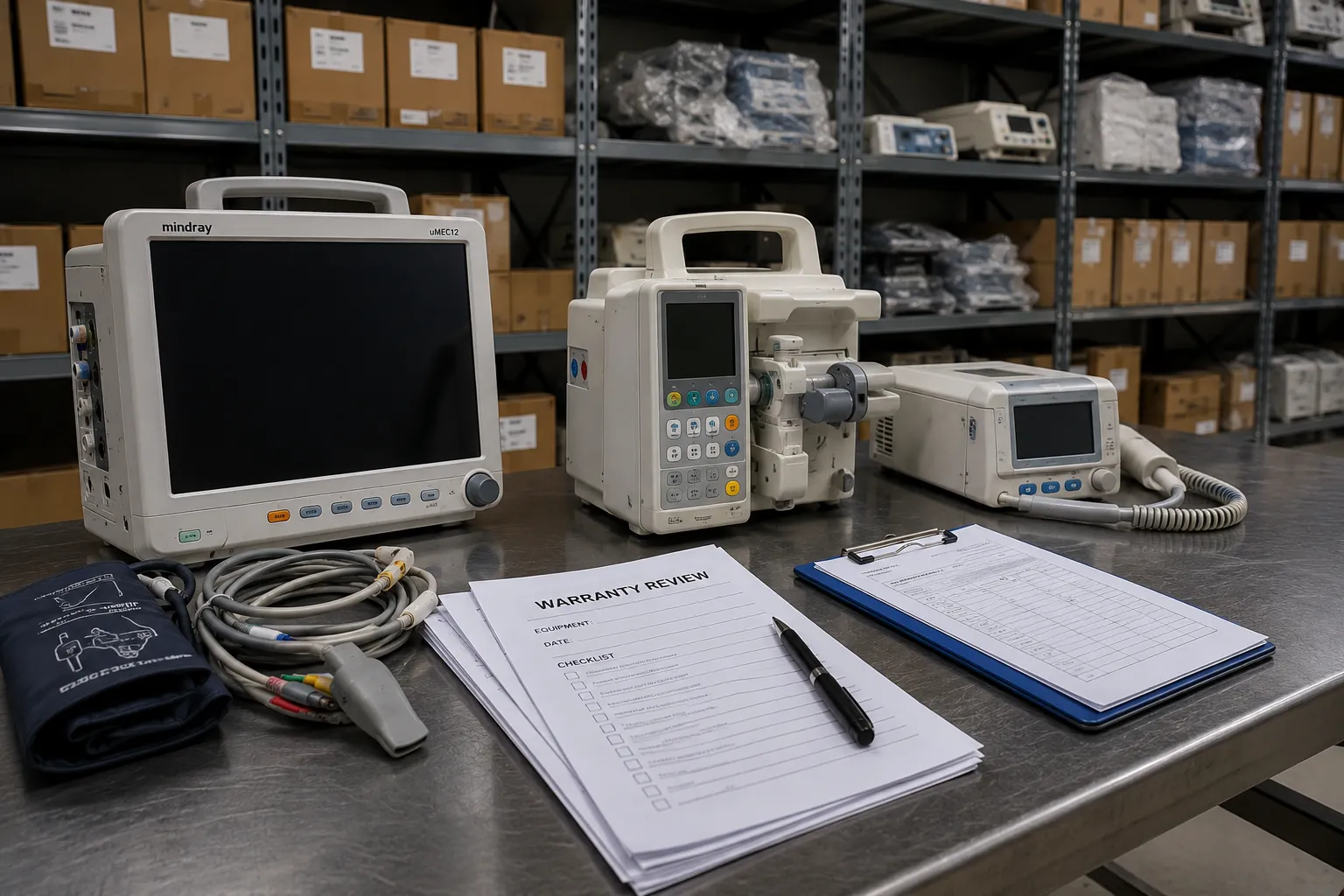
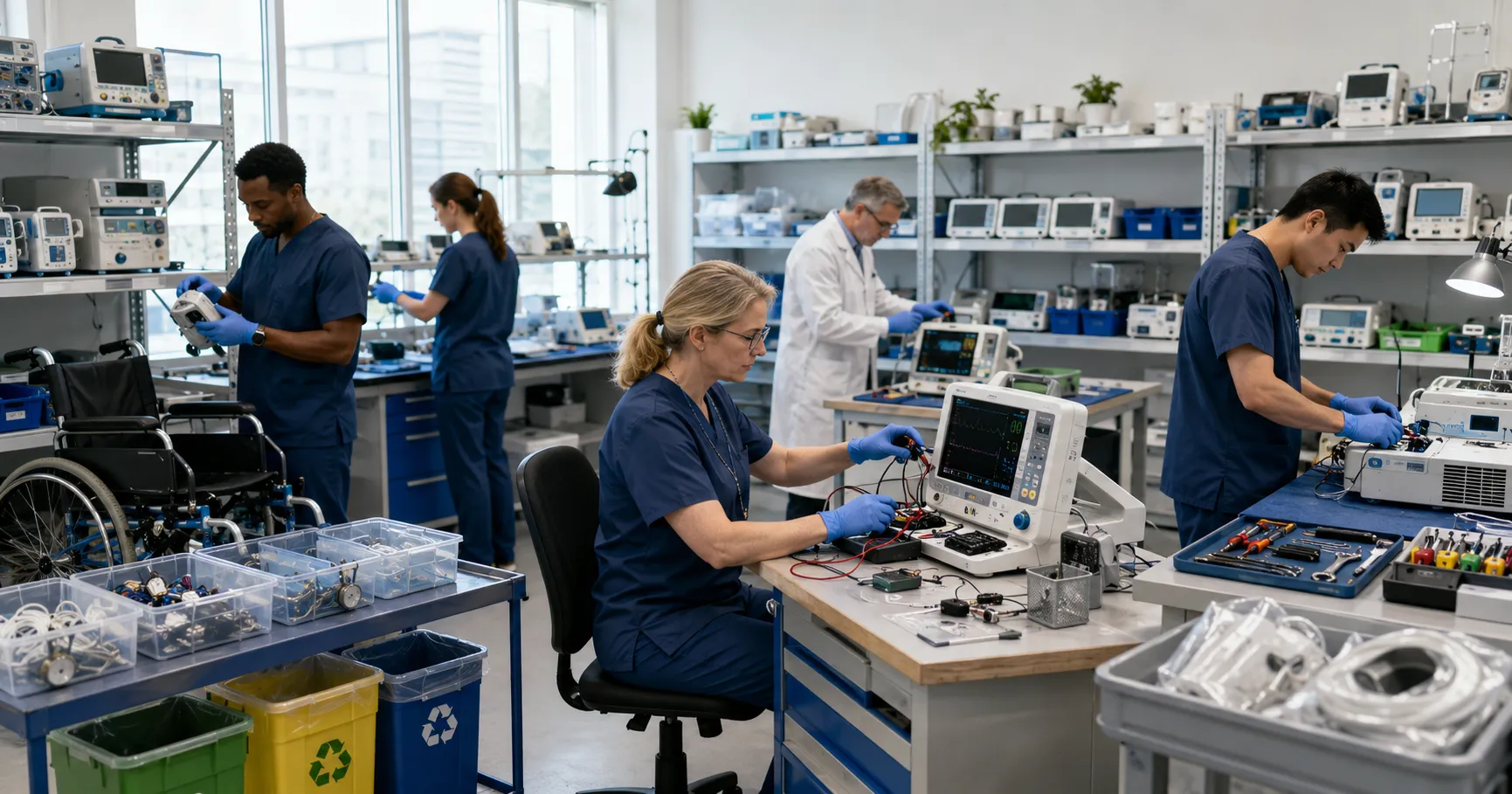
Refurbishment has become one of the most important circular economy strategies in healthcare.
Restoring Equipment Performance- Refurbishment programmes can return equipment to reliable operational condition while extending service life.
Reducing Procurement Costs- Refurbished equipment may provide a cost-effective alternative to new technology in certain healthcare environments.
Supporting Resource Conservation- Refurbishment reduces demand for new manufacturing materials and components.
Expanding Equipment Accessibility- Many healthcare facilities use refurbished equipment to increase access to healthcare technology while managing budgets effectively.
Facilities that have deployed refurbishment programmes often report improvements in both sustainability outcomes and asset utilisation.
Reuse and Redeployment Create Additional Value
Healthcare organisations increasingly explore opportunities to redeploy equipment within their networks rather than unnecessarily replace assets.
Internal Equipment Transfers: Equipment may be transferred between facilities to meet changing operational requirements.
Supporting Resource Optimisation- Redeployment helps ensure that equipment continues to provide value throughout its operational life.
Improving Equipment Utilisation- Healthcare systems can often achieve higher utilisation rates through effective asset management strategies.
Reducing Unnecessary Procurement- Reuse initiatives help healthcare providers avoid purchasing replacement equipment before it is truly required.
Effective redeployment programmes often depend on accurate asset-tracking and lifecycle-management systems.
Recycling Programmes Support Circular Healthcare Systems
While maintenance, refurbishment, and reuse help extend equipment lifespan, recycling remains an important component of the circular economy when equipment reaches the end of its operational life.
Recovering Valuable Materials
Medical equipment often contains metals, plastics, electronic components, and other materials that can be recovered and reintroduced into manufacturing supply chains. Material recovery supports resource conservation while reducing dependence on newly extracted raw materials.
Reducing Landfill Waste- Responsible recycling programmes help divert equipment from landfill disposal and support environmental sustainability objectives. Healthcare facilities increasingly recognise recycling as an important part of equipment lifecycle management.
Supporting Resource Conservation- Material recovery reduces demand for newly produced resources and contributes to more sustainable manufacturing practices across healthcare supply chains.
Improving Environmental Performance- Healthcare organisations increasingly integrate recycling initiatives into broader sustainability programmes designed to reduce waste generation and improve environmental performance.
Facilities that establish structured recycling programmes often improve both sustainability outcomes and resource efficiency.
The Role of Biomedical Engineering in Circular Economy Strategies
Biomedical engineering departments play a critical role in implementing circular economy initiatives within healthcare facilities.
Equipment Lifecycle Assessment- Biomedical professionals evaluate equipment condition, performance, reliability, and remaining service life to support informed decision-making.
Refurbishment Planning- Maintenance records and technical assessments help identify equipment suitable for refurbishment, upgrades, and redeployment.
Asset Optimisation- Biomedical teams support efficient equipment utilisation through lifecycle planning, performance monitoring, and maintenance management.
Compliance and Safety Management: Any refurbishment, reuse, or redeployment strategy must comply with manufacturer recommendations and applicable local regulatory standards.
Facilities with strong biomedical engineering support often achieve greater success when implementing circular economy programmes.
Procurement Strategies That Support Circular Economy Goals
Procurement decisions have a significant influence on long-term sustainability outcomes.
Evaluating Lifecycle Costs- Healthcare organisations increasingly assess the total cost of ownership rather than focusing solely on purchase price. Maintenance, servicing, upgrades, and end-of-life management all influence long-term value.
Assessing Refurbishment Potential- Equipment that can be upgraded, repaired, or refurbished may offer greater long-term sustainability benefits.
Considering Service Support: access to spare parts, technical support, maintenance expertise, and software updates influences equipment longevity and lifecycle performance.
Reviewing Sustainability Commitments- Procurement teams increasingly evaluate manufacturer sustainability programmes, environmental policies, and lifecycle management capabilities.
Many healthcare organisations review information from business advertise when comparing sustainability initiatives, refurbishment programmes, and lifecycle support services.
Healthcare systems managing procurement across multiple facilities often benefit from establishing business partners that support refurbishment planning, maintenance management, asset optimisation, and sustainability objectives.
Technology Is Accelerating Circular Economy Adoption
Digital technologies are helping healthcare organisations implement circular economy principles more effectively.
Digital Asset Management Platforms- Asset management systems provide visibility into equipment location, utilisation, condition, and lifecycle status.
Predictive Maintenance Technologies- Predictive maintenance supports longer equipment lifespans by identifying issues before failures occur.
Data-Driven Lifecycle Planning- Performance analytics help organisations make informed decisions regarding upgrades, refurbishments, redeployments, and replacements.
Connected Healthcare Technologies- Internet-connected devices provide operational insights that support asset optimisation and sustainability planning.
Healthcare providers increasingly use digital tools to improve circular economy performance and resource efficiency.
Future Trends in Circular Healthcare Equipment Management
Circular economy principles are expected to become increasingly important throughout the healthcare sector.
Growth of Refurbishment Programmes- Refurbishment is likely to become more widely adopted as healthcare
organisations seek sustainable equipment solutions.
Expansion of Equipment Redeployment Networks- Healthcare systems may increasingly share equipment resources across facilities to improve utilisation and reduce waste.
Greater Focus on Sustainable Design- Manufacturers are expected to place greater emphasis on durability, repairability, upgradeability, and recyclability.
Enhanced Regulatory Attention- Environmental sustainability and lifecycle management may receive greater attention from policymakers and healthcare regulators worldwide.
Integration of Circular Economy Metrics- Healthcare organisations are increasingly measuring sustainability performance using lifecycle waste-reduction and resource-efficiency indicators.
These developments are expected to strengthen the role of circular economy principles in healthcare technology management.
Final Thoughts
Circular economy principles are transforming how healthcare organisations manage medical equipment throughout its lifecycle. By focusing on maintenance, refurbishment, reuse, redeployment, recycling, and lifecycle optimisation, healthcare facilities can reduce waste, improve resource efficiency, and support environmental sustainability goals.
For healthcare facility procurement decision-makers, circular economy strategies offer opportunities to maximise equipment value while balancing financial performance, operational requirements, and environmental responsibility. Effective lifecycle management can help organisations extend equipment lifespan, reduce procurement frequency, and improve sustainability outcomes.
As healthcare systems continue pursuing environmental and operational improvements, circular economy approaches are expected to play an increasingly important role in the future of healthcare equipment management.
Disclaimer
Medigear.uk is a global medical equipment supplier, exporter, and distributor. The content published on this site is intended for educational and product awareness purposes only. Nothing on this page constitutes medical advice, clinical guidance, or treatment recommendations. All healthcare procurement and clinical decisions should be made by qualified medical professionals and compliant procurement teams operating within the regulatory frameworks of their respective countries.