Clear visibility is one of the most important factors influencing surgical precision. Even highly skilled surgeons depend on consistent illumination to distinguish tissue structures, minimise shadows, and maintain focus throughout procedures that may last several hours. Selecting surgical lighting, therefore, becomes more than a purchasing decision—it is an investment in clinical performance, workflow efficiency, and long-term operational reliability.
For medical equipment buyers services professionals worldwide, choosing the right surgical lights requires balancing clinical needs, technical specifications, maintenance requirements, and budget considerations. Different specialities require different lighting characteristics, while hospitals must also consider future expansion and compatibility with existing operating theatre infrastructure.
This guide explains how surgical lights function, where they are deployed, the technical specifications that matter most, and the procurement considerations healthcare facilities should evaluate before investing.
Understanding How Surgical Lights Support Clinical Performance
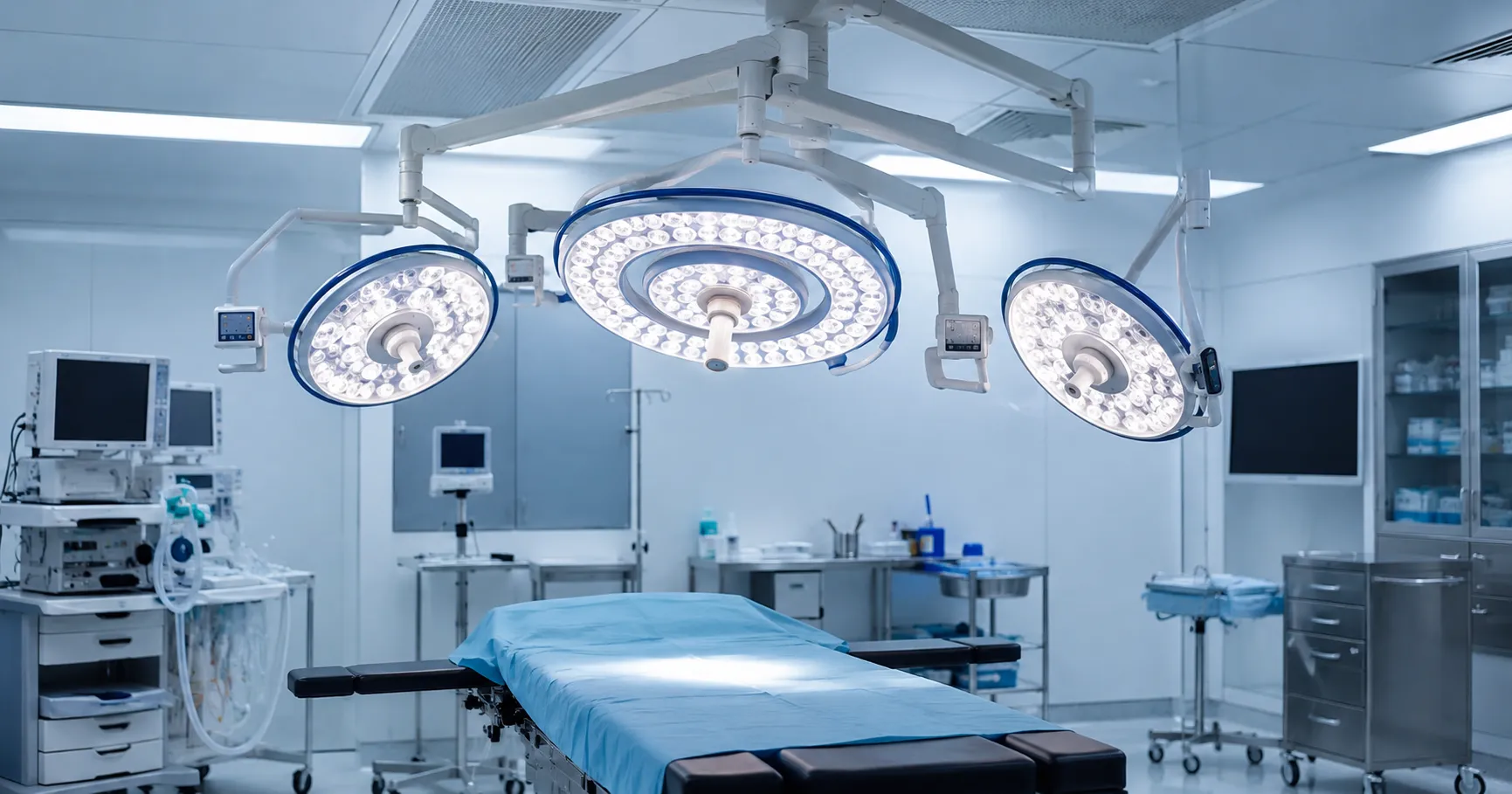
Modern surgical lights are designed to deliver bright, consistent, shadow-free illumination directly over the surgical field. Their purpose extends beyond simply making the operating room brighter. They enable surgeons to distinguish fine anatomical structures while reducing eye fatigue during lengthy procedures.
Consistent Surgical Illumination — High-quality surgical lights maintain uniform brightness across the operating field. Experienced theatre managers often find that stable illumination reduces interruptions caused by frequent light repositioning, allowing surgical teams to remain focused on patient care.
Shadow Reduction Technology — Multiple LED modules work together to minimise shadows created by surgeons' hands, instruments, or equipment. Facilities performing complex procedures generally prioritise shadow management because uninterrupted visibility supports smoother surgical workflows.
Accurate Tissue Colour Recognition — Colour Rendering Index (CRI) plays an important role in helping surgeons accurately distinguish blood vessels, tissues, and organs. A higher CRI makes colours appear more natural, supporting confident clinical decision-making throughout the procedure.
Adjustable Light Positioning — Modern lighting systems feature flexible suspension arms and ergonomic handles, e enabling quick repositioning without disrupting the sterile field. One aspect that surprises first-time buyers is how much arm stability influences daily operating room efficiency.
Clinical Environments Where Surgical Lights Are Used
Although commonly associated with major operating theatres, surgical lights are used in many healthcare settings across public and private systems.
General Operating Theatres — Most hospitals install ceiling-mounted surgical lighting systems in general surgery theatres where consistent illumination is required throughout a broad range of procedures. These environments often prioritise flexibility because different surgical specialities share the same operating room.
Midway through procurement planning, facilities working with trusted international healthcare business suppliers often receive guidance on selecting lighting systems that comply with applicable local regulatory standards and align with existing operating room infrastructure.
Specialist Surgical Departments — Cardiac, neurosurgical, orthopaedic, transplant, and vascular operating rooms frequently require premium lighting systems with advanced depth illumination and precise beam control. These specialists often perform procedures lasting several hours, making lighting consistency particularly important.
Ambulatory Surgery Centres — Outpatient surgical facilities usually seek compact LED lighting systems that combine energy efficiency with reliable performance. Procurement teams often favour systems requiring minimal maintenance because these centres typically operate with limited technical support staff.
Emergency and Trauma Surgery Units — Emergency operating rooms demand lighting systems that provide immediate full-intensity illumination and quick positioning. Facilities that have deployed advanced LED surgical lights at scale frequently report improved workflow during urgent procedures where every second matters.
Technical Specifications That Influence Purchasing Decisions
Understanding technical specifications helps procurement teams compare products based on operational value rather than marketing claims.
Illumination Intensity (Lux) — Brightness directly affects surgical visibility. Higher illumination levels can improve visual clarity, but excessively bright lighting may increase eye fatigue if not properly adjustable. Procurement teams generally look for systems offering variable intensity settings.
Colour Temperature Adjustment — Adjustable colour temperature allows surgical teams to optimise lighting according to procedure type and surgeon preference. Cooler light may improve tissue contrast, while warmer settings can reduce visual strain during extended operations.
Colour Rendering Index (CRI) — CRI indicates how accurately colours appear under artificial lighting. Rather than focusing only on the specification itself, experienced clinical supply managers evaluate how improved colour accuracy contributes to safer tissue identification during surgery.
LED Lifespan and Energy Efficiency — Modern LED surgical lights typically require significantly fewer lamp replacements than traditional halogen systems. Over several years, lower maintenance requirements and reduced power consumption can substantially decrease operating costs, particularly in facilities managing multiple operating theatres.
Evaluating Surgical Lights Before Making a Procurement Decision
Selecting surgical lights involves much more than comparing brightness levels or product prices. Procurement teams should evaluate long-term performance, service support, compliance requirements, and integration with existing operating theatre infrastructure. Experienced clinical supply managers typically assess the total value the lighting system will provide over its operational life rather than focusing solely on the initial purchase cost.
Assessing Total Cost of Ownership — The purchase price represents only one part of the investment. Healthcare facilities should also consider installation costs, maintenance requirements, spare part availability, energy consumption, and expected service life. In practice, hospitals often find that premium LED surgical lights offer lower operating costs over many years due to reduced maintenance and energy usage.
Verifying Compliance and Safety Standards — Surgical lighting systems should comply with applicable local regulatory standards and, where appropriate, internationally recognised certifications, such as CE, FDA, or their regional equivalents. Procurement teams should request complete technical documentation, testing reports, and warranty information before approving a supplier.
Facilities evaluating products from suppliers and manufacturers' business advertisements to global healthcare buyers often compare clinical performance data, service capabilities, and documented compliance rather than relying solely on product brochures.
Reviewing Service and Warranty Support — Reliable after-sales service is essential for equipment used in critical clinical environments. Buyers should confirm response times, spare parts availability, preventive maintenance programmes, and technical support before finalising procurement.
Planning for Future Expansion — Modern operating rooms continue to evolve with integrated imaging systems, digital documentation, and advanced surgical technologies. Selecting lighting systems that support future upgrades helps healthcare facilities avoid unnecessary replacement costs.
Healthcare organisations managing multiple hospitals frequently benefit from establishing long-term medical equipment supply business partners, which help maintain consistent product quality, streamline servicing, and enable predictable procurement planning across different facilities.
Extending Equipment Performance Through Proper Maintenance
Routine maintenance helps surgical lights deliver reliable illumination throughout their service life while reducing unexpected equipment failures.
Routine Preventive Inspections — Biomedical engineering teams should inspect suspension arms, LED modules, handles, control panels, and mechanical joints according to manufacturer recommendations. Regular inspections often identify minor issues before they develop into costly repairs.
Cleaning and Infection Control — Surgical lights should be cleaned with manufacturer-approved disinfectants that protect optical components while maintaining infection-control protocols. Proper cleaning also preserves light output and extends equipment longevity.
LED Module Monitoring — Although LED technology generally requires less maintenance than older lighting systems, periodic performance checks remain important. Facilities with limited local technical support often discover that preventive servicing significantly reduces downtime and emergency repair expenses, ultimately lowering total ownership costs.
Global Demand and International Sourcing Trends
Demand for modern surgical lighting continues to increase as healthcare providers expand operating capacity, modernise ageing facilities, and invest in digital operating theatres.
Growing Preference for LED Technology — Hospitals across developed and emerging healthcare markets are increasingly replacing halogen surgical lights with LED units due to their energy efficiency, longer service life, and improved illumination quality. Procurement teams also appreciate the reduced maintenance requirements associated with LED technology.
Balancing New and Refurbished Equipment — Some healthcare facilities select refurbished surgical lights to meet budget constraints, while others prioritise new equipment for maximum warranty coverage and the latest technological features. The appropriate choice depends on clinical workload, available funding, and long-term operational objectives.
Managing International Procurement — Buyers sourcing equipment internationally should evaluate manufacturing lead times, export documentation, shipping requirements, customs regulations, installation planning, and availability of local technical support. Careful coordination between suppliers and healthcare facilities helps minimise project delays and ensures equipment arrives ready for installation.
Final Thoughts
Choosing the right surgical lights for operating rooms requires careful evaluation of clinical performance, technical specifications, maintenance needs, and long-term operating costs. While illumination quality remains the primary consideration, procurement teams should also assess warranty coverage, regulatory compliance, service support, and compatibility with future developments in operating theatres.
A well-planned procurement decision supports better surgical visibility, smoother clinical workflows, reduced maintenance expenses, and reliable performance throughout the equipment's service life. Investing time in evaluating these factors helps healthcare facilities maximise both clinical outcomes and long-term value.
Disclaimer
Medigear.uk is a global medical equipment supplier, exporter, and distributor. The content published on this site is intended for educational and product awareness purposes only. Nothing on this page constitutes medical advice, clinical guidance, or treatment recommendations. All healthcare procurement and clinical decisions should be made by qualified medical professionals and compliant procurement teams operating within the regulatory frameworks of their respective countries.