Safe anaesthesia delivery depends on equipment that performs consistently throughout every stage of a surgical procedure. Modern operating rooms rely on anaesthesia workstations to deliver medical gases, monitor patient ventilation, and support anaesthesiologists in maintaining stable physiological conditions. Selecting the right system is therefore a critical procurement decision that influences patient safety, clinical efficiency, and long-term operational reliability.
For medical equipment buyers services professionals worldwide, choosing an anaesthesia workstation involves evaluating clinical functionality, integrated monitoring capabilities, ventilation performance, maintenance requirements, and compliance with applicable local regulatory standards. Hospitals must also consider future technology integration and service support to maximise the value of their investment.
This guide explains the essential features every hospital should evaluate before purchasing an anaesthesia workstation, helping healthcare facilities make informed procurement decisions for modern surgical environments.
Understanding the Clinical Role of an Anaesthesia Workstation
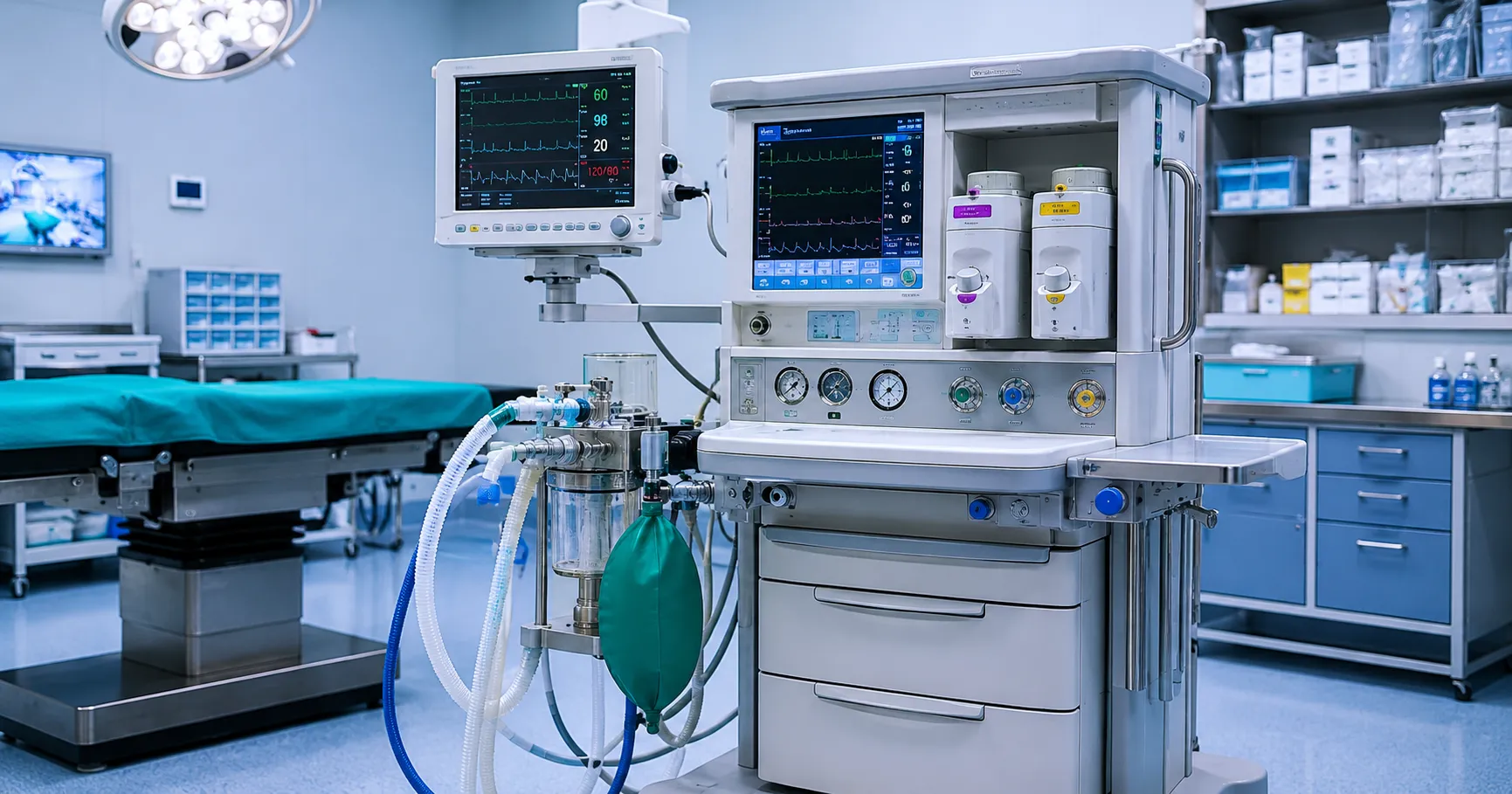
An anaesthesia workstation is far more than a gas delivery device. It integrates ventilation, monitoring, safety mechanisms, and digital controls into a single platform that supports safe anaesthesia administration before, during, and after surgery.
Precise Anaesthetic Gas Delivery — Modern workstations accurately deliver oxygen, air, nitrous oxide, and volatile anaesthetic agents according to clinician settings. Experienced anaesthesiologists often value systems that maintain stable gas concentrations throughout lengthy procedures, reducing the need for frequent manual adjustments.
Integrated Mechanical Ventilation — Built-in ventilators provide multiple ventilation modes suitable for different patient populations, including adults, paediatric patients, and, in some cases, neonatal care. Reliable ventilation helps maintain appropriate respiratory support during surgical procedures.
Continuous Patient Monitoring — Many anaesthesia workstations integrate monitoring for oxygen concentration, airway pressure, tidal volume, carbon dioxide, and anaesthetic gas levels. One aspect that surprises first-time buyers is how integrated monitoring simplifies workflow by reducing the number of standalone devices required in the operating room.
Advanced Safety Mechanisms — Modern systems include automatic alarms, oxygen-failure protection, hypoxic-guard systems, and electronic self-tests before clinical use. These safety features help clinicians identify potential problems before they affect patient care.
Healthcare Settings That Depend on Anaesthesia Workstations
Anaesthesia workstations support surgical services across numerous healthcare settings worldwide, with configuration requirements varying with clinical workload and patient complexity.
General Operating Theatres — Most hospitals install anaesthesia workstations in general surgery operating rooms, where they support a wide range of surgical specialities. These departments typically require versatile systems that can adapt to different procedures throughout the day.
Healthcare facilities sourcing equipment through a trusted international healthcare business supplier often receive assistance in selecting workstation configurations that align with operating room infrastructure, medical gas systems, and applicable local regulatory requirements.
Specialised surgical departments — cardiac, neurosurgical, transplant, orthopaedic, and paediatric operating theatres — frequently require advanced workstations that offer sophisticated ventilation modes, enhanced monitoring capabilities, and expanded gas management features. These environments often perform complex procedures that demand exceptional reliability.
Ambulatory Surgery Centres — Day surgery facilities generally prefer compact anaesthesia workstations that combine efficient performance with simplified operation and maintenance. Equipment reliability is especially important because these centres typically operate with streamlined technical support resources.
Teaching Hospitals and Academic Medical Centres — Educational institutions often select workstations equipped with digital interfaces, integrated data recording, and advanced monitoring functions that support both clinical care and medical training. Facilities operating at this scale frequently report that intuitive system interfaces improve training efficiency for anaesthesia teams.
Technical Features That Matter Most During Procurement
Technical specifications should be evaluated based on their clinical impact rather than simply comparing feature lists across manufacturers.
Ventilation Modes — Modern anaesthesia workstations support volume-controlled, pressure-controlled, pressure-support, and spontaneous-breathing modes. Procurement teams should ensure available modes match the patient populations and surgical specialities served by the facility.
Integrated Gas Monitoring — Continuous monitoring of oxygen, carbon dioxide, anaesthetic agents, and respiratory gases improves clinical awareness throughout surgery. Experienced biomedical engineers often recommend systems with integrated gas analysis because they simplify equipment management while improving workflow.
Electronic Vaporisers and Gas Delivery Accuracy — Accurate vaporisers help maintain consistent anaesthetic concentrations despite changes in patient demand or environmental conditions. Rather than considering only technical specifications, procurement teams should evaluate long-term calibration stability and servicing requirements.
User Interface and Digital Connectivity — Modern touchscreen interfaces, electronic record touchscreens, and compatibility with hospital information systems can improve workflow efficiency. Facilities planning future digital operating theatres frequently prioritise workstations that support software updates and integration with evolving healthcare technologies.
Procurement Considerations Before Investing in an Anaesthesia Workstation
Selecting an anaesthesia workstation requires more than comparing technical specifications. Hospitals should evaluate long-term reliability, clinical safety, servicing capabilities, and compatibility with existing operating theatre infrastructure. Experienced procurement professionals typically consider the equipment's entire lifecycle to ensure sustainable value and uninterrupted clinical performance.
Evaluating Total Cost of Ownership — The purchase price is only one part of the investment. Hospitals should also consider installation, preventive maintenance, spare parts availability, software updates, consumables, and expected equipment lifespan. Facilities that calculate lifetime operating costs often find that premium workstations deliver better long-term value through improved efficiency and reduced downtime.
Confirming Regulatory Compliance — Every anaesthesia workstation should comply with applicable local regulatory standards and recognised certifications, such as CE, FDA, or regional equivalents. Procurement teams should verify certification documents, electrical safety testing, gas delivery accuracy, and manufacturer quality assurance before making a purchasing decision.
Healthcare providers comparing products from suppliers and manufacturers often business advertise to global healthcare buyers, who often request clinical performance data, service records, and customer references to support evidence-based procurement decisions.
Assessing Service and Technical Support — Reliable after-sales support is essential because anaesthesia workstations operate in critical care environments where equipment downtime can disrupt surgical schedules. Buyers should confirm preventive maintenance programmes, technical training, warranty terms, spare parts availability, and response times before selecting a supplier.
Planning for Future Operating Room Integration — Many hospitals are investing in digitally connected operating theatres. Choosing an anaesthesia workstation that supports integration with patient monitors, hospital information systems, and electronic medical records helps future-proof the investment and simplifies clinical workflows.
Healthcare organisations operating multiple facilities often benefit from establishing long-term medical equipment supply business partners, ensuring consistent equipment standards, coordinated service, and streamlined procurement across their network.
Maintaining Anaesthesia Workstations for Reliable Performance
Routine maintenance is essential to ensure accurate gas delivery, dependable ventilation, and consistent patient safety throughout the equipment's operational life.
Preventive Maintenance Schedule — Biomedical engineering teams should perform regular inspections of gas pipelines, breathing circuits, vaporisers, ventilators, pressure regulators, and alarm systems in accordance with manufacturer recommendations. Preventive servicing reduces unexpected failures and helps maintain equipment reliability.
Calibration and Performance Testing — Gas-monitoring sensors, oxygen analysers, vaporisers, and ventilation systems require periodic calibration to maintain measurement accuracy. Regular testing helps ensure the workstation continues to perform within manufacturer specifications throughout its service life.
Cleaning and Component Replacement — Breathing circuits, bacterial filters, absorbers, and other consumable components should be replaced according to recommended service intervals. Facilities operating in regions with limited local technical support frequently find that scheduled maintenance reduces emergency repair costs and extends equipment lifespan, lowering overall ownership costs.
International Demand and Global Procurement Trends
Demand for advanced anaesthesia workstations continues to increase as hospitals modernise operating theatres, improve patient safety, and expand surgical services.
Growing Adoption of Digital Workstations — Healthcare providers increasingly prefer digital anaesthesia workstations with touchscreen controls, automated system-controlled monitoring, and electronic data recording. These features improve workflow efficiency while supporting safer anaesthesia delivery.
Choosing Between New and Refurbished Equipment — Some healthcare facilities purchase refurbished anaesthesia workstations to maximise available budgets. In contrast, others prioritise new systems for longer warranties and access to the latest technologies. The most appropriate option depends on clinical workload, available funding, and long-term operational planning.
Managing International Equipment Procurement — Hospitals purchasing equipment internationally should evaluate export documentation, installation requirements, technical training, shipping timelines, customs regulations, and local servicing availability. Careful planning helps minimise project delays and ensures the workstation is ready for clinical use immediately after installation.
Final Thoughts
An anaesthesia workstation is one of the most important pieces of equipment in any operating room. Beyond delivering medical gases, it supports ventilation, patient monitoring, and multiple safety systems that help clinicians provide safe and effective anaesthesia throughout surgical procedures.
Hospitals should evaluate ventilation capabilities, integrated monitoring, digital connectivity, maintenance requirements, regulatory compliance, and long-term service support before making a procurement decision. Selecting a reliable workstation that matches current clinical needs while supporting future technological developments helps maximise patient safety, operational efficiency, and long-term value.
Disclaimer
Medigear.uk is a global medical equipment supplier, exporter, and distributor. The content published on this site is intended for educational and product awareness purposes only. Nothing on this page constitutes medical advice, clinical guidance, or treatment recommendations. All healthcare procurement and clinical decisions should be made by qualified medical professionals and compliant procurement teams operating within the regulatory frameworks of their respective countries.