
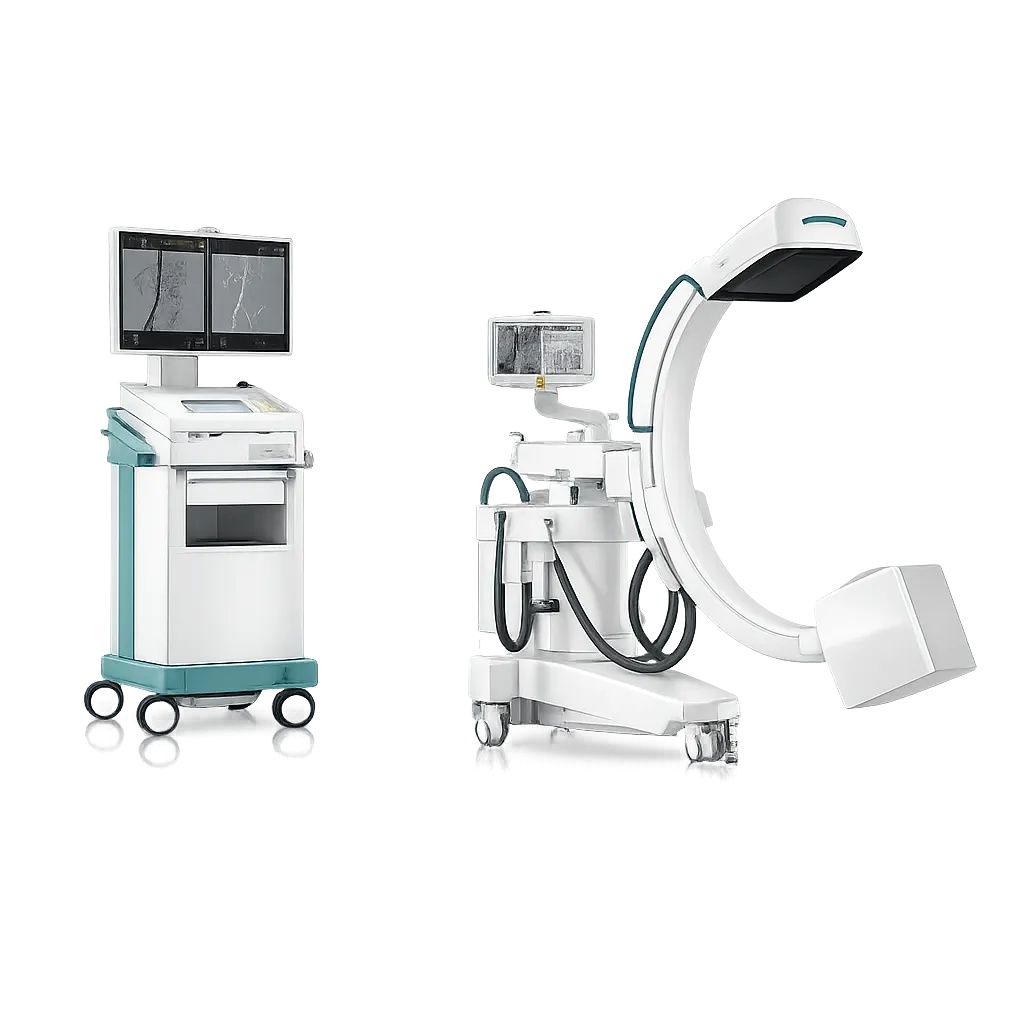
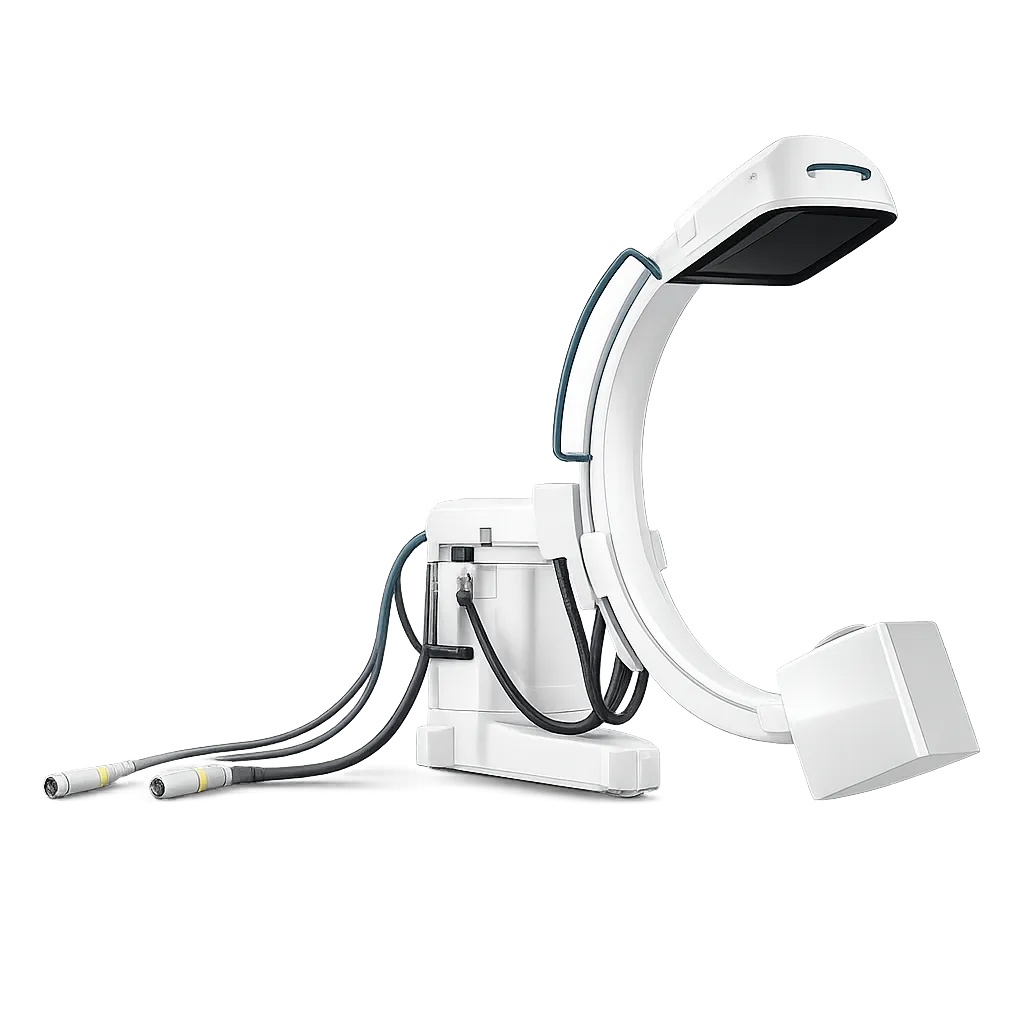
Spinal surgery is the application this combination serves best, and the reason is metal. Instrumented anatomy is where 3D assessment is most wanted and where implants scatter most severely, so a reconstruction method addressing metal artifact directly answers the limiting factor rather than a peripheral one. Ziehm Iterative Reconstruction is described as minimising fan and metal artifacts to give more distinguishable anatomy and defined bone crests across coronal, axial, sagittal and adjustable planes. All clinical judgement, including whether an exposure is justified, remains with the operating surgeon, and Medigear.uk supplies configuration and condition detail rather than clinical guidance.
Neurosurgical and craniomaxillofacial work benefits from the same reconstruction quality alongside the greyscale depth, since separating structures of similar density depends on how many levels the detector can distinguish.
Orthopaedic and trauma theatres gain from the footprint as much as the imaging. At 0.8 square metres Ziehm describes this as among the smallest 3D C-arms available, with a 35 inch C-arm opening, full counterbalancing in every position and single-lever steer and brake. A 3D capable system that fits an ordinary theatre is a different proposition from one requiring a room built around it, and it can move between rooms rather than fixing the capability to one.
Services running navigation should confirm the NaviPort interface is enabled and compatible with the platforms already in use, since 3D data feeding a navigation system is where much of this machine's value sits. An interface that is present but incompatible with the theatre's existing platform delivers none of it, and Medigear.uk establishes both sides of that before quoting.