
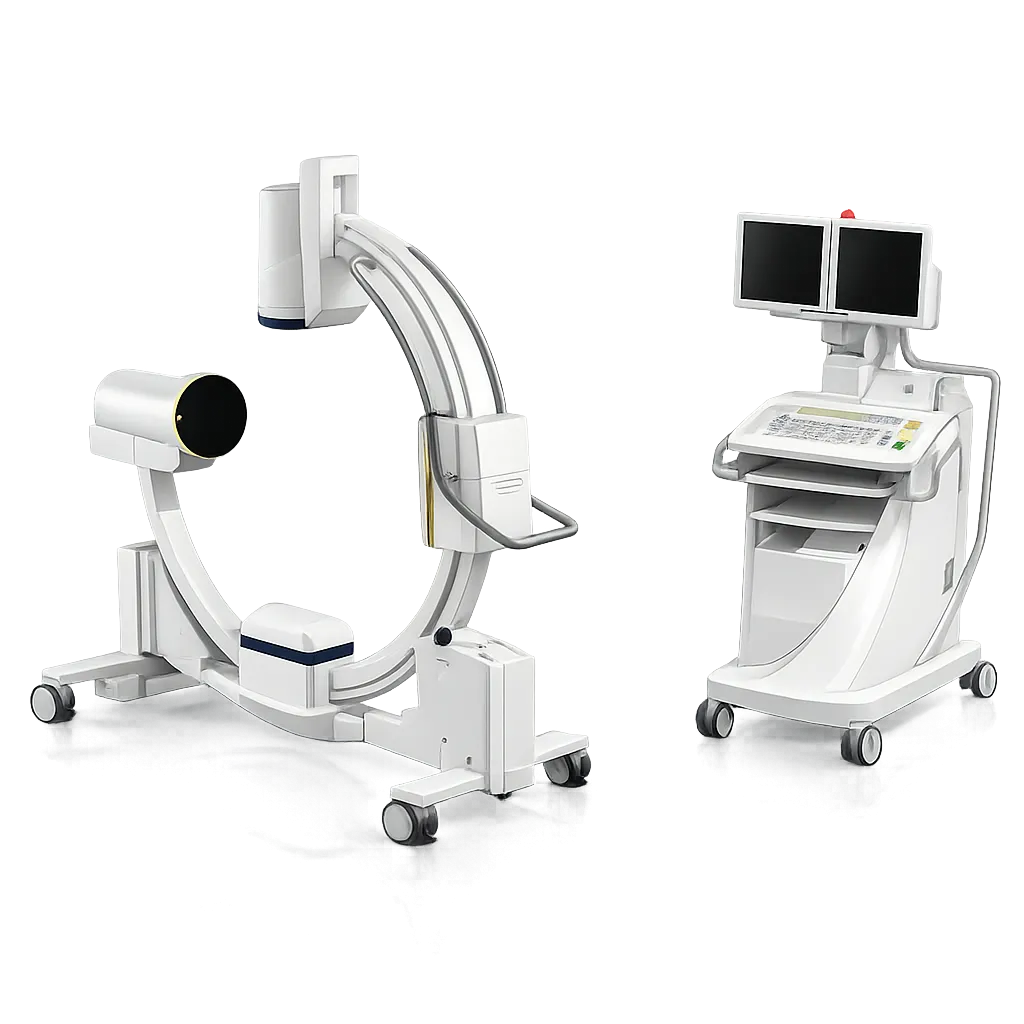
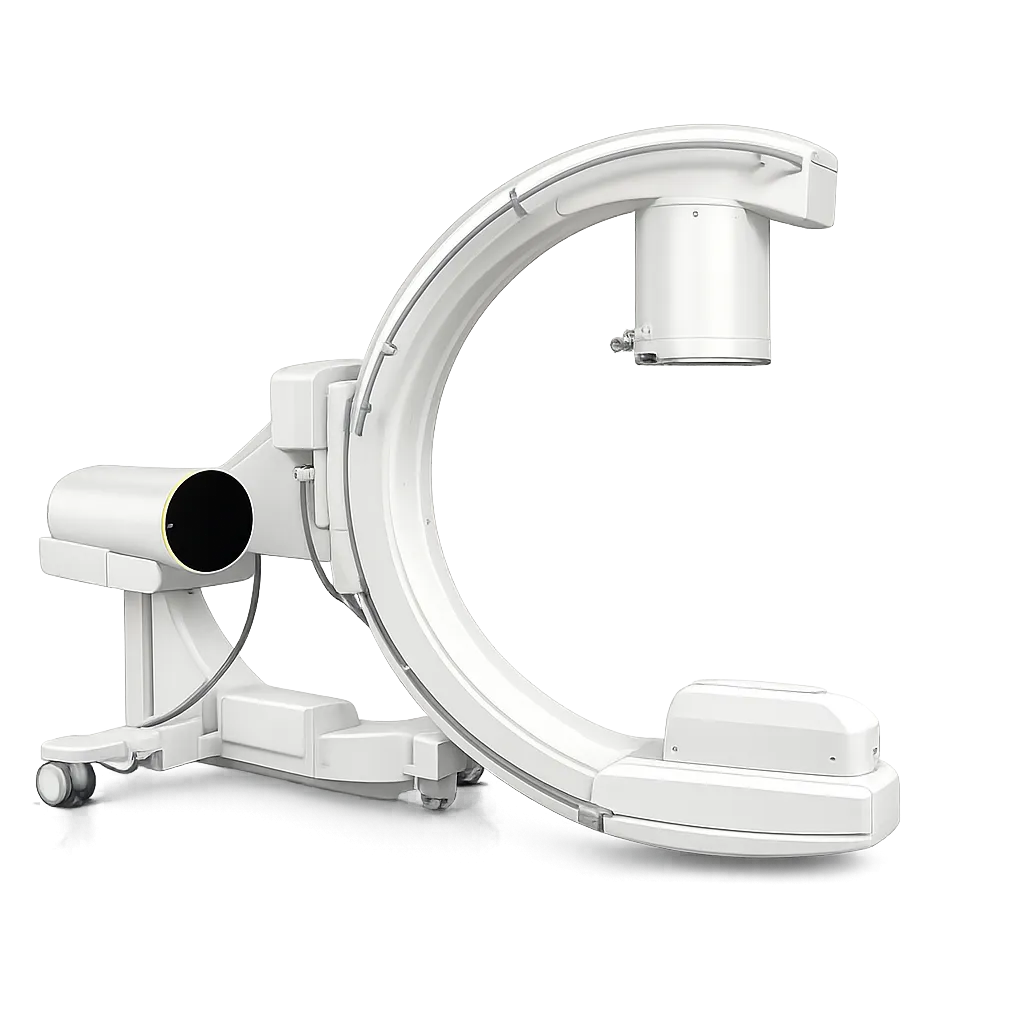
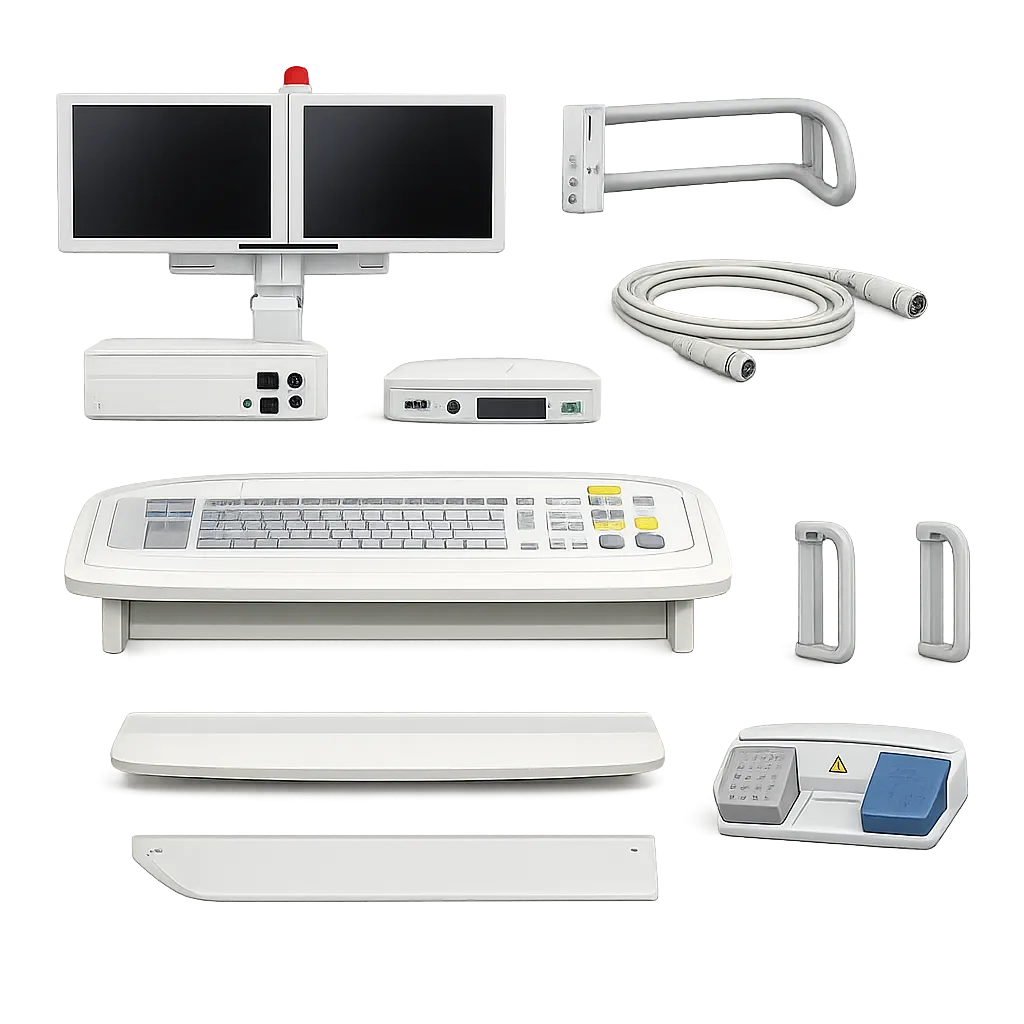
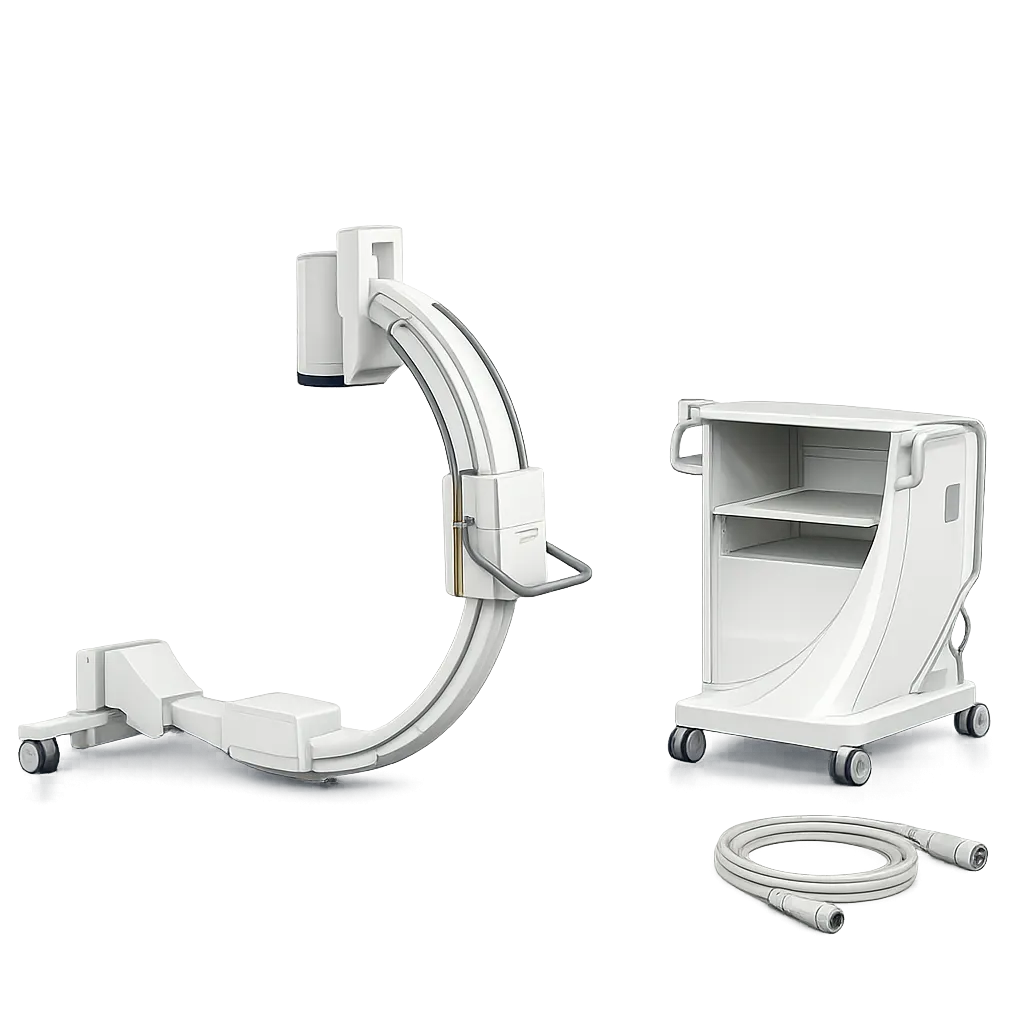
Orthopaedic and trauma surgery is what the Biplanar concept was developed for, and guide wire and implant placement is where simultaneous planes matter most. A wire advanced under a conventional system is checked in one plane, the arm rotated, checked in the other, and rotated back, repeatedly. With both projections available at once the advance can be followed in both planes as it happens. All clinical judgement, including whether an exposure is justified, remains with the operating surgeon, and Medigear.uk supplies configuration and condition detail rather than clinical guidance.
Services buying pre-owned should weigh the lineage evidence. Swemac lists five preceding models and states that units of the original 300 series remain in full operation some twenty years after first use. A manufacturer's own account of its earliest machines still working is a different kind of evidence from a durability claim, and it is directly relevant to a used purchase decision.
Theatres concerned with sterility benefit from a stand that stays fixed and can therefore be draped once, where a rotating arm sweeping through the operative field carries a contamination risk on every plane change. That risk is normally managed through care and time rather than removed, and a fixed stand removes the mechanism itself.
Buyers should plan a doubled condition assessment. Two X-ray tubes and two imaging chains mean twice the wearing components, and a unit strong in one plane and weak in the other is not delivering dual view imaging. Medigear.uk reports each chain separately in figures rather than issuing a single verdict on the machine.